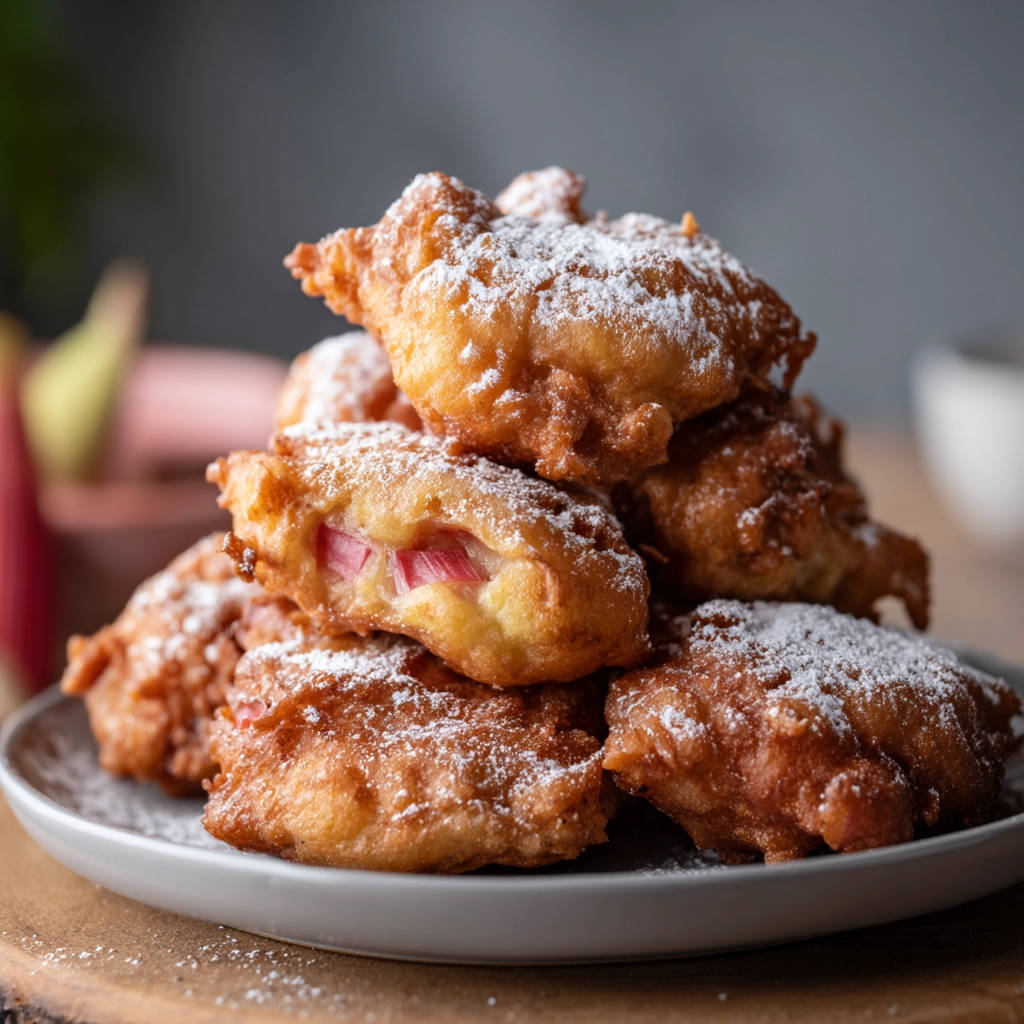
Is there anything better than biting into a warm, sweet fritter? That light, airy texture giving way to a burst of flavor, maybe a hint of fruit? Absolutely divine! But let’s be honest, sometimes homemade fritters can be… well, a little disappointing. Instead of light and fluffy, they turn out heavy, dense, and worst of all, greasy. If you’ve ever experienced this frustration, you’re not alone! I’ve made my fair share of less-than-perfect batches over the years, but after much trial and error, I finally unlocked the secret to making guaranteed fluffy rhubarb fritters every single time. This isn’t just a recipe; it’s a foolproof method that tackles the common fritter pitfalls head-on. Get ready to experience the sweet and tart joy of perfectly fried dough!
Why These Rhubarb Fritters are a Game Changer
Forget everything you thought you knew about making fritters at home. This recipe is designed for success, ensuring you get that coveted light and airy interior with a perfectly golden, slightly crispy exterior. So, what makes this rhubarb fritter recipe stand out?
- Consistently Fluffy: The simple trick in the frying process makes all the difference, preventing that dreaded greasy, dense texture.
- Perfectly Balanced Flavor: The sweet batter beautifully complements the bright, tart notes of fresh rhubarb. It’s a match made in dessert heaven!
- Simple Ingredients: You likely have most of what you need in your pantry right now.
- Quick to Make: Fritters fry up in just minutes, making them a perfect last-minute treat.
- Seasonal Delight: Rhubarb shines in this recipe, making it a fantastic way to use that spring and early summer bounty.
Gathering Your Ingredients for Rhubarb Fritters
Creating these delightful rhubarb fritters starts with a few basic pantry staples and, of course, that wonderful seasonal star: rhubarb! Each ingredient plays a vital role in achieving the perfect balance of flavor and texture. Let’s look at what you’ll need to bring these fluffy bites to life.
For the base of our fritters, we’ll use standard all-purpose flour to provide structure. Granulated sugar sweetens the batter, creating a lovely contrast with the tart rhubarb. Baking powder is our leavening agent, absolutely critical for getting that sought-after fluffiness. A touch of salt balances the sweetness and enhances the overall flavor.
Binding the dry ingredients and adding richness are the wet components. A large egg provides structure and helps bind everything together. For the liquid, you have a choice: milk or buttermilk. Using buttermilk will lend a slight tang and can actually contribute to a more tender fritter thanks to its acidity reacting with the baking powder. Vanilla extract adds a warm, comforting aroma and flavor that pairs beautifully with the rhubarb.
And now for the main event: fresh chopped rhubarb! You’ll want about a cup and a half of fresh, tender stalks, trimmed and cut into small pieces. This provides those wonderful pockets of sweet-tart goodness within the fried dough. For frying, you’ll need enough vegetable oil to create a shallow bath in your pot. Finally, a generous dusting of powdered sugar is the perfect sweet finish.
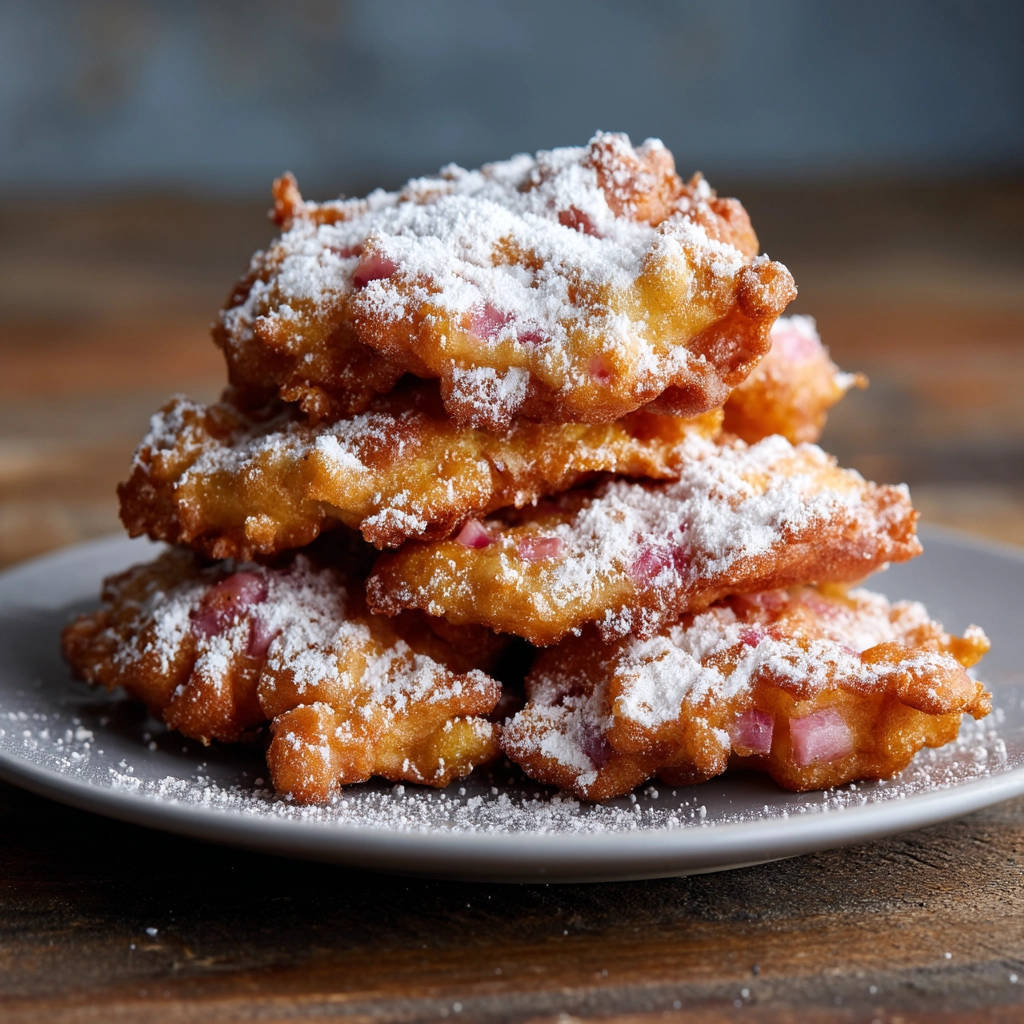
- 1 and 1/2 cups all purpose flour
- 1/4 cup granulated sugar
- 2 teaspoons baking powder
- 1/2 teaspoon salt
- 1 large egg
- 3/4 cup milk or buttermilk
- 1 teaspoon vanilla extract
- 1 and 1/2 cups chopped fresh rhubarb
- Vegetable oil for frying
- Powdered sugar for dusting
Crafting Your Rhubarb Fritters: Step-by-Step
Now that you have your ingredients ready, let’s walk through the process of turning them into those perfect, fluffy rhubarb fritters. Remember, following these steps carefully, especially when it comes to the oil temperature and mixing, is the key to success!
- Begin by combining all your dry ingredients in a large mixing bowl. This includes the all-purpose flour, granulated sugar, baking powder, and salt. Give them a good whisk together. This step isn’t just about mixing; it helps distribute the leavening agent (baking powder) evenly throughout the flour, which is crucial for a uniform rise and fluffy texture in your fritters.
- In a separate, medium-sized bowl, whisk together your wet ingredients: the large egg, milk (or buttermilk), and vanilla extract. Whisking them separately ensures they are well combined before adding them to the dry mix.
- Now, it’s time to bring the two together. Pour the wet ingredients from the medium bowl into the large bowl with the dry ingredients. Use a spoon or spatula to stir everything together. The critical part here is to stir just until the dry ingredients are moistened and combined. Do not overmix! Overmixing develops gluten in the flour, leading to tough, rubbery fritters instead of light ones. A few small lumps in the batter are perfectly fine and actually preferable to a smooth, overmixed batter. Once mostly combined, gently fold in the chopped fresh rhubarb. You want the rhubarb distributed but avoid stirring too vigorously.
- Prepare your frying setup. Pour vegetable oil into a heavy-bottomed pot or a Dutch oven. A heavy pot helps maintain a consistent oil temperature, which is vital for non-greasy fritters. You’ll need enough oil to reach a depth of about 2 to 3 inches. Place the pot over medium-high heat and let the oil heat up. This next part is arguably the most important step for achieving fluffy, non-oily results: heat the oil until it reaches exactly 365 degrees Fahrenheit (approximately 185°C). Using a kitchen thermometer is highly recommended here – it’s the “simple trick” mentioned earlier! If your oil is too cool, the batter will sit in the oil and absorb it, resulting in greasy fritters. If it’s too hot, the outside will burn before the inside is cooked through. If you don’t have a thermometer, you can test the oil temperature by carefully dropping a tiny bit of batter into the hot oil; it should immediately start sizzling and float to the surface within just a few seconds.
- Once the oil is at the correct temperature, carefully drop spoonfuls of batter into the hot oil. A standard tablespoon or a small cookie scoop works well for portioning. Be mindful not to overcrowd the pot. Frying too many fritters at once will drastically lower the oil temperature, leading back to that greasy problem. Fry only 3 to 4 fritters at a time to ensure the oil stays hot enough.
- Let the fritters fry undisturbed for about 2 to 3 minutes on the first side. You’ll see the edges start to look golden brown and they will likely puff up. Then, carefully flip them over using a slotted spoon or spider and fry for another 2 to 3 minutes on the second side, or until they are deeply golden brown all over and look cooked through. Using a slotted utensil allows excess oil to drip back into the pot as you lift the fritters out.
- As you remove the cooked fritters from the oil, transfer them to a plate that you’ve lined with paper towels. The paper towels will help absorb any remaining excess oil, ensuring your fritters stay light and delicious.
- Continue frying the remaining batter in batches, following steps 5 through 7. It’s a good idea to monitor the oil temperature between batches, especially if you’re using a thermometer, allowing it to recover back up to 365°F if needed before adding the next batch.
- The final touch! Once all the fritters are fried, dust them generously with powdered sugar while they are still warm. This classic finish adds a delicate sweetness and beautiful presentation. Serve them immediately and enjoy!
Tips for Perfect Rhubarb Fritters Every Time
Achieving consistently fluffy, non-greasy fritters is easier than you think, especially with a few pro tips up your sleeve. These little pointers will elevate your rhubarb fritter game and ensure delicious results batch after batch.
- Accurate Measuring: Especially for the flour and baking powder, measuring correctly is crucial. For flour, spoon it lightly into your measuring cup and level it off with a straight edge; don’t scoop directly from the bag, as this can compact the flour and result in too much.
- Fresh Baking Powder: Baking powder loses its potency over time. Check the expiry date and test its freshness by putting a teaspoon in hot water; it should bubble vigorously if it’s still active. Using fresh baking powder is key to a good rise.
- Don’t Skip the Thermometer: While the batter test works in a pinch, an oil thermometer is your best friend here. Maintaining the oil temperature at 365°F is the single most important factor for preventing greasy fritters and ensuring they cook perfectly inside and out.
- Monitor Oil Temp Between Batches: As you add cooler batter, the oil temperature will drop. Give the oil a minute or two to come back up to temperature between batches, especially if you’re not using a heavy pot that retains heat well.
- Avoid Overcrowding: We mentioned this in the steps, but it bears repeating! Frying too many at once is a common mistake that leads to temperature drops and greasy results. Stick to 3-4 depending on the size of your pot.
- Use Fresh Rhubarb: While you technically can use frozen, fresh rhubarb is best for texture and flavor. If using frozen, thaw it completely and drain off any excess liquid very well before chopping and folding into the batter.
- Serve Warm: Fritters are always best served warm, ideally right after frying and dusting with powdered sugar. That’s when their texture is at its peak fluffiness!
Serving Suggestions
These warm rhubarb fritters are absolutely delightful on their own, especially fresh from the fryer with a dusting of powdered sugar. But they can also be part of a larger spread or elevated with simple accompaniments. For a breakfast or brunch treat, pair them with your favorite morning beverage. They’d be lovely alongside a simple fruit salad or even some crispy bacon for a sweet and savory contrast. If you’re enjoying them as a dessert, a scoop of vanilla ice cream melting over the warm fritters is pure bliss. You could also offer a simple dipping sauce, like a raspberry coulis or a dollop of whipped cream. They’re versatile enough to fit many occasions!
Your Rhubarb Fritters Questions Answered (FAQ)
Got questions about making the best rhubarb fritters? You’re not alone! Here are some common queries and their answers to help ensure your frying success.
Can I use frozen rhubarb?
Yes, you can use frozen rhubarb if fresh isn’t available. However, frozen rhubarb holds a lot of water. Make sure to thaw it completely in a colander and gently pat it dry with paper towels before chopping and folding it into the batter. Too much moisture can make your batter too wet and affect the fritter texture.
What if I don’t have a thermometer?
While a thermometer is the most reliable way to ensure the oil is at the perfect 365°F, you can use the batter test described in the instructions (Step 4). Drop a tiny bit of batter into the hot oil. It should sizzle immediately and float within a few seconds. If it just sinks and sits there, the oil isn’t hot enough. If it browns too quickly, it might be too hot.
Why are my fritters greasy?
The most common reason for greasy fritters is the oil temperature being too low. When the oil isn’t hot enough (below 365°F), the batter absorbs the oil instead of cooking quickly on the surface. Make sure your oil is heated to the correct temperature and doesn’t drop too low, especially when you add the batter. Don’t overcrowd the pot!
Can I add other fruits to the batter?
Absolutely! This base batter recipe works well with other fruits too. Think chopped apples, berries, or even diced peaches. Just make sure the fruit is chopped into small pieces and, if using juicy fruits, drain any excess liquid first to prevent the batter from becoming too thin. For a classic combination, you could easily adapt this for mini apple pie bites in fritter form or blueberry scones for a baked alternative.
How should I store leftover Rhubarb Fritters?
Fritters are best enjoyed fresh and warm. However, if you have leftovers, store them in an airtight container at room temperature for up to 1-2 days. They may lose some of their crispness.
How do I reheat Rhubarb Fritters?
To reheat, the best method is using a toaster oven or a regular oven set to about 350°F (175°C). Place the fritters on a baking sheet and heat for 5-10 minutes, or until warmed through. This helps them crisp up slightly again. Avoid the microwave, as it will make them soft and potentially rubbery.
Enjoy Your Homemade Rhubarb Fritters!
There you have it – the simple secret to achieving perfectly fluffy, non-greasy rhubarb fritters right in your own kitchen. This recipe takes the guesswork out of frying and lets the delightful sweet-tart flavor of rhubarb shine. Whether you’re making them for a special breakfast, a weekend treat, or just because rhubarb is in season, they are sure to be a hit.
Give this recipe a try, and you’ll see just how easy it is to get bakery-quality results at home. Don’t forget to let me know how they turn out in the comments below! Happy frying!
Rhubarb Fritters

Ingredients
- 1 and 1/2 cups all purpose flour
- 1/4 cup granulated sugar
- 2 teaspoons baking powder
- 1/2 teaspoon salt
- 1 large egg
- 3/4 cup milk or buttermilk
- 1 teaspoon vanilla extract
- 1 and 1/2 cups chopped fresh rhubarb
- Vegetable oil for frying
- Powdered sugar for dusting
Directions
- In a large bowl, whisk together the flour, granulated sugar, baking powder, and salt.
- In a separate medium bowl, whisk together the egg, milk or buttermilk, and vanilla extract.
- Pour the wet ingredients into the dry ingredients and stir just until combined. Do not overmix. A few small lumps are okay. Gently fold in the chopped rhubarb.
- Pour vegetable oil into a heavy pot or Dutch oven to a depth of about 2 to 3 inches. Heat the oil over medium high heat until it reaches 365 degrees Fahrenheit. This is the key temperature for fluffy, non greasy fritters. If you don’t have a thermometer, you can test by dropping a small bit of batter in; it should sizzle immediately and float to the surface within a few seconds.
- Carefully drop spoonfuls of batter into the hot oil, being careful not to overcrowd the pot. Fry 3 to 4 fritters at a time to maintain the oil temperature. If the temperature drops too low, the fritters will absorb too much oil and become greasy and dense.
- Fry for 2 to 3 minutes per side, or until golden brown and cooked through. Use a slotted spoon to remove the fritters from the oil, letting excess oil drain back into the pot.
- Transfer the fried fritters to a plate lined with paper towels to drain further.
- Repeat with the remaining batter, allowing the oil temperature to recover between batches if necessary.
- Dust generously with powdered sugar before serving warm.