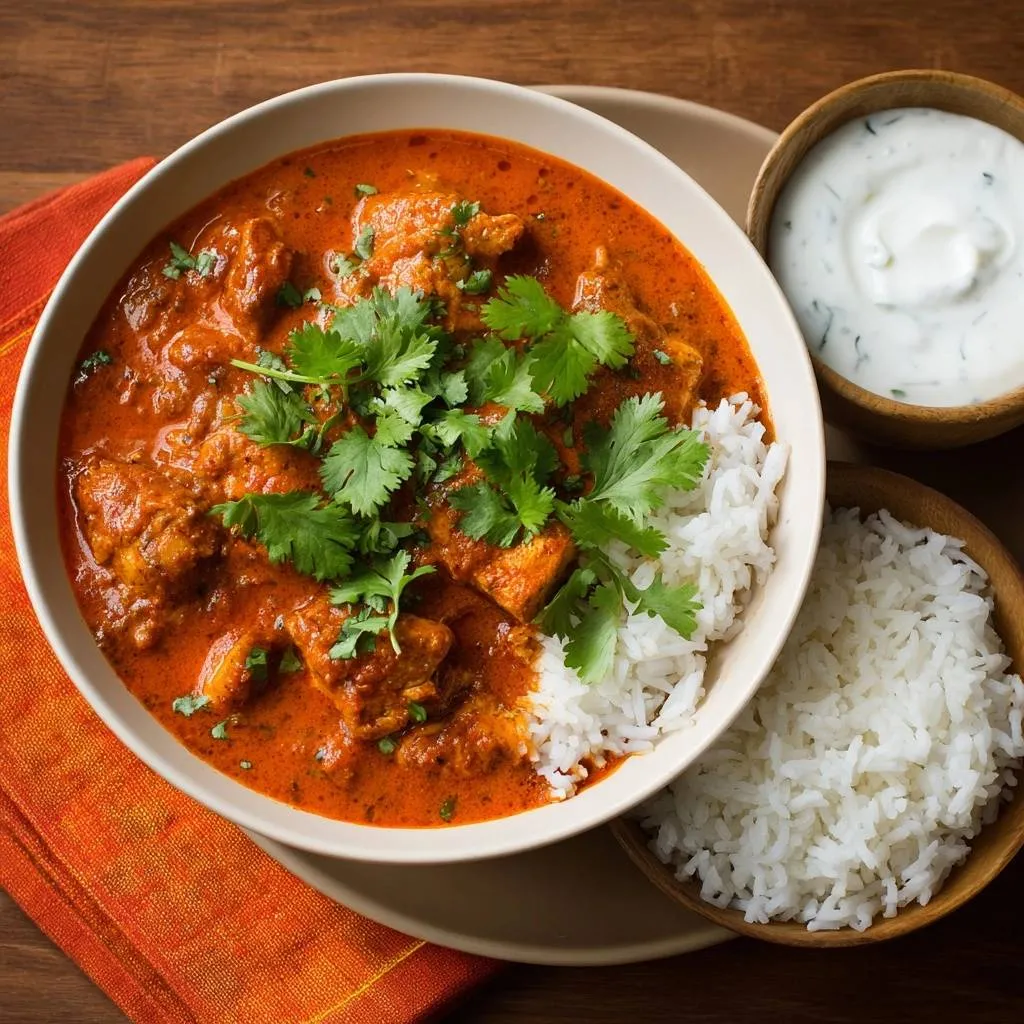
Ever bitten into butter chicken that’s tough and dry? You’re not alone. Most home cooks struggle because they skip the yogurt marinade and high-heat sear. This recipe fixes that with a simple yogurt bath that tenderizes the meat, plus a quick sear that locks in juices for restaurant-quality results every time.
Therefore, you get chicken so juicy it practically melts in the sauce. Picture creamy tomato gravy clinging to tender bites, spooned over fluffy basmati rice with cooling raita on the side. Oh man, that first bite hits with warm spices and silky richness. It’s comfort food that doesn’t fight back.
Here’s the expertise: the yogurt’s lactic acid breaks down proteins gently, while the sear creates a Maillard crust. That combo keeps chicken moist during the simmer. No more disappointment, just perfection.
Why Yogurt Marinade Transforms Butter Chicken
Selecting Chicken Thighs for Optimal Juiciness
Grab boneless chicken thighs for butter chicken. They beat breasts hands down because higher fat content keeps everything juicy, even after cooking. Breasts dry out fast without that natural moisture shield.
Therefore, cut them into bite-sized pieces. This ensures even marinade penetration and quick, uniform cooking. Look for fresh thighs with pink flesh and no off smells; frozen works too, just thaw fully in the fridge first.
In addition, thighs hold up better in the sauce. You’ll notice the difference in tenderness right away.
Full Marinade Breakdown: Spices and Acids
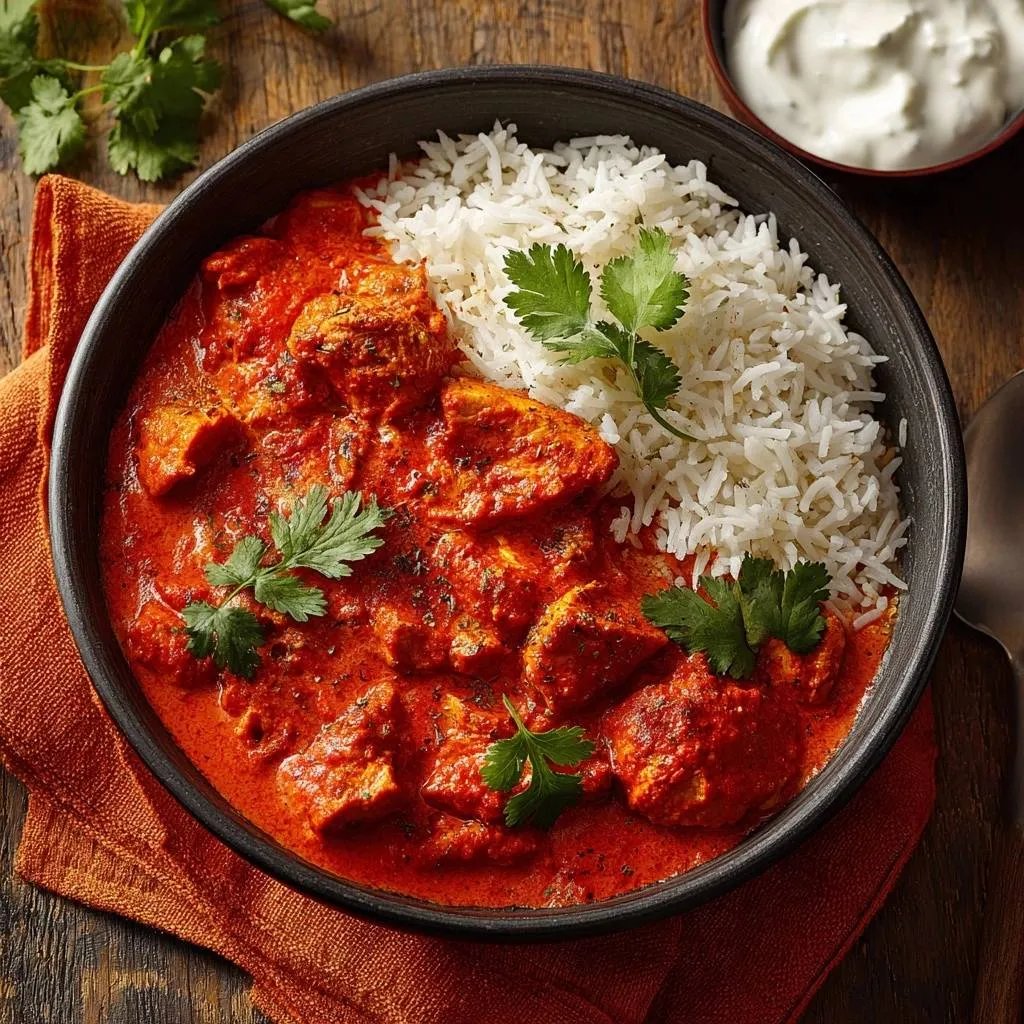
Start with 1 cup plain full-fat yogurt for 1.5 pounds chicken. Its lactic acid tenderizes without mushiness, unlike thinner varieties. Lemon juice adds brightness and balances pH for deeper flavor absorption.
Next, 2 teaspoons garam masala brings warm complexity, while cumin and coriander add earthy depth. Turmeric gives golden color and subtle earthiness. Don’t skip minced garlic and grated ginger; they punch up the base with fresh heat.
However, use these ratios exactly. Marinate 1 hour minimum, but overnight amps up tenderness as enzymes work longer. Full-fat yogurt clings better and creams the sauce later.
Marinating Technique for Maximum Tenderness
Mix yogurt, lemon juice, spices, salt, garlic, and ginger in a bowl first. Stir until smooth, then add chicken pieces. Coat every bit evenly with your hands or a spoon.
Cover and refrigerate. The yogurt enzymes break down tough proteins slowly, so you see juicier results. Check after 1 hour; chicken looks opaque and smells fragrant when ready.
Avoid thin yogurt; it won’t tenderize well. Pro tip: pat chicken lightly before searing to remove excess, preventing a watery pan.
Science of Searing Butter Chicken Perfectly
High-Heat Sear: Locking in Chicken Juices
Heat a large skillet, preferably cast iron, over high heat with 1 tablespoon oil. Add chicken in a single layer; don’t crowd. Sear 2-3 minutes per side until golden-brown crust forms, but keep inside pink.
This triggers the Maillard reaction, creating a flavorful barrier that seals juices. High heat is key; medium won’t crisp properly. You’ll hear sizzling and smell toasty spices.
Therefore, use neutral oil like vegetable. Time it right, or chicken overcooks early. Remove and set aside; that crust makes all the difference.
Post-Sear Resting and Flavor Foundation
Set seared chicken aside on a plate. This lets juices redistribute inside. Plus, the browned bits, or fond, stick to the pan for sauce depth.
Discard excess marinade; it dilutes flavors if added back. Now transition to sauce in the same skillet. Those bits infuse everything with richness.
In addition, resting prevents steaming in the sauce later. Simple step, huge payoff.
Building Rich Creamy Butter Chicken Sauce
Onion Base and Aromatic Spice Bloom
Melt 2 tablespoons butter in the same skillet over medium heat. Add finely chopped large onion; cook 5 minutes until soft and golden. Finely chopped ensures even caramelization without burning.
Stir in 3 minced garlic cloves, 1 tablespoon grated ginger, 1 tablespoon garam masala, 2 teaspoons cumin, 2 teaspoons paprika, and 1 teaspoon chili powder. Cook 1 minute until fragrant; you’ll catch nutty, warm aromas.
However, add spices after onions to bloom properly. Sequence matters: garam first toasts, then others release oils. This builds the sauce’s soul.
Tomato Puree and Cream Integration
Pour in 15 oz canned tomato puree; it offers consistent smoothness over fresh. Stir in 1 cup heavy cream for silkiness; half-and-half works but thins it out.
Add 1/2 cup water and salt to taste. Bring to a simmer, scraping fond from the pan. Heavy cream at room temp prevents curdling here.
Therefore, control consistency with water. Simmer gently; sauce starts chunky but smooths out beautifully.
Gentle Simmer: Finishing Juicy Butter Chicken
Reuniting Chicken with Sauce
Return seared chicken to the skillet. Nestle pieces into sauce, then reduce heat to low. Cover and simmer 15 minutes, stirring occasionally.
This gentle heat finishes cooking to 165°F internally without drying. Sauce thickens from reduction and natural starches. You’ll see chicken plump up moistly.
Pro tip: use a thermometer for precision. Stirring distributes heat evenly.
Texture and Taste Final Adjustments
Check doneness: sauce clings glossy to chicken, no raw pink. Taste and adjust salt. For extra creaminess, stir in cashew paste if you like.
Turn off heat and rest 5 minutes. Flavors meld, textures set. It’s ready when aromatic steam wafts up.
However, don’t boil hard; it toughens meat. This step seals juicy success.
Butter Chicken Pairings and Serving Essentials
Fluffy Basmati Rice Cooking Method
Rinse 1 cup basmati rice until water runs clear, then soak 20 minutes. Use 1:1.5 rice-to-water ratio in a pot. Bring to boil, then simmer covered 12 minutes.
Fluff with a fork; grains stay separate and absorb sauce perfectly. Basmati’s nutty flavor elevates butter chicken. Naan scoops it up great too.
Therefore, soaking prevents gumminess. Pot with tight lid steams it fluffy.
Cooling Raita and Garnish Perfection
Mix 1 cup plain yogurt with chopped cilantro and pinch of salt. Chill 15 minutes for creamy contrast to spicy sauce. Roughly chop fresh cilantro for garnish.
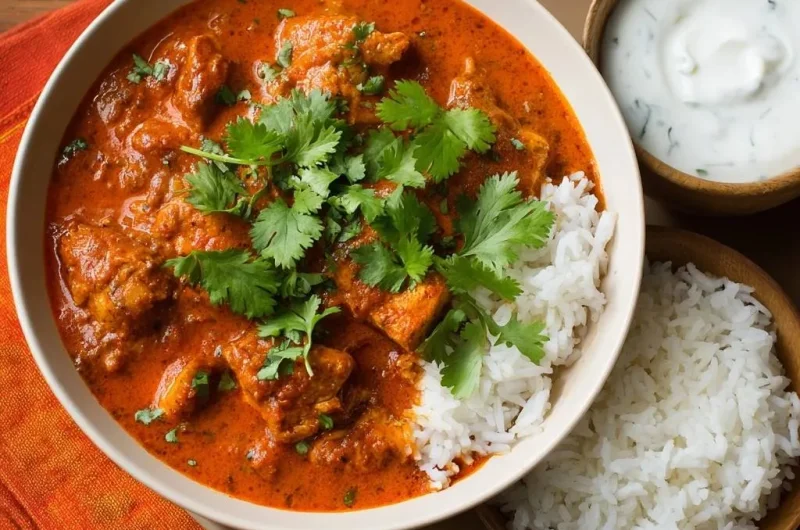
Spoon butter chicken over rice, add raita dollop. Cilantro adds bright green pop. Pair with naan or veggies for balance.
In addition, chill raita heightens cooling effect. Plating looks restaurant-fancy.
History and Evolution of Butter Chicken
Origins in Punjab Curry Houses
Butter chicken, or murgh makhani, started in 1950s Delhi at Moti Mahal. Chefs invented it using leftover tandoori chicken in tomato-butter gravy for British patrons. It wasn’t waste; it was genius.
Punjab roots give it creamy comfort. Unlike chicken tikka masala myths, this stays true to Indian diaspora tables. Home versions adapt tandoor char with sears.
Therefore, cultural staple now global. Families cherish its warmth.
Modern Twists on Traditional Butter Chicken
Western palates tame spices milder. Vegan swaps use coconut cream and tofu. Pressure cookers speed it up while keeping authenticity.
However, core yogurt marinade endures. Global tweaks make it accessible. Stick close for classic taste.
In addition, batch cooking fits busy lives. Evolution keeps it fresh.
Avoiding Dry Chicken: Butter Chicken Troubleshooting
Over-Marinating and Undercooking Fixes
Over-marinate beyond 24 hours, and chicken turns mushy from excess acid. Stick to overnight max. Signs: soft texture, no bite.
Sear until pink inside; undersear means raw spots later. Simmer to 165°F with thermometer. Fixes dryness every time.
Therefore, time marinade precisely. Visual checks save the dish.
Sauce Separation and Spice Balance Errors
Sauce separates if cream boils; add at low heat. Bland? Use fresh-ground spices; old ones fade. Too thick? Stir in stock.
Oil pools from over-spicing; balance with yogurt. Prevent curdling by tempering cream first.
However, taste as you go. Quick fixes restore perfection.
Make-Ahead Butter Chicken Strategies
Marinade Prep and Freezer Tips
Batch marinate chicken in freezer bags up to 3 months. Label with date. Thaw overnight in fridge; pat dry before searing.
This preserves tenderness. No texture loss if frozen raw. Great for weeknights.
In addition, spices hold flavor frozen. Prep ahead wins.
Full Dish Storage and Reheating
Store in airtight container up to 4 days in fridge. Freezes well up to 2 months; thaw in fridge first.
Reheat stovetop low with splash cream; microwave dries it. Stir often for even warmth.
Therefore, retains creaminess. Make-ahead magic.
Butter Chicken FAQ
Can I Use Chicken Breasts Instead?
Yes, but brine breasts in saltwater 30 minutes first to boost moisture. They’ll still dry faster than thighs due to low fat. Thighs stay juiciest; stick with them for foolproof results. Cut same size for even cooking.
How Spicy Is This Butter Chicken?
Mild to medium; chili powder gives gentle kick. Reduce to 1/2 teaspoon for kids, or skip for no heat. Taste sauce before simmering and adjust. Fresh spices control burn perfectly.
Best Substitutes for Heavy Cream?
Coconut milk mimics creaminess with tropical twist, or blend Greek yogurt with milk. Both thicken well but lighten dairy note. Use full-fat for best silk; half amount first to test consistency.
Can Butter Chicken Be Made Dairy-Free?
Absolutely: swap butter for plant-based, heavy cream for coconut or cashew cream. Yogurt becomes coconut yogurt in marinade. Tastes rich, slightly nuttier; sear same way for texture win.
How Long Does Marination Take Minimum?
1 hour minimum tenderizes decently; overnight transforms to melt-in-mouth. Quick hack: 30 minutes at room temp speeds it, but fridge safest. Longer means deeper spice penetration without mush.
Butter Chicken
Course: Main CourseCuisine: IndianDifficulty: easy4
servings20
minutes40
minutes60
Minutes550
kcalIndian
Ingredients
For the chicken:
1.5 pounds boneless chicken thighs, cut into bite-sized pieces
1 cup plain yogurt
1 tablespoon lemon juice
2 teaspoons garam masala
1 teaspoon ground cumin
1 teaspoon ground coriander
1 teaspoon turmeric
1 teaspoon salt
2 garlic cloves, minced
1-inch ginger, grated
For the sauce:
2 tablespoons butter
1 large onion, finely chopped
3 garlic cloves, minced
1 tablespoon grated ginger
1 tablespoon garam masala
2 teaspoons ground cumin
2 teaspoons paprika
1 teaspoon chili powder
1 can (15 oz) tomato puree
1 cup heavy cream
1/2 cup water
Salt to taste
For serving:
Cooked basmati rice
1 cup plain yogurt mixed with chopped cilantro and pinch of salt (raita)
Fresh cilantro leaves, chopped
Directions
- Marinate the chicken: In a bowl, mix yogurt, lemon juice, garam masala, cumin, coriander, turmeric, salt, garlic, and ginger. Add chicken pieces and coat well. Cover and refrigerate for at least 1 hour (or overnight for best results). This yogurt bath breaks down proteins for unbeatable tenderness, preventing dryness.
- Sear the chicken: Heat a large skillet over high heat. Add 1 tablespoon oil. Remove chicken from marinade (discard excess), add to skillet in a single layer. Sear 2-3 minutes per side until golden-brown crust forms but still pink inside. This locks in juices. Remove chicken and set aside. (Key step: High-heat sear creates a barrier against drying out during simmering.)
- Make the sauce: In same skillet, melt butter over medium heat. Add onion and cook 5 minutes until golden. Stir in garlic, ginger, garam masala, cumin, paprika, and chili powder; cook 1 minute until fragrant.
- Simmer: Add tomato puree, cream, water, and salt. Bring to simmer, stirring. Return seared chicken to skillet. Reduce heat to low, cover, and simmer 15 minutes, stirring occasionally. Sauce thickens and chicken finishes cooking gently, staying moist and tender.
- Serve: Spoon over basmati rice. Add raita on side. Garnish with cilantro. Enjoy juicy perfection!
Notes
- Marinate overnight for best tenderness. Use chicken thighs for juicier results. High-heat sear is key to locking in moisture.