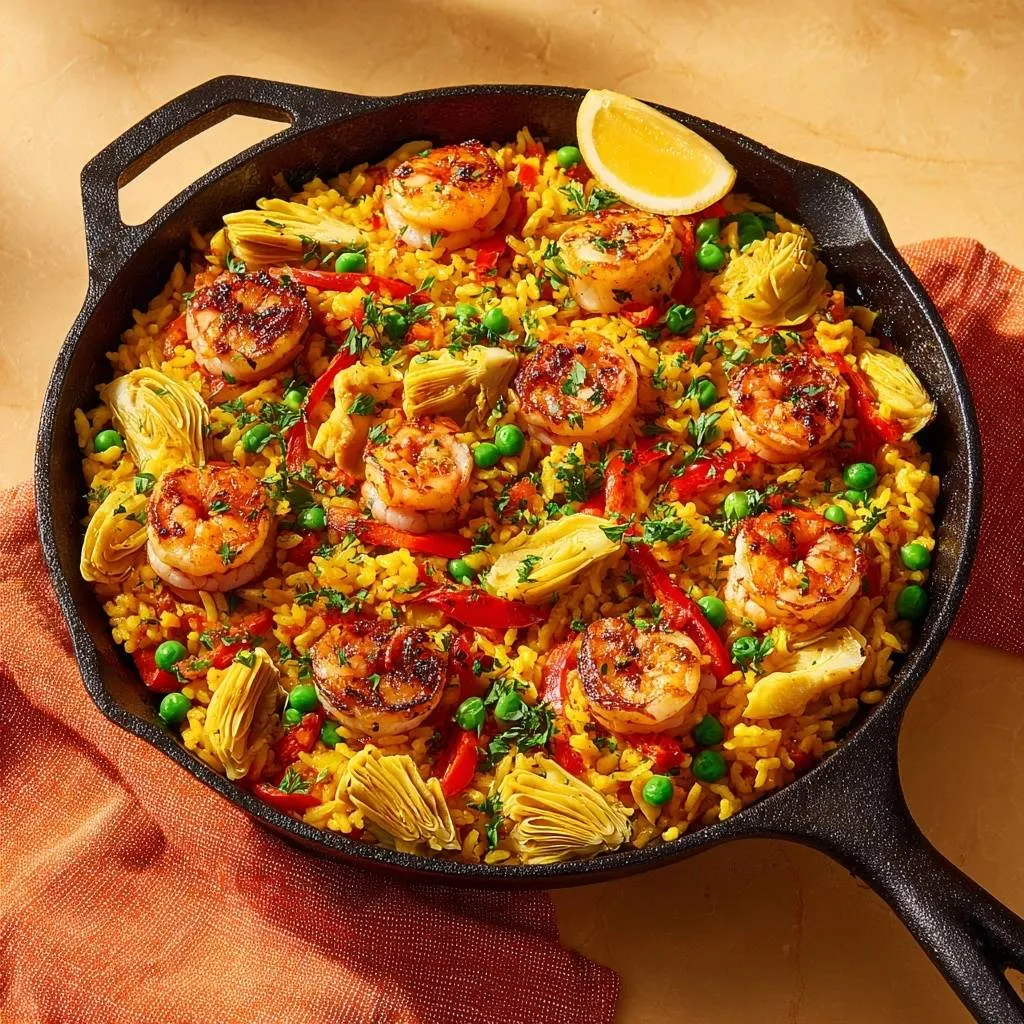
Why Cast Iron Elevates Shrimp Paella
Paella at home usually turns soggy or scorched. However, this cast iron version delivers that elusive crispy socarrat, the caramelized rice crust folks rave about in restaurants. You get it every time with a simple high-heat blast that cast iron handles perfectly.
Therefore, home cooks chase that golden bottom layer from Valencia’s Spanish roots. We’ve adapted it here with shrimp and vegetable broth for a lighter, seafood-forward twist. In addition, cast iron’s even heat retention prevents burning while building intense flavor.
The secret lies in toasting the rice first. It coats every grain in oil and fond, setting up flawless crisping later. Oh man, that crackling sound at the end? Pure kitchen joy.
Essential Ingredients for Cast Iron Shrimp Paella
Start with 2 tablespoons olive oil. It shimmers hot for searing shrimp without sticking. Next, 1 pound large shrimp, peeled and deveined, bring sweet seafood punch; pat them dry for better char.
One red bell pepper, sliced into strips, adds crisp sweetness. A cup of frozen peas offers pop-in-your-mouth texture; they’re easier than fresh and hold up in the simmer. Meanwhile, a 14-ounce can of artichoke hearts, drained and quartered, delivers tangy earthiness.
Two cups short-grain rice absorbs broth ideally for socarrat. One teaspoon crushed saffron threads infuse golden color and floral aroma. Four cups heated vegetable broth keeps things neutral to spotlight shrimp; salt to taste seasons evenly.
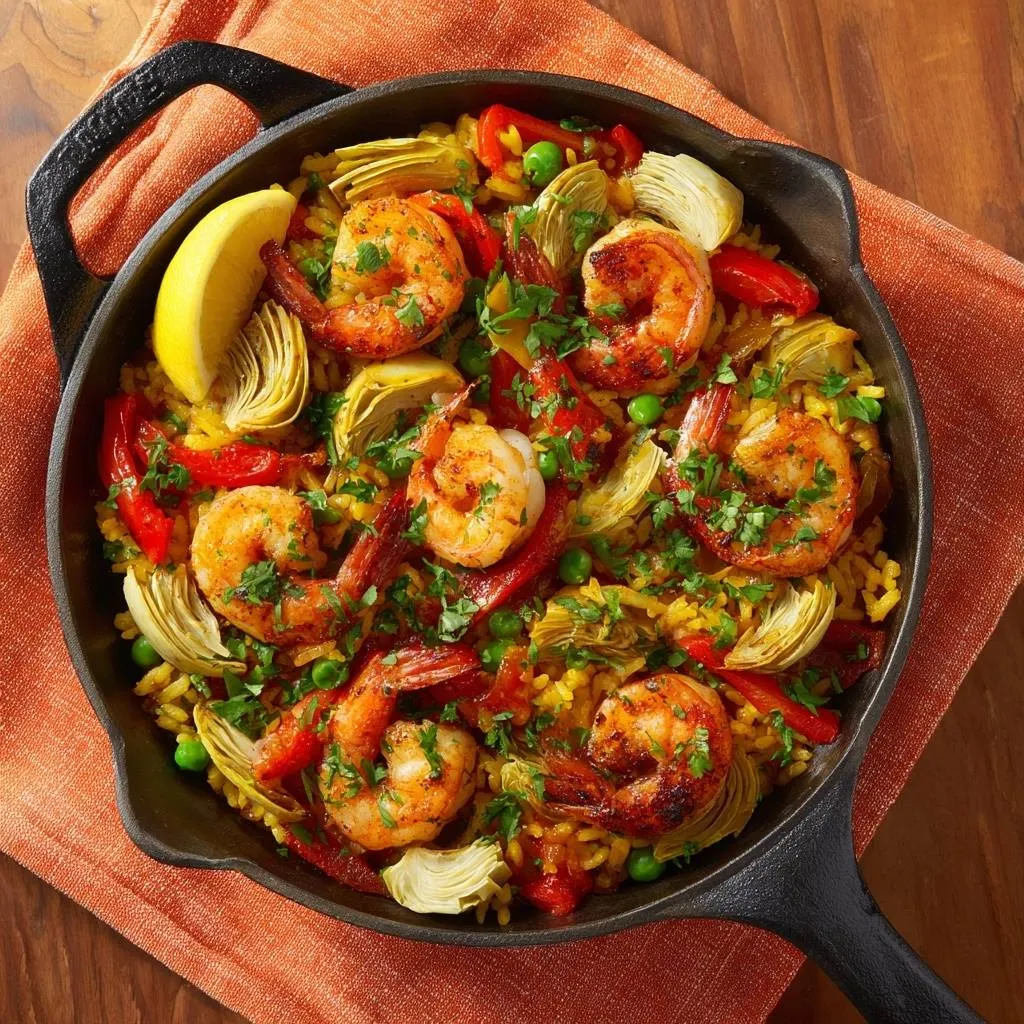
Finish with 1/4 cup chopped fresh parsley for brightness and lemon wedges to cut richness. Use high-quality saffron; it’s worth it for that authentic paella perfume.
Short-Grain Rice vs. Long-Grain Choices
Short-grain like bomba or arborio soaks up broth without falling apart. It gelatinizes perfectly for socarrat’s crunch. Long-grain stays loose and won’t crisp; stick to short for success.
Saffron and Broth Heating Precision
Crush saffron threads to release oils; they bloom in hot broth for deep flavor. Heat vegetable broth first so rice doesn’t seize up. This pro move keeps grains tender and infused.
Equipment: Cast Iron Skillet for Perfect Paella
A 12-inch cast iron skillet rules for this. Its thermal mass distributes heat evenly, crisping socarrat without hot spots. Stainless steel warps; nonstick can’t take the high heat.
Season your skillet well; wipe with oil and bake if needed. It builds nonstick power over time. Therefore, avoid soap washes; hot water and a chainmail scrubber do the trick.
No cast iron? A heavy-bottomed stainless works in a pinch, but watch the heat. Size matters for even cooking; smaller pans crowd and steam.
Skillet Size and Heat Retention Benefits
Twelve-inch fits 4 servings perfectly. Cast iron’s mass holds steady heat during the high blast, forming uniform socarrat. No scorching edges here.
Science of Crispy Socarrat in Shrimp Paella
Socarrat forms via Maillard reaction. Rice starches gelatinize in the simmer, then dehydrate on high heat for that toasty crust. Cast iron conducts evenly, so you hear crackling without smoke.
Undisturbed cooking lets steam escape, concentrating flavors. Vegetable broth evaporates cleanly, enhancing shrimp’s brininess. In addition, toasting first develops nutty edges.
Crater holes on top signal doneness; they’re your visual cue. This method nails restaurant texture at home every time.
Rice Toasting and Broth Absorption Stages
Toasting browns rice edges for nuttiness. Simmer forms craters as broth absorbs; rice puffs slightly. High heat then crisps the base with that signature snap.
Step-by-Step: Searing Shrimp for Cast Iron Paella
Heat 2 tablespoons olive oil until shimmering, around 400°F. Add shrimp in a single layer; sear 1-2 minutes per side till pink and charred. They curl and smell sweet when done.
Remove to a plate; their juices flavor everything next. Overcrowding steams them gray, so don’t. This char builds the paella’s savory base.
Bell Pepper Sauté Fundamentals
Sauté pepper strips 3 minutes on medium-high till softened. They release juices, deglazing fond for depth. Stop before mush; bright color means perfect.
Building the Base: Toasting Rice with Saffron
Stir in 2 cups short-grain rice and crushed saffron. Toast 2 minutes, coating grains in oil and shrimp fond. Edges turn golden; you’ll catch that toasty aroma.
Keep stirring gently to avoid clumps. This step infuses flavor deep into every bite.
Simmering Cast Iron Shrimp Paella Undisturbed
Pour in 4 cups hot vegetable broth and salt. Bring to simmer, then arrange artichokes, peas, and shrimp on top. Do not stir; it kills socarrat.
Lower to medium-low; cook uncovered 18-20 minutes. Liquid absorbs, rice tenders, and craters form. No lid; evaporation crisps the bottom.
High-Heat Socarrat Secret for Paella Crust
Crank heat to high; cook undisturbed 2-3 minutes. Listen for crackling and smell toasty rice. Edges golden’s up perfectly in cast iron.
Remove immediately; it goes bitter fast. This is your crispy payoff, folks.
Resting and Garnishing Your Paella
Rest off heat 5 minutes; steam evens moisture. Sprinkle parsley for fresh pop. Serve family-style with lemon wedges to squeeze over.
Lemon’s acid brightens shrimp and rice. Dig in from the edges for max socarrat.
Avoiding Common Mistakes in Shrimp Paella
Stirring after broth ruins crust; hands off. Cold broth makes gummy rice, so heat it. Overcrowd shrimp, and they steam, not sear.
Burnt fond from too-high start? Lower next time. Bland saffron means uncrushed threads; fix by blooming in broth first. Poorly seasoned cast iron sticks; oil well.
Underseason early; add salt with broth for even pull-up.
Soggy Rice and Burnt Crust Fixes
Soggy? Extend simmer or up heat gently. Burnt socarrat? Shorten high phase, listen closer. Timing tweaks save it.
Flavor Variations for Cast Iron Paella
Swap shrimp for chicken thighs for meatiness. Add smoked paprika for spice. Garlic and onion base boosts depth; sauté first.
Vegan? Tofu cubes sear like shrimp. Scale by 1.5 for 6; watch broth ratios. Keep the no-stir, high-heat core.
Vegetarian Swaps Beyond Standard Peas
Double artichokes or toss in mushrooms for umami. Spinach wilts in at the end. Textures stay crisp.
Pairing Sides with Cast Iron Shrimp Paella
Arugula salad with lemon vinaigrette cuts richness. Garlic green beans add crunch. Crusty bread sopps up every drop.
Sparkling water with lemon refreshes. Albariño’s crispness matches saffron notes.
Make-Ahead Guide for Shrimp Paella
Prep shrimp and chop veggies a day early. Sear shrimp ahead; fridge till simmer. Full paella reheats on stovetop; revive socarrat with medium heat.
Freeze rice base sans shrimp up to a month; thaw and reheat. Best fresh, but this works for weeks.
Frequently Asked Questions on Cast Iron Shrimp Paella
Best Rice Substitutes for Socarrat?
Bomba’s ideal for absorption and crust. Arborio works too; both short-grain. Skip jasmine; it stays fluffy, no crisp.
Scaling Recipe for 6-8 Servings?
Double everything; use 15-inch skillet. Extend simmer 5 minutes, high-heat same. Broth ratio stays 2:1 rice.
How do I store Cast Iron Shrimp Paella leftovers?
Cool completely, then fridge in airtight container up to 3 days. Reheat gently on stovetop with splash of broth to revive moisture. Freezes well without lemon; up to 2 months, thaw overnight and crisp socarrat fresh.
Why isn’t my socarrat forming?
Common issue: stirring or low heat. Ensure undisturbed high blast 2-3 minutes; cast iron needs full throttle. If rice’s wet, simmer longer first. Crackling sound confirms it’s working.
Can I substitute vegetable broth?
Chicken broth adds savoriness, but vegetable keeps shrimp pure. Seafood stock intensifies; heat any swap. Avoid cold liquids; they gum up rice every time.
Is this paella gluten-free?
Yes, naturally; rice, shrimp, veggies are fine. Check artichokes for additives. Saffron’s pure too. Serves celiacs worry-free.

Cast Iron Shrimp Paella
Course: Main CourseCuisine: SpanishDifficulty: easy4
servings15
minutes30
minutes45
Minutes450
kcalSpanish
Ingredients
2 tablespoons olive oil
1 pound large shrimp, peeled and deveined
1 red bell pepper, sliced into strips
1 cup frozen peas
1 (14 ounce) can artichoke hearts, drained and quartered
2 cups short grain rice
1 teaspoon saffron threads, crushed
4 cups vegetable broth, heated
Salt to taste
1/4 cup fresh parsley, chopped
1 lemon, cut into wedges
Directions
- Heat olive oil in a large cast iron skillet over medium high heat until shimmering.
- Add shrimp in a single layer. Sear 1 to 2 minutes per side until pink and lightly charred. Remove shrimp to a plate.
- In the same skillet, add red bell pepper strips. Saute 3 minutes until softened.
- Stir in short grain rice and saffron. Toast rice 2 minutes, stirring to coat in oil and lightly brown edges.
- Pour in hot vegetable broth and a pinch of salt. Bring to a simmer. Arrange artichoke hearts, peas, and seared shrimp evenly on top of rice. Do not stir.
- Reduce heat to medium low. Simmer uncovered 18 to 20 minutes until liquid is fully absorbed and rice is tender. Rice should form small craters on surface.
- Here is the crispy socarrat secret: Increase heat to high. Cook undisturbed 2 to 3 minutes. Listen for a crackling sound and rice toasting smell. Edges will crisp golden without burning thanks to cast iron’s even heat retention. Remove from heat immediately.
- Let rest 5 minutes off heat. Garnish with parsley and serve with lemon wedges.
Notes
- Use short grain rice like bomba or arborio for authentic texture. Listen for crackling sound during high-heat finish to achieve perfect crispy socarrat without burning.