Chocolate Orange Panettone with Candied Peel
Make a tender, buttery panettone dotted with semisweet chocolate and candied orange peel, then cool it upside down to help the tall loaf keep its shape.
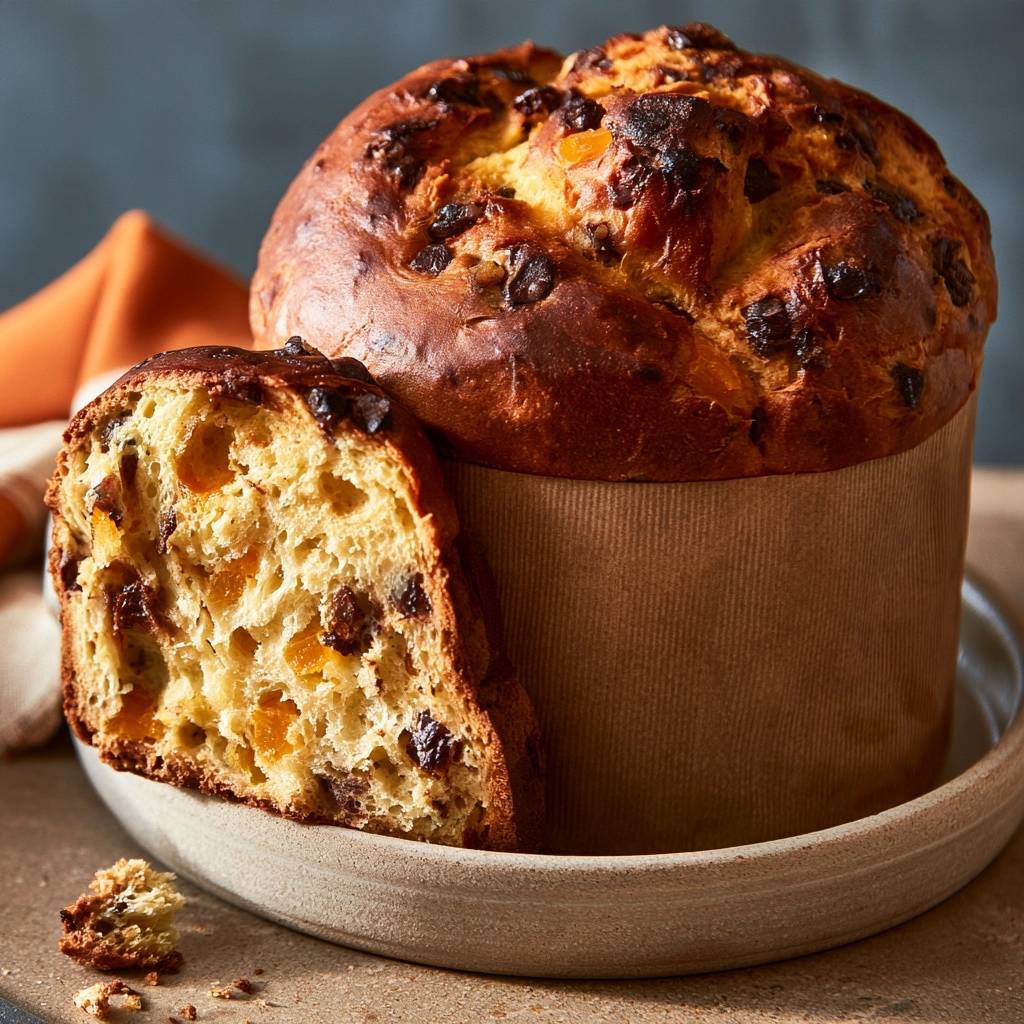
This chocolate orange panettone brings together a tender, buttery crumb, semisweet chocolate chunks, and bright candied orange peel. The enriched dough takes patience as it rises, but its paper mold and upside-down cooling help preserve the loaf’s height.
The method depends on a few useful cues: the dough should stay slightly tacky, the additions should be mixed in gently, and the loaf needs to cool while suspended. Follow the recipe card for the exact amounts and timing, and use the texture and visual signs below to guide your work.
Build an elastic dough without adding extra flour
Bread flour gives the dough structure, while sugar, eggs, yolks, milk, and butter contribute to its rich, tender character. Instant yeast helps the dough rise, and fine salt rounds out the sweetness. Warm the milk as directed on the recipe card, and use room-temperature eggs and yolks so they blend more readily into the mixture.
Start by combining the dry ingredients with the milk, eggs, yolks, orange zest, and vanilla powder. Once a shaggy dough forms, knead it before incorporating softened butter gradually. Adding butter a tablespoon at a time gives it a chance to blend into the dough. The finished dough should be smooth and elastic, but still slightly tacky. Resist the urge to correct that tackiness with extra flour; the recipe notes that too much can make the crumb dense.
Keep the chocolate and candied peel evenly distributed
Finely chopped candied orange peel provides small, concentrated bursts of citrus, while semisweet chocolate chunks bring a gentle contrast to the sweet dough. Add both once the dough has developed, and mix only until they are spread throughout. More mixing than needed can make the dough harder to handle and is not necessary for an even distribution.
The first rise is ready when the dough has doubled, so use that visual cue along with the recipe card’s timing. Shape the risen dough into a tight ball and set it seam-side down in the paper panettone mold. A close fit helps the dough rise upward. During the second rise, watch for it to reach the rim rather than relying on the clock alone.
Use the topping and skewers to support the loaf
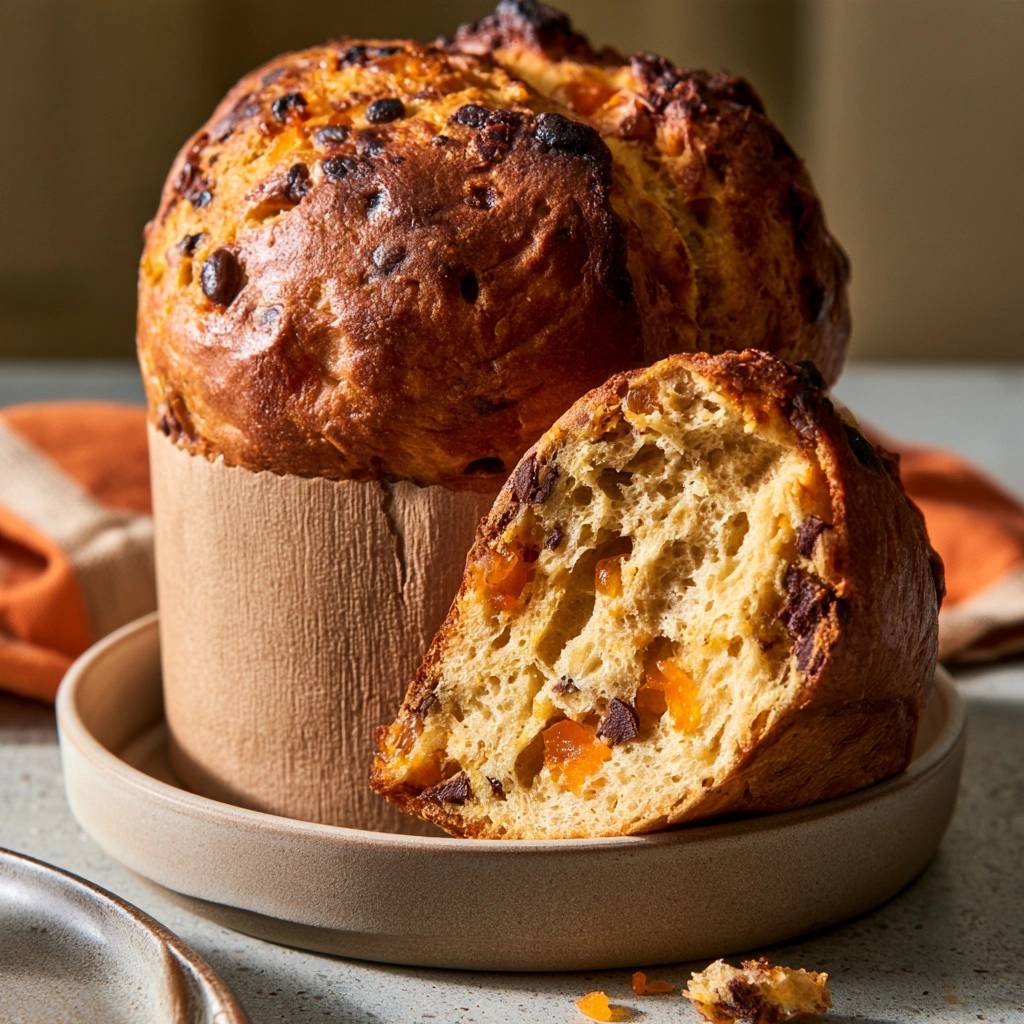
The egg and water brushed over the dough give the surface a glossy finish. Make a shallow cut across the top and place the butter in its center, taking care not to cut deeply into the dough. Bake until the loaf is deep golden and the center reaches the temperature specified on the recipe card. If the top darkens too quickly, tent it loosely with foil as directed.
Before baking, push the long metal skewers horizontally through the lower part of the paper mold. They need to pass through the loaf so their ends can rest on sturdy pots after baking. Check that the setup lets the loaf hang freely and securely. Turn the panettone upside down right away, then let it cool completely before removing the skewers. Cutting it while warm interrupts that cooling process and can compromise the tall shape.
Frequently Asked Questions
How can you tell when the dough is kneaded enough?
Look for dough that is smooth and elastic while remaining slightly tacky. It should feel cohesive rather than shaggy. Avoid adding flour just to make it feel dry or easy to handle; the recipe notes that extra flour can lead to a dense crumb.
What if the dough has not reached the rim during the second rise?
Use the dough’s position as your cue: the second rise is complete when it reaches the rim of the paper mold. Rising can take the time listed on the recipe card, but the visual cue helps you judge its progress. Keep it covered loosely while it rises.
Why does the panettone cool upside down?
The loaf is suspended from skewers while it cools so its height is supported rather than resting on its base. Set the skewer ends on sturdy pots and make sure the panettone hangs freely. Wait until it is completely cool before removing the skewers and slicing.
Recipe
Chocolate Orange Panettone with Candied Peel
This buttery, enriched panettone has a tender crumb dotted with semisweet chocolate and candied orange peel. It bakes in a paper mold and cools upside down to help the loaf keep its height.
- Course
- Dessert
- Cuisine
- Italian
- Difficulty
- Medium
- Servings
- 12 slices
- Prep time
- 35 mins
- Cook time
- 55 mins
- Total time
- 8 hr 30 mins
- Calories
- 370 kcal
Ingredients
Dough
Mix-ins
Topping
Instructions
Make the dough
In the bowl of a stand mixer fitted with a dough hook, combine the flour, sugar, instant yeast, and salt. Add the warm milk, eggs, egg yolks, orange zest, and vanilla powder. Mix on low until a shaggy dough forms, then knead for 5 minutes.
With the mixer on low, add the softened butter a tablespoon at a time. Knead on medium-low for 8–10 minutes, until the dough is smooth, elastic, and still slightly tacky. Add the candied orange peel and chocolate chunks; mix on low just until evenly distributed.
Rise and shape
Transfer the dough to a clean bowl, cover, and let rise in a warm spot until doubled, about 2 hours. Shape it into a tight ball and place it seam-side down in a 7-inch paper panettone mold set on a baking sheet. Cover loosely and let rise until the dough reaches the rim, about 2 hours.
Bake
Near the end of the rise, preheat the oven to 350°F. Beat the egg with the water and gently brush it over the dough. Cut a shallow X in the top and place the tablespoon of butter in the center. Push two long metal skewers horizontally through the lower part of the mold, about 1 inch above its base. Bake for 55 minutes, until deep golden and the center registers 190–195°F. If the top darkens too quickly, tent it loosely with foil after 35 minutes. If the center is below 190°F at 55 minutes, continue baking in 5-minute increments.
Cool
Immediately turn the loaf upside down, resting the ends of the skewers on two sturdy pots so the loaf hangs freely. Cool completely, about 3 hours, before removing the skewers and slicing.
Notes
- The dough should feel slightly tacky after kneading; adding extra flour can make the finished crumb dense.
Recipe: https://dishwhisperer.com/chocolate-orange-panettone-with-candied-peel/