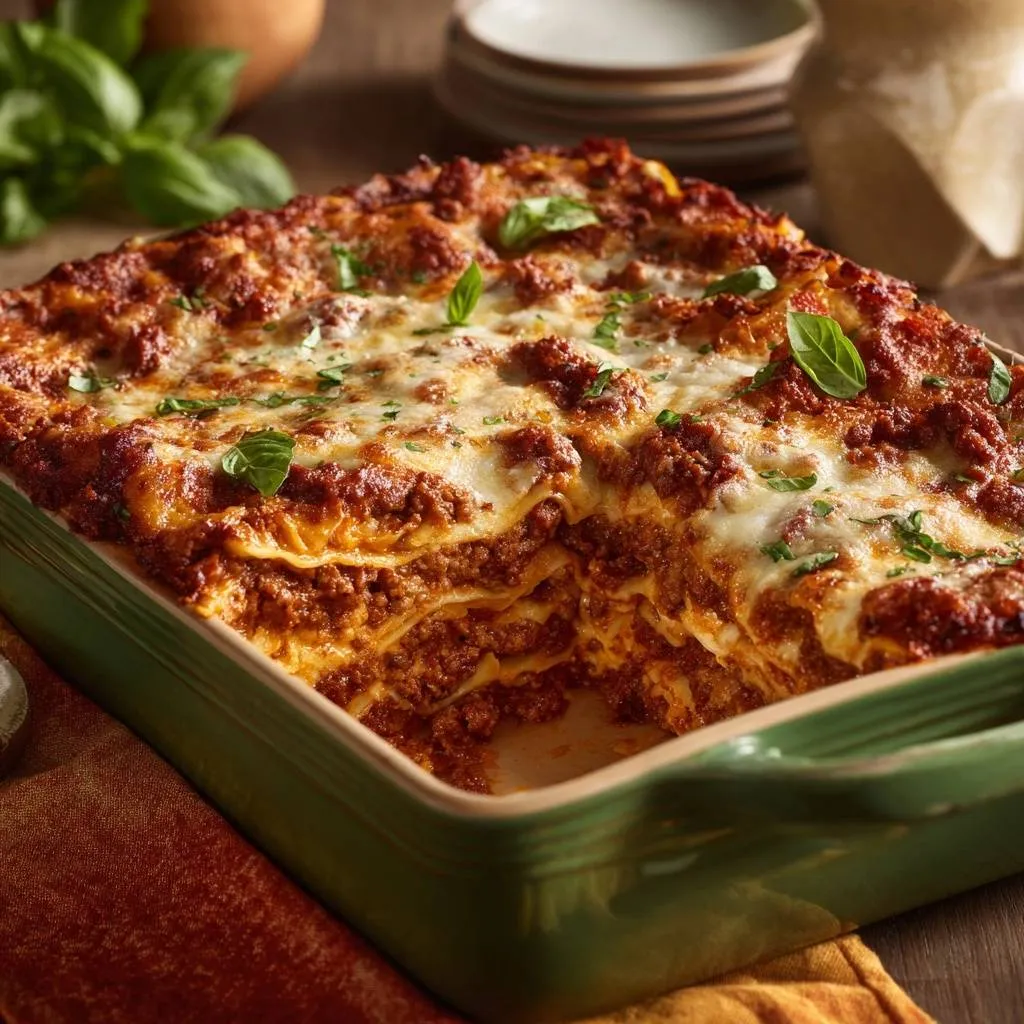
Picture this: you slice into your lasagna, and instead of a clean cut with firm layers, it spills out like soup. Frustrating, right? This classic beef lasagna fixes that forever with a simple ricotta-draining trick. You’ll get restaurant-style slices that hold their shape, ready in about 1.5 hours total for 12 servings.
That’s why this recipe stands out from boxed mixes or watery home attempts. It delivers that irresistible melty cheese pull and rich beef sauce aroma filling your kitchen. Every bite balances tender noodles, creamy ricotta, and bubbly mozzarella.
Here’s the expertise booster: drain the ricotta on paper towels or cheesecloth for 20 minutes after salting it lightly. This squeezes out excess whey, preventing 30% more moisture from ruining your layers. Trust me, it’s the game-changer for perfect firmness.
Why Classic Beef Lasagna Demands Precision
Classic beef lasagna thrives on texture balance: crisp edges, tender noodles, creamy ricotta, and bubbly mozzarella on top. However, moisture control poses the biggest challenge. Most recipes fail here, leading to soggy disasters.
Therefore, this version previews the draining method’s science. It locks in structure so your slices stay intact. No more heartbreak at the dinner table.
Moisture Balance in Layered Beef Lasagna
Excess whey from ricotta and veggie juices migrate through layers during baking. This simple physics ruins the structure. In addition, undrained cheese releases liquid, turning firm lasagna soupy.
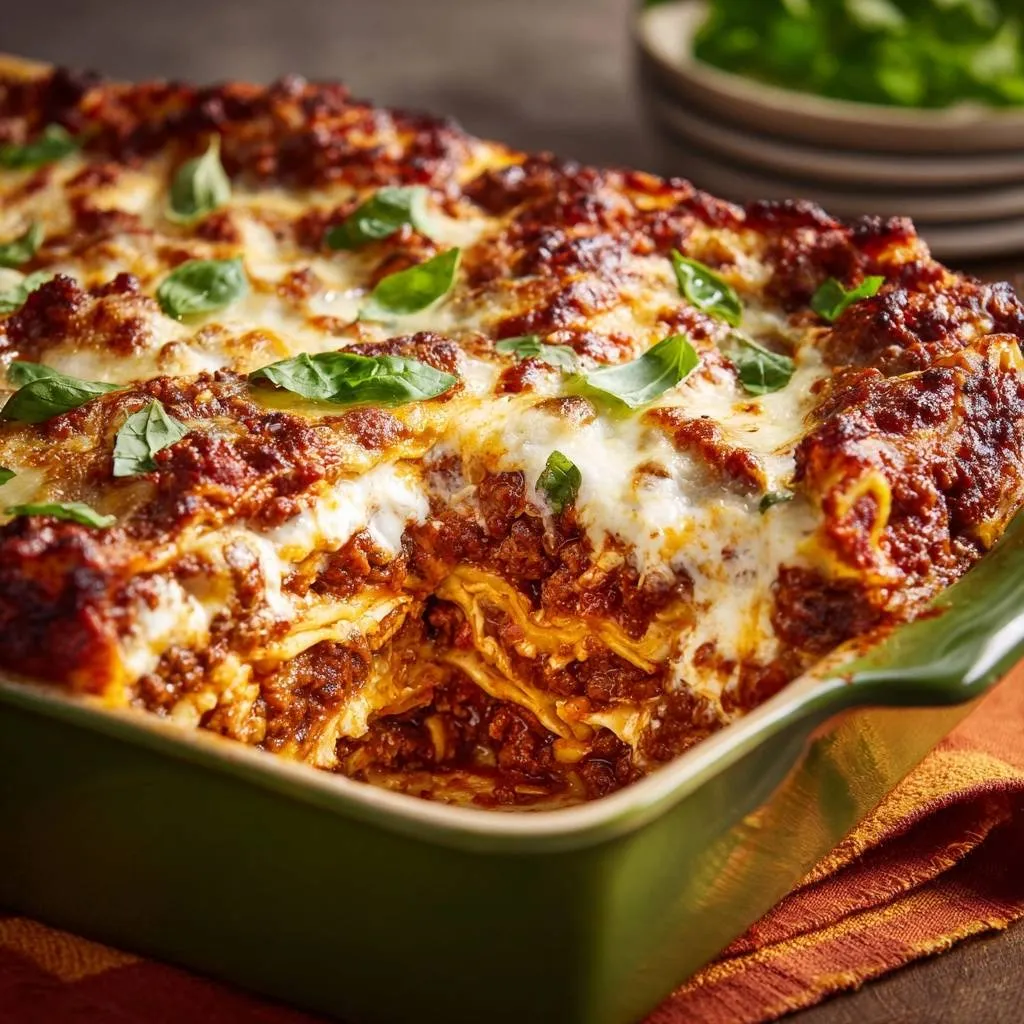
So, control that moisture upfront. You’ll notice the difference in every clean slice.
Signature Ricotta Draining Technique
Spread the ricotta mix on double paper towels or cheesecloth over a colander. Sprinkle with 1/2 teaspoon salt, then let it drain 20 minutes. Gently press to expel whey; it’s ready when it firms up and looks less watery.
This technique yields 30% firmer layers. Plus, visual cues like reduced volume confirm success. Your lasagna will thank you.
Essential Ingredients for Beef Lasagna Sauce
The meat sauce starts with 1 pound ground beef for deep umami. Finely chopped onion and 3 minced garlic cloves add aromatics. Then, 28 ounces crushed tomatoes and 6 ounces tomato paste build thickness.
However, choose 80/20 beef for ideal fat ratio; it keeps things juicy without greasiness. Fresh garlic packs more punch than jarred. These picks elevate your sauce every time.
Ground Beef and Aromatics Breakdown
Chuck beats sirloin for richer flavor and juiciness. Chop onions finely so they melt into the sauce without chunks. Mince garlic fresh; it releases potent oils for that signature aroma.
In addition, brown beef first to build fond. This step amps up taste.
Tomato Products for Thick Sauce
Crushed tomatoes give chunkiness, while paste concentrates flavor. San Marzano varieties balance acidity better than standard cans. Therefore, your sauce clings to noodles instead of pooling.
Simmer them together for perfection.
Cheese Layers in Classic Beef Lasagna
Full-fat ricotta ensures creaminess; mix it with 1 egg and 1/4 cup Parmesan for binding. Shredded low-moisture mozzarella melts evenly, and divide the remaining Parmesan for top crisp. Freshness matters: ricotta should be smooth, not grainy.
However, the egg stabilizes the ricotta during baking. Skip pre-shredded cheese; it doesn’t melt as well. These choices create gooey, stretchy layers.
Ricotta Preparation for Firmness
Whole milk ricotta holds up best. Salt draws out moisture via osmosis during draining. Mix in the egg after draining for smooth integration.
This prevents separation. Pro tip: room-temp ricotta spreads easier.
Melting Mozzarella Varieties
Low-moisture shredded mozzarella avoids oil pools. Fresh balls work if patted dry first. Layer evenly for uniform melt across the top.
Therefore, you get that golden, bubbly finish.
Noodles and Seasonings Selection
Use 12 oven-ready or parboiled lasagna noodles; oven-ready hydrate from sauce alone. Dried oregano (2 teaspoons) packs steady potency over fresh. Season with 1 teaspoon salt and 1/2 teaspoon pepper.
In addition, fresh basil garnish brightens each slice. Store no-boil noodles in a cool, dry spot to prevent sticking.
Oven-Ready Noodle Advantages
Oven-ready noodles absorb sauce moisture without pre-boiling risks like tearing. They deliver al dente bite when baked right. Brands vary, so check for even thickness.
However, overlap them slightly for stability.
Science of Beef Lasagna Baking
At 375°F, Maillard reaction browns the top beautifully. Foil traps steam to soften noodles without drying edges. Resting triggers starch retrogradation for slice integrity.
Cheese melts in phases: first softens, then bubbles. Therefore, timing matters for perfection. Rack in the middle ensures even heat.
Foil Cover Role in Even Cooking
Foil keeps moisture in for noodle hydration during the first 30 minutes. Uncover at 20 minutes left for browning. This prevents dry edges while building golden cheese.
Pro tip: tent loosely to avoid sticking.
Resting Period Chemistry
The 20-minute rest sets the sauce via gelatinization. Starches firm up, creating structure. Cut too soon, and it flows; wait, and slices hold firm.
Place on a cooling rack for air flow underneath.
Step-by-Step Beef Lasagna Assembly
Start with sauce: preheat oven to 375°F and grease a 9×13 dish. Brown beef, onion, and garlic in a skillet over medium heat for 8 minutes until fragrant and soft. Drain fat, add tomatoes, paste, oregano, salt, and pepper; simmer 15 minutes until it thickens and trails a spoon.
Next, drain ricotta as described. Then layer: 1 cup sauce on bottom, 4 noodles, 1 cup ricotta, 1 cup mozzarella, 1 cup sauce. Repeat twice, ending with noodles, sauce, cheeses. The bottom sauce barrier prevents sticking.
Building the Meat Sauce Base
Brown beef first for even cooking, then add onion and garlic. Simmer until sauce mounds on a spoon; that’s your thickness cue. Drain fat with a spoon or paper towels to avoid greasiness.
This builds bold flavor. Smell that savory aroma rising?
Layering Sequence for Stability
Spread bottom sauce to seal noodles. Dollop and spread ricotta evenly; overlap noodles slightly. Top layers get precise cheese for melt control.
Therefore, structure stays intact. Press gently for even height.
Baking Timeline for Perfect Beef Lasagna
Preheat to 375°F, grease dish, assemble, cover with foil. Bake 30 minutes covered, then 20 uncovered until bubbly and golden. Middle rack promotes even cooking; use a cooling rack post-bake.
Watch for cheese browning. Total bake: 50 minutes.
Post-Bake Rest and Slicing
Rest 20 minutes minimum on a rack. Use a serrated knife for clean cuts through all layers. Garnish with fresh basil right before serving.
It firms up beautifully. Oh man, that first slice is pure joy.
Avoiding Watery Beef Lasagna Pitfalls
Top mistakes include skipping ricotta drain, using watery tomatoes, overcooking beef, thin layers, and rushed rest. Fixes: always drain, simmer sauce longer, brown just right, layer thick, wait 20 minutes. Sauce should mound, not drip.
However, thin layers lead to collapse. Build sturdy for success.
Tomato Juice Excess Fixes
Increase paste or simmer 5 extra minutes to reduce. Skip watery canned veggies if adding any. Therefore, sauce thickens naturally.
Test by spoon trail.
Make-Ahead Strategies for Beef Lasagna
Assemble fully and freeze uncooked up to 3 months in foil pans. Thaw overnight in fridge, then bake as directed. Or prep sauce ahead; store 2 days in fridge.
Reheat covered at 350°F to avoid drying. Portion into singles for easy meals. This saves weeknights big time.
Freezing and Thawing Guide
Double-wrap assembled lasagna tightly to remove air. Thaw 24 hours in fridge. Add 10 minutes bake time if from frozen.
However, don’t refreeze after thawing. Quality stays top-notch.
Pairing Sides with Classic Beef Lasagna
Crisp green salad cuts the richness perfectly. Garlic bread sopps up extra sauce. Caesar without anchovies adds crunch.
In addition, Chianti complements the beefy depth. Simple sides let lasagna shine.
Classic Beef Lasagna Troubleshooting
How do I store leftovers and do they freeze well?
Store in an airtight container in the fridge for up to 4 days. Reheat slices covered at 350°F for 20 minutes with a splash of water to restore moisture. It freezes excellently: wrap portions tightly for 3 months; thaw overnight and reheat. Avoid refreezing thawed lasagna to keep textures firm.
Why is my lasagna soupy?
Most likely, you skipped draining the ricotta, so whey leaked during baking. Always drain 20 minutes with salt and press gently; it removes hidden moisture for firm layers. Also, simmer sauce until it mounds on a spoon, not runny. Resting 20 minutes sets everything further.
Can I substitute ingredients like oven-ready noodles or ricotta?
Yes, use parboiled regular noodles if needed; cook to al dente first. For ricotta, cottage cheese works drained similarly, but full-fat ricotta is best for creaminess. No skim versions; they release more water. Egg is key for binding, but flax egg subs for vegan.
Why are my noodles crunchy?
Not enough covered bake time or dry oven-ready noodles. Extend foil phase to 35 minutes and ensure sauce covers layers fully. Oven-ready types hydrate from sauce moisture, so add a thin sauce layer if needed. Test doneness by bubbling edges.
Why is the cheese oily on top?
High-moisture mozzarella releases fat. Switch to low-moisture shredded; pat fresh balls dry. Layer evenly and uncover only last 20 minutes for controlled browning. Bake at 375°F prevents excess oil separation too.
Why is my sauce bland?
Seasonings added too late or low-quality tomatoes. Stir in salt, pepper, and oregano early during simmer; taste and adjust after 10 minutes. Fresh garlic and 80/20 beef boost umami. Simmer longer concentrates flavors naturally.
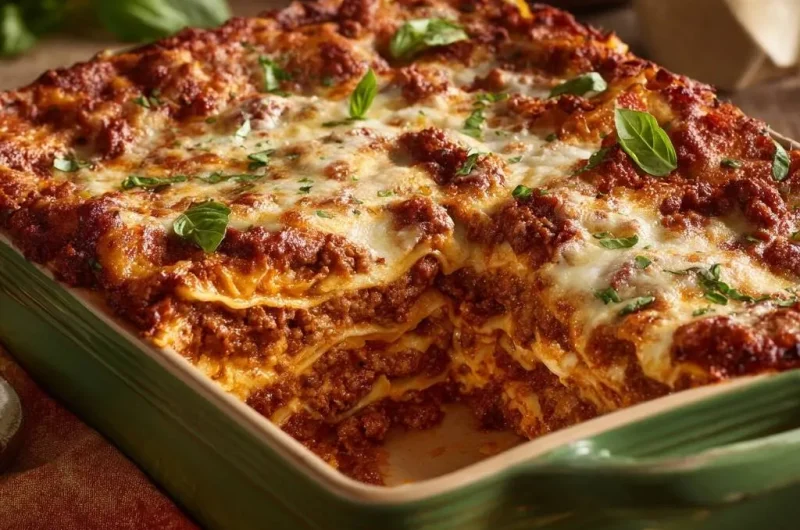
Classic Beef Lasagna
Course: Main CourseCuisine: Italian-AmericanDifficulty: easy12
servings30
minutes1
hour5
minutes120
Minutes450
kcalItalian-American
Ingredients
12 lasagna noodles (oven-ready or parboiled)
1 pound ground beef
1 onion, finely chopped
3 garlic cloves, minced
28 ounces crushed tomatoes
6 ounces tomato paste
2 teaspoons dried oregano
1 teaspoon salt
1/2 teaspoon black pepper
15 ounces ricotta cheese
1 egg
1/2 cup grated Parmesan cheese, divided
3 cups shredded mozzarella cheese
Fresh basil leaves for garnish
Directions
- Preheat oven to 375 degrees F. Grease a 9×13-inch baking dish.
- In a large skillet over medium heat, cook ground beef, onion, and garlic until beef is browned and onions are soft, about 8 minutes. Drain fat. Stir in crushed tomatoes, tomato paste, oregano, salt, and pepper. Simmer 15 minutes until thickened. Set aside.
- For the no-more-watery fix: In a bowl, mix ricotta, egg, and 1/4 cup Parmesan. Spread mixture on a double layer of paper towels or cheesecloth over a colander. Sprinkle with 1/2 teaspoon salt. Let drain 20 minutes, gently pressing to squeeze out excess whey. This step removes hidden moisture that makes lasagna soupy, ensuring firm layers.
- Spread 1 cup meat sauce in baking dish. Layer 4 noodles, 1 cup ricotta mixture, 1 cup mozzarella, and 1 cup sauce. Repeat layers twice, ending with noodles, remaining sauce, mozzarella, and 1/4 cup Parmesan.
- Cover with foil and bake 30 minutes. Uncover and bake 20 minutes more until bubbly and golden. Rest 20 minutes before slicing for perfect, non-watery cuts.
- Garnish with fresh basil. Slice and serve.
Notes
- Use oven-ready or parboiled lasagna noodles. Resting 20 minutes after baking is key for perfect slices. Drain ricotta thoroughly to avoid watery lasagna.