
Ever sliced into lasagna only to watch it slump into a watery puddle? You’re not alone. Most home cooks battle soggy layers from undrained ricotta and thin sauces. This classic beef lasagna fixes that with a ricotta-draining trick and sauce reduction that delivers firm, clean cuts every time.
Therefore, you get restaurant-worthy slices that hold their shape. No more frustration at the dinner table. In addition, these techniques balance moisture perfectly for gooey centers and sturdy edges.
The secret lies in simmering the sauce uncovered until it thickens by 25 percent. That step evaporates excess liquid upfront. Meanwhile, draining the ricotta squeezes out whey for a dry filling that won’t weep.
Why Classic Beef Lasagna Demands Precision Layers
Classic beef lasagna brings hearty comfort with layers of rich meat sauce, creamy cheeses, and tender pasta. However, without precision, it turns soupy. The core challenge is moisture from tomatoes, beef juices, and ricotta.
This beef lasagna recipe tackles that head-on. First, reduce the sauce to concentrate flavors. Then, drain the ricotta thoroughly. You end up with a beef lasagna that slices beautifully.
Picture firm edges that crisp slightly, a bubbling cheese top, and no pooling liquid. That’s the magic of balance. Restaurants nail this; now you can too.
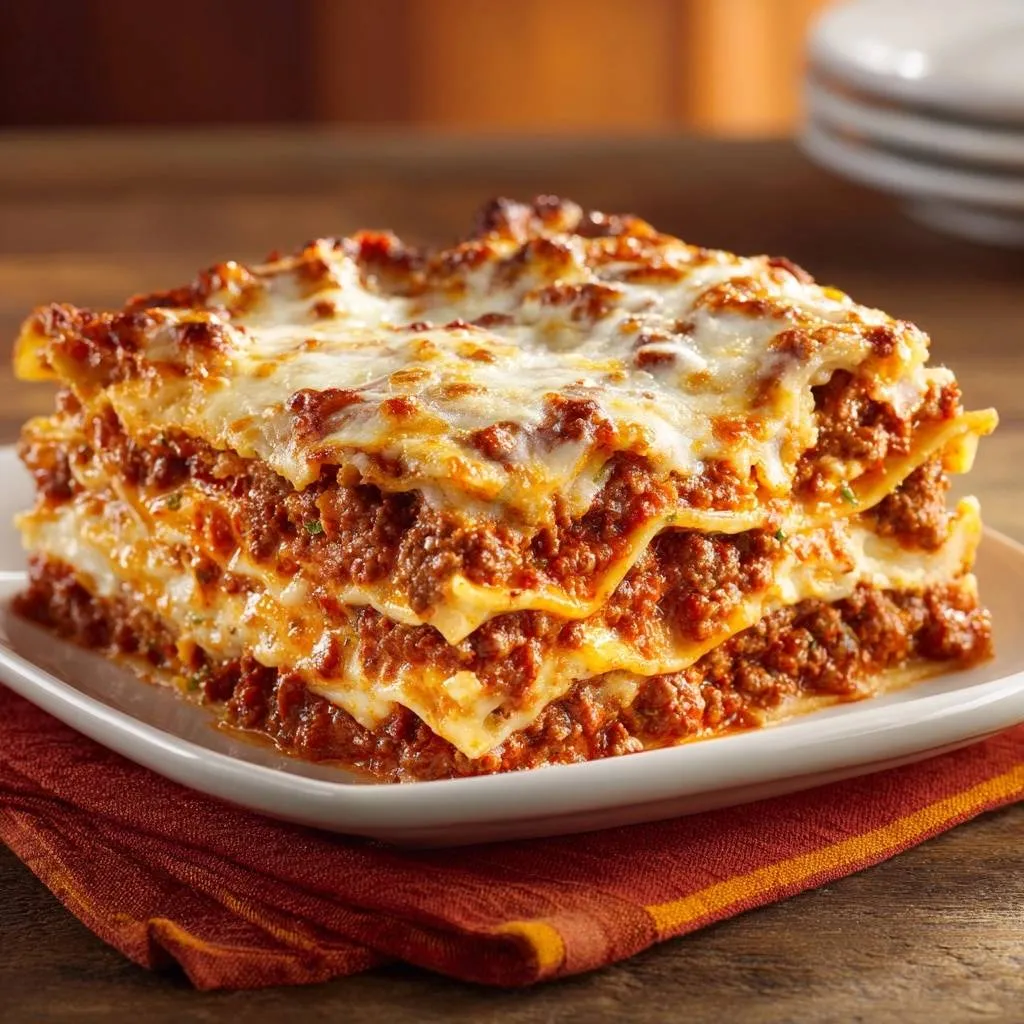
Signature Texture That Holds Every Slice
Ideal classic beef lasagna boasts gooey centers with stretchy mozzarella pulls. Firm edges hold the structure. No liquid pools on the plate.
During baking, steam builds under foil, cooking noodles evenly. Uncovering lets evaporation brown the top via Maillard reaction. Therefore, you get that golden crust over creamy layers.
Meat Sauce Mastery for Classic Beef Lasagna
Start with 2 pounds ground beef for hearty beef lasagna sauce. Brown it deeply for Maillard flavors that build umami. Crushed tomatoes provide pectin for natural thickening; 48 ounces simmer down perfectly.
Garlic, oregano, and basil release aroma compounds when added post-browning. Simmer uncovered 25 minutes, and you’ll see it reduce by about 25 percent, or 2 cups of liquid gone. That’s your beef lasagna sauce secret.
Salt and pepper go in early to season evenly. Fresh herbs wilt faster, so dried hold up better here. Taste as it simmers; the acidity mellows into savory depth.
Browning Ground Beef Without Excess Fat
Heat olive oil over medium-high. Add beef and break it up constantly for even searing. Look for deep brown bits, not just gray; that takes 8 minutes.
Drain fat thoroughly. Excess grease seeps into layers later. Therefore, your slices stay firm.
Tomato Reduction’s Role in Firmness
Uncovered simmering maximizes surface area for evaporation. Stir every 5 minutes to prevent sticking. Volume drops from 48 ounces to about 36; that’s key for non-watery lasagna.
Herbs balance tomato acidity over time. First sharp, then rounded after 25 minutes. Pro tip: if too thick, add a splash of water, but rarely needed.
Ricotta Draining Technique for Dry Filling
Ricotta holds 80 percent water as whey, causing soupiness in classic beef lasagna filling. Line a colander with cheesecloth, add 2 cups ricotta, and drain 20 minutes in the fridge. Press gently to expel more.
Mix with 2 eggs for binding power and half the Parmesan for umami punch. Eggs emulsify at room temp, creating structure. Undrained ricotta weeps; this stays firm.
Yield drops to 1.5 cups, but that’s perfect. Therefore, layers stack without sliding.
Cheesecloth Setup and Pressing Method
Dampen cheesecloth, line colander over a bowl. Fold edges over ricotta. Refrigerate; gravity pulls whey out first, then press with a spoon.
Avoid hard squeezes that break curds. You get smooth, dry filling ready to spread.
Mixing Eggs and Parmesan Seamlessly
Bring eggs to room temp for even blending. Stir ricotta gently; overmixing toughens it. Parmesan melts in later for creamy results.
Layering Secrets for Sturdy Beef Lasagna
Grease a 9×13 dish lightly. Spread 1 cup sauce first to anchor noodles. Layer 4 no-boil noodles with slight overlap for a tight seal.
Add 1 cup ricotta mix, 1 cup mozzarella, then 1 cup sauce. Repeat 3 times, ending with sauce and remaining cheeses. That builds sturdy beef lasagna.
Top generously for a golden crust. Noodles hydrate from sauce moisture alone if reduced properly.
No-Boil Noodles vs. Parboiled Choice
No-boil noodles absorb oven steam perfectly here. Parboiling risks mush if overdone. Therefore, stick to no-boil for foolproof results.
They expand just right in reduced sauce. Brands vary slightly, but all work with this method.
Baking Timeline for Golden Beef Lasagna
Preheat to 375°F for even cooking without drying edges. Cover tightly with foil for 30 minutes; steam tenderizes noodles. Uncover for 20 minutes to bubble and brown.
Rest 30 minutes post-bake. Meats set, starches absorb juices. Internal temp hits 165°F safely.
Pro tip: tent foil loosely if top browns too fast. Patience yields perfect slices.
Foil Seal and Steam Management
Crimp foil edges tightly around dish. No vents; trap all steam for noodle hydration. Loose seals let moisture escape early.
Science of Moisture Control in Lasagna
Tomato water, beef juices, ricotta whey, and noodle starch all release liquid. Sauce reduction evaporates 25 percent upfront via thermodynamics. Draining uses osmosis to pull whey.
Baking steam gelatinizes starch, then resting triggers syneresis, where excess water binds. This creates non-watery classic beef lasagna. Skip steps, and moisture pools.
Visualize moisture dropping from 70 percent to 50 percent over process. Firmness follows.
Evaporation Rates During Simmer
Large pot, lid off, medium heat: lose 12 ounces in 25 minutes. Stirring boosts rate. Smaller pots slow it; adjust time up.
History of Classic Beef Lasagna Origins
Lasagne started in 14th-century Italy, layered pasta from Emilia-Romagna. American beef version boomed post-WWII with immigrants adapting Bolognese.
Crushed tomatoes sped it up from slow ragu. Beef replaced pork for US tastes. By 1950s, it became casserole king.
Now a family staple, evoking Sunday dinners. This recipe honors those roots with modern fixes.
Make-Ahead and Freezing Beef Lasagna Guide
Assemble fully, cover airtight, fridge up to 2 days. Or freeze 3 months wrapped tightly. Thaw overnight, bake adding 10 minutes.
Portion before freezing for easy reheats. Bake from partial chill works too. Label with date for make-ahead beef lasagna success.
Reheat covered at 350°F to prevent drying. Steam keeps it moist inside.
Freezer Packaging Without Ice Crystals
Layer foil twice, then zip bag, squeeze air out. Fridge thaw beats cold water for even results. No crystals means fresh texture.
Avoiding Pitfalls in Beef Lasagna Builds
Top error: skipping ricotta drain, leading to soupiness. Simmer sauce fully or it runs. No rest means collapsing slices.
Overcook top without foil adjustment; dries out. Wrong temp unevenly cooks. Test doneness with clean knife insert.
Fix: follow timelines exactly. Therefore, every build succeeds.
Perfect Pairings for Classic Beef Lasagna
Crisp arugula salad with balsamic cuts richness. Garlic bread adds crunch without grease. Roasted zucchini brings earthiness.
Serves 8-10 generously. Sparkling cranberry juice refreshes alongside. Tiramisu contrasts sweetly for dessert.
Troubleshooting Classic Beef Lasagna Issues
How do I store leftovers and can it freeze?
Store in airtight container in fridge up to 4 days. Reheat slices covered at 350°F with a splash of water to steam. Freezes excellently up to 3 months; wrap portions tightly in foil and bag. Thaw overnight in fridge, bake as directed adding 10-15 minutes. Avoid refreezing after thaw to keep texture firm.
Why is my lasagna watery?
Usually undrained ricotta or under-reduced sauce. Always drain ricotta 20 minutes and simmer sauce until thickened by 25 percent. Resting 30 minutes lets juices set too. If still soupy, next time press ricotta harder and uncover simmer longer.
Can I substitute ingredients in classic beef lasagna?
Swap ground turkey for beef; it browns similarly but drain fat well. No ricotta? Use small-curd cottage cheese, drained same way. Gluten-free noodles work if no-boil style; ensure sauce covers fully. No Parmesan? Extra mozzarella adds sharpness.
Why are my noodles still crunchy?
Sauce wasn’t moist enough or foil seal leaked steam. Use reduced-but-still-sauced layers and crimp foil tight. Next time, press noodles down gently into sauce before baking. Parboil 2 minutes as backup if needed.
How do I prevent greasy layers?
Drain beef fat completely after browning. Tilt pan and spoon it out. Reduced sauce concentrates flavors without oiliness. If beef is lean, add a teaspoon olive oil for browning.
Why didn’t the cheese brown on top?
Oven too low or foil on too long. Uncover at 30 minutes exactly at 375°F. Broil 2 minutes last if needed for golden top. Watch closely to avoid burning.
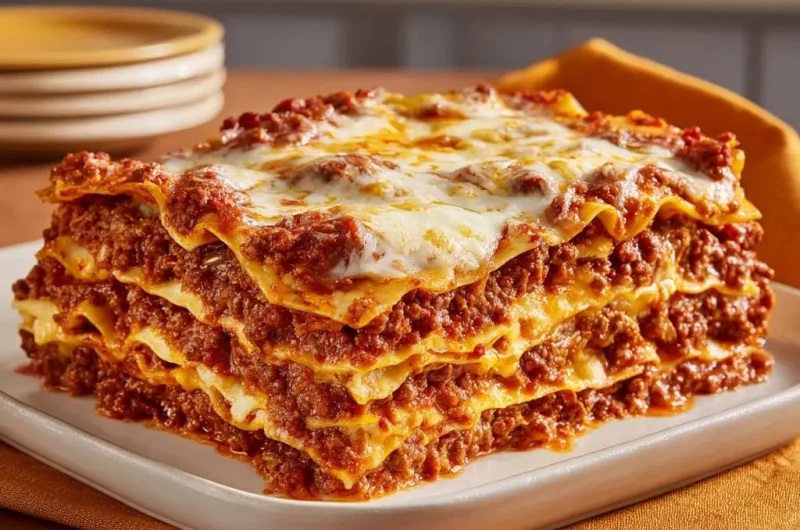
Classic Beef Lasagna
Course: Main CourseCuisine: Italian-AmericanDifficulty: easy12
servings30
minutes1
hour120
Minutes450
kcalItalian-American
Ingredients
1 pound lasagna noodles (no-boil or parboiled)
2 pounds ground beef
48 ounces crushed tomatoes
2 cups ricotta cheese
4 cups shredded mozzarella cheese
1 cup grated Parmesan cheese
2 eggs
2 tablespoons olive oil
3 garlic cloves, minced
2 teaspoons dried oregano
2 teaspoons dried basil
Salt and pepper to taste
Directions
- Preheat oven to 375 degrees F. For the sauce, heat olive oil in a large pot over medium heat. Add ground beef and cook until browned, breaking it up, about 8 minutes. Drain fat. Add garlic, oregano, basil, salt, and pepper; cook 2 minutes. Stir in crushed tomatoes. Simmer uncovered 25 minutes, stirring occasionally, until thickened and reduced by about 25 percent. This key reduction step removes excess liquid for non-watery layers.
- For the ricotta filling, place ricotta in a cheesecloth-lined colander over a bowl. Let drain 20 minutes in fridge, pressing gently to squeeze out whey. This draining hack eliminates moisture that makes lasagna soupy. Mix drained ricotta with eggs and half the Parmesan until smooth.
- Spread 1 cup meat sauce in a 9×13-inch baking dish. Layer 4 noodles, 1 cup ricotta mixture, 1 cup mozzarella, and 1 cup sauce. Repeat layers 3 times, ending with sauce and remaining mozzarella and Parmesan on top.
- Cover tightly with foil and bake 30 minutes. Uncover and bake 20 more minutes until bubbly and golden. Let rest 30 minutes before slicing. This rest firms up the structure for perfect, non-watery cuts. Slice and serve.
Notes
- Key tips: Reduce sauce by 25% to remove excess liquid; drain ricotta for 20 minutes to eliminate whey; rest lasagna 30 minutes before slicing for firm structure.