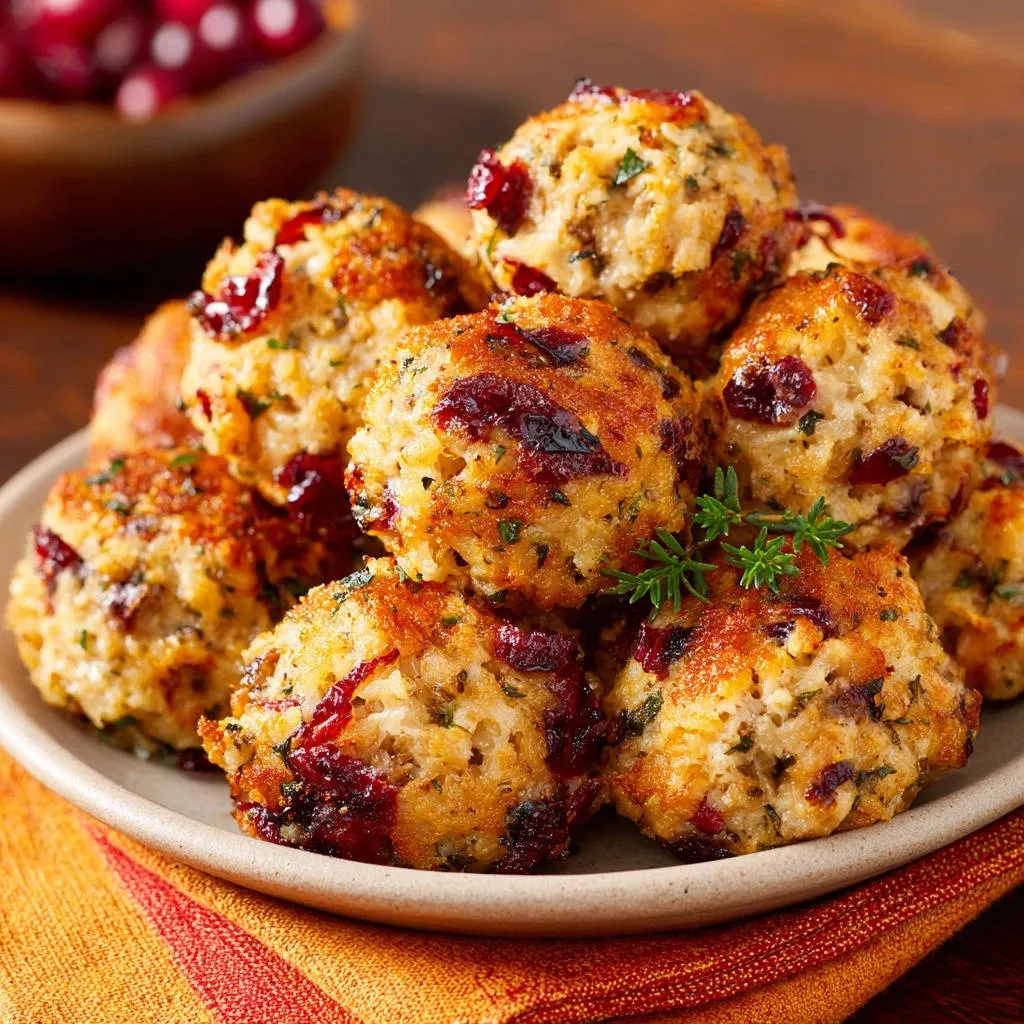
For years, I struggled with dry, crumbly stuffing, a disappointing end to what should be a comforting side. But I’ve finally perfected the art of the Cranberry Herb Stuffing Balls, guaranteeing a dish that’s beautifully golden on the outside and wonderfully tender within. This recipe will transform your holiday table or any meal, delivering moist, flavorful perfection every single time.
Why These Cranberry Herb Stuffing Balls Belong in Your Recipe Repertoire
The Foolproof Secret to Never-Dry Stuffing
The magic of these Cranberry Herb Stuffing Balls lies in a careful balance of moisture and a smart baking technique. We ensure the bread mixture is perfectly damp, allowing it to fully absorb all the rich flavors.
Crucially, baking with foil initially traps steam, keeping the interior unbelievably tender before a final uncovered bake for that irresistible crisp exterior.
Golden Exterior, Tender Interior: A Textural Delight
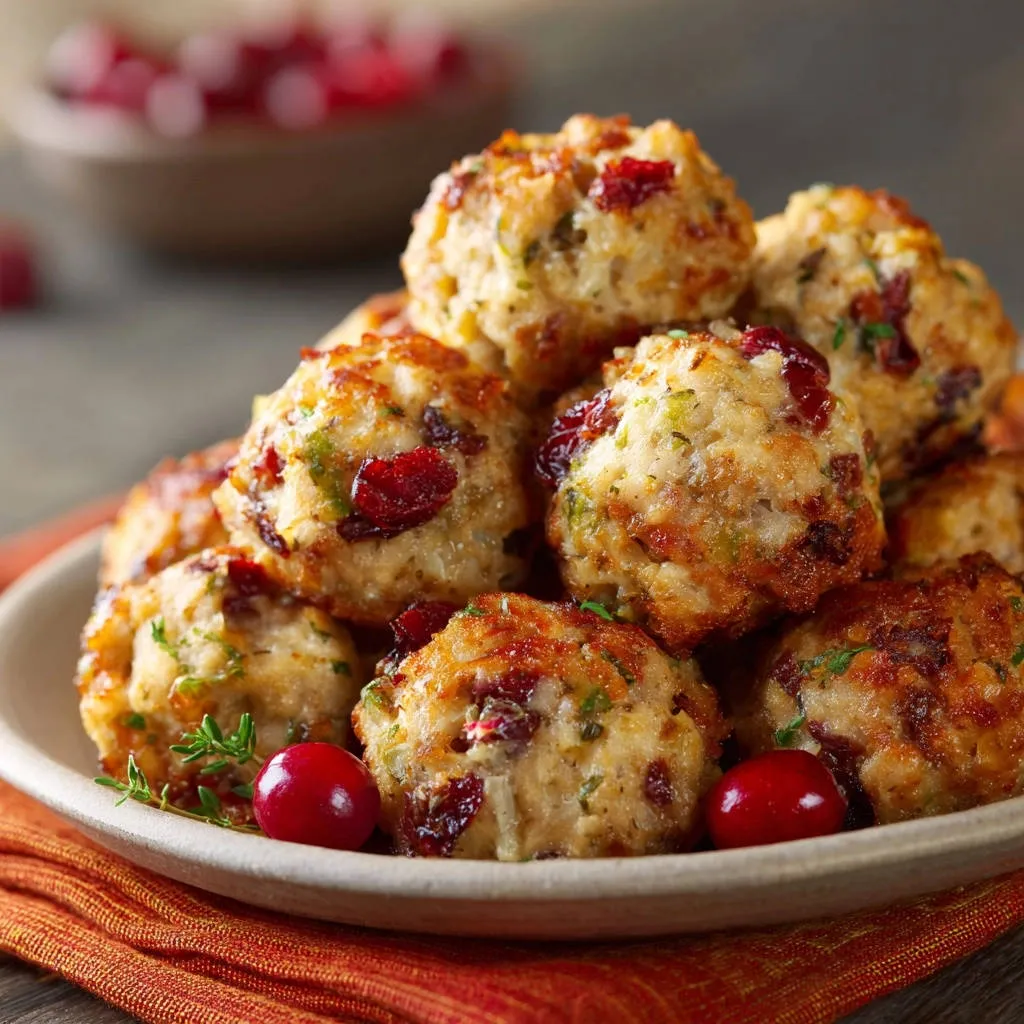
Each stuffing ball offers a delightful textural contrast. You get a delicate crunch from the golden-brown crust, immediately followed by the soft, aromatic, herb-infused interior.
This perfect combination elevates classic stuffing into an elegant, satisfying bite.
Effortless Elegance for Any Holiday or Dinner Plate
Individual stuffing balls are inherently more elegant and easier to serve than a traditional casserole. They cook evenly, present beautifully, and ensure everyone gets a perfect portion.
Ideal for holiday feasts or as a sophisticated accompaniment to a weeknight roast, they make entertaining a breeze.
The Building Blocks of Flavor: Inside Your Cranberry Herb Stuffing Balls
The Essential Bread Base: Stale is Key!
The foundation of great stuffing is stale bread. This allows the bread to soak up the flavorful liquids without becoming soggy or mushy.
Using hearty bread like sourdough or even day-old white bread, cut into uniform cubes, provides the best texture and absorption.
Aromatic Foundation: Onion, Celery, and Fresh Herbs
Finely chopped yellow onion and celery, gently sautéed in butter, create a sweet, savory base. They become translucent and fragrant, infusing the entire dish with their classic comforting aroma.
Fresh parsley and thyme provide vibrant, earthy notes that are essential to the stuffing’s classic flavor profile, offering a bright counterpoint to the richness.
Sweet-Tart Pop: Dried Cranberries
Dried cranberries are the secret weapon for a burst of balanced flavor. Their tartness cuts through the savory elements, while their natural sweetness complements the herbs and broth.
They also add a lovely chewiness and beautiful color to each Cranberry Herb Stuffing Ball.
The Binding and Moistening Agents: Egg and Broth
A lightly beaten egg acts as a binder, helping the stuffing balls hold their shape during baking. It contributes to the overall tender texture as well.
Warm vegetable or chicken broth is paramount for moisture and flavor. It hydrates the stale bread, ensuring a consistently moist and savory stuffing, providing a depth of flavor perfect for any meal like a hearty homemade chicken soup.
Crafting Perfect Cranberry Herb Stuffing Balls: A Detailed Guide
- Prepare Your Workspace and Ingredients:
Start by preheating your oven to 375°F (190°C) and gathering all your ingredients. Ensure your stale bread is cut into 1/2-inch cubes and your fresh herbs are finely chopped.
- Combine Dry Elements:
In a large mixing bowl, gently combine the bread cubes, dried cranberries, chopped parsley, chopped thyme, salt, black pepper, and poultry seasoning.
Mixing these dry ingredients first ensures an even distribution of flavors throughout the entire mixture.
- Sauté the Aromatics:
Melt the unsalted butter in a large skillet over medium heat. Add the finely chopped yellow onion and celery, cooking them until they are soft and translucent, which usually takes about 5 to 7 minutes.
Pour this aromatic, buttery onion and celery mixture evenly over the bread mixture in your bowl, tossing gently to coat.
- Achieve the Perfect Moisture Balance:
Now, add the lightly beaten egg to the bowl. Gradually pour in the warm broth, mixing gently with your hands or a large spoon until all the bread cubes are evenly moistened.
This is the critical step for perfectly moist stuffing: the mixture should be damp but not soaking wet, and it should hold its shape when gently squeezed in your hand.
- Form Your Stuffing Balls:
Take portions of the mixture and gently form them into uniform 1 1/2-inch balls. Arrange these balls in a single layer on a lightly greased or parchment-lined baking sheet, leaving a little space between each.
- The Foil Secret: Locking in Tenderness:
To ensure wonderfully moist, never-dry stuffing balls, loosely cover the baking sheet with aluminum foil. Bake for 20 minutes with the foil on, which effectively traps steam and keeps the centers incredibly tender.
- Golden Finish and Serving:
Carefully remove the aluminum foil and continue baking for an additional 15 to 20 minutes, or until the stuffing balls are beautifully golden brown and slightly crispy on the outside.
Serve your perfectly moist Cranberry Herb Stuffing Balls warm and prepare for rave reviews!
Expert Tips for Cranberry Herb Stuffing Ball Success
Choosing the Best Bread for Superior Texture
For the best Cranberry Herb Stuffing Balls, opt for a sturdy, rustic bread like sourdough, challah, or even a good quality white sandwich bread. The key is that it must be stale; fresh bread will become gummy.
If you only have fresh bread, spread the cubes on a baking sheet and toast them in a 250°F (120°C) oven for 15-20 minutes until dried out but not browned.
Customizing Your Herb Blend for Unique Flavors
While parsley and thyme are classic, feel free to experiment with your favorite herbs. Sage provides a deeper, more traditional holiday flavor, while a touch of rosemary can add an aromatic, piney note.
Just remember that fresh herbs are potent, so adjust quantities to your taste preference.
Preventing Common Stuffing Pitfalls: Troubleshooting Guide
If your stuffing balls are too dry: The most common culprit is insufficient broth. Next time, ensure the mixture feels distinctly damp and holds its shape firmly before baking, adding a little more broth if needed.
If they fall apart: You might not have added enough egg or your bread cubes were too large. Ensure the egg is thoroughly mixed in, as it acts as a binder, and aim for consistent 1/2-inch cubes.
If they’re too soggy: This often means too much broth was added. The mixture should be damp, not dripping. Ensure you’re gradually adding the broth and checking the consistency as you go.
Make-Ahead Magic: Prep Your Cranberry Herb Stuffing Balls in Advance
You can prepare the stuffing mixture (up to step 5, before forming balls) a day ahead. Store it covered in the refrigerator.
Alternatively, form the balls and arrange them on the baking sheet, then cover and refrigerate until ready to bake. This makes holiday meal prep significantly easier.
Common Questions About Cranberry Herb Stuffing Balls
Can I Use Fresh Bread Instead of Stale?
While stale bread is highly recommended for optimal absorption and texture, you can use fresh bread if lightly toasted. Spread fresh bread cubes on a baking sheet and bake at 250°F (120°C) for 15-20 minutes until dried out but not browned.
This process mimics the properties of stale bread, preventing a gummy result.
Are These Stuffing Balls Freezer-Friendly?
Absolutely! Fully baked Cranberry Herb Stuffing Balls freeze beautifully. Allow them to cool completely, then freeze them in a single layer on a baking sheet before transferring to an airtight, freezer-safe container or bag for up to 3 months.
To reheat, bake from frozen at 350°F (175°C) until warmed through and crisp, about 20-30 minutes.
What Are Some Good Substitutions for Dried Cranberries?
If dried cranberries aren’t your preference, consider dried cherries or golden raisins for a similar sweet-tart note. For a savory alternative, try toasted pecans or walnuts for added crunch and richness.
Can I Make a Gluten-Free Version?
Yes, you can easily adapt this recipe to be gluten-free! Simply substitute the regular bread with your favorite gluten-free bread, ensuring it’s stale or lightly toasted as directed.
The rest of the ingredients and steps remain the same, providing a delicious gluten-free option for everyone to enjoy.
Serving Suggestions and Storage for Your Delicious Creation
Beyond the Holiday Feast: Versatile Pairings
While a staple for Thanksgiving and Christmas, these Cranberry Herb Stuffing Balls are incredibly versatile. They pair wonderfully with a bright lemon herb roast chicken, tender pork loin, or even a simple weeknight meatloaf.
They also make an excellent accompaniment to a comforting roasted butternut squash, creating a balanced and satisfying meal any time of year.
Keeping Them Fresh: Proper Storage Guidelines
Store any leftover Cranberry Herb Stuffing Balls in an airtight container in the refrigerator for up to 3-4 days. They reheat beautifully in the oven or air fryer, maintaining their golden crispness.
Ready to Impress? Share Your Cranberry Herb Stuffing Balls Masterpiece!
With this foolproof recipe, dry stuffing will be a distant memory. You’re now equipped to create Cranberry Herb Stuffing Balls that are consistently moist, perfectly flavored, and beautifully presented. Give this recipe a try, and watch as it becomes a cherished favorite in your home.
I can’t wait to hear how much you and your loved ones enjoy this golden, moist perfection!

Cranberry Herb Stuffing Balls
Course: Side DishCuisine: American CuisineDifficulty: easy6
servings25
minutes40
minutes60
minutesAmerican Cuisine
Ingredients
6 cups stale bread, cut into 1/2-inch cubes (about 8 to 10 slices)
1/2 cup unsalted butter, melted
1 cup finely chopped yellow onion
1/2 cup finely chopped celery
1/2 cup dried cranberries
1/4 cup fresh parsley, chopped
1 tablespoon fresh thyme leaves, chopped
1 large egg, lightly beaten
1 1/2 cups warm vegetable or chicken broth
1 teaspoon salt
1/2 teaspoon black pepper
1/2 teaspoon poultry seasoning
Directions
- Preheat your oven to 375°F (190°C).
- In a large mixing bowl, combine the bread cubes, dried cranberries, chopped parsley, chopped thyme, salt, black pepper, and poultry seasoning (if using).
- In a large skillet over medium heat, melt the butter. Add the chopped onion and celery and cook until softened, about 5 to 7 minutes. Pour the melted butter, onion, and celery mixture over the bread mixture in the bowl.
- Add the lightly beaten egg to the bowl. Gradually pour in the warm broth, mixing gently with your hands or a large spoon until all the bread cubes are evenly moistened. The mixture should be damp but not soaking wet, and it should hold its shape when gently squeezed. This is the crucial step for ensuring your stuffing never turns out dry!
- Gently form the mixture into 1 1/2-inch balls. Arrange them in a single layer on a lightly greased baking sheet or a parchment-lined baking sheet.
- To ensure wonderfully moist, never-dry stuffing balls: Cover the baking sheet loosely with aluminum foil. Bake for 20 minutes with the foil on. This traps steam and keeps the centers tender.
- Remove the foil and continue baking for an additional 15 to 20 minutes, or until the stuffing balls are golden brown and slightly crispy on the outside.
- Serve warm and enjoy your perfectly moist stuffing balls!
Notes
- Covering with foil during the first part of baking is key to moist, tender stuffing balls.