
Forget every soggy, gray, or bitter sprout you have ever been forced to eat at a holiday dinner. Most people struggle with this vegetable because they boil or over-steam them, which releases unpleasant sulfur compounds and creates a mushy mess. This recipe changes the game by focusing on a high-heat sear that transforms the natural sugars into a nutty, caramelized crust.
The magic happens when you combine that crispy exterior with a velvety garlic cream sauce and salty bits of beef bacon. You get a beautiful contrast between the crunch of the seared edges and the tender, buttery core of the sprout. It is a sophisticated side dish that actually makes people reach for seconds because it balances rich fats with the bright, earthy notes of the greens.
The secret to this success is the Maillard reaction, which is just a fancy way of saying we are browning the flat side of the sprout to neutralize bitterness. By searing them undisturbed in rendered fat before adding any liquid, you create a structural barrier. This ensures the sprouts stay firm and vibrant even after they are bathed in a luxurious garlic glaze.
The Anatomy of a Non-Bitter Brussels Sprout
Great flavor starts at the grocery store, and size definitely matters when you are picking out your produce. Look for smaller sprouts, roughly the size of a large marble, because they tend to be sweeter and more tender than the giant, cabbage-like ones. Smaller sprouts have a higher sugar-to-fiber ratio, which means they caramelize faster and taste less like “health food.”
Check for freshness by looking at the leaf structure; you want tight, compact heads that feel heavy for their size. If the leaves are starting to peel away or look yellow, the sprout is aging and will likely have a much stronger, more bitter flavor profile. A vibrant, deep green color is your best indicator that the vegetable is still full of moisture and natural sweetness.
Whatever you do, please step away from the frozen aisle for this specific dish. Frozen sprouts have already undergone cellular breakdown during the freezing process, which releases excess water when they thaw. You will never achieve that restaurant-quality golden sear with frozen sprouts because they will end up steaming in their own moisture before they can ever brown.
Essential Components for the Creamy Garlic Base
The sauce is the soul of this dish, and using heavy cream is absolutely non-negotiable for the right texture. Heavy cream has a high fat content that remains stable under heat, whereas milk or half-and-half will often curdle or break when mixed with the acidic nature of the sprouts. The cream reduces into a thick, glossy coating that clings to every leaf.
When it comes to the cheese, grab a wedge of Parmesan and grate it yourself right before you need it. Pre-shredded cheeses are coated in potato starch or cellulose to prevent clumping in the bag, which can make your sauce feel gritty or chalky. Freshly grated Parmesan melts instantly into the cream, acting as a natural thickening agent that creates a smooth, professional finish.
While fresh garlic provides the aromatic punch, a pinch of onion powder adds a necessary layer of savory depth. It works in the background to round out the sharp edges of the garlic without competing for attention. This combination ensures the sauce tastes complex and well-seasoned rather than just tasting like a bowl of hot cream.
Choosing the Right Halal Bacon Alternative
Since we are keeping this recipe pork-free, choosing a high-quality beef bacon is the best way to replicate that classic smoky flavor. Beef bacon is typically made from the plate cut, which has excellent fat marbling that renders down beautifully in the skillet. This rendered fat becomes the flavorful foundation for searing your sprouts, so do not discard it!
If you prefer turkey bacon, keep in mind that it is much leaner and has a lower smoke point than beef or traditional fats. You will likely need to add an extra tablespoon of olive oil to the pan to ensure the sprouts have enough fat to sear properly. Watch your heat closely with turkey alternatives, as they can go from crispy to burnt much faster than beef bacon.
Regardless of which alternative you choose, the goal is to render the fat slowly over medium heat until the meat is shattered-glass crispy. This provides a salty, crunchy garnish that cuts through the richness of the garlic cream. Always remove the bacon once it is done and set it aside, adding it back only at the very end to preserve that essential crunch.
The Science of the Sear-and-Steam Technique
The reason this recipe works so well is the transition from dry heat to moist heat. When you place the sprouts cut-side down in the hot fat, you are initiating caramelization. This chemical process breaks down the complex carbohydrates into simple sugars, which is why seared sprouts taste so much sweeter than boiled ones.
By leaving the sprouts undisturbed for several minutes, you build a “crust” on the flat surface. This crust acts as a shield, preventing the sprout from soaking up too much cream later and becoming waterlogged. You want that deep, dark golden brown color because that is where all the flavor lives; if they look pale, they will likely taste bitter.
Once the sear is established, the brief steaming period with the lid on softens the dense core of the sprout. The heavy cream provides the moisture for this steam, allowing the vegetable to become tender-crisp in just a few minutes. This two-step approach ensures the outside is flavorful and the inside is perfectly cooked without ever crossing the line into mushy territory.
Step-by-Step: Executing the Perfect Skillet Glaze
Phase 1: Rendering Fat and Achieving Maximum Crisp
Start your chopped beef bacon in a cold skillet rather than a hot one. This allows the fat to melt away gradually as the pan heats up, resulting in much crispier meat and more liquid fat for cooking. If you drop bacon into a screaming hot pan, the outside sears shut before the fat can fully render out.
Keep an eye on the bubbles in the pan; when they slow down and the bacon looks deeply browned, it is time to pull it out. Use a slotted spoon to move the crispy bits to a paper towel-lined plate. You should be left with a shimmering layer of liquid gold in the skillet that is now seasoned with smoky, salty flavor.
Phase 2: The Uninterrupted Golden Sear
Turn the heat up to medium-high and add your olive oil to the rendered fat. Carefully place each sprout half cut-side down into the oil, making sure they aren’t overlapping. If you crowd the pan, the moisture escaping the sprouts will cause them to steam rather than sear, and you will lose that golden crust.
Now comes the hardest part: do not touch them. You might be tempted to stir, but moving them too early ruins the caramelization process. Let them sit for a full four to five minutes until you can see a dark ring forming around the bottom edges, signaling that the flat side is perfectly browned.
Phase 3: Emulsifying the Garlic Cream Sauce
Once the sprouts are seared, toss in your minced garlic and onion powder. You only need about 30 seconds here; garlic burns quickly, and burnt garlic will make the entire dish taste acrid. As soon as you smell that incredible aroma, pour in the heavy cream to deglaze the pan and stop the garlic from cooking further.
Immediately pop a lid on the skillet and turn the heat down. This creates a micro-environment where the cream gently poaches the sprouts while the steam softens the centers. After two minutes, remove the lid to find the sprouts a vibrant, bright green and the cream starting to thicken into a rich, bubbling sauce.
Troubleshooting Common Texture Issues
If you find that your sprouts are still too firm after the steaming phase, your heat might have been too low or your sprouts were particularly large. Simply add a splash more cream or water, put the lid back on, and give them another sixty seconds. The tip of a paring knife should slide into the core with just a little bit of resistance.
On the flip side, if your sauce looks like it is separating or looks oily, the heat was likely too high. You can fix a broken sauce by adding a tablespoon of cold cream and whisking it gently to bring the emulsion back together. Heat management is key; once the cream is in the pan, you want a gentle simmer, never a rolling boil.
If the sauce feels too thin, don’t panic and don’t add flour. Just let it simmer uncovered for an extra minute while stirring in the Parmesan cheese. The cheese acts as a natural binder, and as the water in the cream evaporates, the sauce will naturally thicken into a glaze that coats the back of a spoon.
Flavor Variations and Dairy-Free Adjustments
While the garlic and cream are a classic pairing, you can easily pivot the flavor profile to suit your mood. A pinch of red pepper flakes added with the garlic provides a nice heat that cuts through the fat. Alternatively, a tiny grating of fresh nutmeg into the cream adds a warm, autumnal depth that pairs beautifully with the earthy sprouts.
If you need to avoid dairy, you can substitute the heavy cream with full-fat canned coconut milk or a thick cashew cream. Keep in mind that coconut milk will add a slight sweetness, so you may want to increase the black pepper or add a squeeze of lemon juice at the end. Use nutritional yeast instead of Parmesan to maintain that savory, cheesy element.
For a bit of acidity, a teaspoon of Dijon mustard whisked into the cream before adding it to the pan can brighten the whole dish. This is especially helpful if you are serving the sprouts alongside a very rich main course. The mustard helps emulsify the sauce even further, creating an incredibly stable and tangy glaze.
Optimal Pairings for Creamy Garlic Brussels Sprouts with Bacon
This dish is quite rich, so it pairs best with main courses that have a clean, savory profile. A simple roasted chicken with herbs or a pan-seared ribeye steak are perfect partners. The creaminess of the sprouts acts almost like a sauce for the meat, making every bite feel like a complete meal.
Grilled lamb chops are another fantastic option, as the earthy flavor of the lamb stands up well to the bold garlic and smoky bacon. If you are serving a lighter main, like seared salmon, consider adding a squeeze of fresh lemon over the sprouts right before serving. The acidity will bridge the gap between the delicate fish and the heavy cream sauce.
Because the sprouts have a lot of texture and fat, avoid serving them with other heavy, cream-based sides like mashed potatoes with gravy. Instead, try a simple wild rice pilaf or a crisp arugula salad. These lighter sides provide a necessary palate cleanser between bites of the decadent, garlic-laden sprouts.
Make-Ahead Logistics and Storage Standards
While these sprouts are at their absolute peak the moment they leave the pan, you can store leftovers in an airtight container in the fridge for up to three days. However, be aware that the cream sauce will thicken significantly as it cools. When you go to eat them again, the sauce might look a bit solid or dull.
Avoid the microwave for reheating if you can help it, as it tends to make the sprouts rubbery and can cause the cream sauce to break into an oily mess. Instead, place them back in a small skillet over medium-low heat with a splash of water or milk. Stir gently until the sauce thins out and becomes glossy again, and the sprouts are warmed through.
Do not attempt to freeze this dish. The cellular structure of the Brussels sprouts will turn to mush upon thawing, and the cream-based sauce will likely separate and become grainy. This is a dish meant for immediate enjoyment, celebrating the fresh, crisp textures that only a hot skillet can provide.
Expert Tips for Restaurant-Quality Presentation
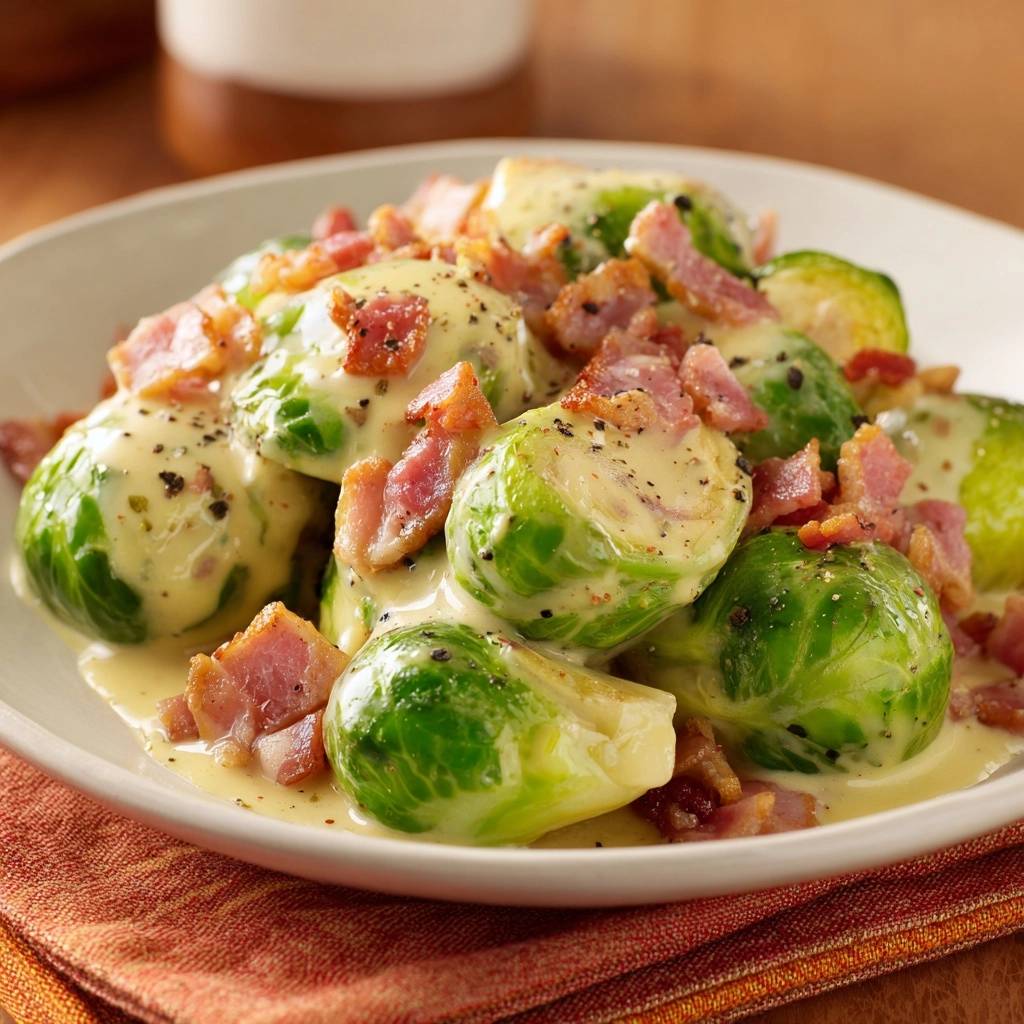
To get that high-end restaurant look, pay attention to the final “visual finish.” Don’t just dump the bacon back into the pan and stir it in; save it for the very top. This keeps the bacon from getting soggy in the sauce and ensures that the first thing your guests see is that beautiful, crispy texture.
A final, aggressive crack of black pepper over the top adds visual contrast and a fresh pop of heat. If you have a warm serving platter, use it! Cream-based sauces can seize up and become thick very quickly if they hit a cold plate. Serving them on a pre-warmed dish keeps the sauce velvety and pourable throughout the entire meal.
How do I keep the sprouts from being bitter?
The bitterness in Brussels sprouts comes from sulfur compounds that are released when they are overcooked or boiled. To prevent this, use the searing method. By browning the cut side of the sprout in fat over medium-high heat, you caramelize the natural sugars, which effectively masks and neutralizes the bitter notes. Also, choosing smaller sprouts and ensuring they are fresh will result in a much sweeter flavor.
Can I use turkey bacon instead of beef bacon?
Yes, you can use turkey bacon, but you will need to make a small adjustment. Turkey bacon is much leaner than beef bacon, so it won’t render as much fat into the pan. When you remove the crispy turkey bacon, you will likely need to add an extra tablespoon of olive oil or butter to the skillet to ensure there is enough fat to properly sear the Brussels sprouts without them sticking or burning.
Why did my cream sauce turn oily or separate?
A sauce “breaks” or turns oily when the heat is too high, causing the fat to separate from the solids in the cream. To prevent this, always reduce the heat to medium-low before pouring in the heavy cream. If it does happen, you can usually fix it by adding a tablespoon of cold heavy cream or water and stirring vigorously over low heat to re-emulsify the sauce.
How do I store and reheat leftovers?
Store any leftovers in an airtight container in the refrigerator for up to 3 days. To reheat, avoid the microwave as it makes the sprouts soggy. Instead, place them in a skillet over medium-low heat with a splash of milk or water. Stir gently until the sauce becomes creamy again and the sprouts are heated through. This dish does not freeze well because the cream will separate and the sprouts will lose their texture.
Can I make this recipe dairy-free?
You can make a dairy-free version by substituting the heavy cream with full-fat canned coconut milk or a thick cashew cream. For the Parmesan, use a dairy-free alternative or two tablespoons of nutritional yeast to maintain the savory, “umami” flavor. Keep in mind that coconut milk will add a slight coconut flavor, so you may want to add a bit more garlic or black pepper to balance it out.
What if my sprouts are still hard after steaming?
If the sprouts are still too firm, it usually means they were quite large or the lid wasn’t tight enough to trap the steam. Simply add another splash of liquid (cream or water), replace the lid, and cook for an additional 1-2 minutes. You can test for doneness by poking the stem end with a fork; it should be tender but not falling apart.

Creamy Garlic Brussels Sprouts with Bacon
Course: Side DishCuisine: AmericanDifficulty: easy4
servings10
minutes15
minutes25
Minutes310
kcalAmerican
Ingredients
1 pound fresh Brussels sprouts, trimmed and halved
6 slices thick-cut bacon, chopped
3 cloves garlic, minced
2/3 cup heavy cream
1/3 cup freshly grated parmesan cheese
1 tablespoon olive oil
1/2 teaspoon cracked black pepper (plus extra for garnish)
1/4 teaspoon sea salt
1/4 teaspoon onion powder
Directions
- Place a large skillet over medium heat. Add the chopped bacon and cook until crispy and the fat has rendered. Remove the bacon with a slotted spoon and drain on paper towels, leaving the rendered fat in the pan.
- Increase heat to medium-high and add 1 tablespoon of olive oil to the bacon fat. Place the Brussels sprouts cut-side down in a single layer. Do not crowd the pan; work in batches if necessary.
- Sear the sprouts undisturbed for 4 to 5 minutes until the flat bottoms are deeply golden brown. This caramelization is the key to removing the natural bitterness of the vegetable.
- Stir in the minced garlic and onion powder, cooking for 30 seconds until fragrant.
- Pour in the heavy cream and immediately reduce the heat to medium-low. Cover the pan with a lid for 2 to 3 minutes. This brief steaming period softens the core while the heavy cream begins to emulsify with the fats.
- Remove the lid. The sprouts should be bright green. Stir in the parmesan cheese, salt, and cracked black pepper. Simmer uncovered for 1 to 2 minutes, stirring gently, until the sauce thickens into a velvety glaze that coats the sprouts.
- Transfer to a warm plate. Top generously with the reserved crispy bacon and an extra crack of black pepper to match the visual finish. Serve immediately while the texture is at its peak.
Notes
- The secret to removing bitterness is the deep caramelization during the initial sear. Ensure the sprouts are placed cut-side down and left undisturbed for the full 4 to 5 minutes.