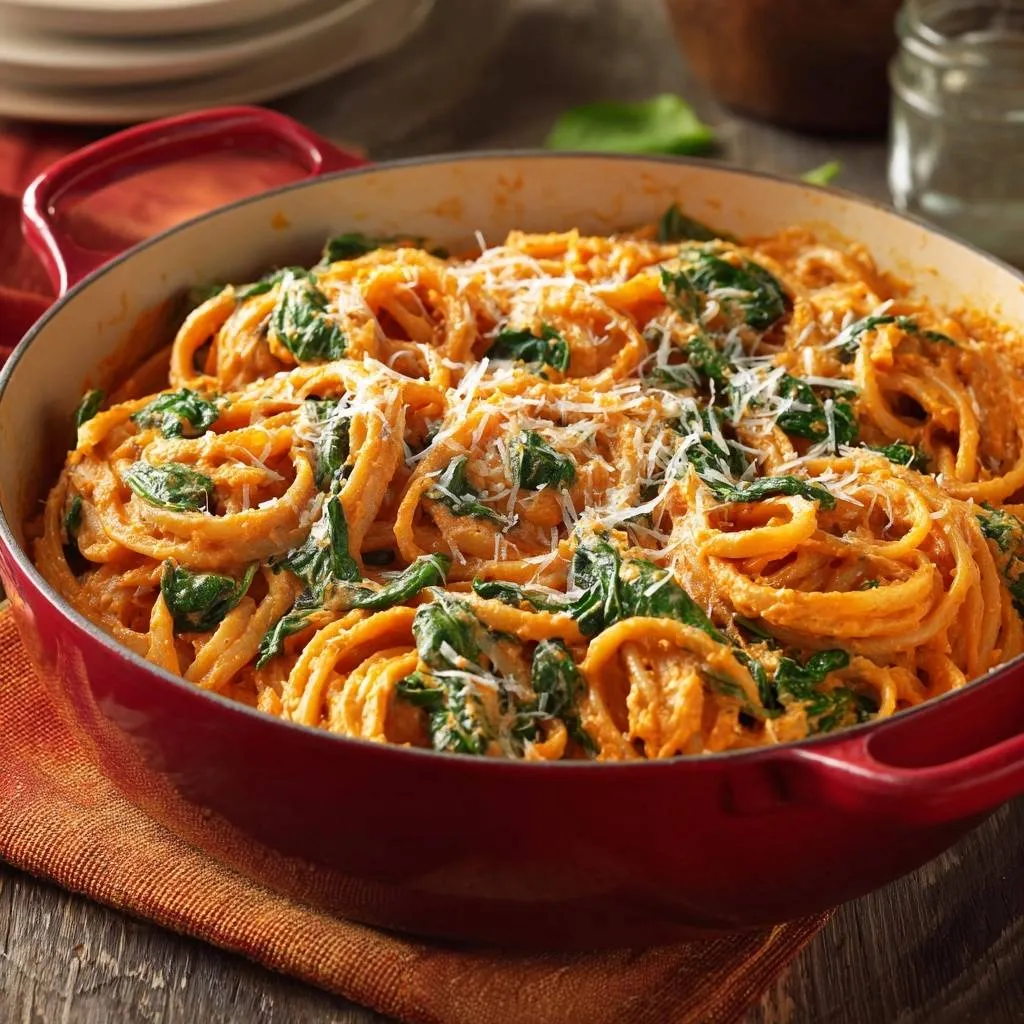
Have you ever spent forty minutes in the kitchen only to end up with a puddle of watery orange liquid at the bottom of your pasta bowl? It’s a common frustration when making cream-based sauces at home. Most recipes rely on heavy cream alone, which often slides right off the noodles, leaving the pasta bland and the plate a mess.
This Creamy Roasted Red Pepper Pasta with Spinach changes that dynamic entirely. We’re aiming for that luxurious, velvet-like “cling” you usually only find at high-end Italian bistros. By using a specific emulsification technique, we ensure every single strand of fettuccine is fully coated in a thick, vibrant sauce that stays put from the first bite to the last.
The secret to this professional finish is the addition of whole milk ricotta cheese in the blender. While most people just use cream, the ricotta provides a structural “grip” that binds the sauce to the starch of the pasta. You’ll get a restaurant-quality dinner on the table in just 30 minutes, balancing the smoky sweetness of roasted peppers with a rich, savory finish.
The Science of Sauce Emulsification and Texture
Achieving the perfect pasta “cling” isn’t luck; it’s physics. When you boil pasta, the water becomes saturated with starch. This liquid is liquid gold in the culinary world. The starch molecules act as a bridge, or an emulsifier, that allows the fats in the heavy cream and ricotta to bond with the watery base of the sauce.
Therefore, finishing your pasta directly in the skillet is a non-negotiable step. If you simply pour sauce over plain noodles, the sauce will separate and pool at the bottom. By tossing the undercooked noodles in the simmering pepper cream, the pasta absorbs the sauce into its outer layer. This creates a unified dish where the flavor is inside the noodle, not just sitting on top of it.
The ricotta cheese acts as a stabilizer in this equation. Because ricotta has a grainy, thick protein structure, it prevents the heavy cream from “breaking” or turning oily when it hits the high heat of the pan. It creates a thick, matte texture that holds onto the linguine or fettuccine with incredible strength. You’ll notice the sauce looks glossy and opaque rather than translucent and runny.
Essential Components for the Pepper Cream Base
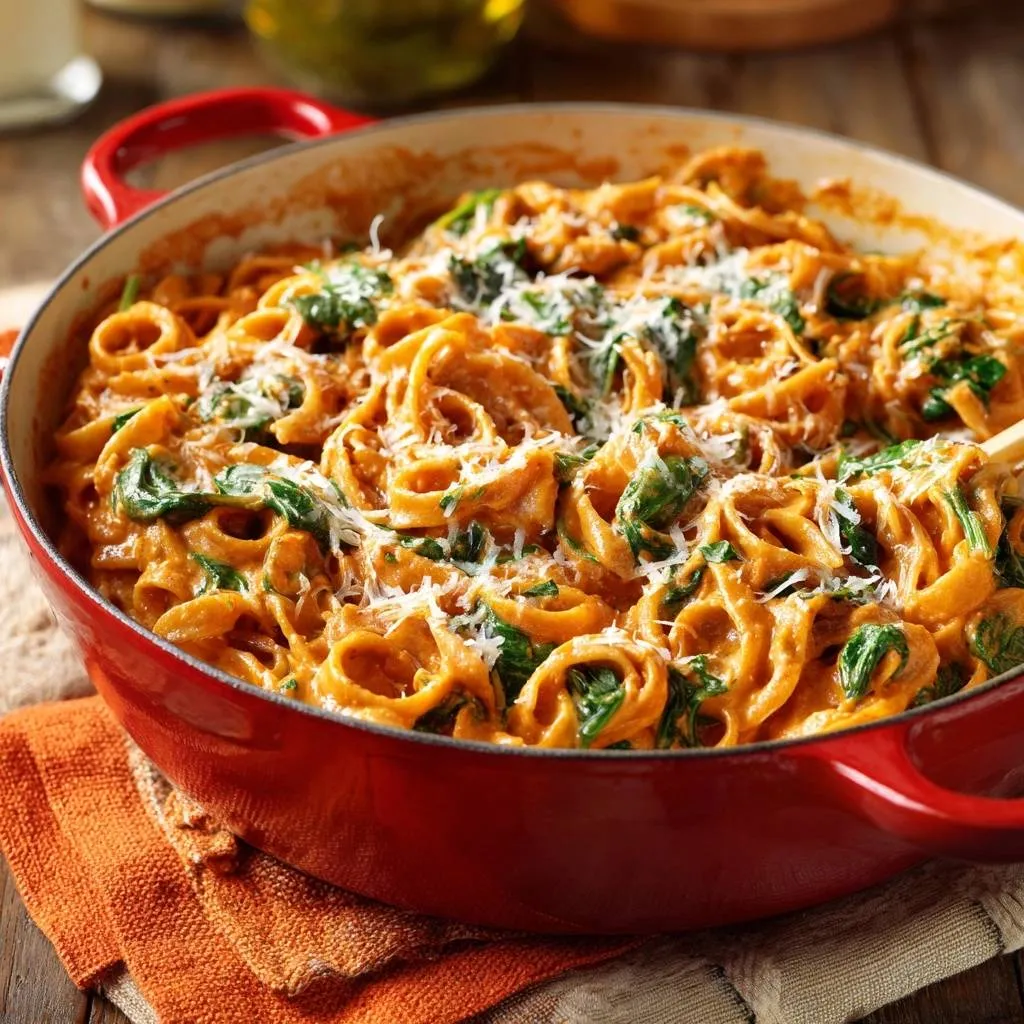
For this recipe, I actually prefer using high-quality jarred roasted red peppers over roasting them myself. Jarred peppers are packed at peak ripeness and offer a consistent acidity and sweetness that balances the heavy dairy. However, you must drain them thoroughly and pat them dry with paper towels. If you skip the drying step, the residual brine will make your sauce taste metallic and thin.
When it comes to the dairy, fat is your friend. Use heavy cream rather than half-and-half. The higher fat content is necessary to create a chemical bond with the parmesan cheese, resulting in a smooth melt. If you use a lower-fat milk, the sauce is much more likely to curdle or become grainy when the cheese is added later.
The shape of your pasta matters just as much as the sauce. I recommend long, flat noodles like fettuccine or linguine. These shapes provide a wide surface area for the viscous pepper cream to latch onto. While penne or rigatoni work in a pinch, the elegant “drape” of a long noodle coated in sunset-orange sauce is hard to beat for a professional presentation.
Selecting the Right Spinach and Aromatics
Baby spinach is the clear winner here because of its delicate texture. It wilts in seconds from the residual heat of the sauce, meaning you don’t have to overcook the pasta while waiting for the greens to soften. Mature spinach can be tough and stringy, which disrupts the silky mouthfeel we’re working so hard to create.
Don’t reach for the jar of pre-minced garlic for this one. Fresh garlic cloves provide a sharp, pungent bite that cuts through the richness of the ricotta and cream. In addition, the red pepper flakes offer a subtle back-end heat. They don’t make the dish “spicy” in a traditional sense, but they provide a necessary contrast to the sweet roasted peppers.
Step-by-Step: Mastering the Roasted Red Pepper Sauce
Success with this dish comes down to timing and temperature. You want to move with purpose once the pasta hits the boiling water, as the sauce and the noodles should reach their peak readiness at the exact same moment.
Phase 1: The High-Speed Blend
Start by placing your dried peppers, ricotta, and heavy cream into a blender. You are looking for a completely smooth, uniform puree. If you see any small red flecks, keep blending. Any remaining chunks of pepper will prevent the sauce from creating that perfectly even coating on the pasta. The mixture should look like a thick, pale orange milkshake before it hits the pan.
Phase 2: Building the Flavor Foundation
Heat your olive oil in a large skillet and add the garlic and red pepper flakes. Watch the garlic closely; you want it to smell fragrant and look soft, but never brown. Burnt garlic will turn the entire sauce bitter. Once the garlic is ready, pour in your blended mixture. Bring it to a gentle simmer, not a rolling boil. As it reduces for five minutes, the color will transform from a pale peach to a vibrant, deep sunset hue as the flavors concentrate.
Phase 3: The Marriage of Pasta and Cream
Follow the “Al Dente Minus Two” rule. If your pasta box says 10 minutes for al dente, pull it out at 8 minutes. It should still have a firm “snap” in the center. Transfer the noodles directly into the simmering sauce along with a splash of that starchy pasta water. Use tongs to toss the mixture vigorously. This movement encourages the starch and fat to emulsify, creating a glossy, restaurant-style finish. Finally, stir in the parmesan cheese at the very end. The cheese acts as the final bonding agent, thickening the sauce into a heavy, luxurious coating.
Troubleshooting Common Sauce Consistency Issues
If your sauce looks too thick or “gloppy” after adding the cheese, don’t panic. Simply add your remaining pasta water one tablespoon at a time. The heat and starch will loosen the fats and restore the silkiness. On the other hand, if the sauce seems too thin, let it simmer for an extra minute with the pasta. The noodles will continue to drink up the liquid as they finish cooking.
Sometimes the flavor can taste a bit “flat” despite all the cream and cheese. This usually means you need more salt or a touch of acidity. A tiny squeeze of fresh lemon juice or a single drop of balsamic vinegar can brighten the roasted pepper notes instantly. Always taste your sauce right before serving to ensure the seasoning is perfect.
Flavor Variations and Dietary Swaps
This pasta serves as a fantastic base for proteins. Grilled chicken breast or sautéed shrimp are natural partners for roasted red peppers. If you want to swap the vegetables, kale works beautifully, though you should add it a few minutes earlier than you would spinach so it has time to tenderize. Sun-dried tomatoes also add a nice chewy texture and a punch of umami.
For those eating gluten-free, I recommend using a brown rice or corn-based fettuccine. These varieties tend to release more starch than chickpea pasta, which helps the sauce emulsify better. Just be extra careful not to overcook gluten-free noodles, as they can become mushy very quickly in a heavy cream sauce.
Optimal Side Dish Pairings
Since this pasta is quite rich and creamy, you want side dishes that offer a “crunch” or high acidity to cleanse the palate. A simple arugula salad tossed with a sharp lemon vinaigrette is the perfect companion. The peppery greens cut right through the density of the ricotta and cream.
Roasted broccolini with a sprinkle of sea salt or charred asparagus also provides a nice textural contrast. If you’re feeling indulgent, a piece of crusty sourdough focaccia is essential. You’ll definitely want something to mop up every last drop of that vibrant orange sauce left on your plate.
Storage and Reheating for Best Results
Cream sauces are notoriously tricky to reheat because the fats tend to separate, leaving you with oily noodles. To avoid this, store leftovers in a glass airtight container for up to three days. I don’t recommend freezing this dish, as the ricotta and cream will lose their smooth texture and become grainy upon thawing.
When you’re ready to eat, skip the high-heat microwave setting. Instead, place the pasta in a small skillet with a splash of milk or water. Heat it over low-medium heat, tossing constantly. The extra liquid will help the sauce “re-emulsify” and return to its original creamy state without the oil separating from the solids.
Expert Tips for Professional Presentation
For a truly professional look, serve this pasta in warmed wide-rimmed bowls. Cold plates will cause the cream sauce to seize and thicken too quickly. Use a microplane to grate fresh parmesan over the top right before serving; this creates a “snow-like” finish that looks much more elegant than thicker shreds.
A final crack of fresh black pepper and a few small, un-wilted spinach leaves or a sprig of parsley can add a beautiful visual contrast against the orange sauce. It’s these small details that make a 30-minute weeknight meal feel like a special occasion. Serve it immediately while the sauce is at its glossiest and most fluid.
Frequently Asked Questions
How do I keep the sauce from getting watery?
The most important step is to finish cooking the pasta in the sauce. When you add undercooked noodles to the skillet along with starchy pasta water, the starch acts as a glue. This binds the cream and peppers to the pasta. Additionally, make sure to pat your roasted peppers dry before blending, as any extra brine will thin out the sauce.
Can I use milk instead of heavy cream?
I don’t recommend using regular milk as a direct substitute. The lower fat content makes the sauce much more likely to break or curdle when mixed with the acidic peppers and salty parmesan. If you must use a lighter option, half-and-half is the lowest you should go, but the sauce will not be as thick or velvety as the original version.
What is the best way to store and reheat leftovers?
Store the pasta in an airtight container in the fridge for up to 3 days. To reheat, add the pasta to a pan with a tablespoon of milk or water over low heat. Stir gently until the sauce becomes creamy again. Avoid the microwave if possible, as it often causes the cheese and cream to separate into an oily mess.
Can I make this recipe dairy-free?
You can substitute the heavy cream with full-fat canned coconut milk and use a vegan ricotta alternative. However, the flavor profile will change significantly. Be sure to use a high-quality vegan parmesan to help with the thickening process, as the starch-fat bond is harder to achieve with plant-based fats.
Why is my sauce grainy?
Graininess usually happens for two reasons: either the garlic was burnt, or the parmesan cheese was added over heat that was too high. Always stir in your cheese at the very end and make sure you are using freshly grated parmesan. Pre-shredded cheese is coated in potato starch to prevent clumping, which can result in a gritty texture when melted into a sauce.
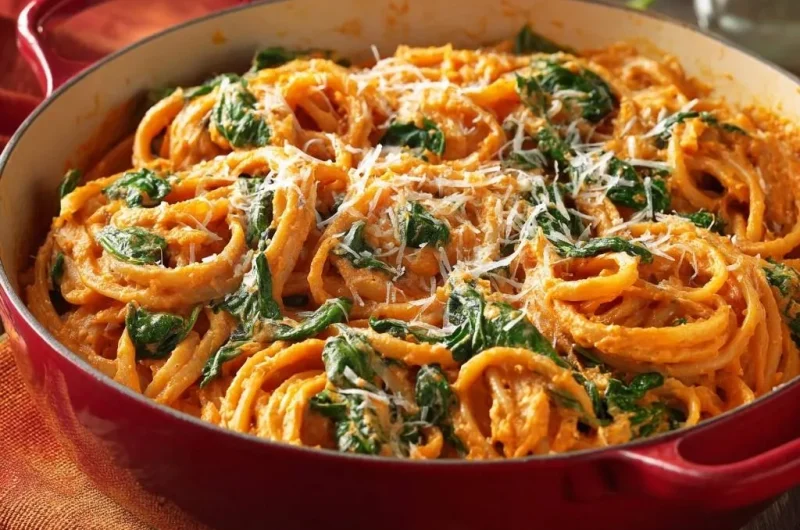
Creamy Roasted Red Pepper Pasta with Spinach
Course: Main CourseCuisine: Italian-AmericanDifficulty: easy4
servings10
minutes20
minutes30
Minutes510
kcalItalian-American
Ingredients
1 pound fettuccine or linguine pasta
1 jar (12 ounces) roasted red peppers, drained and patted dry
1/2 cup whole milk ricotta cheese (for texture and thickness)
3 cloves garlic, minced
1 cup heavy cream
3/4 cup freshly grated parmesan cheese, plus extra for garnish
4 cups fresh baby spinach
2 tablespoons olive oil
1/2 teaspoon red pepper flakes
Salt and black pepper to taste
1/2 cup reserved starchy pasta cooking water
Directions
- Bring a large pot of heavily salted water to a boil. Cook the pasta for 2 minutes less than the package directions for al dente. The pasta must finish cooking in the sauce to properly absorb the liquid and prevent a watery result.
- While the pasta cooks, place the drained roasted red peppers, heavy cream, and ricotta cheese into a blender. Blend until completely smooth. The addition of ricotta provides a structural “grip” that prevents the sauce from sliding off the noodles.
- In a large deep skillet or dutch oven, heat the olive oil over medium heat. Add the minced garlic and red pepper flakes, sautéing for 1 minute until fragrant but not browned.
- Pour the blended pepper cream into the skillet. Bring to a gentle simmer. Let the sauce reduce for 4 to 5 minutes over medium-low heat until it thickens and the color deepens.
- Just before draining the pasta, scoop out 1/2 cup of the starchy pasta water. Drain the pasta and add it directly into the skillet with the sauce.
- Add the fresh spinach and half of the reserved pasta water to the skillet. Increase heat to medium-high and toss vigorously with tongs. The starch in the water acts as a bridge between the fats in the cream and the pasta, locking the sauce in place.
- Once the spinach has wilted and the sauce has thickened to a glossy, heavy coating, stir in the 3/4 cup of parmesan cheese. The cheese provides the final thickening bond. If the sauce is too thick, add the remaining pasta water one tablespoon at a time.
- Season with salt and pepper. Serve immediately in the pan or on warm plates with an extra sprinkle of finely grated parmesan on top to match the visual finish.
Notes
- The secret to the sauce’s ‘cling’ is finishing the pasta in the skillet with reserved starchy water and ricotta cheese to prevent a watery result.