Crispy Roast Duck with Orange Pomegranate Glaze
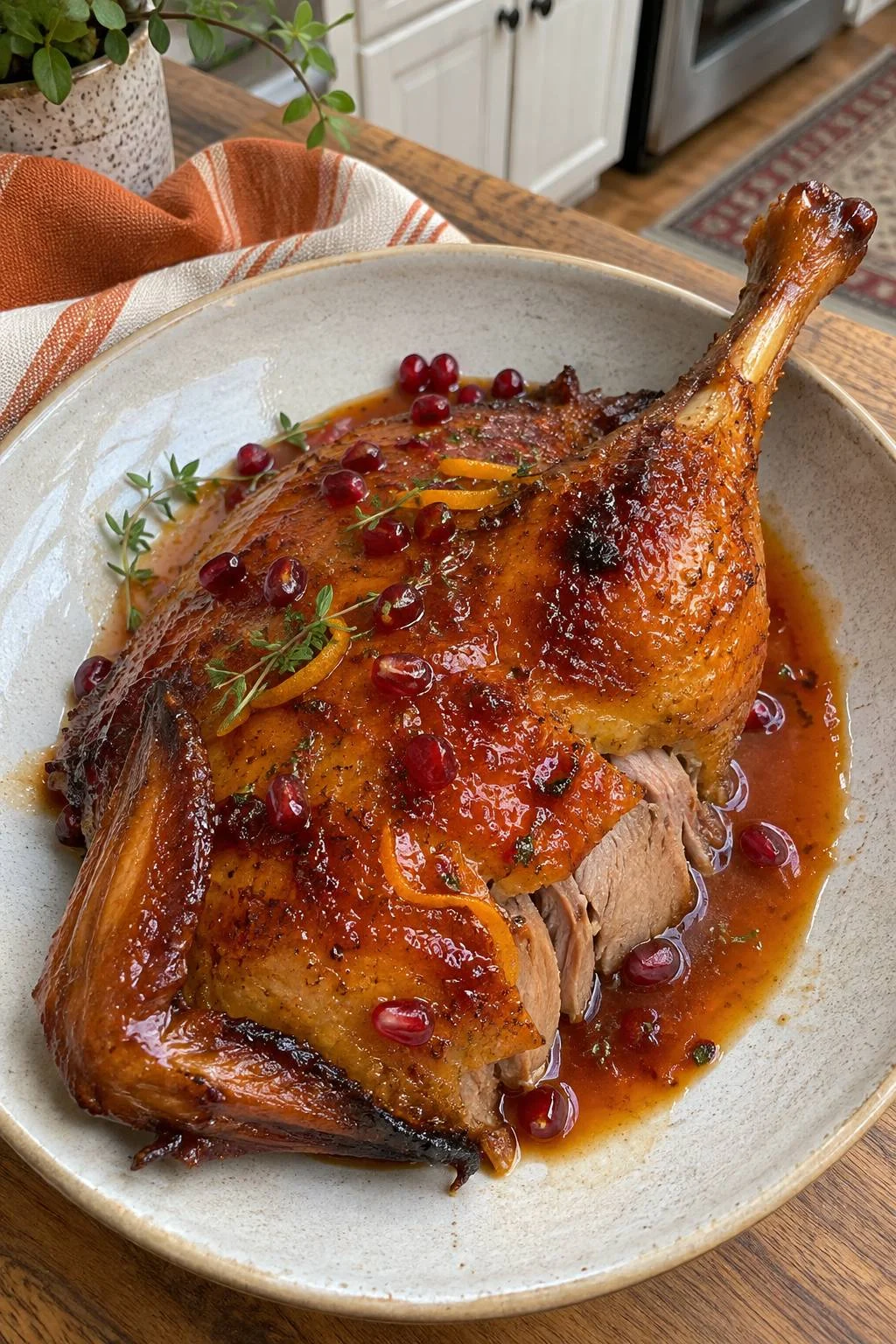
Roast duck with orange and thyme, then brush it with a glossy pomegranate-orange glaze. Pomegranate arils and roasted orange finish the platter.
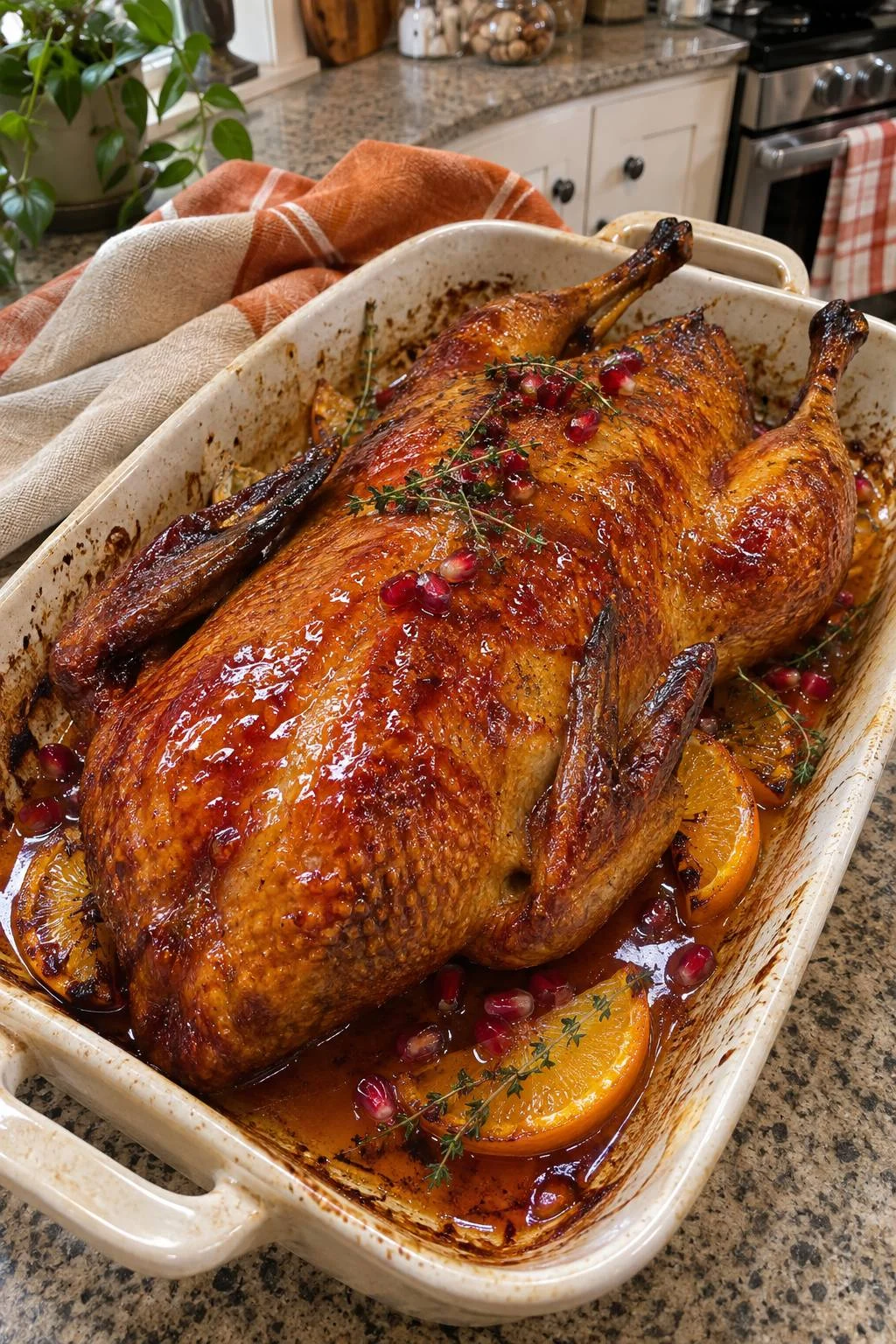
Crispy roast duck with orange pomegranate glaze makes a striking main course, with savory, well-browned skin and a bright finish. Orange and thyme roast alongside the duck, while a honey-sweetened glaze brings pomegranate and citrus together.
The method focuses on rendering the duck’s fat before the final glazing. Each part has a job: careful pricking helps the fat escape, and a reserved portion of glaze brings the same tangy sweetness to the platter.
Prepare the duck for crisp skin
Pat the duck thoroughly dry before seasoning it inside and out with kosher salt and black pepper. Moisture on the surface can interfere with browning, so take care over the breast and thighs as well as the rest of the skin.
Prick through the skin and fat with a skewer, especially over those thicker areas, but stop short of the meat. The distinction matters: the goal is to give fat a route out while keeping the meat intact. Put orange quarters and fresh thyme loosely in the cavity to add aroma as the duck roasts.
Render fat before adding the glaze
Set the duck breast side up on a rack in a large roasting pan. As it roasts, fat accumulates in the pan; carefully pouring it off at the point specified on the recipe card helps keep the duck from sitting in it. Hot fat can spill easily, so handle the pan with care.
While the first roasting stage is underway, simmer pomegranate juice, orange juice, honey, orange zest, and Dijon mustard until the glaze thickens slightly. Set aside about one-third for serving. This keeps a clean portion available for the table while the rest is brushed onto the duck during the hotter finishing stage.
Glaze in thin layers and check doneness
Raise the oven temperature as directed on the recipe card, arrange the remaining orange quarters and thyme around the duck, and let them roast together. Brush on a thin layer of glaze, then repeat the brushing and roasting sequence listed on the card. Thin coats build a glossy finish without covering the skin too heavily.
Check the thickest part of the breast and the inner thigh with an instant-read thermometer, avoiding bone. Both areas need to reach the temperature specified on the recipe card. If either is below that point, return the duck to the oven and check again at the intervals listed there. Rest the duck uncovered so the skin stays exposed rather than trapping steam.
Finish the platter with citrus and pomegranate
Scatter pomegranate arils over the rested duck and roasted oranges for a fresh, jewel-like finish. Serve the reserved glaze and pan juices alongside, so you can add more of the sweet-tart sauce at the table. The oranges and thyme carry the roasting flavors onto the platter, while the arils add a lively contrast to the rich duck.
Frequently Asked Questions
Why should I prick the duck skin without piercing the meat?
Pricking through the skin and fat gives rendered fat a way to drain during roasting. If the skewer reaches the meat, you can pierce the flesh rather than simply opening the outer layer. Focus especially on the breast and thighs, where the recipe calls for extra attention.
When should I brush on the pomegranate-orange glaze?
Make the glaze during the initial roasting stage, then reserve about one-third for serving. Brush thin layers onto the duck during the hotter finishing stage, following the recipe card’s roasting sequence. Keeping a portion aside means you have glaze that was not brushed onto the duck.
How do I know when the duck is done?
Use an instant-read thermometer in the thickest part of the breast and the inner thigh, taking care to avoid bone. Both readings should meet the temperature on the recipe card. If either is below it, return the duck to the oven and recheck at the listed intervals.
Recipe
Crispy Roast Duck with Orange Pomegranate Glaze
Whole duck roasts with orange and thyme, then gets a glossy pomegranate-orange glaze. Fresh pomegranate seeds and roasted orange wedges finish the platter.
- Course
- Main Course
- Cuisine
- American
- Difficulty
- Medium
- Servings
- 4 servings
- Prep time
- 20 mins
- Cook time
- 2 hr 35 mins
- Total time
- 3 hr
- Calories
- 850 kcal
Ingredients
For the duck
For the glaze
To finish
Instructions
Heat the oven to 325°F. Pat the duck dry. Prick the skin all over, especially over the breast and thighs, with a skewer, taking care not to pierce the meat. Season the duck inside and out with the salt and pepper. Put 2 orange quarters and 2 thyme sprigs loosely in the cavity.
Set the duck breast side up on a rack in a large roasting pan. Roast for 120 minutes, carefully pouring off the accumulated fat after 60 minutes. During this roasting stage, combine the pomegranate juice, orange juice, honey, orange zest, and Dijon in a small saucepan. Bring to a simmer and cook for 10 minutes, stirring occasionally, until the glaze thickens slightly. Set aside about one-third of the glaze for serving.
Raise the oven temperature to 425°F. Arrange the remaining orange quarters and thyme sprigs around the duck. Roast for 10 minutes, then brush the duck with a thin layer of some of the remaining glaze. Roast for 7 minutes, brush once more, and roast for 8 minutes.
Check the thickest part of the breast and inner thigh with an instant-read thermometer, avoiding bone; both should reach at least 165°F. Transfer the duck to a platter and rest uncovered for 15 minutes.
Scatter the pomegranate arils over the duck and oranges. Serve with the reserved glaze and pan juices.
Notes
- For crisp skin, pat the duck thoroughly dry and prick through the skin and fat without piercing the meat.
- If either temperature is below 165°F after roasting, return the duck to the oven and check again every 5 minutes.
Recipe: https://dishwhisperer.com/crispy-roast-duck-with-orange-pomegranate-glaze/