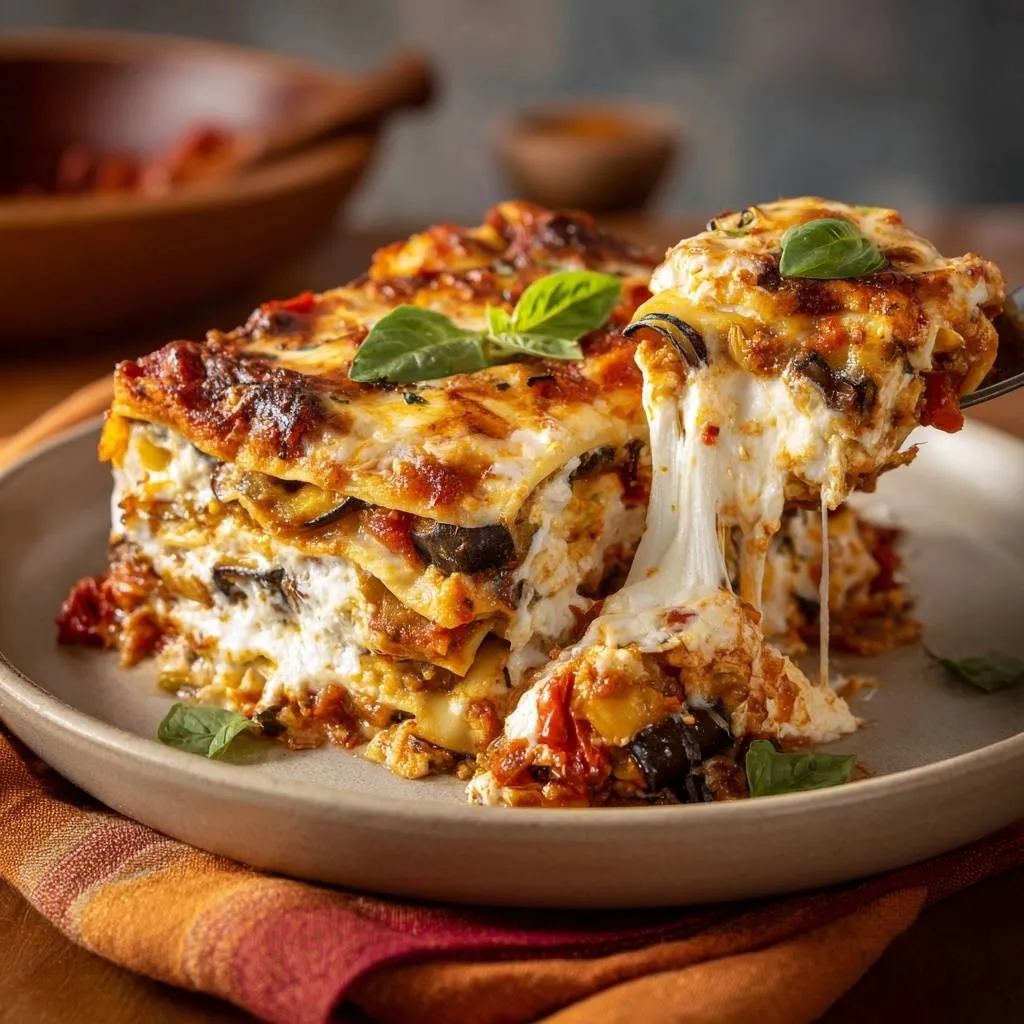
Ever pulled out a slice of eggplant lasagna only to watch it collapse into a watery puddle? You’re not alone. I’ve had batches that turned into mush right on the plate, frustrating after all that effort. But this eggplant lasagna changes everything with a simple salting and roasting trick that keeps every layer firm and sliceable.
Here’s why it works so well. Eggplant holds tons of water, but we draw it out first. Then roasting crisps the slices just right. You get that perfect cheesy pull without the flop, plus it’s lower in carbs than traditional versions.
The real secret? Salt the slices generously and let them sit. That pulls out moisture through osmosis, so your eggplant lasagna stays structured. Rinse, dry, and roast, and you’ve nailed it. Oh man, the first bite melts with cheese while holding its shape perfectly.
Why Eggplant Lasagna Fails Most Times
Moisture Trap in Eggplant Slices
Eggplant’s about 92% water, so it releases liquid during baking. That’s why your eggplant lasagna ends up soggy. Salting creates osmosis, where salt draws water out of the cells into the towels.
Without it, unsalted slices weep and drown the layers. But after 20-30 minutes, rinse them under cold water. Pat dry thoroughly, or you’ll trap bitterness and extra dampness. Therefore, this step guarantees firm texture every time.
No-Boil Noodles Need Prep
No-boil noodles seem convenient, but they stay crunchy without help. Skipping the hot water soak means they don’t hydrate enough in the oven. Soak them for 10 minutes first, and they soften perfectly.
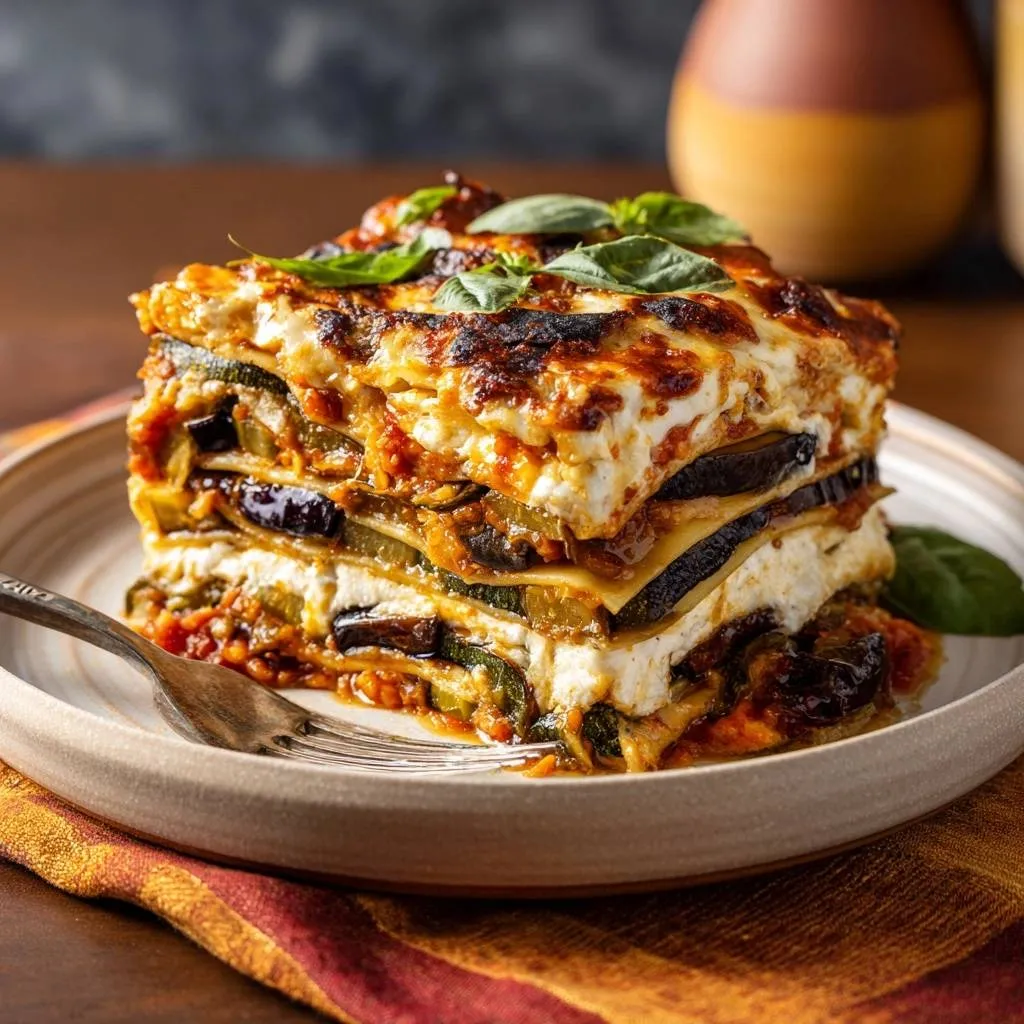
In addition, the oven’s steam from covered baking finishes the job. Unsoaked ones turn chewy, ruining your eggplant lasagna. Drained and ready, they layer smoothly without excess starch gumming things up.
Key Ingredients for Firm Eggplant Lasagna
Eggplant Selection and Slicing Precision
Pick firm, heavy eggplants with smooth, shiny skin. They hold less water than soft ones. Slice lengthwise into 1/4-inch thick pieces for even roasting; thinner burns, thicker stays raw.
Globe eggplants work great for lasagna due to their size. Italian varieties are milder but smaller, so use more. Therefore, precise slicing ensures your eggplant lasagna stacks neatly and cooks uniformly.
Cheese Blend Ratios Explained
Ricotta brings creamy moisture, mozzarella melts into stretchy bliss, and Parmesan adds sharp umami. Use 2 cups ricotta, 3 cups mozzarella, and 1/2 cup Parmesan to avoid greasiness. Fresh basil chopped fine brightens everything over dried.
In addition, room-temp cheeses mix smoothly. For dairy-free, try cashew ricotta and vegan mozzarella. This balance keeps your eggplant lasagna rich but not oily.
Sauce and Seasoning Balance
Full ingredients: 2 large eggplants sliced 1/4-inch thick, 12 no-boil lasagna noodles, 4 cups marinara sauce, 2 cups ricotta, 3 cups shredded mozzarella, 1/2 cup grated Parmesan, 1/4 cup chopped fresh basil (plus more for garnish), 2 tablespoons olive oil, 1 teaspoon salt, 1 teaspoon black pepper, 1 teaspoon dried oregano.
Choose thick marinara; jarred works if it’s not watery. Oregano pairs with eggplant’s earthiness, pepper adds bite. Olive oil in roasting promotes browning. Therefore, these keep flavors balanced and prevent blandness.
Science of Salting Eggplant for Lasagna
Osmosis Draws Out Excess Water
Lay slices on paper towels and sprinkle both sides with 1 teaspoon salt. Salt makes a hypertonic solution, pulling water from eggplant cells. Wait 20-30 minutes; you’ll see beads form.
Weigh them before and after: they lose up to 20% weight in water. This step transforms floppy slices into firm ones for your eggplant lasagna. Rinse well next to remove excess salt.
Rinse and Dry for Clean Flavor
Cold water rinse washes away bitterness from eggplant’s solanine. Pat very dry with clean towels; don’t skip this. A salad spinner works too, but towels absorb better.
Air-drying takes too long and risks reabsorbing moisture. Dry slices feel firm and matte. Therefore, your eggplant lasagna tastes clean and never bitter.
Roasting Eggplant to Lock Firmness
High-Heat Oven Setup at 425°F
Preheat to 425°F. Brush slices with 1 tablespoon olive oil and arrange in a single layer on baking sheets. Crowding steams them instead of roasting.
Oil triggers Maillard browning for nutty flavor. Flip halfway through 15-20 minutes. Then reduce to 375°F for assembly. This high heat evaporates moisture fast.
Golden-Dry Texture Checkpoints
Roast until edges curl slightly and slices feel dry-firm, not floppy. No liquid pools on the pan. Let cool 10 minutes; heat softens them if layered hot.
Roast in batches if needed. Therefore, perfect texture means your eggplant lasagna slices cleanly without falling apart.
Prepping No-Boil Noodles Right
Pour hot tap water over noodles in a dish; soak 10 minutes. They soften without boiling, absorbing just enough for the oven. Drain well to avoid watery layers.
Traditional noodles need parboiling and more time. No-boil gives better texture contrast here. In addition, they hold up to eggplant’s firmness in your lasagna.
Cheese Filling Mix for Eggplant Lasagna
Mix room-temp ricotta, 1 cup mozzarella, Parmesan, basil, oregano, pepper, and 1 tablespoon olive oil. Fold gently; overmixing makes it grainy. Basil last preserves its fresh aroma.
This yields about 3 cups, or 1/3 per layer. Pepper distributes evenly for consistent bite. Therefore, every forkful bursts with creamy, herby goodness.
Layering Eggplant Lasagna Perfectly
Base Layer Marinara Strategy
In a 9×13-inch dish, spread 1 cup marinara first. It prevents sticking and infuses flavor. Add 4 soaked noodles, then 1/3 roasted eggplant, 1/3 ricotta mix, 1 cup marinara, and 3/4 cup mozzarella.
Use an offset spatula for even spreading. This order builds stability. Repeat without rushing for pro results.
Repeating Layers Without Shifting
Do three full layers, pressing gently so they bond. End with mozzarella on top for that golden crust. Exact 9×13 sizing prevents overflow.
Don’t overload cheese, or it shifts. Therefore, your eggplant lasagna holds shape beautifully when baked.
Baking Schedule for Crispy-Topped Eggplant Lasagna
Foil-Covered Initial Bake
Cover with foil and bake at 375°F for 30 minutes. Foil traps steam to hydrate noodles fully. Aim for 165°F internal temp.
This melds layers without drying edges. Remove foil carefully to avoid steam burns. In addition, it sets the structure early.
Uncovered Finish for Golden Bubble
Bake uncovered 15-20 more minutes until bubbly and golden. Broil 1-2 minutes for extra char if needed. Rest 10 minutes; this firms collagen for clean slices.
Use a sharp knife for edges. Garnish with basil. Therefore, each piece pulls apart perfectly cheesy.
Make-Ahead Guide for Eggplant Lasagna
Assemble and Chill Overnight
Assemble fully, cover, and fridge up to 24 hours. Flavors deepen. Bake straight from cold, adding 10 minutes covered.
Par-bake 20 minutes covered for busy days, then finish later. Label with instructions. This makes weeknights easy.
Freezing Slices or Whole Pan
Cool completely, wrap airtight in plastic then foil. Freeze up to 3 months. Thaw overnight in fridge, rebake at 350°F covered for 30 minutes.
Portion slices for singles. Avoid refreezing. Therefore, homemade eggplant lasagna anytime.
Avoiding Mistakes in Eggplant Lasagna
Skipping Salt Step Pitfalls
No salting means watery layers that collapse. Over-salting? Rinse longer. Under-roasting leaves chewy eggplant.
Always check dryness post-roast. Therefore, follow steps for foolproof firmness.
Layering Order Errors
Noodles first sticks everything. Skip base sauce, and it burns. Too much cheese pools oil on top.
Stick to sequence. In addition, even layers prevent tilting.
Pairing Sides with Eggplant Lasagna
Crisp Green Salads
Arugula with lemon vinaigrette cuts the cheese richness. Add balsamic reduction for sweet tang. Light and refreshing contrast.
Garlic Bread Alternatives
Herbed flatbread or polenta fries soak up sauce. Chianti or light red complements the flavors nicely.
Eggplant Lasagna FAQ
Can I Use Fresh Lasagna Noodles?
Yes, parboil them 4-5 minutes first until pliable, then drain. Reduce total bake time by 10 minutes to avoid mushiness. Fresh gives softer texture, but no-boil holds firmness better in eggplant lasagna.
Gluten-Free Eggplant Lasagna Swap?
Use gluten-free no-boil noodles and check marinara labels for hidden gluten. Add 1 tablespoon almond flour to ricotta mix for binding. It works great without changing flavor or texture.
How to Fix Watery Baked Layers?
Next time, salt eggplant 30 minutes and roast fully dry. Salvage by broiling uncovered 5 minutes to evaporate liquid. Press layers gently before serving.
Vegetarian to Vegan Eggplant Lasagna?
Swap ricotta for blended cashews soaked in water with lemon juice and garlic. Use nutritional yeast for Parmesan, vegan mozzarella shreds. Blend smooth for perfect creaminess.
Storage After Baking?
Store in airtight container in fridge up to 4 days. Reheat at 350°F covered with foil 20-25 minutes. Freeze portions up to 3 months; thaw overnight and rebake same way.
Eggplant Lasagna
Course: Main CourseCuisine: ItalianDifficulty: easy8
servings30
minutes1
hour90
Minutes450
kcalItalian
Ingredients
2 large eggplants, sliced lengthwise into 1/4-inch thick slices
12 lasagna noodles, no-boil
4 cups marinara sauce
2 cups ricotta cheese
3 cups shredded mozzarella cheese
1/2 cup grated Parmesan cheese
1/4 cup fresh basil leaves, chopped (plus more for garnish)
2 tablespoons olive oil
1 teaspoon salt
1 teaspoon black pepper
1 teaspoon dried oregano
Directions
- Solve the sogginess first: Lay eggplant slices on paper towels, sprinkle both sides generously with 1 teaspoon salt. Let sit 20-30 minutes to release water. Rinse under cold water, pat very dry with clean towels. This extracts moisture that ruins texture.
- Preheat oven to 425 degrees F. Brush eggplant slices with 1 tablespoon olive oil, place on baking sheets in a single layer. Roast 15-20 minutes until golden and dry-firm, flipping halfway. This locks in perfect firmness. Reduce oven to 375 degrees F.
- Soak no-boil lasagna noodles in hot water for 10 minutes, then drain.
- Mix ricotta, 1 cup mozzarella, Parmesan, basil, oregano, pepper, and remaining olive oil in a bowl.
- Assemble in 9×13-inch baking dish: Spread 1 cup marinara, layer 4 noodles, 1/3 roasted eggplant, 1/3 ricotta mix, 1 cup marinara, 3/4 cup mozzarella. Repeat twice, ending with mozzarella on top.
- Cover with foil, bake 30 minutes. Uncover, bake 15-20 more minutes until bubbly and golden. Rest 10 minutes before slicing for clean cuts. Garnish with basil.
Notes
- Salting and roasting the eggplant is key to preventing soggy layers. Let the lasagna rest 10 minutes before slicing for clean cuts.