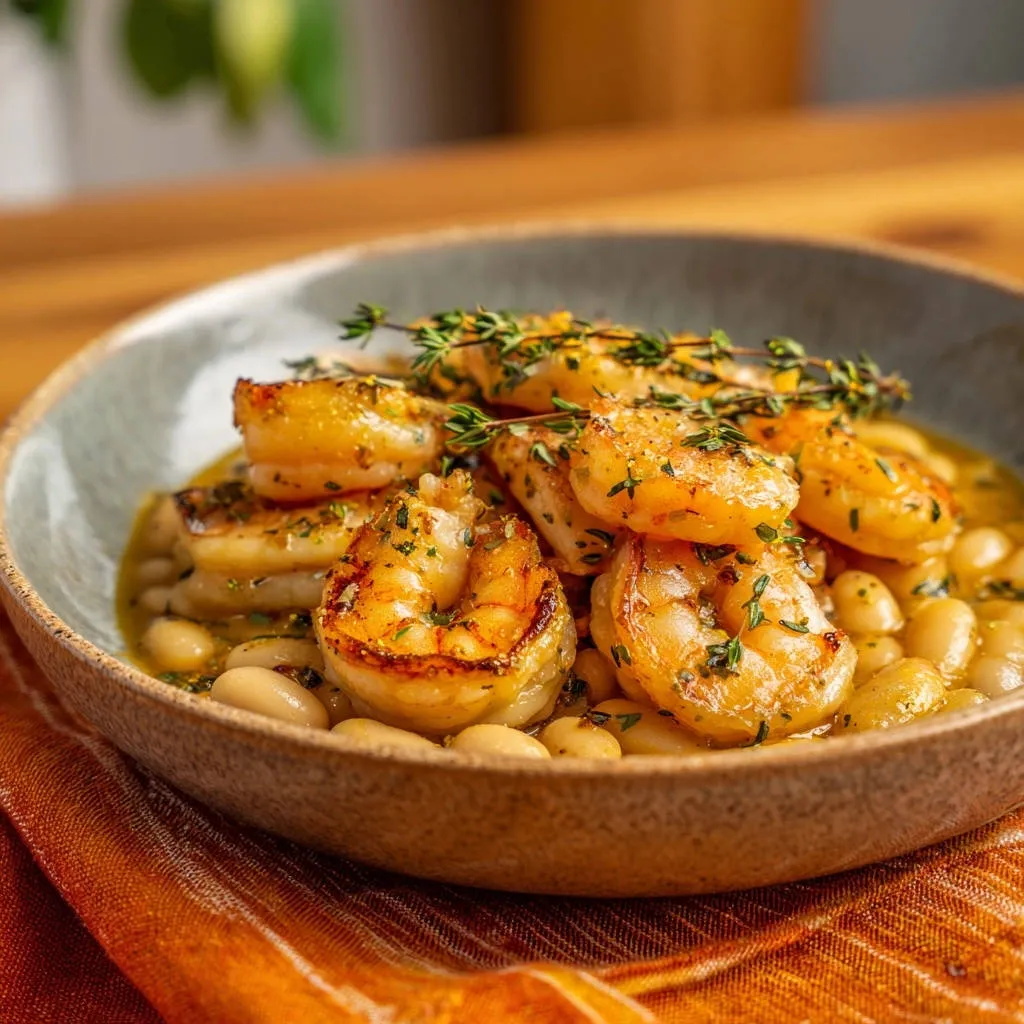
There is nothing more frustrating than rushing through a weeknight meal only to end up with rubbery, overcooked shrimp that completely ruins the experience.
But mastering the simple high-heat technique detailed below ensures you achieve perfectly tender results every time you make this exceptional Garlicky Seared Shrimp and White Beans.
This method locks in flavor and moisture, transforming simple ingredients into a quick, restaurant-quality meal you can trust.
The Anti-Rubbery Secret: Why This Recipe Guarantees Tender Shrimp
Achieving a beautiful sear and maintaining a succulent interior relies entirely on controlling moisture and temperature.
This recipe focuses on three crucial techniques that ensure the shrimp texture remains impeccable, setting it apart from standard skillet preparations.
The Power of Patting: Moisture Control is Non-Negotiable
Drying the shrimp is arguably the most critical preparatory step, yet it is frequently skipped by home cooks.

Any surface moisture will instantly turn to steam when hitting a hot pan, causing the shrimp to effectively boil rather than sear.
We need that moisture removed to encourage the Maillard reaction, which develops the coveted golden crust and intense, savory flavor.
High-Heat, Quick-Flip: Mastering the Sear
We use a quick, aggressive sear over medium-high heat-specifically 90 seconds per side-to build maximum exterior flavor fast.
At this point, the shrimp will look beautifully pink and golden but will be intentionally slightly underdone in the center.
This partial cooking is essential because the shrimp will finish cooking when they are returned to the hot sauce at the very end, preventing them from seizing up and becoming tough.
The Hidden Ingredient: Reserving Bean Liquid for Sauce Depth
Many recipes call for draining canned beans completely, but the thick liquid surrounding Cannellini beans is a secret weapon for sauce building.
This reserved liquid contains natural starches and inherent flavor from the beans, which helps emulsify the sauce and gives it a luxurious, slightly thick body without needing flour or thickeners.
Using the bean liquid provides complexity and natural binding that plain vegetable broth simply cannot offer.
Building the Ultimate One-Bowl Meal: Ingredients Deep Dive
Choosing Your Shrimp: Size Matters for the Sear
Always opt for large (or jumbo) shrimp, typically 21/25 count per pound, as smaller shrimp are highly prone to overcooking during the searing process.
If you are using frozen shrimp, ensure they are thawed completely and dried thoroughly before beginning prep.
Keeping the tails on provides a beautiful presentation, but removing them before cooking makes the final dish easier to eat.
Cannellini Beans: Texture and Purpose
Cannellini beans are the ideal choice here because their skin holds up well to simmering, yet their interiors are incredibly creamy, dissolving slightly into the sauce.
This creamy texture is essential for creating the rich, comforting base of the dish.
Rinsing the beans properly removes excess sodium and any residual starchy liquid you do not want in the final sauce.
Herb Harmony: Enhancing the Garlicky Base
The combination of dried parsley and oregano forms the classic, robust Mediterranean backbone that complements the heavy garlic and butter.
These dried herbs provide persistent background flavor that stands up to the high heat.
The final touch of fresh thyme sprigs is critical, adding a highly aromatic layer right before serving that elevates the sensory experience of the finished dish.
Essential Equipment for a Seamless Garlicky Sear
Having the right tools ready ensures you can execute the high-heat searing technique quickly and efficiently.
The Right Skillet for High Heat
Cast iron or high-quality stainless steel is crucial for maintaining the high temperature needed to achieve a perfect crust on the shrimp.
Paper Towels and Patience
A generous stack of paper towels is non-negotiable for the drying process, ensuring zero moisture remains on the surface of the shrimp.
Tongs and Spatulas
Use sturdy metal tongs for quickly and gently flipping the shrimp without damaging the crust, and a flexible spatula to scrape up the browned fond.
Step-by-Step Mastery: Cooking Garlicky Seared Shrimp and White Beans
- Preparation is Key (The Anti-Rubbery Technique)
Lay the shrimp flat and thoroughly pat them dry on all sides using paper towels until they feel completely matte, not slick.
Season the dried shrimp lightly with salt and pepper; this initial seasoning helps draw out flavor during the sear and prevents steaming.
- Sear the Shrimp Hot and Fast
Heat the olive oil in your large skillet over medium-high heat until it is shimmering but not smoking.
Add the shrimp in a single layer, ensuring the pan is not crowded; work in batches if necessary to maintain consistent heat.
Sear for exactly 1 minute and 30 seconds without moving them, then flip and sear for another 1 minute and 30 seconds; immediately remove the shrimp and set them aside.
- Build the Sauce Base
Reduce the heat to medium and add the butter to the skillet, letting it melt until foamy.
Add the minced garlic and crushed red pepper flakes; cook for about 30 seconds until very fragrant, stirring constantly to prevent the garlic from scorching or turning bitter.
- Finish the Beans and Sauce
Stir in the dried parsley and dried oregano, allowing them to bloom briefly in the hot fat before pouring in the reserved bean liquid or vegetable broth.
Bring the sauce to a gentle simmer, vigorously scraping up the browned bits (fond) from the bottom of the pan to integrate their deep flavor.
Add the rinsed Cannellini beans and simmer for 2 to 3 minutes, allowing the sauce to reduce slightly and thicken to a coating consistency.
- Combine and Serve: The Flash Finish
Turn off the heat completely to halt the cooking process in the skillet.
Return the seared shrimp to the skillet and gently toss them with the beans and sauce for about 30 seconds, just long enough to coat and warm the shrimp through fully without further cooking.
- Presentation and Garnish
Transfer the Garlicky Seared Shrimp and White Beans mixture immediately to serving bowls.
Garnish generously with fresh sprigs of thyme, allowing the warmth of the dish to release their delicate aroma.
Chef’s Secrets: Elevating the Flavor and Texture of Your Dish
These small, expert adjustments can turn a good dish into a truly memorable one.
Maximizing Aromatics: Blooming Dried Herbs Add dried herbs like parsley and oregano slightly earlier, along with the garlic and butter, before introducing any liquid.
This allows the residual heat of the fat to gently toast their essential oils, maximizing their flavor release before they hydrate in the broth.
The Final Acid Balance: A Squeeze of Lemon Finish the dish with a small squeeze of fresh lemon juice or a pinch of zest right before serving.
The acidity cuts through the richness of the butter and garlic, brightening all the savory flavors of the Garlicky Seared Shrimp and White Beans.
Selecting Quality Olive Oil Use a high-quality olive oil specifically marked as robust or suitable for high-heat cooking for the searing step.
Lower-quality oils or those sensitive to heat can break down quickly, leading to off-flavors or excessive smoking during the initial sear.
Making It Your Own: Adaptations and Recipe Variations
The beauty of this white bean recipe lies in its flexibility, allowing for easy customization based on what you have available or dietary needs.
Ingredient Swaps: Navigating Different Beans and Broths
If Cannellini beans are unavailable, Great Northern or Navy beans make excellent substitutes, although they may be slightly smaller and less creamy.
If you choose not to reserve the bean liquid, ensure you use a high-quality vegetable or chicken broth for the sauce base to maintain flavor depth.
Adjusting the Heat: Managing the Red Pepper Flakes
The recipe calls for a small amount of crushed red pepper flakes, providing a gentle warmth in the background.
For a spicier kick, double the flakes or substitute a tiny pinch of cayenne pepper during the sauce-building step.
If heat is not desired, simply omit the red pepper flakes, or use a sweet paprika for color without the burn.
Going Green: Adding Fresh Vegetables
This meal easily accommodates quick-cooking vegetables for added nutrition and color.
Toss in a handful of fresh spinach or cherry tomatoes during the final 2 minutes of the sauce simmer.
For tougher vegetables like chopped zucchini or bell peppers, sauté them briefly with the butter and garlic before adding the liquids.
Serving, Storing, and Reheating Garlicky Seared Shrimp
Proper serving and storage are key to ensuring the leftovers of this comforting dish maintain their integrity and flavor.
What to Serve Alongside the Beans and Shrimp
Since the white beans provide a substantial base, all you truly need is something to soak up the amazing garlicky sauce.
Serve with slices of warm, crusty bread or spoon the mixture over a small bed of orzo or fluffy white rice.
A simple side salad dressed lightly with olive oil and lemon vinaigrette provides a nice fresh contrast to the rich flavors.
Handling Leftovers: Safe Storage Practices
Cool the leftover Garlicky Seared Shrimp and White Beans mixture quickly and transfer it to an airtight container.
Store in the refrigerator for up to 2 days; shrimp quality degrades rapidly, so consume promptly.
The Best Way to Reheat Without Ruining the Texture
The biggest risk when reheating shrimp is turning it rubbery, which often happens in a microwave.
The best method is reheating gently on the stovetop over low heat, adding an extra splash of broth or water to prevent drying out.
Heat only until warmed through, usually about 3 to 5 minutes, stirring occasionally.
Troubleshooting: Fixing Common Issues in Your Skillet
Problem: The Sauce is Too Thin
Solution 1: Increase the heat slightly and allow the beans and liquid to simmer uncovered for an extra minute or two to reduce the liquid naturally.
Solution 2: As a last resort, mix 1 teaspoon of cornstarch with 2 teaspoons of cold water to create a slurry.
Stir the slurry into the simmering sauce and cook for 30 seconds; this will thicken the sauce immediately without affecting flavor greatly.
Problem: The Shrimp Turned Rubbery Anyway
Solution: The most likely mistake was either crowding the pan during the initial sear, which caused steaming, or leaving the shrimp in the hot sauce too long at the end.
Next time, ensure you work in batches and stick strictly to the 30-second flash toss at the end to warm them through.
Problem: The Garlic Tastes Burnt or Bitter
Solution: This occurs when the heat is too high or the garlic cooks for longer than 30 seconds after the butter melts.
If your garlic tastes bitter, unfortunately, that flavor permeates the entire sauce base and cannot be fixed.
Discard the sauce and restart the base using fresh butter and garlic, ensuring you reduce the heat immediately.
Quick Answers: Your Garlicky Seared Shrimp FAQs
Can I use previously frozen shrimp for this recipe?
Yes, most commercial shrimp is flash-frozen at sea, making it excellent quality, but you must ensure it is fully thawed overnight in the refrigerator.
Crucially, once thawed, you must pat the shrimp bone-dry before searing to achieve that crispy exterior.
Is it safe to eat the residual bean liquid?
Yes, the liquid (or aquafaba) from canned beans is perfectly safe to consume and is excellent for adding body to sauces.
You should still rinse the beans themselves, but reserving some of the liquid for this recipe is highly recommended for flavor.
How can I make this dish dairy-free?
To make the dish dairy-free, substitute the two tablespoons of unsalted butter with an additional two tablespoons of olive oil or a high-quality vegan butter substitute.
The primary flavor profile comes from the garlic, herbs, and searing technique, which remain delicious even without the dairy fat.
Ready to Impress? Share Your Garlicky Seared Shrimp Masterpiece!
This recipe for Garlicky Seared Shrimp and White Beans proves that restaurant-quality flavor and texture don’t require complicated methods or long cook times.
By focusing on proper prep and the quick, hot sear, you guarantee tender shrimp every time and a comforting bowl of garlicky goodness.
Try this quick weeknight winner tonight and share your success stories!

Garlicky Seared Shrimp and White Beans
Course: Main CourseCuisine: Mediterranean cuisineDifficulty: easy2
servings10
minutes10
minutes20
minutesMediterranean cuisine
Ingredients
1 pound large shrimp, peeled and deveined (tails optional)
2 tablespoons olive oil
2 tablespoons unsalted butter
4 cloves garlic, minced
1 teaspoon dried parsley
1/2 teaspoon dried oregano
1/4 teaspoon crushed red pepper flakes (optional)
1 can (15 ounces) Cannellini beans, rinsed and drained, reserving liquid
1/2 cup reserved bean liquid or vegetable broth
Salt and black pepper to taste
Fresh thyme sprigs, for garnish
Directions
- Preparation is Key (The Anti-Rubbery Technique): Lay the shrimp out on a plate and thoroughly pat them dry on all sides using paper towels. This step is critical because any surface moisture will cause the shrimp to steam instead of sear, leading to a rubbery texture. Season the dried shrimp lightly with salt and pepper.
- Sear the Shrimp Hot and Fast: Heat the olive oil in a large skillet over medium-high heat until shimmering. Add the shrimp in a single layer (work in batches if necessary to avoid crowding the pan). Sear for exactly 1 minute and 30 seconds without moving them. Flip the shrimp and sear for another 1 minute and 30 seconds. They should be beautifully pink with golden edges. Immediately remove the shrimp from the pan and set them aside. They will finish cooking later.
- Build the Sauce Base: Reduce the heat to medium. Add the butter to the skillet and let it melt. Add the minced garlic and crushed red pepper flakes. Cook until fragrant, about 30 seconds, taking care not to scorch the garlic.
- Finish the Beans and Sauce: Stir in the dried parsley and dried oregano. Pour in the reserved bean liquid or vegetable broth and bring the mixture to a gentle simmer, scraping up any browned bits from the pan. Add the rinsed Cannellini beans to the sauce and let them simmer for 2 to 3 minutes until heated through and the sauce has slightly reduced and thickened. Taste and adjust seasoning with salt and pepper.
- Combine and Serve: Turn off the heat. Return the seared shrimp to the skillet and gently toss them with the beans and sauce for about 30 seconds, just enough time to coat them and warm them through fully. This flash toss prevents them from overcooking.
- Presentation: Transfer the shrimp and beans mixture to serving bowls. Garnish immediately with fresh sprigs of thyme. Serve hot.
Notes
- Ensure shrimp are completely dry before searing to achieve the perfect texture and prevent steaming.