Gingerbread Scones with Vanilla Glaze
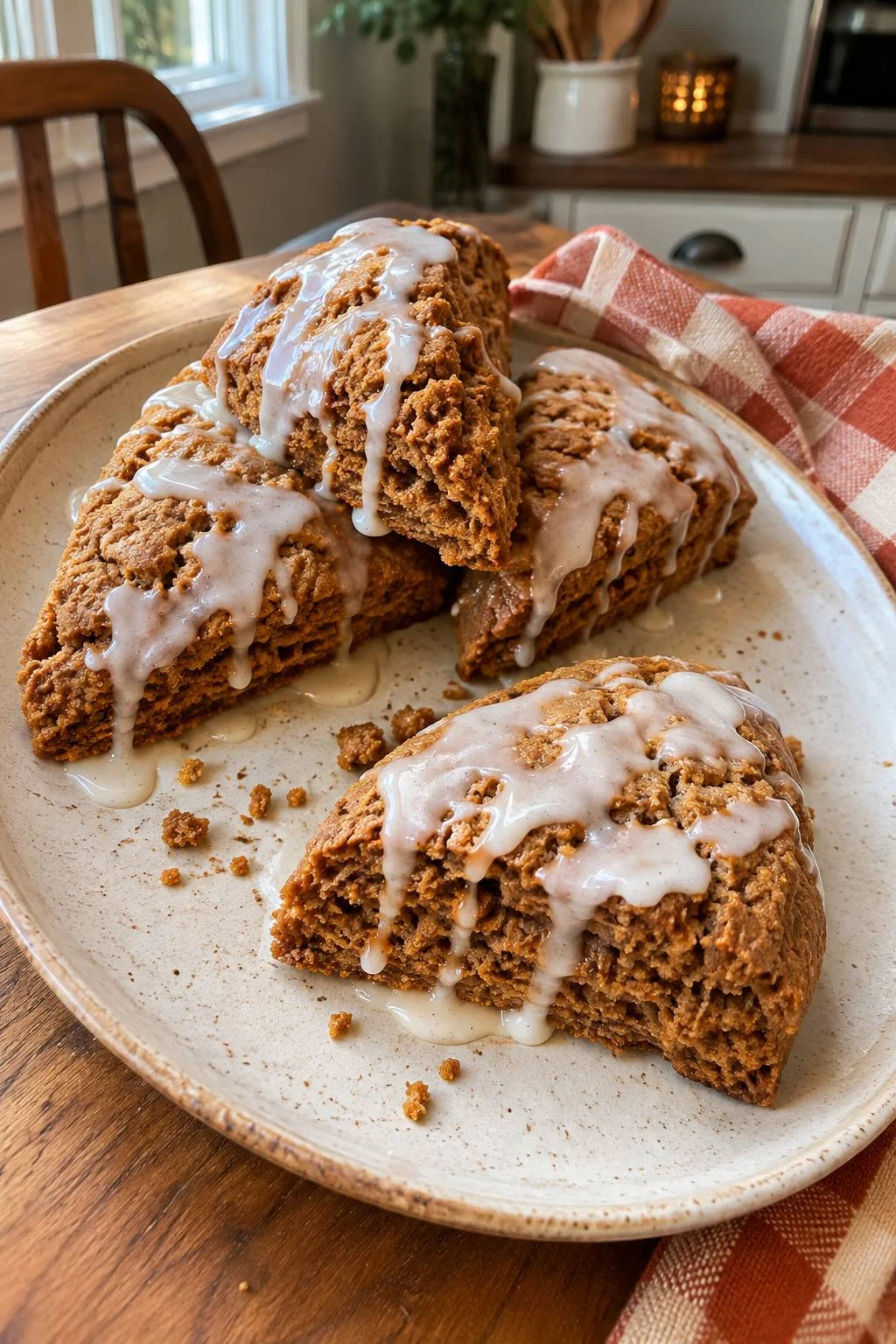
Tender gingerbread scones flavored with molasses and warm spices, finished with a drizzle of vanilla bean glaze. Tips for flaky layers and a glaze that drips.
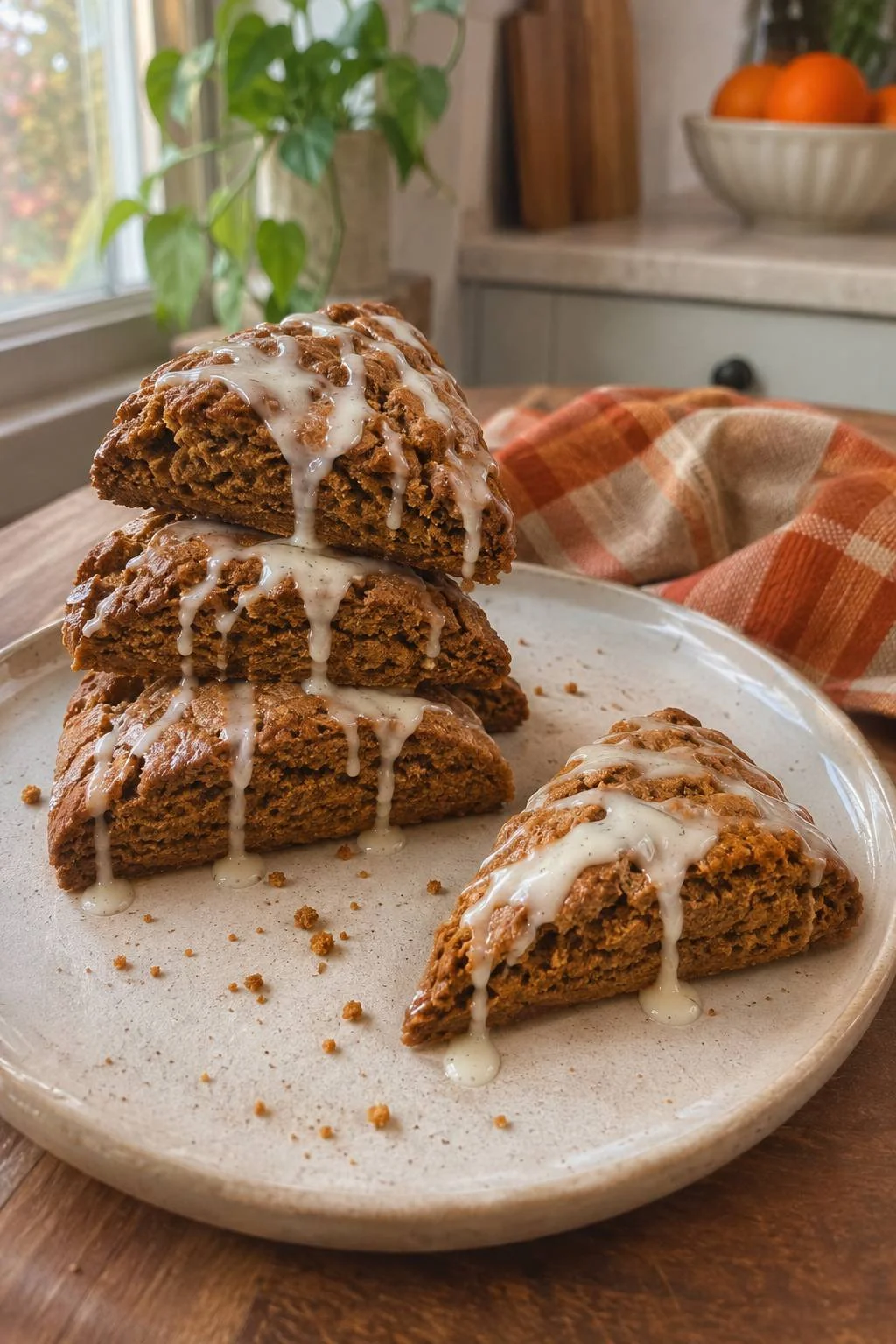
Gingerbread flavor is usually reserved for cookies and cakes, but it fits beautifully into a scone. These gingerbread scones combine molasses, brown sugar, and a warm blend of ginger, cinnamon, and cloves in a tender, lightly sweet dough with golden, crisp edges. They feel like a special breakfast without demanding much of your morning.
The vanilla glaze is what makes them feel finished. It is just powdered sugar, milk, and vanilla bean powder whisked until smooth, and it drips down the sides in generous ribbons. Below, you will find notes on ingredients, texture, and the mistakes that matter most, so you can bake with confidence.
Why Molasses and Warm Spices Work Together
Molasses does more than add color. It brings a deeper, slightly bittersweet flavor that balances the brown sugar and gives the crumb a soft, moist character. Choose unsulfured molasses for a clean, rich taste that suits the spices. Ginger, cinnamon, and cloves should taste like a warm background rather than a sharp bite, so whisk them into the flour with the baking powder and baking soda before anything else. That way every wedge has the same spiced flavor from edge to center.
Keeping the Butter Cold and Visible
Texture starts with the butter. Cold butter should stay in visible pieces, so the mixture looks like coarse crumbs with some pea-size bits still showing. Use a pastry blender or your fingertips, and work quickly so the butter does not soften into the flour. As those pieces melt in the hot oven, they release steam that pushes the dough apart and creates flaky layers. If the dough turns greasy or sticky while you work, a brief chill will firm the butter back up.
Mixing and Shaping Without Overworking
Overmixing is the most common mistake with scones. Once the wet ingredients meet the flour, stir with a fork only until a shaggy dough forms, with a few dry spots still showing. It will look rough, and that is exactly right. Pat the dough into a round with gentle hands, aiming for even thickness so every wedge bakes at the same rate. Cut with a sharp knife or bench scraper and press straight down rather than sawing, which keeps the layers intact.
Getting the Vanilla Glaze Just Right
The glaze should be thick but still pourable, similar to heavy cream. Add the milk gradually, since it is easy to thin the glaze too far. Glaze the scones while they are warm rather than hot, so the glaze runs down the sides and sets to a soft, opaque finish as it cools. Give it time to set before you stack the scones on a plate, or the drips will smear.
Frequently Asked Questions
Why does the butter need to stay cold?
Cold butter creates small pockets that release steam in the oven, which lifts the dough and builds flaky layers. If the butter melts into the flour before baking, the scones will spread and turn dense and flat. Keep the butter cold and work quickly so it stays in visible pieces.
How can I tell when the scones are done?
Look for tops that feel firm and edges that have turned golden brown. Pulling them out early leaves the centers pale and soft, so give them the full baking time listed on the recipe card. Let them rest on a wire rack before glazing so the glaze sets cleanly.
How do I keep the glaze from running too thin?
Add the milk a little at a time and stop once the glaze is thick but still pourable. If it runs off the scones instantly, it is too thin; let it rest briefly and whisk again before drizzling. Warm scones, not hot ones, give the glaze the soft, opaque finish you want.
Recipe
Gingerbread Scones with Vanilla Glaze
Tender, triangle-cut scones flavored with molasses and warm gingerbread spices, baked until golden and finished with a drizzle of vanilla bean glaze. The dough is cut in cold butter, shaped into a round, cut into wedges, and baked at 400°F for about 15 minutes.
- Course
- Breakfast
- Cuisine
- American
- Difficulty
- Easy
- Servings
- 8 scones
- Prep time
- 20 mins
- Cook time
- 15 mins
- Total time
- 1 hr
- Calories
- 350 kcal
Ingredients
Scones
Vanilla Glaze
Instructions
Scones
Preheat the oven to 400°F. Line a baking sheet with parchment paper.
In a large bowl, whisk together the flour, brown sugar, baking powder, baking soda, ginger, cinnamon, cloves and salt.
Add the cold butter cubes. Using a pastry blender or your fingertips, work the butter into the flour until the mixture looks like coarse crumbs with some pea-size pieces remaining.
In a small bowl, whisk together the molasses, cold buttermilk and egg until smooth. Pour into the flour mixture and stir with a fork just until a shaggy dough forms. Do not overmix.
Refrigerate the dough for 15 minutes to firm up the butter.
Turn the dough out onto a lightly floured surface and gently pat it into an 8-inch round about 3/4 inch thick. Cut the round into 8 wedges with a sharp knife or bench scraper.
Arrange the wedges on the prepared baking sheet about 2 inches apart. Bake for 14 to 16 minutes, until the tops are firm and the edges are golden brown.
Transfer the scones to a wire rack and let cool for 10 minutes.
Vanilla Glaze
While the scones cool, whisk the powdered sugar, 2 tablespoons of the milk and the vanilla bean powder in a small bowl until smooth. Add more milk, 1 teaspoon at a time, until the glaze is thick but pourable.
Drizzle the glaze over the slightly warm scones, letting it run down the sides. Let the glaze set for about 10 minutes before serving.
Notes
- Keep the butter cold and leave it in visible pieces. As the cold butter melts in the oven, it releases steam that lifts the dough and creates flaky layers.
- Glaze the scones while they are warm but not hot. The glaze will be thinner and drip down the sides, and it will set to a soft, opaque finish as it cools.
Recipe: https://dishwhisperer.com/gingerbread-scones-with-vanilla-glaze/