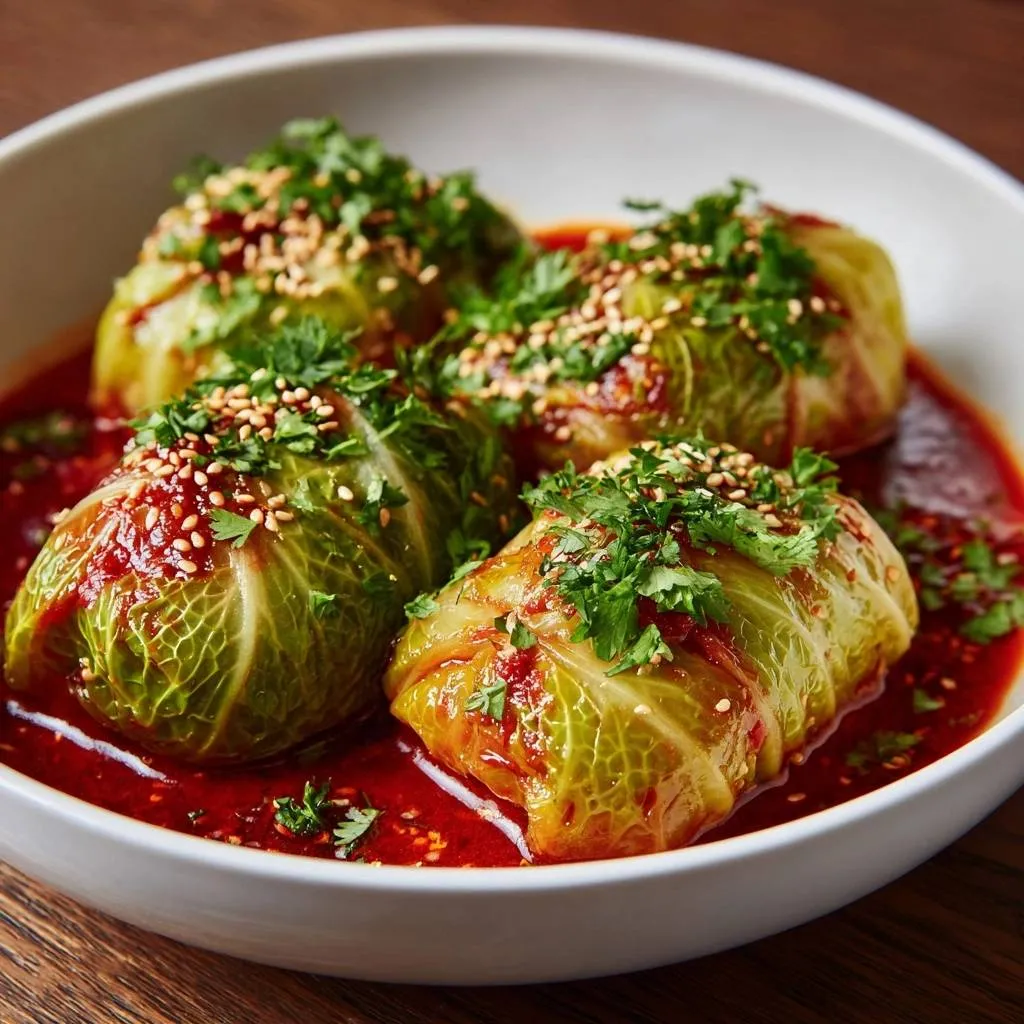
Why Gochujang Beef Cabbage Rolls Transform Weeknight Dinners
Ever yanked a cabbage leaf only to watch it rip apart mid-roll? You know the drill: tears everywhere, filling spilling out, dinner ruined. But these Gochujang Beef Cabbage Rolls fix that frustration with a dead-simple blanching trick. You’ll get pliable leaves that wrap tight every time, no shreds or fails.
Here’s why they shine. That foolproof method delivers intact rolls packed with spicy beef, sticky rice, and glossy gochujang sauce. Plus, bold Korean heat meets tender cabbage in just 45 minutes. In addition, they beat takeout with fresh flavors you control.
The secret? Core the cabbage first, then blanch and ice-shock the leaves. This breaks down just enough pectin for flexibility without mush. Oh man, the first bite’s glossy sauce and juicy filling? Pure crave-worthy bliss.
Key Ingredients for Gochujang Beef Cabbage Rolls
Large green cabbage leaves give your rolls sturdy structure. They hold the spicy filling without splitting. Therefore, pick firm heads with vibrant color.
Gochujang brings fermented heat and umami to the beef. It layers sweet-spicy depth that clings perfectly. Meanwhile, short-grain rice binds everything, soaking up juices for moist bites.
Soy sauce and sesame oil add salty-nutty balance. Green onions and garlic build fresh punch. For the sauce, mix 1/2 cup gochujang, 1/4 cup water, 1 tablespoon soy sauce, and 1 teaspoon sugar if store-bought lacks zing. Each roll packs protein with low-carb perks.
Selecting Perfect Cabbage for Flawless Rolls
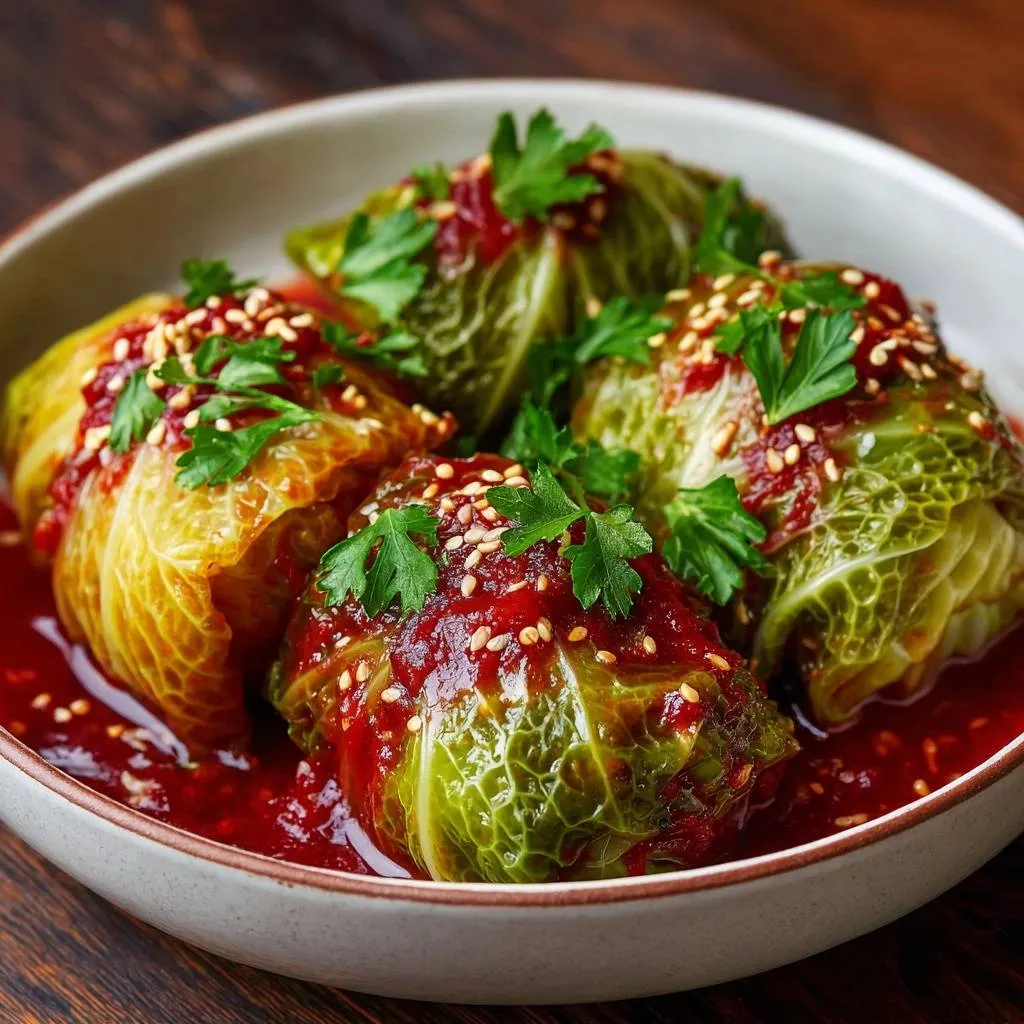
Choose green cabbage over Napa for tougher leaves that grip filling. Test freshness by squeezing: it should feel heavy and crisp. First, core out the thick bottom with a paring knife. This stops curling and tearing during blanching.
Gochujang Paste vs. Sauce Breakdown
Paste packs intense fermented chili heat; brands vary from mild to fiery. Sauce thins it for glossy pours. However, DIY milder versions by upping water or sugar. This ensures even adhesion to your Gochujang Beef Cabbage Rolls.
Science of Blanching Cabbage Leaves
Blanching boils water breaks pectin bonds, making leaves pliable. You submerge each for 2-3 minutes until flexible. Then, the ice bath shocks them, halting enzymes for crisp edges.
This thermal shock prevents mushiness. Leaves transform from rigid to roll-ready, soft but snappy. In addition, it preps surfaces so gochujang sauce sticks without sliding off.
Picture the timeline: stiff leaf hits boil, softens fast, then ice firms the texture. Korean banchan preps evolved this way for perfect wraps. No more fights with brittle cabbage.
Why Ice Bath Prevents Torn Gochujang Beef Cabbage Rolls
Ice denatures enzymes that soften too much post-boil. Without it, leaves turn soggy. Common fails like straight draining lead to tears; this method keeps them intact and rollable.
Preparing the Spicy Beef Filling
Mix 1 pound ground beef, 1/2 cup cooked short-grain rice, 2 chopped green onions, 2 minced garlic cloves, 1 tablespoon soy sauce, 1 tablespoon gochujang, and 1 teaspoon sesame oil. Hand-mix gently for even spread.
Rice absorbs fats, keeping rolls juicy. Garlic and onions layer umami first. Taste and tweak seasoning before rolling. Therefore, you’ll avoid bland surprises.
Foolproof Assembly of Gochujang Beef Cabbage Rolls
Lay a blanched leaf flat. Spoon 2 tablespoons filling at the base. Fold sides in snug, then roll tightly like a burrito from the bottom.
Don’t overstuff, or leaks happen. Place seam-side down in the skillet. Pro tip: chill filling 10 minutes first for firmer handling. Pat leaves dry too, for no-slip grips.
Cooking Gochujang Beef Cabbage Rolls to Perfection
Fit 8 rolls seam-side down in a skillet. Pour 1 cup gochujang sauce over. Bring to simmer, cover, and cook low for 30-35 minutes.
Steam tenderizes leaves while sauce reduces glossy. Beef hits safe 160°F inside. Finish uncovered if you want thicker shine. Sensory cue: sauce bubbles gentle, aromas fill the kitchen spicy-sweet.
Monitoring Simmer for Tender Results
At 15 minutes, baste rolls with spooned sauce. By 30, beef firms and cabbage softens fully. Don’t cut to check; look for sauce cling and no pink juices. Total tender perfection.
Korean Roots of Gochujang Beef Cabbage Rolls
Gochujang fermented since the 1800s, blending chiles, glutinous rice, and soybeans for umami fire. It stars in modern twists like these rolls. Influences from bossam, Korea’s boiled pork wraps, inspire the cabbage technique.
This version fuses beef filling with gochujang punch. However, it’s a Korean-American riff on stuffed leaves. Pairs culturally with banchan sides for balanced heat.
Avoiding Common Mistakes in Gochujang Beef Cabbage Rolls
Over-blanching turns leaves mushy; stick to 2-3 minutes. Loose filling leaks if you skip rice binder. Sauce separates without whisking well first.
Fixes include patting leaves super dry and chilling filling. Therefore, rolls stay intact. Reader fix: curl from uncored cabbage? Always knife out that base.
Troubleshooting Torn Leaves and Leaks
Torn leaves mean skipped coring or no ice bath. Leaks come from wet leaves or excess filling. Adjust by trimming thick veins and using 2 tablespoons max per roll.
Make-Ahead and Freezing Gochujang Beef Cabbage Rolls
Assemble rolls up to 24 hours ahead; fridge them covered. For freezing, blanch, fill, roll, then freeze flat on a tray before bagging. Thaw overnight, simmer 20 extra minutes.
Batch for meal prep: doubles easy. Shelf life hits 3 days fridge post-cook. Pro tip: par-cook before freezing for best texture.
Flavor Variations for Gochujang Beef Cabbage Rolls
Swap beef for ground turkey or tofu for lighter twists. Add chopped kimchi for crunch. Milder? Blend gochujang with extra honey or dilute sauce.
Vegan filling: mushrooms, rice, and gochujang shine. Tier spice by paste heat. Therefore, customize for kids or heat-lovers alike.
Pairing Sides with Gochujang Beef Cabbage Rolls
Crisp cucumber salad cuts the spice. Steamed rice soaks up glossy sauce. Pickled radish adds tang balance.
Iced barley tea refreshes perfectly. Garnish with sesame seeds and cilantro for pretty plating. Simple sides elevate the bold rolls.
Expert Tips for Gochujang Beef Cabbage Rolls
Scale up: double for crowds, use two skillets. Air fryer alt: 375°F for 20 minutes, sauce baste halfway. Thicken sauce with cornstarch slurry if thin.
Yield: 8 rolls serve 4. Store extras airtight. Reheat steams best, keeps tender.
Frequently Asked Questions About Gochujang Beef Cabbage Rolls
How do I store Gochujang Beef Cabbage Rolls and can they freeze?
Store cooked rolls in an airtight container in the fridge for up to 3 days. Reheat gently on stovetop with a splash of water to revive sauce gloss. For freezing, assemble uncooked rolls on a tray, freeze solid, then bag for up to 2 months. Thaw in fridge overnight and simmer 35 minutes; blanching prevents sogginess, so texture holds firm. Avoid freezing cooked sauce separately, as it may separate.
Why do my cabbage rolls tear and how do I fix it?
Tears happen from skipping the core cut or improper blanching; rigid leaves split under filling. Always core first to stop curling, blanch 2-3 minutes for pliability, and ice bath immediately. Pat dry thoroughly before assembly. If still issues, trim thick veins post-blanch. This method guarantees no tears, delivering intact rolls every time with tender, sauce-clinging cabbage.
Can I substitute ingredients in Gochujang Beef Cabbage Rolls?
Swap ground beef for turkey or crumbled tofu; adjust cook time slightly for doneness. No gochujang? Mix sriracha, miso, and honey 1:1:0.5 ratio for similar heat-umami. Use tamari for gluten-free soy. Short-grain rice binds best, but jasmine works if soaked first. These keep the juicy, spicy profile without compromise.
Is Napa cabbage okay for these rolls?
Yes, Napa works but it’s softer, so blanch just 1-1.5 minutes to avoid mush. Its frilly leaves roll looser, perfect for lighter fillings. Green cabbage gives firmer structure for beefy versions. Either way, core and ice-shock for no tears; Napa shines in milder sauces.
How do I make Gochujang Beef Cabbage Rolls less spicy?
Dilute gochujang paste with more water or sugar in the sauce; try 1/3 cup paste to 1/3 cup water. Add diced bell peppers to filling for sweet bulk. Taste filling raw and reduce paste to 2 teaspoons start. Builds flavor without overwhelming heat, ideal for families.
Can I bake Gochujang Beef Cabbage Rolls instead of stovetop?
Absolutely, arrange seam-side down in a baking dish, pour sauce over, cover with foil. Bake at 350°F for 40 minutes, uncover last 10 for sauce reduction. Check beef at 160°F. This even-cooks larger batches; baste midway for glossy results matching skillet tenderness.
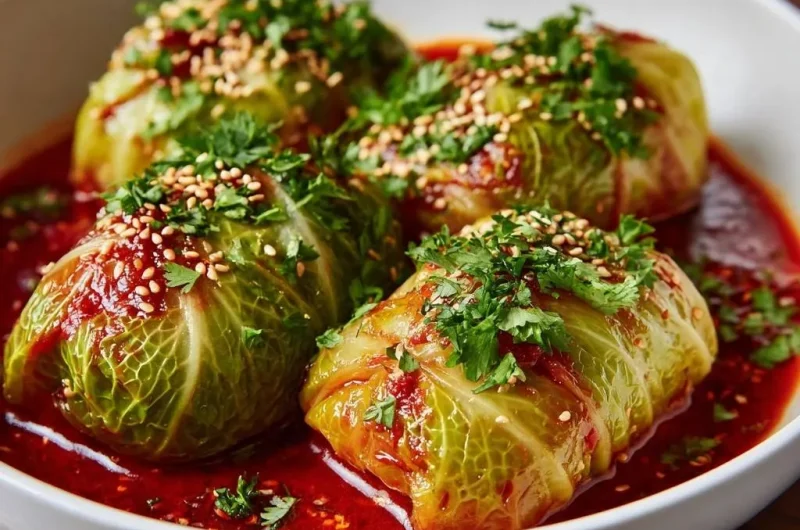
Gochujang Beef Cabbage Rolls
Course: Main CourseCuisine: KoreanDifficulty: easy8
rolls20
minutes35
minutes55
MinutesKorean
Ingredients
8 large green cabbage leaves
1 pound ground beef
1/2 cup cooked short-grain rice
2 green onions, finely chopped
2 garlic cloves, minced
1 tablespoon soy sauce
1 tablespoon gochujang (Korean chili paste)
1 teaspoon sesame oil
1 cup gochujang sauce (store-bought or mix 1/2 cup gochujang, 1/4 cup water, 1 tablespoon soy sauce, 1 teaspoon sugar)
Sesame seeds, for garnish
Fresh cilantro, chopped, for garnish
Directions
- Core the cabbage: Cut out the thick core from the bottom of the head with a paring knife. This prevents leaves from curling and tearing.
- Blanch for perfect pliability: Bring a large pot of water to a boil. Submerge cabbage leaves one by one for 2-3 minutes until soft and flexible but not mushy. Immediately transfer to an ice water bath for 1 minute to stop cooking and preserve crisp edges. Pat dry. This shock method (boil then ice) is the key fix, no more torn leaves, guaranteed rollable every time.
- Make filling: In a bowl, mix ground beef, rice, green onions, garlic, soy sauce, gochujang, and sesame oil until combined.
- Assemble rolls: Place 2 tablespoons filling on the base of each blanched leaf. Fold sides in, then roll tightly from the bottom like a burrito. No tears, no unraveling.
- Cook: Place rolls seam-side down in a skillet. Pour gochujang sauce over top. Bring to a simmer, cover, and cook on low for 30-35 minutes until beef is cooked through and rolls are tender.
- Serve: Garnish with sesame seeds and cilantro. Enjoy intact, flavorful rolls in glossy sauce.
Notes
- Use store-bought gochujang sauce or mix 1/2 cup gochujang, 1/4 cup water, 1 tablespoon soy sauce, 1 teaspoon sugar. Blanching with ice bath is key to pliable leaves without tears.