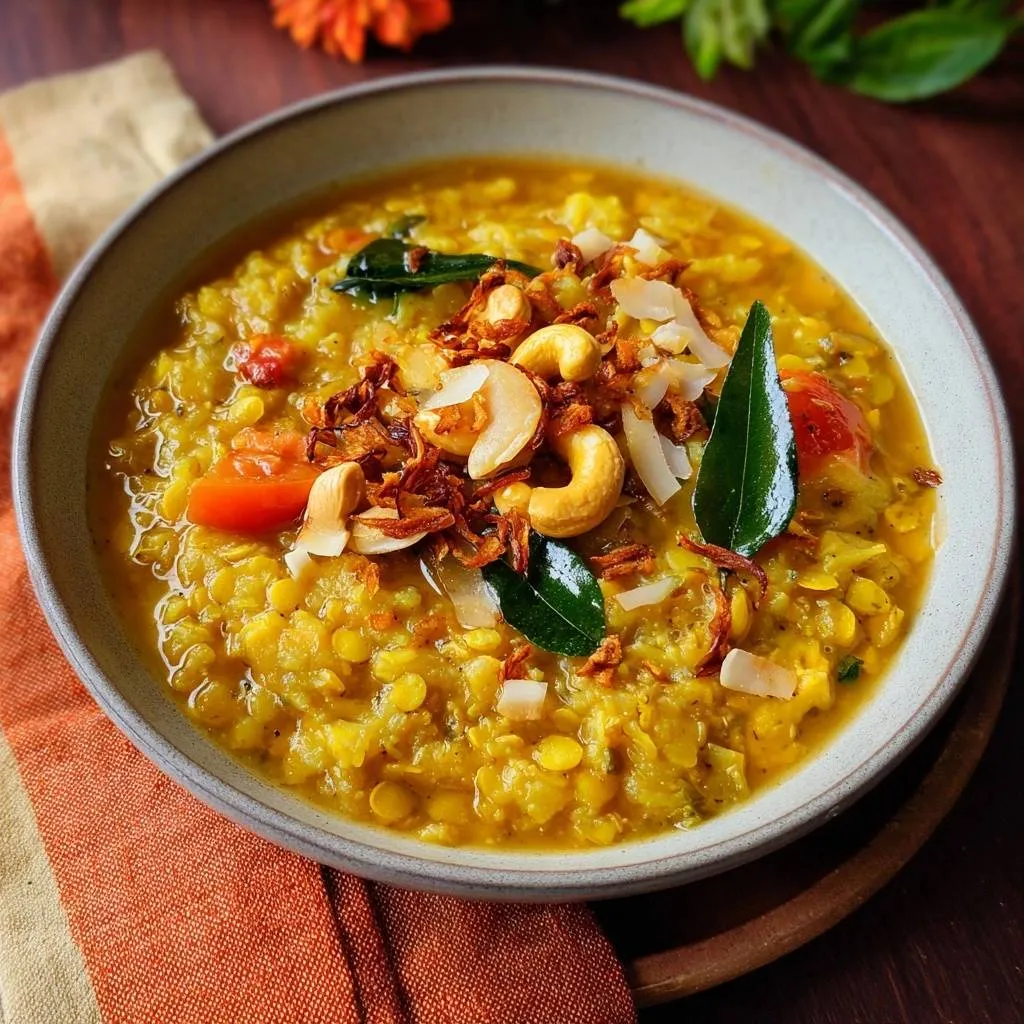
Ever turned your back on the stove just to find your dal’s tempering charred and bitter? That heartbreaking crunch of burnt onions and cashews ruins the whole pot. But this Golden Coconut Cashew Dal changes everything with a low-slow heat trick that delivers crispy, golden toppings every single time.
Therefore, you get that perfect contrast: creamy lentils hugging vibrant spices below, while crunchy onions, cashews, and curry leaves perch on top. In addition, it’s packed with plant-based protein from toor dal and anti-inflammatory turmeric for a nourishing meal that feels indulgent. Home cooks love it because no fancy gear is needed.
The secret lies in sequencing the tempering just right. Start onions on truly low heat for 8-10 minutes; they soften then crisp without a hint of scorch. That patience unlocks nutty sweetness you can’t get from rushed high-heat methods.
Core Elements for Golden Coconut Cashew Dal
You’ll need 1 cup yellow split lentils, 2 chopped medium tomatoes, 1/2 cup fresh grated coconut, 1/4 cup raw cashews, 10-12 fresh curry leaves, 1 large thinly sliced red onion or 6 shallots, 1 teaspoon turmeric powder, salt to taste, 3 cups water, and 2 tablespoons coconut oil (divided). These create the base, tempering stars, and enrichers.
Fresh grated coconut adds moisture and freshness that desiccated versions lack; grate it yourself for best results. Raw cashews toast to gold thanks to their natural oils. Use coconut oil because its high smoke point handles low-heat tempering without breaking down.
| Ingredient | Quantity | Substitution Tip |
|---|---|---|
| Yellow split lentils | 1 cup | Red lentils for quicker cook |
| Tomatoes | 2 medium | Canned for off-season |
| Raw cashews | 1/4 cup | Sunflower seeds if nut-free |
| Curry leaves | 10-12 fresh | Frozen; avoid dried if possible |
Yellow Split Lentils and Tomato Base
Toor dal shines here for its superior creaminess; other lentils stay firmer. Rinse them under cold water until clear to ditch excess starch that causes gumminess. Tomatoes bring acidity that balances turmeric’s earthiness, while 3 cups water yields stew-like consistency.
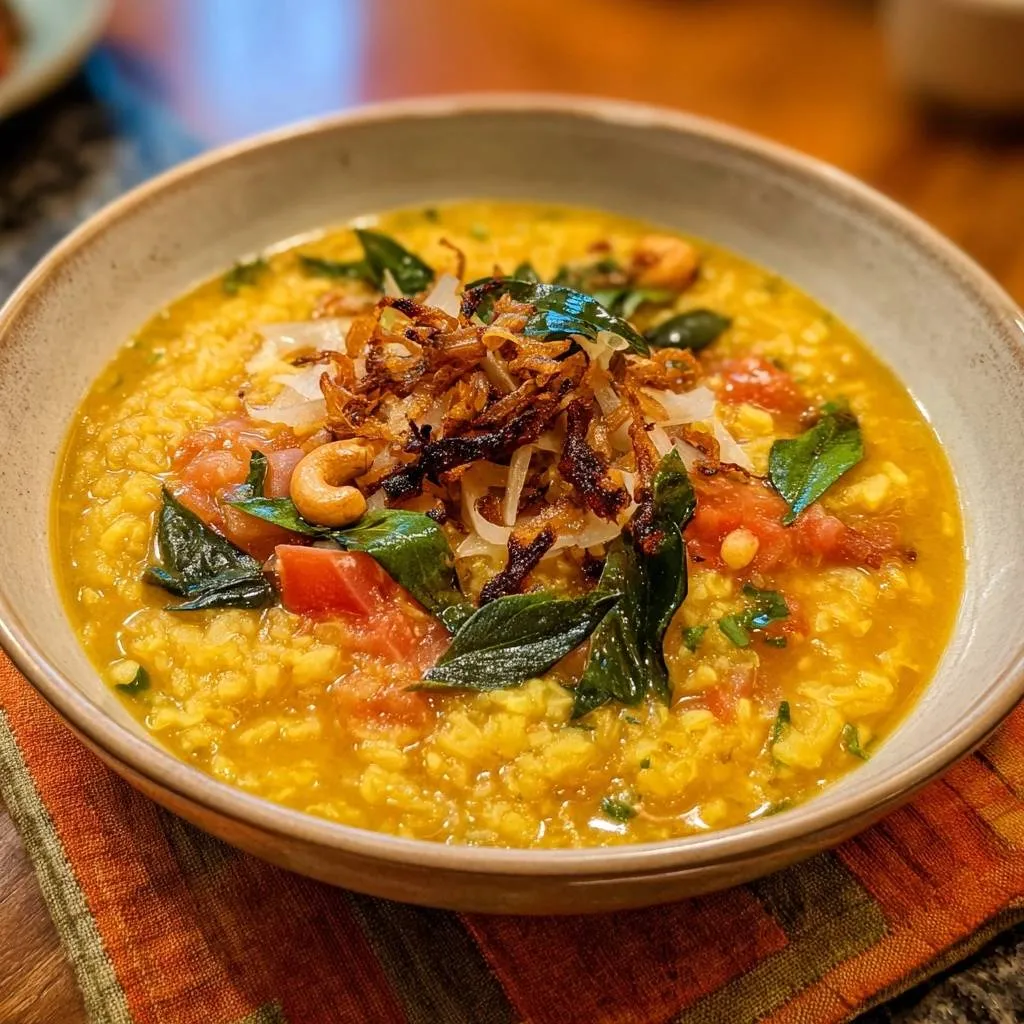
Add salt early so lentils absorb it evenly. Therefore, your base simmers to velvety perfection without bland spots.
Tempering Stars: Onions, Cashews, Curry Leaves
Red onions offer bold sweetness over shallots’ milder bite; slice thin for even crisping. Raw cashews’ oils release nutty depth when toasted low and slow. Fresh curry leaves pack volatile oils that burst with aroma; store them in the fridge wrapped in a damp towel.
However, skip pre-toasted nuts; they burn fast. Thin slicing ensures onions crisp uniformly.
Coconut Oil and Fresh Grated Coconut
Coconut oil’s saturated fats stabilize flavors during low-heat work, preventing the rancid taste of other oils. Fresh grated coconut sprinkles moist, chewy contrast; desiccated dries out fast. Grate from a fresh nut or quality frozen block.
In addition, stir one tablespoon into the dal for silky richness that ties everything together.
Perfect Golden Coconut Cashew Dal: Low-Heat Sequence
This method divides into three phases. Low heat is your anti-scorch hero, mimicking traditional clay pots. Follow timings for crunch that lasts.
Phase 1: Creamy Lentil Base Simmer
Rinse lentils until water runs clear. In a pot, combine them with turmeric, tomatoes, salt, and 3 cups water. Bring to a boil, then cover and simmer 20 minutes until soft.
Mash lightly with a spoon for texture; don’t blend or it turns gluey. Add water if too thick. Covered simmering locks in nutrients and builds creaminess; you’ll smell sweet earthiness rising.
Phase 2: Foolproof Golden Onion Crisp
Heat 1 tablespoon coconut oil in a small pan over low heat; never crank above medium-low. Add sliced onions or shallots; stir gently 8-10 minutes. They soften first, then turn deep golden and crispy with a sweet, caramel-like scent.
Patience here prevents bitterness from uneven browning. Pro tip: Use a wide pan for even heat diffusion.
Phase 3: Cashew and Curry Leaf Finish
Add cashews to the onion pan; stir 2-3 minutes until they glow golden. Toss in curry leaves last for 30 seconds; edges curl and aromas explode. Remove from heat right away to halt cooking.
This sequence avoids overcrowding. Therefore, crunch stays even after sitting.
Tempering Science in Golden Coconut Cashew Dal
Low heat triggers the Maillard reaction gently, browning onions and cashews to nutty gold without char. High heat skips this, jumping to bitter compounds. Think of it like toasting bread slowly for even flavor.
Curry leaves release volatile oils at low temps; blast them hot and they turn acrid. Coconut oil’s stability holds these flavors steady. In contrast, rushed methods scorch sugars first, killing balance.
Visualize heat as a dimmer switch: gradual build crisps surfaces while insides stay tender. That’s your foolproof edge.
No-Scorch Secrets for Cashew Dal Tempering
Common pitfalls include burnt onions from high heat, soggy tops from early adds, or bland dal sans final oil stir. Fix with low heat, sequence, and pan size. Here’s your checklist: low start, wide pan, off-heat rest.
Fixing Burnt or Bitter Tempering
If scorched, start over or deglaze with water and strain. Low heat echoes clay pot diffusion, avoiding hot spots. Acid from tomatoes later balances any edge.
Handling Soggy or Uneven Crunch
Dry pan pre-heat, stir in single layer, rest off-heat. High humidity? Pat toppings dry first. At altitude, drop time by 1-2 minutes for same results.
Flavor Twists on Golden Coconut Cashew Dal
Keep the coconut cashew essence but tweak: Add spinach for greens, ginger-garlic for punch, or swap to red lentils. These boost nutrition like iron from spinach pairing with lentil protein. Spice ups with chili stay vegan.
Green Boost: Spinach-Infused Version
Stir in 2 cups chopped spinach post-simmer; wilt 2 minutes. Lentils’ iron meets spinach’s vitamin C for better absorption. Keeps creaminess intact.
Spice Forward: Ginger Garlic Tempering
Mince 1 teaspoon each ginger and garlic; add after onions on low heat. Stir 1 minute without browning. Builds warmth without overpowering.
Quick Red Lentil Adaptation
Swap for 1 cup red lentils; simmer 15 minutes. Mash less for natural creaminess. Same tempering shines.
Ideal Pairings for Golden Coconut Cashew Dal
Pair with steaming basmati rice to soak up creaminess, or brown rice for chew. Roti contrasts crisp edges against soft dal. Cucumber raita cools spice; okra stir-fry adds pop.
Therefore, textures play off: creamy vs. crisp. For meal prep, portion with rice in bowls; holds 4 days.
Batch Cooking Golden Coconut Cashew Dal
Scale x2-4 easily; double water per cup lentils. Cook base in one pot, tempering in batches to avoid crowding. Fridge lasts 4 days in airtight containers; freeze portions 3 months without texture loss.
Reheat dal on stove with splash water; oven-toast fresh tempering at 350°F for 5 minutes to revive crunch. Glass meal prep bowls stack well.
Golden Coconut Cashew Dal Troubleshooting
How do I store Golden Coconut Cashew Dal leftovers?
Store in airtight containers in the fridge for up to 4 days. Freeze dal base (without tempering) in portions for 3 months; thaw overnight and re-temper fresh for crunch. Avoid freezing toppings as they soggy up.
Why is my tempering not crispy?
Usually from high heat or wet pan. Always start low, pat onions dry, and use a wide pan for steam escape. Rest off-heat 1 minute; crunch sets as it cools.
Can I use dried curry leaves instead of fresh?
Yes, rehydrate 10-12 dried leaves in warm water 5 minutes, pat dry, then add last 30 seconds. They crisp less but aroma holds. Fresh or frozen beat dried for volatile oils.
Why aren’t my lentils softening?
Old lentils take longer; soak 30 minutes first if over 6 months stored. Check pot isn’t too small causing uneven boil. Fresh toor dal simmers creamy in 20 minutes.
Is this recipe dairy-free and vegan?
Absolutely, 100% plant-based. Coconut oil and fresh coconut provide richness; no dairy needed. Nut-free swap: seeds like sunflower for cashews.
Why is my dal too thick or thin?
Thick from starch or low water; mash and add 1/4 cup hot water per serving. Thin? Simmer uncovered 5 minutes more. Aim for spoon-coating stew texture.
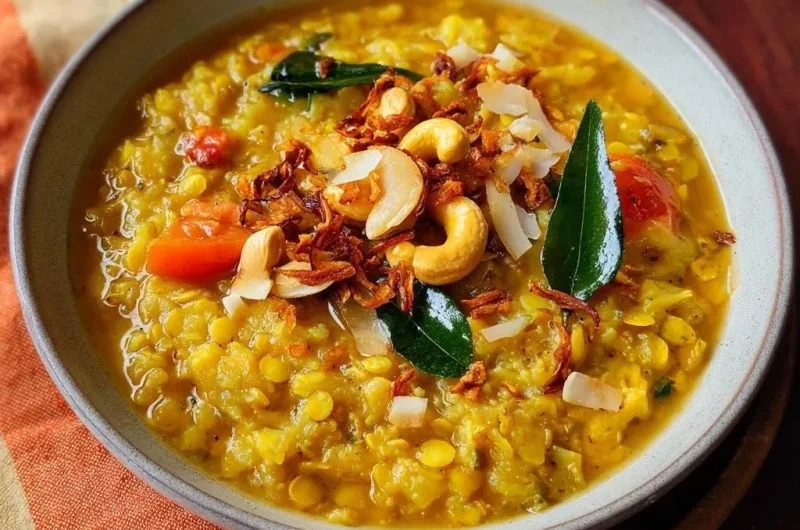
Golden Coconut Cashew Dal
Course: Main CourseCuisine: IndianDifficulty: easy4
servings15
minutes35
minutes50
Minutes350
kcalIndian
Ingredients
1 cup yellow split lentils (toor dal or pigeon peas)
2 medium tomatoes, chopped
1/2 cup fresh grated coconut
1/4 cup raw cashews
10-12 fresh curry leaves
1 large red onion or 6 shallots, thinly sliced
1 teaspoon turmeric powder
Salt to taste
3 cups water
2 tablespoons coconut oil (divided)
Directions
- Rinse lentils until water runs clear. In a pot, add lentils, turmeric, chopped tomatoes, salt, and 3 cups water. Bring to boil, then simmer covered for 20 minutes until lentils are soft and creamy. Mash lightly for texture; add water if needed for stew-like consistency.
- For the foolproof tempering (your no-scorch secret): Heat 1 tablespoon coconut oil in a small pan over LOW heat (key: never go above medium-low to prevent burning). Add sliced onions or shallots first; stir gently for 8-10 minutes until deep golden and crispy. They’ll soften then crisp without charring thanks to the slow heat.
- Add cashews to the same pan; stir 2-3 minutes until golden. Toss in curry leaves last (they crisp fast); stir 30 seconds until aromatic and edges curl. Remove from heat immediately to stop cooking.
- Stir remaining 1 tablespoon coconut oil into dal for richness, then pour hot tempering over top. Sprinkle fresh grated coconut evenly over the dal. Mix half the tempering into the dal for flavor infusion, leave half (with coconut) as crispy garnish. Serve hot with rice. The low-heat sequence guarantees perfect crunch that stays crisp even after sitting!
Notes
- Use low heat for tempering to ensure onions and cashews turn golden without burning. Fresh curry leaves and grated coconut elevate the flavor and texture.