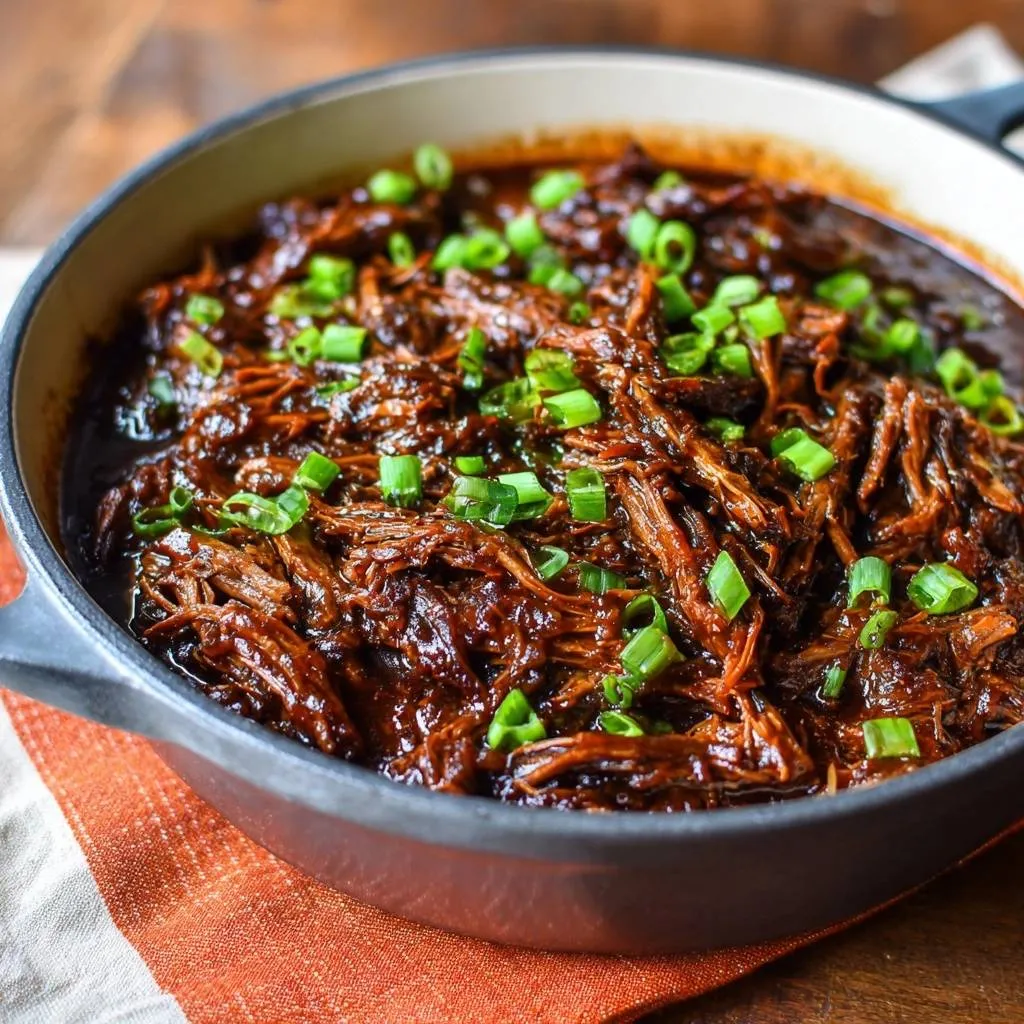
Ever braised beef only to end up with tough, dry chunks that no amount of sauce can save? This Korean-Style Shredded Beef changes everything. You’ll get shreddable, moist perfection in just 20 minutes prep and a hands-off 3.5-hour braise, serving 6-8 hungry folks.
Therefore, it delivers those bold Korean flavors of soy, ginger, and sesame without the usual pitfalls. No more gray, chewy meat. Instead, picture glossy shreds that soak into rice like a dream.
The secret lies in the tight-lid braise with halfway liquid. It traps steam, breaking down collagen into silky gelatin while locking in every drop of juice. That’s why this Korean-Style Shredded Beef stays juicy every time.
Core Elements for Korean-Style Shredded Beef
Start with the protein: 3 lb beef chuck roast, cut into 4 large chunks. Chuck’s marbling melts during braising, keeping your Korean-Style Shredded Beef tender. Avoid lean cuts; they dry out fast.
Aromatics bring the punch. You’ll need 6 minced garlic cloves and 2 tbsp grated fresh ginger. Fresh ginger gives zing that powdered can’t match; it cuts through richness. In addition, 6 thinly sliced green onions add freshness at the end.
Braising liquids seal the deal: 1 cup low-sodium soy sauce, 1/2 cup brown sugar, 1/2 cup beef broth, and 2 tbsp sesame oil. Low-sodium soy prevents oversalting, while sugar balances umami into a glossy glaze. No tamari? It subs perfectly for gluten-free.
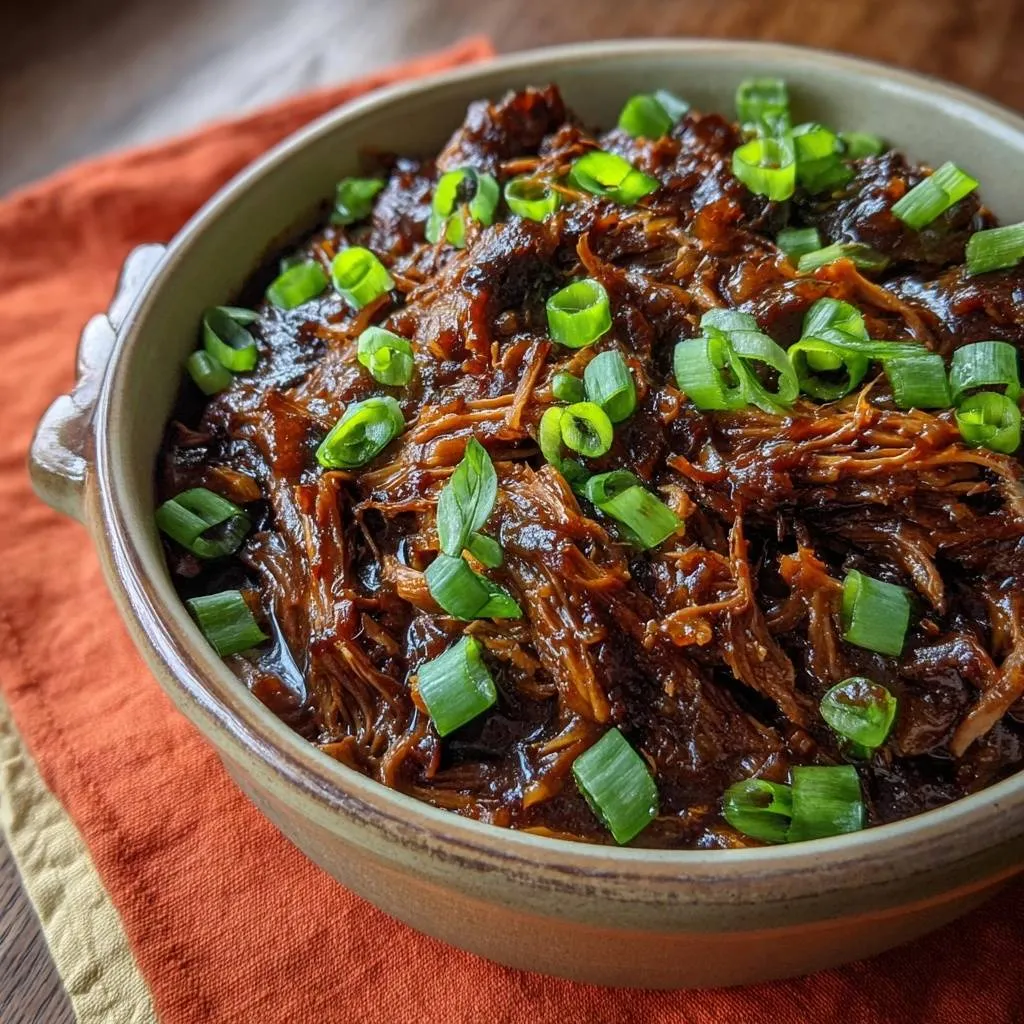
Don’t forget 1/4 cup vegetable oil for searing and 1 tsp black pepper. These basics transform tough roast into Korean-Style Shredded Beef magic.
Selecting the Ideal Beef Chuck Roast
Choose a 3 lb chuck roast with good marbling for even fat distribution. Cut into 4 large chunks so they braise uniformly in your Korean-Style Shredded Beef. Trim excess fat cap, but leave some for moisture.
Look for Choice grade; Prime works too if you’re splurging. This ensures the connective tissue breaks down into tender shreds without dryness.
Braising Liquids and Aromatics Breakdown
The 1:1:1 ratio of soy, sugar, and broth creates umami-sweet balance for Korean-Style Shredded Beef. Soy tenderizes via enzymes, sugar caramelizes the sauce. Sesame oil goes in early for nutty depth, not at the end.
Green onions sliced thin cut sharpness, adding crunch. Together, they build a sauce that clings to every shred.
Mastering the Sear for Juicy Korean-Style Shredded Beef
Preheat your oven to 300°F. Pat the beef dry and season with pepper. Heat 1/4 cup vegetable oil in a 6-7 qt Dutch oven over medium-high until shimmering.
Sear chunks 4 minutes per side for a deep brown crust. This Maillard reaction locks in juices, preventing dry Korean-Style Shredded Beef. Don’t crowd the pot; work in batches if needed to avoid steaming.
Remove beef to a plate. You’ll smell that rich, caramelized aroma promising flavor ahead.
Building the Braising Liquid Base
Drop heat to medium. Add garlic and ginger; stir 1 minute until fragrant. Those aromas will fill your kitchen.
Pour in soy sauce, brown sugar, broth, and sesame oil. Scrape up browned bits for depth in your Korean-Style Shredded Beef sauce. Bring to a simmer; flavors meld beautifully here.
Why halfway liquid? It steams the top while braising the bottom, keeping meat moist without boiling.
Tight-Lid Oven Braise Technique
Nestle beef back in the pot. Add a splash of broth if liquid doesn’t hit halfway up the chunks. Bring to a boil on stovetop.
Cover tightly; wrap lid edge in foil for an airtight seal. This traps steam for even, moist braising in Korean-Style Shredded Beef.
Transfer to oven for 3 hours. Test doneness: a fork should glide in effortlessly. Pro tip: check halfway and reseal if steam escapes.
Shredding and Sauce Reduction Method
Remove beef; it shreds easily with two forks right into the sauce. The pot’s warmth makes this effortless.
Simmer uncovered over medium heat for 10 minutes. Sauce thickens to a glossy coat, locking moisture into every shred of Korean-Style Shredded Beef. Stir in sliced green onions for brightness.
Why not drain? Sauce keeps it juicy, unlike dry pulled meats. Garnish with extra onions and serve hot.
Science of Moist Korean-Style Shredded Beef Braising
Low 300°F heat over 3 hours breaks collagen at 160-205°F into gelatin. Tight lid retains 30% more moisture than open pots by trapping steam. That’s the key to shreddable Korean-Style Shredded Beef.
Soy’s pH tenderizes proteins, sugar stabilizes for glaze. Halfway liquid creates gentle pressure, unlike full submersion which dilutes flavor. Compared to bulgogi’s quick grill, this slow braise mimics jjim for home cooks.
Result? Silky texture without toughness. It’s physics working for you.
Collagen to Gelatin Transformation
Tough collagen in chuck needs time and moisture. At 180°F+, it converts to gelatin, giving Korean-Style Shredded Beef that pull-apart silkiness. Rush it, and you get chewiness.
Steam Pressure and Juice Retention
Airtight seal builds gentle pressure, cooking evenly without evaporation. Juices stay inside, unlike loose lids that dry meat. Foil hack ensures perfection.
Origins of Korean-Style Shredded Beef Techniques
This draws from Korean jjim and jangjorim, soy-braised meats simmered low and slow. Hanjeongsik banchan tables feature similar tender beef sides.
Joseon dynasty cooks used earthenware for steam-trapped braises. Modern twists add sesame oil for nuttiness. Pair with rice to soak up sauce, just like tradition.
Adapted for home, it captures that bold, comforting flavor without fuss.
Essential Equipment for Korean-Style Shredded Beef
A 6-7 qt enameled cast iron Dutch oven shines here. It retains heat for perfect sear and braise. Lid must seal tight; foil fixes gaps.
Use forks for shredding, microplane for ginger. Oven thermometer confirms 300°F. No Dutch oven? Instant Pot works on high pressure 90 minutes, but sear first. Expect slight texture difference.
Avoiding Dry Beef in Korean-Style Shredded Beef
Skip the sear? You get gray, bland meat leaking juices. Always pat dry first. Overcrowd? Steam ruins crust; sear in batches.
Check lid halfway; reseal if needed. Test with fork glide, not clock. Over-shredding toughens; pull gently.
Thin sauce? Simmer longer or whisk in cornstarch slurry. These fixes keep Korean-Style Shredded Beef moist.
Fixing Undercooked or Tough Chunks
Braise extra 30-60 minutes until 195-205°F internal. Shred and sauce will revive most. Prevent by forking early.
Rescuing Watery Sauce Post-Shred
Simmer uncovered on low 15-20 minutes. Avoid high heat to prevent separation. Cornstarch helps if urgent.
Flavor Variations for Korean-Style Shredded Beef
Add 2 tbsp gochujang for spicy kick. Korean anju style uses pear juice for natural tenderizing sweetness. Mirin boosts glaze without overpowering.
Swap in carrots or shiitakes for veggies. Keep moist by braising same way. Low-carb? Pair with cauliflower rice that sauce clings to perfectly.
Perfect Pairings for Korean-Style Shredded Beef
Spoon over steamed rice for bowls that comfort like nothing else. Kimchi fried rice amps crunch and tang.
Add cucumber salad or pickled radish for fresh contrast. Assemble bibimbap with egg on top. Starch soaks glossy sauce beautifully. Meal prep lasts days.
Make-Ahead and Storage for Korean-Style Shredded Beef
Braise a day ahead; flavors deepen overnight. Store in sauce in airtight container up to 4 days in fridge. Freezes 3 months; thaw in fridge, shred post-thaw.
Reheat stovetop low with broth splash. Sauce prevents drying. Pro tip: portion into bags flat for quick thaw.
Troubleshooting Korean-Style Shredded Beef Issues
Beef tough? Braise wasn’t long enough; collagen needs 3+ hours. Sauce salty? Low-sodium soy fixes next time; dilute now with broth.
Slow cooker yes: 8 hours low after searing. Leftovers dry? Reheat in sauce only. Spicy? Stir in gochugaru during reduction.
FAQ
How do I store Korean-Style Shredded Beef leftovers?
Keep it juicy by storing shreds in the sauce in an airtight container. Refrigerate up to 4 days or freeze in portions for 3 months. Thaw overnight in fridge, then reheat gently on stovetop with a splash of broth to restore gloss without drying.
Why is my Korean-Style Shredded Beef tough?
Toughness comes from incomplete collagen breakdown, often from loose lid letting steam escape or undercooking. Ensure airtight seal with foil if needed, and braise until a fork glides effortlessly, hitting 195-205°F internal. Extend 30-60 minutes if unsure; it’ll shred perfectly after.
Can I substitute ingredients in Korean-Style Shredded Beef?
Swap low-sodium soy for tamari if gluten-free. No fresh ginger? Use 1 tbsp ground, but fresh gives better zing. Brown sugar out? Coconut sugar works for similar caramelization. Beef broth substitute: veggie broth keeps it umami-rich without overpowering Korean flavors.
Can I make Korean-Style Shredded Beef in a slow cooker?
Yes, sear first in a skillet, then transfer to slow cooker with liquids. Cook 8 hours on low until fork-tender. Reduce sauce on stovetop after shredding for that glossy coat; slow cookers don’t thicken well.
Why sear the beef before braising Korean-Style Shredded Beef?
Searing creates Maillard crust that traps juices, preventing dry, gray meat. It builds fond for sauce depth too. Skip it, and beef steams bland; pat dry and use high heat for best results.
How do I know when Korean-Style Shredded Beef is done braising?
Fork test: it should slide in with no resistance, and meat shreds easily. Internal temp 195-205°F confirms collagen-to-gelatin shift. Time varies by roast size; check at 3 hours, not before.
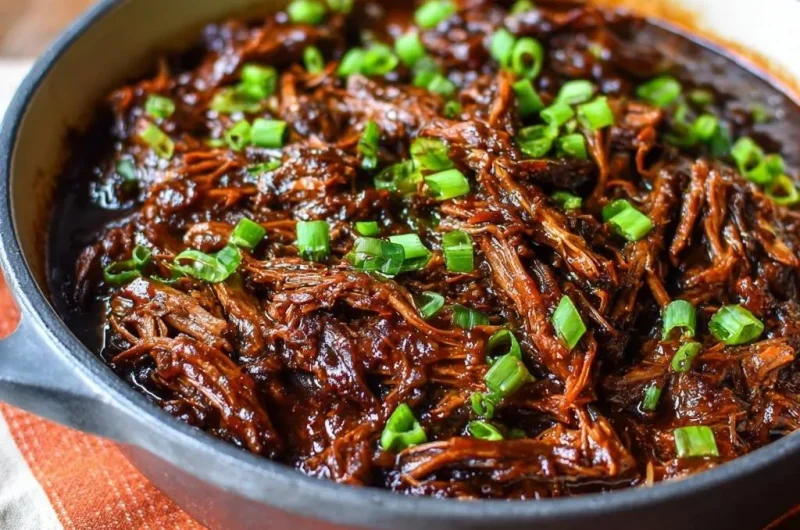
Korean-Style Shredded Beef
Course: Main CourseCuisine: KoreanDifficulty: easy6
servings20
minutes3
hours180
MinutesKorean
Ingredients
3 lb beef chuck roast, cut into 4 large chunks
1/4 cup vegetable oil
1 cup low-sodium soy sauce
1/2 cup brown sugar
1/2 cup beef broth
6 garlic cloves, minced
2 tbsp grated fresh ginger
2 tbsp sesame oil
1 tsp black pepper
6 green onions, thinly sliced (plus extra for garnish)
Directions
- Preheat oven to 300 degrees F. Pat beef dry and season with pepper. Heat vegetable oil in a large Dutch oven over medium-high heat until shimmering. Sear beef chunks on all sides until deeply browned, about 4 minutes per side. This locks in juices to prevent dryness. Remove beef to a plate.
- Reduce heat to medium. Add garlic and ginger to pot, stirring 1 minute until fragrant. Stir in soy sauce, brown sugar, beef broth, and sesame oil, scraping up browned bits. Bring to simmer.
- Return beef to pot, nestling chunks in liquid. Liquid should come halfway up meat; add a splash more broth if needed. Bring to boil, then cover tightly with lid (key step: wrap lid edge in foil if needed for airtight seal). This traps steam to braise moist and tender without drying out.
- Transfer to oven and braise 3 hours, until fork slides in effortlessly. Remove beef; it will shred perfectly.
- Shred beef with two forks directly into sauce in pot. Simmer on stovetop over medium heat, uncovered, 10 minutes to thicken glossy sauce and coat shreds, locking in moisture. Stir in sliced green onions.
- Serve hot, garnished with extra green onions. Store leftovers in sauce to stay juicy.
- Pair with rice for the ultimate comfort bowl!
Notes
- Key to success: Sear beef deeply, use a tight lid (foil if needed) for airtight seal, and store leftovers in sauce to stay juicy.