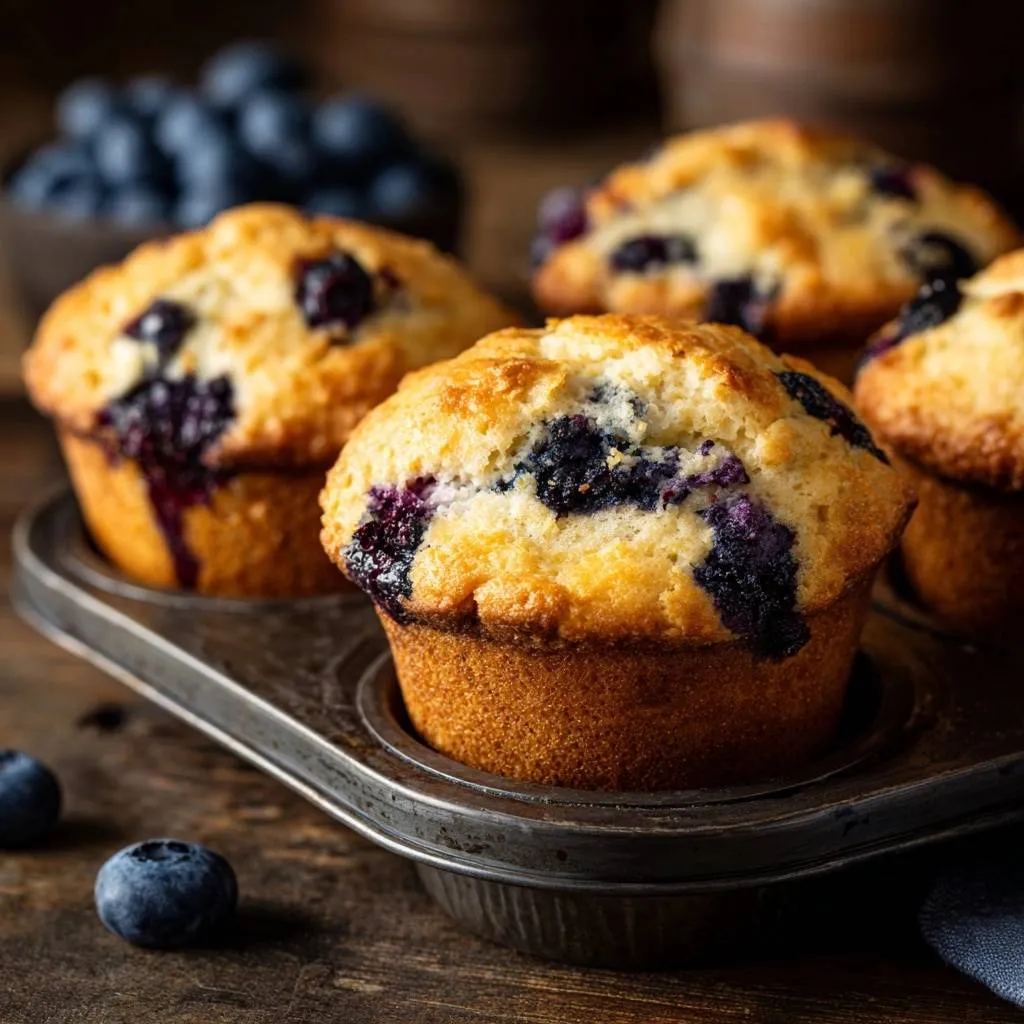
Imagine biting into a muffin that actually lives up to the ones in the glass display case at your favorite local bakery. You know the ones—they have those towering, craggy domes that spill over the edges, a golden crust that crunches slightly, and a center so tender it practically melts. Most homemade muffins end up as sad, flat-topped disappointments with purple-stained bottoms, but we’re changing that today.
The “Anti-Soggy Bottom” philosophy is all about structural integrity and moisture control. We want a muffin that feels substantial yet light, where the berries stay exactly where you put them instead of sinking into a mushy pile at the base. It’s that contrast between the soft, vanilla-scented crumb and the burst of tart fruit that makes this the ultimate breakfast treat.
The secret to achieving that professional “burst” top isn’t a special pan or a secret ingredient; it’s all about the temperature transition. By starting with an intense blast of heat, we force the batter to rise rapidly before the edges set. This creates that iconic mushroom shape and a texture that’s miles ahead of any grocery store version.
The Science of the High-Heat Bakery Rise
When you slide your muffin tin into a 425°F oven, you’re triggering a massive thermodynamic reaction. This initial high heat causes the liquid in the batter to turn into steam almost instantly, which works alongside the baking powder to push the batter upward. This “oven spring” is what creates the height you see in professional kitchens.
However, if you kept the oven at that temperature for the whole bake, the outside would burn before the middle finished. That’s why we drop the temperature to 350°F after seven minutes. This allows the interior to cook through gently while the dome maintains its structure. Whatever you do, don’t open the oven door during this transition, or you’ll lose that precious heat and the tops might deflate.
Why Thick Batter Prevents Sunken Fruit
Most muffin recipes fail because the batter is too thin, resembling a runny pancake mix. In a thin batter, heavy blueberries act like stones in water—they sink straight to the bottom. This recipe produces a batter that is remarkably thick, almost like a soft cookie dough, which provides the buoyancy needed to hold the fruit in place.
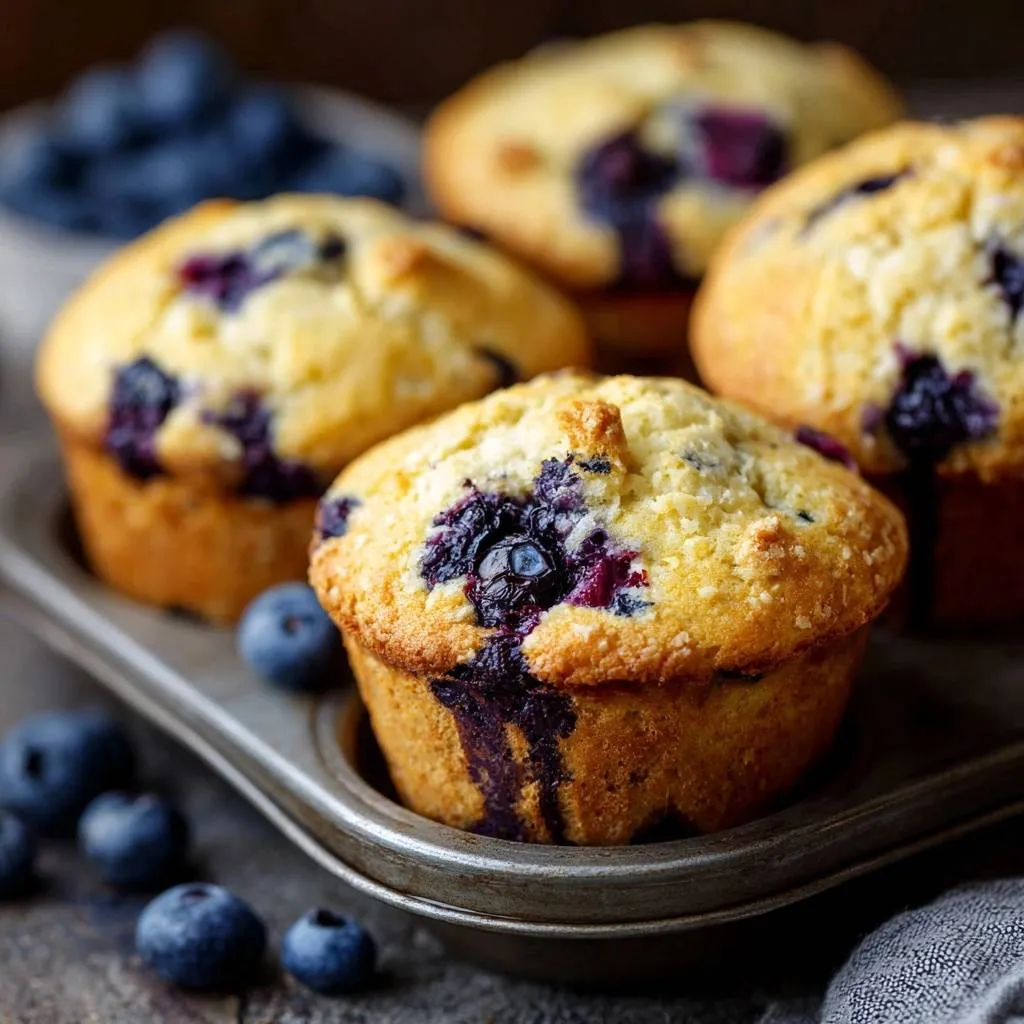
Because the batter is so viscous, it can support the weight of the berries even as the heat begins to soften them. This ensures that every single bite, from the very top of the dome to the bottom of the cup, is perfectly studded with fruit. You’ll notice the batter doesn’t pour; it needs to be scooped and mounded into the tin.
Essential Components for Bakery Style Blueberry Muffins
The fat ratio in this recipe is carefully balanced to give you the best of both worlds. We use melted butter because nothing beats that rich, toasted flavor in a warm muffin. However, we also add neutral oil because oil stays liquid at room temperature, ensuring the muffins remain moist and soft even on the second or third day.
Sour cream or full-fat Greek yogurt is the other non-negotiable hero here. The acidity in these dairy products reacts with the baking powder to create a finer, more tender crumb. It also adds a subtle tang that cuts through the sweetness of the sugar and the richness of the butter, providing a complex flavor profile.
Selecting and Preparing Your Blueberries
Fresh blueberries are the gold standard for this recipe because they hold their shape beautifully and offer a bright, tart pop. If you’re using fresh berries, make sure they are completely dry after washing. Any extra moisture on the skin can lead to those dreaded soggy spots in the finished muffin.
The “flour-toss” technique is your best friend here. By coating the berries in a tablespoon of flour before folding them in, you create a dry surface that the batter can grip onto. This simple step acts like a glue, preventing the berries from sliding down through the batter and stopping the juice from bleeding and turning your entire muffin purple.
The Role of Coarse Sparkling Sugar
While it might seem like a decorative afterthought, coarse sparkling sugar (or turbinado sugar) adds a vital textural element. It doesn’t melt into the batter like granulated sugar does. Instead, it sits on top, creating a glittering, crunchy crust that contrasts beautifully with the soft interior.
This sugar also helps reinforce the “crust” of the muffin top. As the batter expands and cracks during the high-heat phase, the sugar crystals settle into the crevices, giving the muffins that professional, finished look you see in high-end cafes. It’s the difference between a good muffin and a great one.
The Case for Greasing vs. Paper Liners
If you want the absolute best texture, skip the paper liners and grease the tin directly with butter or non-stick spray. When the batter makes direct contact with the metal, it undergoes the Maillard reaction—a chemical process that browns the edges and creates a delicious, caramelized “skin” on the sides of the muffin.
Paper liners tend to trap steam, which results in soft, pale, and sometimes slightly damp sides. By baking directly in the tin, you get a muffin that is sturdy enough to stand on its own with a satisfying golden exterior. Just be sure to let them cool for a few minutes before removing them so the structure has time to set.
Step-by-Step: Engineering the Perfect Muffin
Creating these muffins is more about the process than the ingredients themselves. You want to be intentional with how you handle the batter to ensure it stays light and airy. Think of yourself as an engineer building a structure that needs to be both strong and delicate.
Phase 1: Creating the Aerated Wet Base
Start by whisking your eggs and sugar together until the mixture looks pale and slightly frothy. This isn’t just about mixing; it’s about incorporating tiny air bubbles that will expand in the oven. Using room temperature eggs and milk is crucial here because cold ingredients will cause the melted butter to seize up and clump.
Once the eggs and sugar are ready, slowly whisk in your fats and dairy. You’re looking for a smooth, emulsified liquid that smells strongly of vanilla. This liquid base is what will eventually hydrate your flour, so making sure it’s well-combined now prevents you from having to overwork the batter later.
Phase 2: The “Just-Combined” Folding Technique
When you add the wet ingredients to the dry, put down the whisk and pick up a spatula. This is the most critical moment for the texture of your muffin. You want to fold the mixture gently, scraping the bottom of the bowl and bringing it over the top until the flour is just barely moistened.
If you see a few small streaks of dry flour, stop! Overmixing develops gluten, which turns a tender muffin into something tough and rubbery. The batter should look lumpy and thick. When you fold in the blueberries at the very end, do it with a light hand to keep them intact and prevent the juice from streaking.
Phase 3: Filling to the Brim for Maximum Volume
Forget the old rule about filling muffin cups two-thirds of the way full. For that true bakery look, you need to pile the batter high, right up to the brim of the cup. Because this batter is so thick, it won’t run all over your oven; it will grow upward into a beautiful dome.
Use a large scoop to divide the batter evenly. Don’t be afraid to mound it up slightly in the center of each cup. This extra volume is exactly what allows the high heat to catch the edges and push the center into that iconic craggy shape. Sprinkle your coarse sugar generously over these mounds before they hit the heat.
Troubleshooting Common Muffin Failures
If your muffins come out tough or rubbery, you likely overmixed the batter. Next time, try to use fewer strokes when combining the wet and dry ingredients. If your muffins are riddled with large holes or “tunnels” inside, that’s also a sign of overworking the dough or an oven that was too hot for too long.
Flat tops usually mean your baking powder is expired or your oven didn’t reach that crucial 425°F starting temperature. Always check the date on your leavening agents! Finally, if the bottoms are soggy, it’s probably because they sat in the hot tin for too long. The steam needs to escape, so get them onto a wire rack as soon as they are cool enough to handle.
Flavor Variations and Ingredient Swaps
While blueberry is the classic choice, this base recipe is incredibly versatile. You can easily swap the blueberries for raspberries or blackberries, though keep in mind that raspberries are more delicate and may break apart more easily. A teaspoon of lemon zest rubbed into the sugar before mixing adds a bright, citrusy lift that pairs perfectly with berries.
If you need a dairy-free option, you can use a thick coconut-based yogurt and your favorite plant-based milk. For a different flavor profile, try adding a half-teaspoon of almond extract or a pinch of nutmeg to the dry ingredients. These small tweaks can completely change the vibe of the muffin while keeping that perfect bakery structure.
Make-Ahead Strategies and Storage Logistics
These muffins are at their absolute peak about 30 minutes after they come out of the oven, once the crumb has set but the center is still slightly warm. If you have leftovers, do not put them in an airtight plastic container while they are still warm, as the trapped steam will turn the crisp tops soft and sticky.
To store them for the next day, place them in a container with a paper towel to absorb excess moisture. For longer storage, these muffins freeze beautifully. Wrap them individually in plastic wrap and place them in a freezer bag. To eat, let them thaw at room temperature and then pop them in a 350°F oven for 5 minutes to restore that “just-baked” crunch to the top.
Expert Tips for Professional Results
For the most consistent results, use a kitchen scale to weigh your flour. It’s very easy to pack too much flour into a measuring cup, which leads to a dry, heavy muffin. One cup of all-purpose flour should weigh approximately 125 grams. This precision ensures your batter is the perfect thickness every single time.
When testing for doneness, be careful where you poke the toothpick. If you hit a blueberry, the toothpick will come out wet even if the cake is done. Aim for a spot of plain cake. Also, using a trigger-release ice cream scoop to portion the batter ensures that every muffin is the same size, which means they will all finish baking at the exact same moment.
Frequently Asked Questions
Can I use frozen blueberries without thawing?
Yes, you can use frozen blueberries, and you actually should not thaw them first. Thawing frozen berries makes them very wet and causes them to bleed dark purple juice into your batter. Use them straight from the freezer, toss them in the flour as directed, and be aware that you might need to add 2 or 3 minutes to the final baking time since the batter will be colder.
Why did my muffins develop large holes (tunnels) inside?
Tunnelling is a classic sign of overmixing. When you stir the batter too much, you develop gluten and trap air in a way that creates long, vertical holes as the muffins bake. To prevent this, use a spatula instead of a whisk for the final mixing stages and stop as soon as the flour streaks disappear. A lumpy batter is a happy batter.
Can I substitute Greek yogurt for the sour cream?
Absolutely. Full-fat Greek yogurt is an excellent 1:1 substitute for sour cream in this recipe. Both provide the necessary acidity and fat to keep the muffins moist and tender. Avoid using non-fat or “light” versions if possible, as the fat content is what contributes to the rich mouthfeel and the structural integrity of the muffin crumb.
How do I get my muffins to stay fresh for more than 24 hours?
The combination of oil and sour cream in this recipe helps keep them moist longer than butter-only recipes. To maintain freshness, store them at room temperature in a container that isn’t completely airtight—a little airflow helps keep the tops from getting soggy. If they do soften, a quick 5-minute toast in the oven or toaster oven will revive the texture perfectly.
Is it possible to make these jumbo-sized?
You can definitely use this batter for jumbo muffins. You will likely get 6 large muffins instead of 12 standard ones. Keep the initial 425°F blast at 7 minutes to set the top, but you will need to increase the second baking phase at 350°F to about 25-30 minutes. Use the toothpick test to ensure the centers are fully baked through.
Bakery Style Blueberry Muffins
Course: BreakfastCuisine: AmericanDifficulty: easy12
muffins15
minutes25
minutes40
MinutesAmerican
Ingredients
2 1/2 cups all-purpose flour (plus 1 tablespoon for coating)
1 tablespoon baking powder
1 teaspoon salt
1/2 cup (1 stick) unsalted butter, melted and slightly cooled
1/4 cup neutral oil (vegetable or canola)
1 cup granulated sugar
2 large eggs, room temperature
1/2 cup sour cream or full-fat Greek yogurt
1/2 cup whole milk
2 teaspoons vanilla extract
1 1/2 cups fresh blueberries
2 tablespoons coarse sparkling sugar (optional, for topping)
Directions
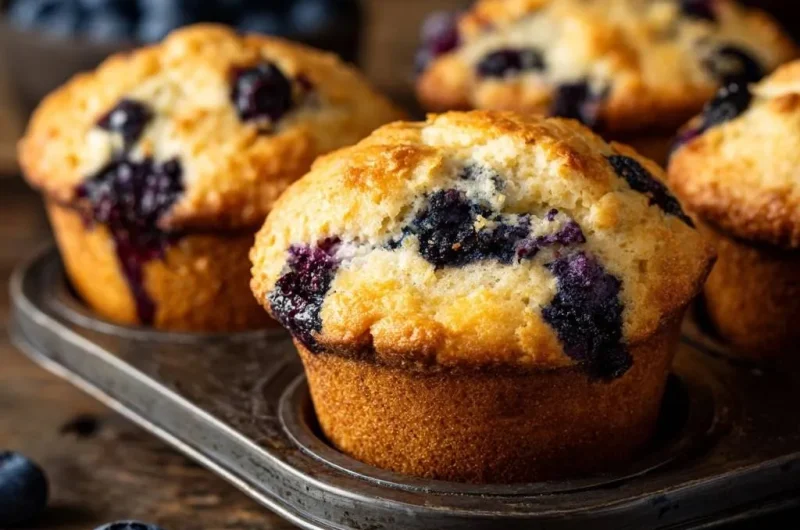
- Preheat your oven to 425°F (218°C). Generously grease a standard muffin tin with butter or non-stick spray. For the crisp, golden sides shown in the image, baking directly in the greased tin is preferred over paper liners.
- In a small bowl, toss the blueberries with 1 tablespoon of flour until evenly coated. This creates a dry surface for the batter to cling to, preventing the berries from sinking to the bottom.
- In a large bowl, whisk together the 2 1/2 cups flour, baking powder, and salt.
- In a separate medium bowl, whisk the granulated sugar and eggs until pale and slightly frothy. Whisk in the melted butter, oil, sour cream, milk, and vanilla extract until smooth. The addition of sour cream and oil ensures a moist crumb that won’t dry out during the high-heat bake.
- Make a well in the center of the dry ingredients and pour in the wet mixture. Fold gently with a spatula until just combined; a few streaks of flour are okay. Do not overmix.
- Gently fold in the flour-coated blueberries. The batter should be very thick, almost like a soft cookie dough.
- Divide the batter evenly among the 12 muffin cups, piling it high. The cups should be full to the brim to achieve the “overflowing” bakery look. Sprinkle the tops with coarse sugar if desired.
- Place the tin in the oven and bake at 425°F for exactly 7 minutes. This initial blast of heat activates the baking powder rapidly, lifting the batter before the berries can settle.
- Without opening the oven door, reduce the temperature to 350°F (175°C). Bake for an additional 13-15 minutes, or until the tops are golden brown and a toothpick comes out clean.
- Let the muffins cool in the pan for 5-10 minutes. Run a thin knife around the edges to release them. Transfer to a wire rack to ensure the bottoms stay crisp and dry.
Notes
- Baking directly in a greased tin instead of using paper liners results in crisper, more golden sides. The initial 7-minute bake at 425°F is crucial for the high dome shape.