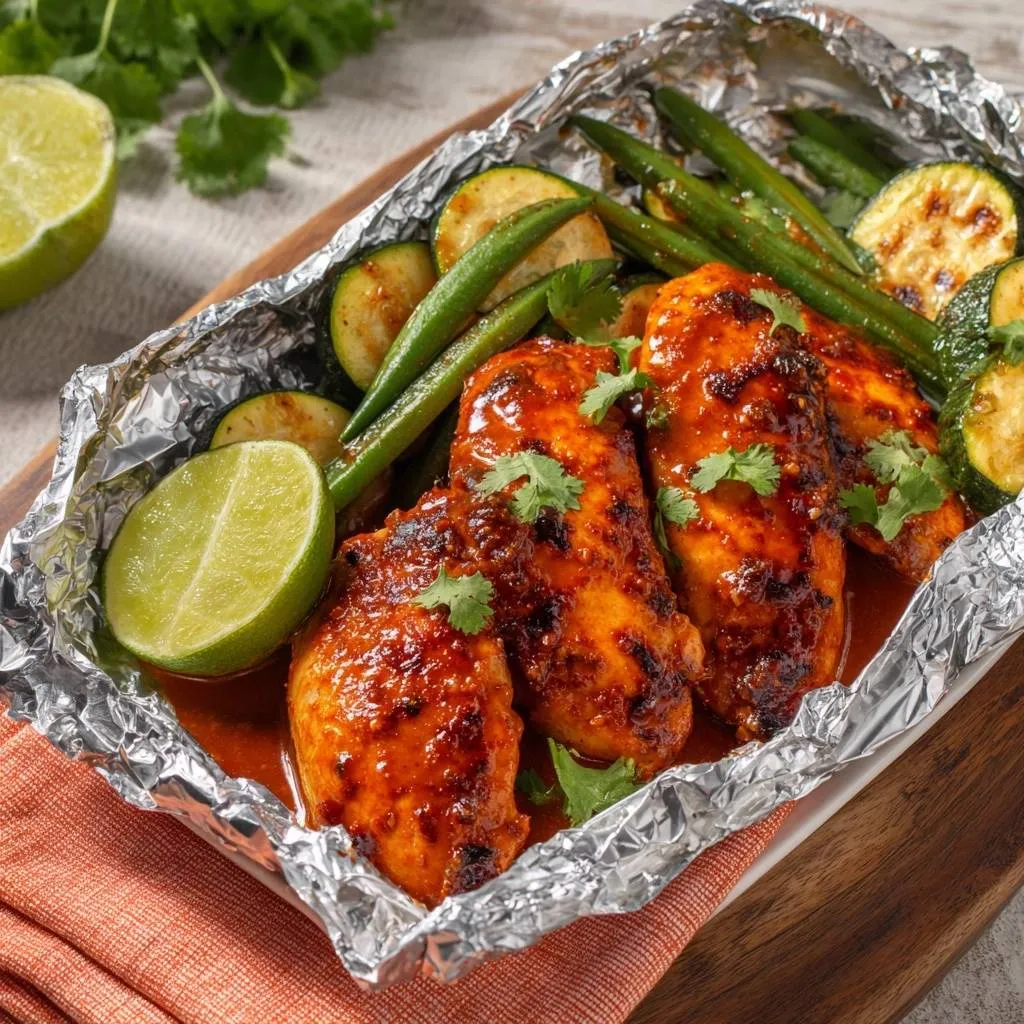
Forget everything you know about those soggy, steamed foil dinners that leave your vegetables mushy and your chicken gray. Most people fail at this dish because they seal the foil tight, creating a miniature steam chamber that boils the food rather than roasting it. I’m going to show you how to fix that with a simple venting technique that delivers crispy edges and juicy meat every single time.
The secret to this recipe lies in the “Vented Boat” method, which allows moisture to escape while concentrating the flavors of the chili and lime. By leaving the top of the packet open, you invite the dry heat of the oven to work its magic on the honey-based glaze. You’ll get that gorgeous caramelization you usually only see on a grill, but with the convenience of a sheet pan meal.
If you want to ensure success, make sure you use heavy-duty aluminum foil. Standard foil is too thin and often tears when you try to form the basket shape, leading to leaks on your baking sheet. A sturdy foil holds its structure, keeping the juices pooled around the chicken while the tops of the zucchini rounds get that perfect, slightly charred finish under the broiler.
The Science of Preventing Soggy Foil Packet Vegetables
Traditional foil packets act like a pressure cooker, trapping every drop of water that escapes from the vegetables as they heat up. Since zucchini is about 95% water, a sealed packet quickly fills with liquid, resulting in a boiled texture that lacks depth. Therefore, we use the vented boat shape to encourage evaporation, which is the only way to achieve a roasted mouthfeel in a foil medium.
When you leave the top open, the hot air circulates directly over the ingredients. This process allows the honey in the marinade to undergo the Maillard reaction, which is the chemical transformation that creates those savory, browned flavors. Without this airflow, the honey would simply dissolve into a watery soup at the bottom of the packet.
Furthermore, the high heat of a 425°F oven works in tandem with the venting to reduce the marinade into a thick, glossy coating. As the water evaporates, the sugars and spices become more concentrated. This ensures that every bite of chicken is draped in a punchy, vibrant sauce rather than a diluted liquid.
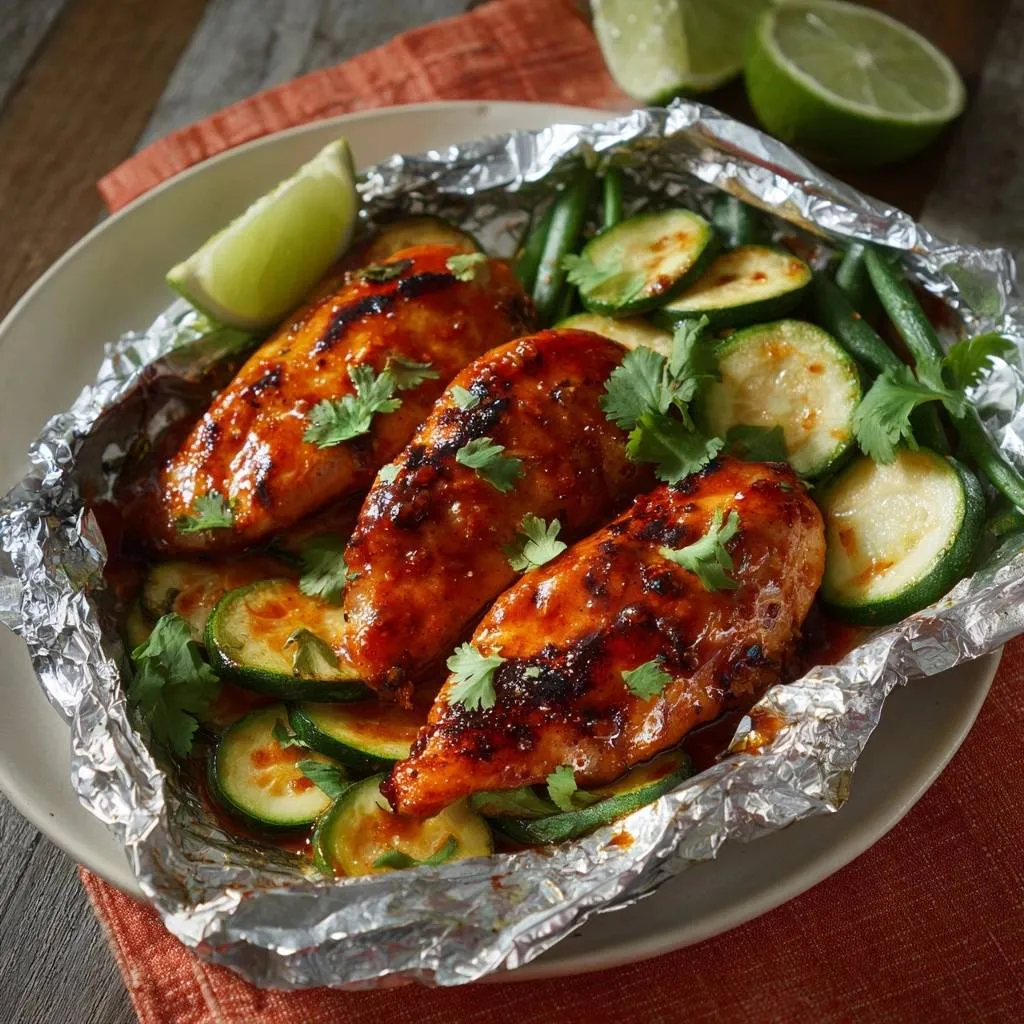
Essential Components for Chili Lime Chicken and Zucchini Foil Packets
Choosing the right cut of meat is the first step toward a successful dinner. I recommend boneless skinless chicken breasts for this specific recipe because they cook quickly and evenly at high temperatures. While thighs are flavorful, they often require a longer roasting time that would turn your zucchini into a puree before the meat is safe to eat.
The zucchini needs to be sliced into thick rounds, at least half an inch wide. If you slice them too thin, they will lose their structural integrity before the chicken finishes cooking. In addition, fresh green beans provide a necessary snap and earthy contrast to the bright acidity of the lime juice and the sweetness of the honey.
For the spice blend, smoked paprika is a non-negotiable ingredient. Unlike standard sweet paprika, the smoked variety adds a campfire depth that mimics the flavor of an outdoor grill. When combined with chili powder and garlic, it creates a robust profile that stands up well to the citrusy lime.
Selecting the Right Poultry and Produce
When you’re at the grocery store, look for chicken breasts that are relatively uniform in thickness. If one end is significantly thicker than the other, the thin end will dry out while the center remains raw. You can also lightly pound the thicker sections to ensure the entire cutlet cooks at the same rate.
For the produce, choose small to medium zucchinis because they have smaller seeds and a firmer texture. Large, “overgrown” zucchinis tend to be more watery and fibrous, which can sabotage your efforts to keep the dish crisp. Your green beans should be bright green and snap loudly when bent in half.
The Pantry Staples: Spices and Aromatics
I prefer using garlic and onion powder in this marinade rather than fresh minced aromatics. Fresh garlic has a tendency to burn and turn bitter under the intense heat of the broiler. The powdered versions distribute more evenly in the oil, ensuring every square inch of the chicken is seasoned without the risk of acrid, burnt bits.
The lime juice serves two purposes: it provides a zesty top note and acts as a mild tenderizer. The citric acid begins to break down the tough protein fibers in the chicken, making it incredibly tender. However, the honey balances this acidity, creating a well-rounded flavor that hits every part of your palate.
Step-by-Step: Preparing the Chili Lime Marinade
Start by whisking your olive oil, lime juice, and honey in a large bowl until the mixture is fully emulsified. You’ll notice the marinade transform from a separated liquid into a thick, cohesive glaze. This viscosity is crucial because it needs to cling to the chicken and vegetables rather than sliding straight to the bottom of the foil.
Always toss the chicken in the marinade first to ensure it gets the heaviest coating of spices. Once the meat is well-covered, remove it and then add the vegetables to the remaining liquid. This sequence prevents the vegetables from soaking up all the oil, which would leave the chicken dry and under-seasoned.
The final marinade should look dark red and smell intensely fragrant. If it feels too thin, add a tiny bit more honey to help it thicken up. You want a sauce that looks like it will “paint” the ingredients rather than just wet them.
Constructing the Vented Foil Boats for Maximum Airflow
Tear off four large sheets of heavy-duty foil and lay them flat on your counter. Place your portioned vegetables on one side and the chicken right next to them. Instead of folding the foil over the top, you are going to pull the edges upward to create a rectangular basket with high walls.
Crimp the corners tightly so the juices don’t leak out onto your baking sheet, but keep the center wide open. This “boat” structure protects the bottom of the food from burning while exposing the top to the direct heat of the oven. It is the single most important step in achieving that roasted, non-soggy texture.
Make sure there is a little bit of space between the chicken and the vegetables within the boat. If you pile them on top of each other, you’ll create pockets of steam. Air needs to be able to move around each component to cook everything evenly and develop those charred edges.
The Two-Phase Cooking Method: Roast and Broil
The first phase of cooking happens at 425°F for about 15 minutes. During this time, the chicken cooks through to a safe internal temperature and the vegetables soften. Because the packets are open, you’ll smell the chili and lime filling your kitchen almost immediately.
The second phase is the “magic” step: the broil. Switch your oven to the broil setting for the last 3 to 5 minutes of cooking. Stay close and watch through the oven window as the honey in the glaze begins to bubble and darken. This high-intensity heat creates the signature char on the zucchini and a sticky, professional-grade finish on the chicken.
Be careful not to walk away during the broiling phase, as the transition from perfectly caramelized to burnt happens in seconds. You are looking for the sauce to turn a deep, mahogany red and for the edges of the green beans to look slightly blistered. Once you see those signs, pull the tray out immediately.
Troubleshooting Common Foil Packet Mistakes
If you find that your chicken is fully cooked but the sauce still looks watery, don’t panic. Simply use a spoon to carefully drain some of the excess liquid from the corner of the foil boat and return it to the broiler for another minute. This will quickly thicken the remaining glaze without overcooking the meat.
For those who end up with “woody” or tough green beans, it usually means they weren’t trimmed properly or were a bit old. To avoid this, always snap off the stem ends and look for beans that are slender. If your zucchini is mushy despite the venting, you likely sliced it too thin; aim for thicker rounds next time to maintain that “bite.”
Always use a meat thermometer to check the chicken. You are aiming for exactly 165°F in the thickest part of the cutlet. If you pull it out at 160°F and let it rest in the foil for a few minutes, the carryover heat will usually bring it to the perfect temperature without drying it out.
Flavor Variations and Ingredient Swaps
If you don’t have honey on hand, maple syrup makes an excellent substitute that adds a slightly woodsy sweetness. For those who prefer a bit more heat, swap the standard chili powder for chipotle powder. This will add a significant spicy kick and an even deeper smoky aroma to the entire dish.
You can easily adapt the vegetables based on what is in your fridge. Asparagus spears or bell pepper strips work beautifully with this cooking time and method. Just remember to keep the pieces relatively uniform in size so nothing ends up raw while other parts are overdone.
For a different citrus profile, try using orange juice instead of lime. It creates a sweeter, more floral glaze that pairs exceptionally well with the smoked paprika. Regardless of the swap, keep the ratio of oil to acid the same to ensure the chicken stays moist.
What to Serve with Chili Lime Chicken
Since this dish has a bold, acidic flavor profile, it pairs perfectly with neutral sides that can soak up the extra glaze. A fluffy bed of cilantro lime rice is the classic choice, but quinoa or even a simple piece of crusty bread works wonders. The goal is to have something on the plate to catch every drop of that chili-lime sauce.
A cold corn salad with red onions and avocado can also provide a refreshing contrast to the warm, spicy chicken. The creaminess of the avocado cuts through the heat of the red pepper flakes beautifully. If you want to keep things low-carb, serve the contents of the foil boat over a pile of fresh cauliflower rice.
Don’t forget the garnishes! A heavy sprinkle of fresh cilantro and a final squeeze of lime juice right before serving wakes up all the flavors. The fresh juice reacts with the cooked glaze to create a vibrant, restaurant-quality experience right at your dining table.
Make-Ahead Prep and Storage Instructions
You can definitely prep the marinade and slice the chicken a day in advance. However, I don’t recommend marinating the chicken in the lime juice for more than 4 hours. The acid is so strong that it will eventually start to “cook” the meat and change the texture, making it slightly mushy once it actually hits the oven.
Store any leftovers in an airtight container in the refrigerator for up to three days. When you’re ready to eat, avoid the microwave if possible, as it will make the zucchini very soft. Instead, pop the chicken and veggies into an air fryer or a toaster oven for a few minutes to maintain the integrity of the glaze and the snap of the beans.
I do not recommend freezing this dish once it has been cooked. Zucchini has a high water content, and the cell walls collapse during the freezing and thawing process. This results in a very watery, unappealing texture that even a broiler can’t save.
Expert Tips for High-Heat Foil Cooking
Always place your foil boats on a rimmed baking sheet. Even with the best folding technique, a little juice might bubble over the side, and a rimmed sheet prevents a smoky mess on the bottom of your oven. It also makes it much easier to slide the entire meal in and out of the oven safely.
Avoid crowding too many foil boats onto one tray. If they are touching, the air cannot circulate between them, which brings back the dreaded steaming effect. If you are doubling the recipe, use two separate baking sheets and rotate them halfway through the cooking time.
Let the chicken rest for at least 3 minutes before you cut into it. This allows the juices to redistribute throughout the meat. If you slice it immediately, all that flavorful moisture will run out onto the foil, leaving you with a dry piece of poultry.
Finally, use a light spritz of oil on the foil before adding your ingredients. Even though the marinade contains olive oil, the honey can be quite sticky. A quick spray ensures that the caramelized bits stay on your chicken and zucchini rather than stuck to the aluminum.
Frequently Asked Questions
Can I cook these on an outdoor grill?
Yes, you can easily adapt this for the grill. Set your grill to medium-high heat and place the foil boats on the grate. Close the lid to mimic the oven’s roasting environment for about 15 minutes. To get the charred effect, move the boats to the hottest part of the grill for the last few minutes, but watch closely to prevent the honey from burning.
How do I prevent the chicken from sticking to the foil?
The olive oil in the marinade does most of the work, but for extra insurance, you can lightly coat the foil with a non-stick spray. Additionally, ensuring your oven or grill is fully preheated before adding the packets helps the proteins sear quickly rather than bonding to the metal surface.
Is this recipe suitable for frozen vegetables?
I strongly advise against using frozen zucchini because it releases too much water and will become mushy. If you must use frozen green beans, make sure to thaw them completely and pat them very dry with paper towels before tossing them in the marinade. This prevents extra moisture from ruining the “anti-soggy” technique.
Can I substitute chicken thighs for breasts?
You can use boneless thighs, but you will need to increase the roasting time by about 5 to 7 minutes. Because thighs take longer to reach 165°F, I recommend cutting your zucchini into even thicker chunks (about 1 inch) so they don’t overcook while the chicken finishes. Avoid bone-in thighs for this recipe as the cook time would be too long for the vegetables to survive.
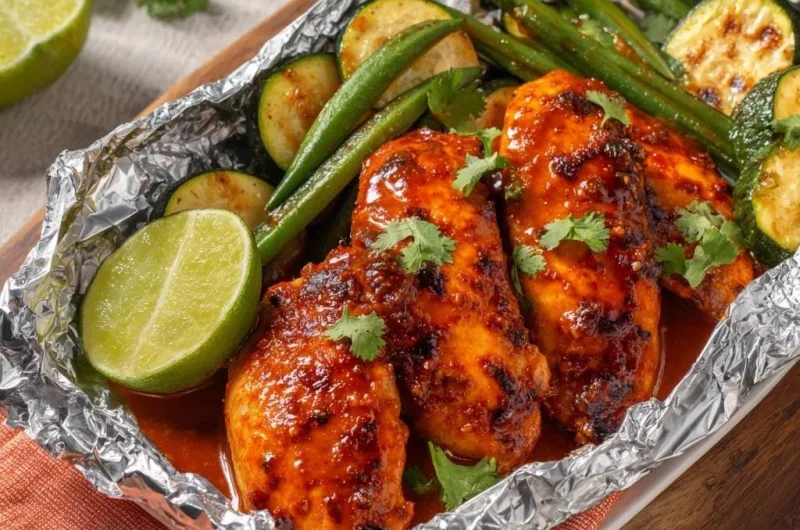
Chili Lime Chicken and Zucchini Foil Packets
Course: Main CourseCuisine: AmericanDifficulty: easy4
servings15
minutes20
minutes35
Minutes380
kcalAmerican
Ingredients
1.5 lbs boneless skinless chicken breasts, sliced into thick cutlets
2 medium zucchinis, sliced into thick rounds
1/2 lb fresh green beans, trimmed
3 tablespoons olive oil
2 tablespoons fresh lime juice
1 tablespoon honey (for the glossy glaze shown in the image)
1 tablespoon chili powder
1 teaspoon smoked paprika
1 teaspoon garlic powder
1/2 teaspoon onion powder
1/2 teaspoon salt
1/4 teaspoon cracked black pepper
1 teaspoon red pepper flakes (optional, for texture)
Fresh cilantro and lime wedges for garnish
Directions
- Preheat your oven to 425°F (220°C). If using a grill, heat to medium-high.
- In a large bowl, whisk together the olive oil, lime juice, honey, chili powder, paprika, garlic powder, onion powder, salt, and pepper until a thick marinade forms.
- Add the chicken cutlets to the bowl first, coating them heavily. Remove the chicken and set aside. Toss the zucchini rounds and green beans in the remaining marinade.
- Cut four large sheets of heavy-duty aluminum foil. Place a portion of the green beans and zucchini on one side of each sheet. Place the chicken cutlets next to the vegetables.
- To solve the soggy veggie problem, fold the sides of the foil up to create a “boat” or “basket” shape, but do not crimp the top shut. Leave the top completely open. This allows moisture to evaporate so the vegetables roast rather than steam, and the honey in the marinade can caramelize on the chicken.
- Place the foil boats on a large baking sheet. Bake for 15 minutes.
- Switch the oven to Broil for the final 3-5 minutes. Watch closely as the high heat bubbles the sauce into the thick, dark red glaze seen in the image and chars the edges of the zucchini.
- Remove from the oven when the chicken reaches an internal temperature of 165°F. Garnish with fresh cilantro and serve with extra lime wedges to cut through the rich glaze.
Notes
- To avoid soggy vegetables, leave the top of the foil packets open to allow moisture to escape. Use the broiler for the last 3 to 5 minutes to achieve a thick, caramelized glaze.