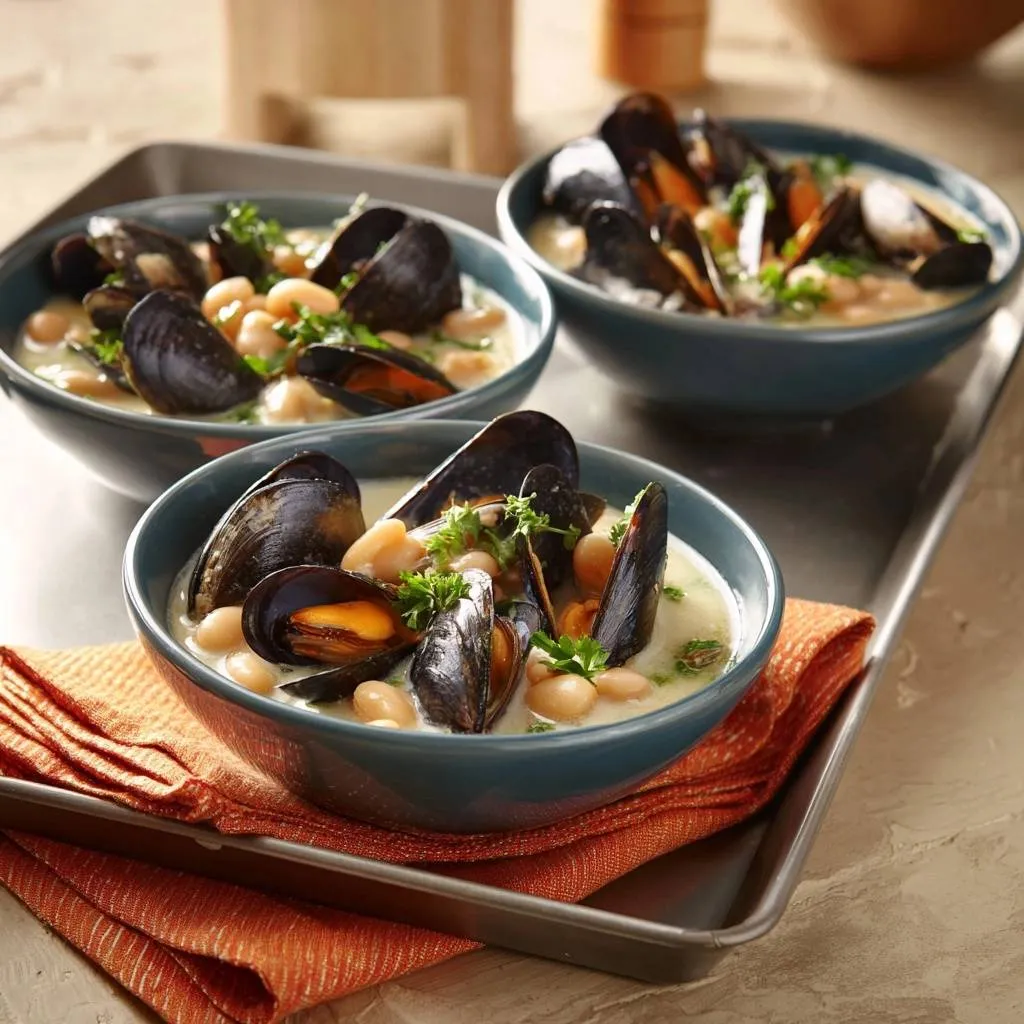
Imagine biting into a mussel that is so plump and tender it practically melts, rather than fighting against a rubbery, overcooked texture. Most home cooks shy away from shellfish because they fear that chewy, disappointing result. However, achieving restaurant-quality Creamy Garlic Mussels and White Beans is actually about precision and temperature control rather than complex culinary skills.
The magic of this dish lies in the contrast between the briny, oceanic sweetness of the mussels and the earthy, velvety richness of the cannellini beans. It’s a sophisticated pairing that feels indulgent yet light enough for a weeknight dinner. By mastering a few simple techniques, you can transform these humble ingredients into a masterpiece that rivals any high-end bistro.
The secret to success is the “stop-and-drop” method. Instead of boiling the mussels until they shrink into tiny pebbles, we steam them just until they peek open and then immediately pull them from the heat. This preserves their delicate moisture while we focus on building a luxurious, garlic-infused cream sauce that coats every shell perfectly.
The Anatomy of Tender Mussels and Velvety Beans
Creating a balanced seafood dish requires a thoughtful layering of flavors. We start with a foundation of high-quality fats, using both olive oil for its high smoke point and unsalted butter for its rich, nutty flavor. This aromatic base of shallots and garlic provides a savory depth that anchors the brighter notes of the seafood.
One of the most brilliant aspects of this recipe is the role of the cannellini beans. As they simmer in the broth, they release a small amount of natural starch. This starch acts as a natural thickener, helping the heavy cream and seafood stock bind together into a cohesive sauce without the need for a heavy flour-based roux.
The result is a sauce that feels incredibly decadent but remains clean on the palate. The beans also provide a satisfying structural contrast to the soft mussels, making the meal feel substantial and hearty. Every spoonful offers a mix of silky liquid, creamy legumes, and tender protein.
Essential Components for the Garlic Cream Broth
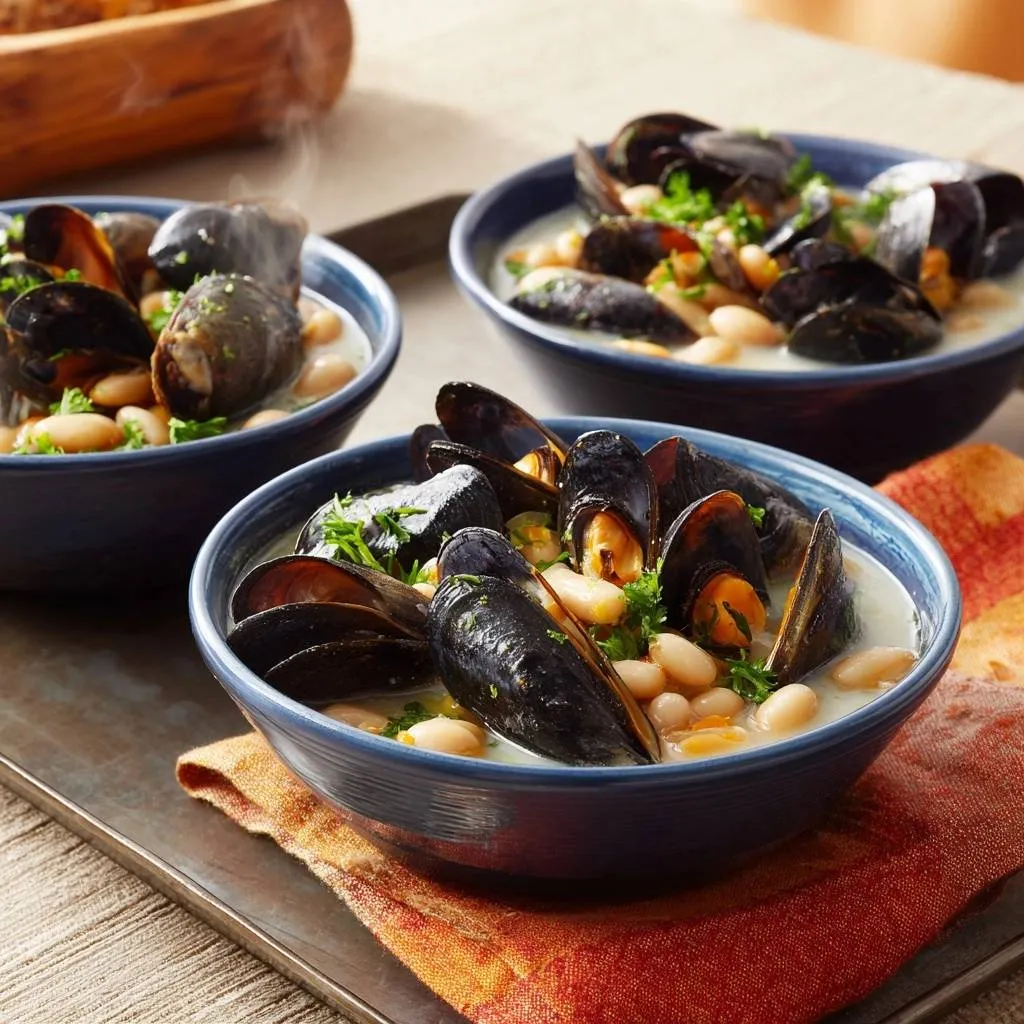
When it comes to the broth, ingredient quality is everything. For the deglazing liquid, a dry white wine like Sauvignon Blanc is the gold standard. Its high acidity and citrus undertones cut through the fat of the cream, whereas a buttery Chardonnay might make the dish feel too heavy or cloying.
Heavy cream is non-negotiable here if you want that signature velvety mouthfeel. Half-and-half or milk lacks the stable fat content required to emulsify with the acidic lemon juice and wine, often resulting in a broken or curdled sauce. The cream provides the body necessary to cling to the mussels and beans.
A professional trick used in this recipe is monter au beurre, which simply means whisking in cold butter at the very end. This creates a glossy, emulsified finish that looks beautiful and tastes even better. Finally, always use fresh curly parsley; dried herbs simply cannot provide the vibrant, grassy pop needed to wake up the rich cream.
Selecting and Cleaning Fresh Mussels
Your dish is only as good as your seafood, so start with the freshest mussels possible. When buying them, they should smell like the clean ocean, never “fishy” or like ammonia. Look for shells that are tightly closed or that snap shut when you give them a firm tap on the counter.
Before cooking, you must “debeard” the mussels. This involves finding the brown, hairy tuft (the byssal thread) poking out from the shell and pulling it firmly toward the hinge of the mussel until it comes out. Give them a good scrub under cold running water to remove any grit or sand that might ruin your smooth sauce.
Choosing the Right White Bean Variety
While there are many white beans on the shelf, Cannellini beans are the superior choice for this specific preparation. They are larger and meatier than Navy beans, with a thin skin that yields to a very creamy interior. This texture mimics the richness of the cream sauce itself.
Great Northern beans are a decent backup, but they tend to be a bit more delicate and can fall apart if stirred too vigorously. Cannellini beans hold their shape beautifully, ensuring that your final presentation looks intentional and polished rather than like a mushy stew.
Step-by-Step: Executing the Perfect Steam
The first phase of this recipe is building the aromatic foundation. You’ll sauté the shallots in butter and oil until they are translucent and sweet. When you add the garlic, keep a close eye on it; you want it to become fragrant and soft, but if it turns brown or bitter, it will overwhelm the delicate flavor of the mussels.
Once the aromatics are ready, you’ll move into the high-heat steam phase. After pouring in your liquids and bringing them to a boil, add the mussels and clamp the lid on tight. This creates a pressurized steam environment that cooks the mussels evenly from all sides in just a few minutes.
The “No-Peek” rule is vital during these three minutes. Every time you lift the lid, you release the trapped heat and steam, which extends the cooking time and increases the risk of the mussels becoming tough. Trust the timer and let the steam do the heavy lifting for you.
The final phase is the reduction. After removing the mussels, you’ll simmer the cream and beans. This is where the flavors concentrate. You are looking for the sauce to reduce until it can coat the back of a spoon, ensuring that every bite is packed with the essence of garlic, wine, and sea salt.
The Secret to Preventing Rubbery Seafood
The single biggest mistake people make is leaving the mussels in the pot while the sauce reduces. To avoid this, use tongs to pluck each mussel out the very second it opens. Transfer them to a warm bowl and cover them loosely with foil while you finish the broth.
Mussels continue to cook for a minute or two after they are removed from the heat due to carry-over cooking. By pulling them early, you ensure they stay plump and juicy. If you leave them in the boiling cream for the full reduction time, they will shrink into tiny, rubbery knots that lose all their sweetness.
Troubleshooting Common Sauce and Texture Issues
If your sauce feels too thin after the reduction time, don’t panic. Simply turn the heat up slightly and continue to simmer for another minute or two. The starch from the beans will eventually do its job. Conversely, if the sauce gets too thick, whisk in a tablespoon of seafood stock to loosen it back up.
A “broken” sauce occurs when the fat separates from the liquid, usually because the heat was too high when the cream or cold butter was added. To prevent this, always lower the heat before adding the cream and turn it off entirely before whisking in the final knobs of cold butter.
If you find the broth is a bit too salty—which can happen depending on the saltiness of your seafood stock—add a splash of water or a little extra lemon juice. The acidity of the lemon helps mask excess salt and brightens the entire profile of the dish without changing the texture.
Flavor Variations and Ingredient Swaps
Once you master the base recipe, you can experiment with sophisticated variations. For a Mediterranean twist, add a pinch of saffron threads to the wine as it reduces. This will turn the sauce a beautiful golden hue and add a subtle, floral depth that pairs perfectly with shellfish.
If you prefer a bit of smokiness, stir in a teaspoon of smoked paprika and some diced roasted red peppers along with the beans. This creates a “Spanish-style” profile that is incredibly comforting. For those avoiding certain ingredients, you can deglaze the pan with extra seafood stock and a tablespoon of white wine vinegar instead of the wine.
For a dairy-free alternative that still feels rich, full-fat coconut milk can replace the heavy cream. This will give the dish a slightly tropical, Thai-inspired flair. If you go this route, consider swapping the parsley for fresh cilantro and adding a squeeze of lime instead of lemon.
Optimal Pairings for Creamy Garlic Mussels
This dish is all about the sauce, so you absolutely need a vehicle to soak up every last drop. A warm, crusty loaf of sourdough or a toasted ciabatta is the traditional choice. The acidity of the sourdough complements the cream, while the sturdy crust handles the heavy broth without falling apart.
To balance the richness of the butter and cream, serve a light, acidic side salad. A simple toss of wild arugula with lemon juice, olive oil, and a shaving of parmesan provides a peppery bite that cleanses the palate between spoonfuls of the decadent mussels and beans.
If you want a more substantial meal, you can serve the mussels and beans over a bed of linguine or angel hair pasta. The creamy garlic broth acts as a built-in pasta sauce that is far more flavorful than anything you could buy in a jar. Just be sure to cook the pasta al dente so it can absorb some of the liquid.
Managing Leftovers and Reheating Seafood
Seafood is always at its absolute peak the moment it is cooked. The delicate proteins in mussels don’t fare well with repeated heating. However, if you do have leftovers, store them in an airtight container in the refrigerator for no more than one day.
When reheating, avoid the microwave at all costs, as it will turn the mussels into rubber in seconds. Instead, place the sauce and beans in a small saucepan over low heat. Once the sauce is warm, add the mussels just long enough to take the chill off. This “low and slow” approach is the only way to maintain a decent texture.
Please note that this dish does not freeze well. The heavy cream base will likely separate and become grainy upon thawing, and the mussels will lose their tender structure. This is a recipe designed to be enjoyed fresh, hot, and shared with friends around the table.
Expert Tips for Professional Presentation
For a true bistro-style look, use wide, shallow bowls rather than deep soup bowls. This allows you to spread the beans and sauce across the bottom, creating a stable “nest” for the mussels. Pile the shells high in the center to create height and visual interest.
Don’t forget the final garnishes. A generous sprinkle of bright green parsley adds a necessary color contrast against the white cream and dark shells. A final crack of fresh black pepper over the top adds a hint of heat and a professional touch that shows you care about the details.
Always provide an extra “discard bowl” on the table for the empty shells. It keeps the dining experience clean and allows your guests to focus on the delicious flavors. Serving this with a few lemon wedges on the side lets everyone customize the acidity to their own liking.
Frequently Asked Questions
Can I use frozen mussels for this recipe?
You can use frozen mussels if fresh aren’t available, but there is a significant texture difference. Frozen mussels are often pre-cooked, meaning they can become tough very quickly when reheated in the sauce. If using frozen, skip the steaming step and simply toss them into the finished cream sauce for 2 minutes until they are warmed through.
What should I do if some mussels don’t open?
Safety is the priority when it comes to shellfish. If a mussel remains tightly closed after the full steaming time, discard it immediately. A shell that refuses to open usually indicates the mussel was dead before it ever hit the pot, and consuming it could lead to foodborne illness. Never force a shell open.
Can I substitute the heavy cream with something lighter?
While you can use half-and-half, the sauce will be much thinner and more prone to curdling. For a non-dairy substitute, full-fat canned coconut milk or a cashew-based cream are the best options because they provide the necessary fat content to create a stable, thick emulsion that mimics the mouthfeel of heavy dairy cream.
How do I store fresh mussels before I’m ready to cook?
Fresh mussels need to breathe. Never store them in a sealed plastic bag or submerged in water, as they will suffocate. Instead, place them in a bowl, cover them with a damp kitchen towel, and keep them in the coldest part of your refrigerator. They are best used within 24 hours of purchase for the best flavor and safety.
Is there a good substitute for white wine in the broth?
If you prefer not to use wine, you can achieve a similar flavor profile by using an equal amount of extra seafood stock or chicken bone broth mixed with a tablespoon of fresh lemon juice or white wine vinegar. The goal is to provide an acidic element that balances the richness of the cream and butter.

Creamy Garlic Mussels and White Beans
Course: Main CourseCuisine: French-AmericanDifficulty: easy4
servings15
minutes12
minutes27
Minutes450
kcalFrench-American
Ingredients
2 pounds fresh mussels, scrubbed and debearded
1 can (15 ounces) cannellini beans, drained and rinsed
3 tablespoons unsalted butter
1 tablespoon olive oil
2 shallots, finely minced
4 cloves garlic, minced
1/2 cup dry white wine (like Sauvignon Blanc)
1/2 cup seafood stock or clam juice
3/4 cup heavy cream
1 tablespoon fresh lemon juice
1/4 cup fresh curly parsley, chopped
1/2 teaspoon black pepper
Pinch of red pepper flakes
Directions
- In a large heavy-bottomed pot or Dutch oven, heat the olive oil and 1 tablespoon of butter over medium heat. Add the minced shallots and sauté for 2 minutes until translucent. Add the garlic and red pepper flakes, sautéing for just 1 minute until fragrant but not browned.
- Increase the heat to medium-high. Pour in the white wine and seafood stock. Bring the liquid to a rolling boil and let it reduce by about one-third (roughly 2 minutes). This concentrates the flavor and ensures the alcohol burns off.
- Add the mussels to the pot. Immediately cover with a tight-fitting lid. This is the secret to preventing rubbery seafood: set a timer for exactly 3 minutes. Do not peek; the trapped steam is what cooks the mussels gently.
- After 3 minutes, remove the lid. Use tongs to quickly transfer only the mussels that have opened into a separate bowl. If some are still closed, cover for 1 more minute, then remove. Discard any that remain tightly closed. By removing them the second they open, you stop the cooking process before the proteins tighten and become tough.
- Lower the heat to medium. Stir the white beans, heavy cream, and black pepper into the remaining liquid. Simmer for 3 to 4 minutes, stirring occasionally, until the sauce reduces slightly and coats the back of a spoon.
- Whisk in the remaining 2 tablespoons of cold butter and the lemon juice to give the sauce a glossy, professional finish.
- Turn off the heat entirely. Add the mussels and any accumulated juices from their bowl back into the pot. Toss gently to coat them in the warm, creamy sauce.
- Ladle the beans and sauce into shallow bowls first, then nestle the mussels on top. Garnish generously with fresh chopped parsley and serve immediately.
Notes
- To prevent rubbery seafood, remove mussels from the pot the moment they open. Discard any mussels that do not open after the steaming process. Use a dry white wine like Sauvignon Blanc for the best flavor profile.