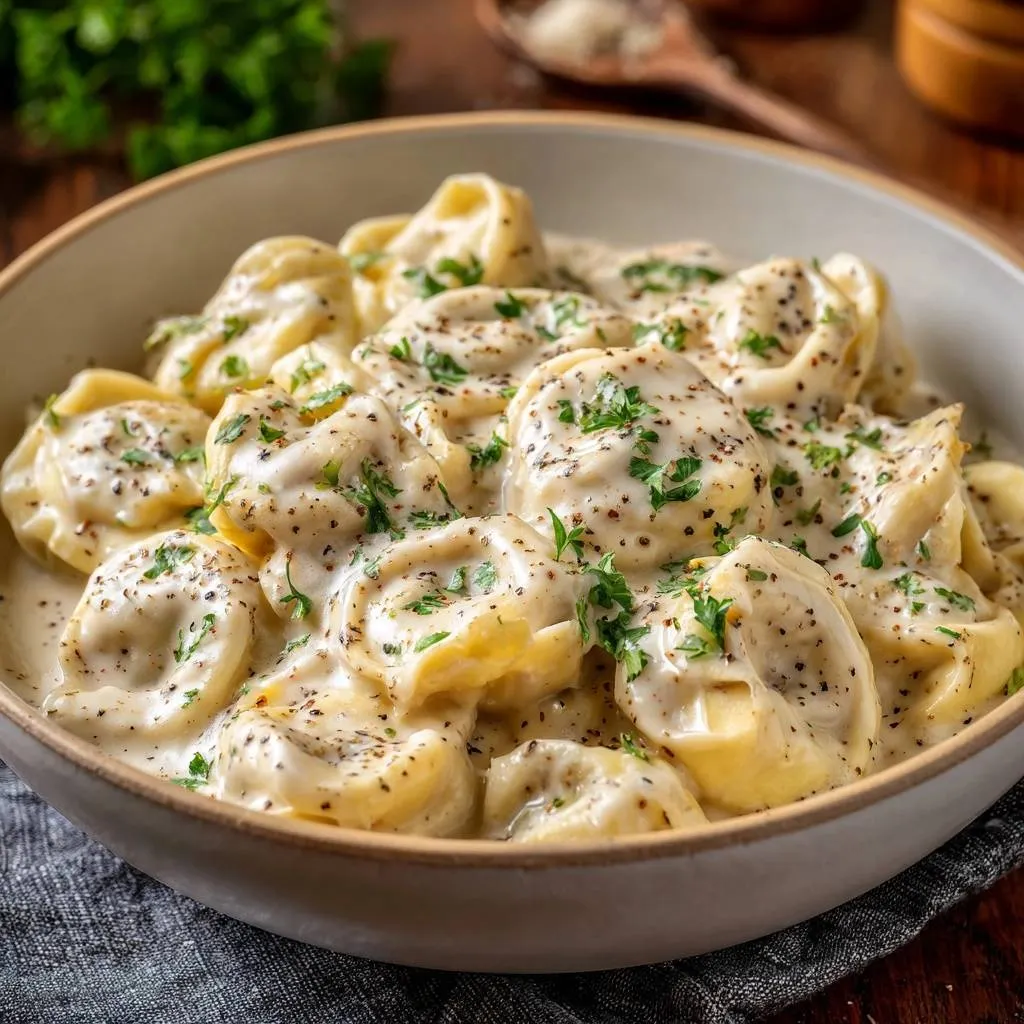
Imagine a bowl of pasta where every single piece of tortellini is perfectly intact, cradling a sauce so velvety it looks like liquid silk. You’ve likely experienced the frustration of boiling a pot of fresh pasta only to find half the cheese filling has leaked out into the water. It’s heartbreaking to see those empty dough shells floating around while the flavor disappears down the drain.
This recipe changes the game by focusing on a gentle poaching technique rather than a violent boil. By controlling the temperature, we protect the delicate seams of the pasta while building a rich, garlic-heavy emulsion that actually clings to the dough. You won’t find any watery puddles at the bottom of your bowl here; just pure, concentrated comfort that feels like a high-end bistro meal.
The secret to this professional finish is all in the “low-simmer” approach. Most home cooks treat tortellini like dried spaghetti, but fresh pasta requires a softer touch. I’ve found that by dropping the heat before the pasta even hits the water, you preserve the structural integrity of the dough, ensuring every bite is a perfect explosion of cheese and cream.
The Anatomy of a Perfect Creamy Garlic Parmesan Tortellini
A successful Creamy Garlic Parmesan Tortellini relies on a delicate balance of three pillars: fat, salt, and aromatics. The heavy cream provides a luxurious mouthfeel, while the Parmesan acts as both a seasoning and a thickening agent. When these two meet the sharp, pungent bite of fresh garlic, they create a flavor profile that is deeply satisfying without being overly complex.
The “clinging” factor is what separates a mediocre pasta from a great one. If your sauce is too thin, it slides right off the smooth surface of the tortellini. However, by reducing the cream and using starchy pasta water, we create a natural glue. This ensures the sauce wraps around the ridges of the pasta, delivering a consistent punch of flavor in every mouthful.
Why Refrigerated Pasta Outperforms Dried Varieties
When you’re browsing the grocery store, head straight for the refrigerated section. Refrigerated tortellini has a much higher moisture content in the dough compared to the rock-hard dried bags on the shelf. This higher hydration means the pasta cooks faster and has a tender, “toothsome” texture that feels much more authentic.
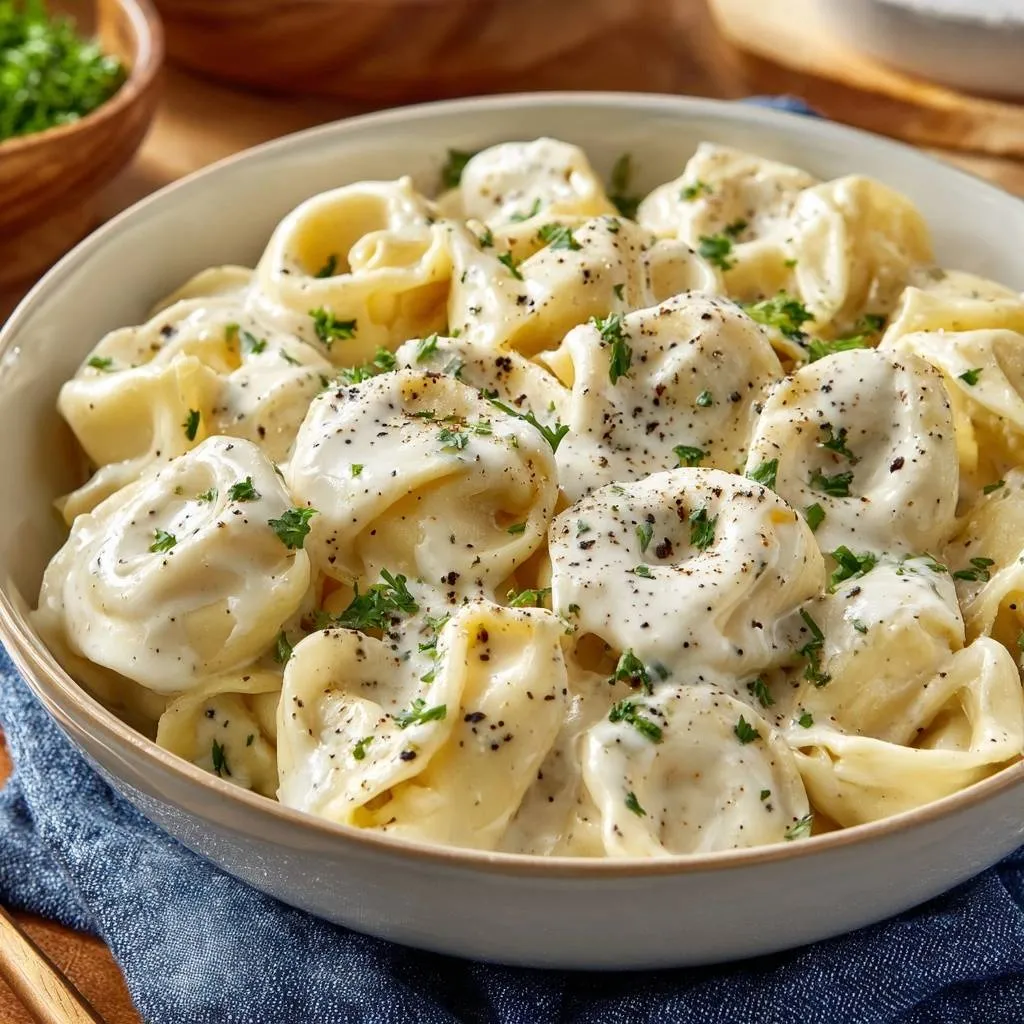
Dried tortellini often has a thick, gummy seam that stays hard even when the rest of the pasta is overcooked. Refrigerated versions, usually made with egg-based dough, are far more supple. They absorb the flavors of the garlic cream sauce much more effectively, making them the gold standard for this specific preparation.
Essential Components for a Silky Parmesan Emulsion
Quality ingredients are the backbone of this dish because there are so few of them. I always recommend using unsalted butter. This gives you total control over the seasoning, especially since Parmesan cheese is naturally quite salty. If you use salted butter, you might find the final dish crosses the line into being too briny.
Don’t reach for the fine table pepper here. Coarse cracked black pepper is essential for both the flavor and the aesthetic. The larger flakes provide little bursts of heat that cut through the richness of the cream, and they look beautiful against the white sauce. It adds a rustic, professional touch that fine powder simply can’t match.
The Case for Freshly Grated Parmesan Cheese
If there is one rule you shouldn’t break, it’s this: grate your own cheese. Those pre-shredded bags are coated in potato starch or cellulose to keep the strands from sticking together in the package. While that’s convenient for a salad, it’s a disaster for a cream sauce. Those anti-caking agents will prevent the cheese from melting smoothly, leaving you with a grainy, “broken” sauce.
When you grate a block of real Parmesan-Reggiano, it melts almost instantly into the warm cream. The result is a glossy, homogenous sauce that looks like it came out of a professional kitchen. It only takes two minutes to grate a cup of cheese, and the difference in texture is worth every second of effort.
Heavy Cream vs. Half-and-Half: The Fat Content Rule
Heavy cream is non-negotiable for this recipe because of its stability. It has a high enough fat content to withstand being simmered and reduced without curdling. The fat molecules coat the other ingredients, creating a protective barrier that keeps the sauce smooth even when you add the acidic garlic.
Half-and-half or whole milk are much more temperamental. Because they contain more water and less fat, they often “break” or separate when they hit high heat or are mixed with cheese. If you want that thick, restaurant-style coating that stays emulsified on the plate, heavy cream is the only way to go.
The “Low-Simmer” Technique: Preventing Broken Pasta
The physics of a rolling boil are actually quite violent for a delicate pasta. When water is bubbling aggressively, the tortellini bounce against each other and the sides of the pot. This physical battering is what causes the seams to split. By switching to a “poaching” method, we keep the pasta stationary and safe.
Step 1: Preparing the Starch-Rich Pasta Water
Start by bringing your water to a boil and salting it generously. You want the water to taste like the sea, as this is your only chance to season the dough itself. Once it’s boiling, turn the heat down until the bubbles are small and lazy. This is the “low-simmer” sweet spot.
As the tortellini cook, they release starch into the water. This cloudy, starchy liquid is liquid gold for your sauce. It acts as a bridge between the fat in the cream and the water in the pasta, helping everything bind together into a cohesive unit later on.
Step 2: The Gentle Transfer Method
Forget the colander for this recipe. Dumping a pot of delicate pasta into a plastic or metal strainer is a recipe for torn skins. The weight of the water and the impact of the fall are too much for the soft dough to handle. Instead, use a slotted spoon to lift the tortellini out of the water.
Transfer them directly to a plate or a bowl. It’s actually a good thing if a little bit of water clings to them. That extra moisture prevents them from sticking to each other while you finish the sauce and helps the cream adhere to the pasta when you finally combine them.
Building the Garlic and Cream Base
Now we move to the skillet, where the flavor really starts to build. This part of the process is all about temperature control. You want to coax the flavor out of the garlic without changing its color. Burnt garlic is bitter and will ruin the delicate profile of the cream.
Sautéing Garlic Without Browning
Melt your butter over medium heat and add the minced garlic. You’re looking for “blonde” garlic—soft, fragrant, and translucent. This usually takes about 60 seconds. As soon as you can smell that wonderful aroma filling your kitchen, it’s time to pour in the cream.
If the garlic starts to turn brown or crispy, it has gone too far. Browned garlic has a toasted, nutty flavor that is great for some dishes, but here it will overpower the sweetness of the cream and the saltiness of the Parmesan. Keep the heat moderate and stay close to the pan.
The Reduction Phase: Achieving Natural Thickness
We don’t use flour or cornstarch to thicken this sauce. Instead, we rely on the simple power of evaporation. By simmering the heavy cream for about 5 to 7 minutes, you’re removing water and concentrating the fats and solids. This creates a natural thickness that feels much cleaner on the palate than a flour-based roux.
You’ll know it’s ready when it reaches the “nappe” stage. This is a fancy chef term that just means the sauce is thick enough to coat the back of a spoon. If you run your finger through the sauce on the spoon and the line stays clear, you’ve achieved the perfect reduction.
The Emulsion: Integrating Cheese and Starch Water
This is the most critical moment of the recipe. We are turning a simple reduction into a true emulsion. The goal is to get the cheese to melt into the cream so perfectly that you can’t tell where one ends and the other begins.
Whisking for a Glossy Finish
Turn the heat down to low before you add the Parmesan. High heat can cause the proteins in the cheese to tighten up and clump, which leads to a stringy or oily mess. Whisk the cheese in slowly. If the sauce starts to look too “tight” or tacky, whisk in a tablespoon of that reserved pasta water.
The starch in the water helps the cheese and cream stay bonded together. It adds a beautiful gloss to the sauce, making it look shiny and appetizing. Keep adding water one tablespoon at a time until the sauce looks like melted velvet. It should be thick but still pourable.
The Folding Technique: Protecting the Pasta Skins
When it’s time to add the tortellini back in, put down the whisk and pick up a silicone spatula. You want to use a gentle “lifting and folding” motion. Imagine you’re folding egg whites into a cake batter. You want to coat every crevice of the pasta without piercing the dough.
Aggressive stirring with a metal spoon is the fastest way to break the pasta you worked so hard to protect. By using a soft spatula and a lifting motion, you ensure the cheese filling stays inside the tortellini where it belongs. Once every piece is glistening with sauce, you’re ready to serve.
Troubleshooting Your Creamy Garlic Sauce
If your sauce looks oily or separated, it has likely “broken.” This usually happens if the heat was too high. You can often fix this by adding a tiny splash of cold cream or a bit more pasta water and whisking vigorously off the heat. The sudden change in temperature can help the emulsion reform.
If the texture feels grainy, it’s almost always due to the cheese. Either it was pre-shredded or the sauce was too hot when the cheese was added. While you can’t fully “un-grain” a sauce, adding a little extra cream and whisking can help smooth it out enough to be enjoyable. Next time, grate your own and lower the flame!
Flavor Variations and Ingredient Swaps
This recipe is a fantastic canvas for customization. If you want to add some color, stir in a handful of fresh baby spinach at the very end; the residual heat will wilt it in seconds. Sun-dried tomatoes or roasted red peppers also add a lovely sweetness that complements the garlic perfectly.
For a bit of protein, you can top the finished dish with sliced grilled chicken breast or some blackened shrimp. Just make sure to cook the protein separately and add it at the end so it doesn’t interfere with the delicate emulsion of the sauce. A pinch of red pepper flakes can also add a nice “kick” if you like things spicy.
Optimal Pairings for Rich Pasta Dishes
Because this dish is so rich and creamy, you want side dishes that offer a sharp contrast. A crisp arugula salad with a lemon-heavy vinaigrette is the perfect partner. The acidity of the lemon and the peppery bite of the greens help cleanse your palate between bites of the heavy pasta.
Vegetable-wise, try charred broccolini or roasted asparagus. The slight bitterness of charred green vegetables cuts through the fat of the cream and cheese beautifully. Avoid heavy, buttery sides like garlic bread unless you’re looking for a total carb-fest—though I certainly won’t judge you if you go that route!
Storage and Reheating: Maintaining the Texture
Cream sauces are notorious for “seizing up” in the fridge. As the fats cool, they solidify, leaving you with a thick, clumpy mess the next day. Don’t worry, though; you can bring it back to life. The key is to reheat it slowly on the stovetop rather than in the microwave.
Place the leftovers in a skillet with a splash of milk or water. Heat it over low, stirring gently as the sauce thins out. The extra liquid will re-emulsify with the fats, returning the sauce to its original silky state. Be careful not to overcook it, or the tortellini will become mushy.
Expert Tips for Professional Presentation
To really impress your guests, serve this in warmed bowls. You can warm them in a low oven or by rinsing them with hot water. A warm bowl prevents the cream sauce from thickening too quickly as it hits the table, keeping your dinner at the perfect consistency for longer.
Finally, don’t be shy with the garnish. A heavy dusting of fresh Italian parsley adds a pop of green and a hit of freshness that balances the heavy cream. Add one last crack of black pepper over the top for visual contrast. It’s these small details that make a 20-minute meal feel like a special occasion.
Expert Troubleshooting: Frequently Asked Questions
Can I use milk instead of heavy cream?
I don’t recommend it. Milk has a much higher water content and lacks the fat needed to create a stable reduction. If you use milk, the sauce will likely be thin and watery, and it has a high chance of curdling when it hits the heat and the cheese. Stick to heavy cream for that signature velvety texture.
Why did my cheese clump into a ball instead of melting?
This usually happens for two reasons: the heat was too high or the cheese was pre-shredded. High heat causes the proteins in the cheese to seize up and separate from the fat. Always turn your burner to the lowest setting before adding the Parmesan, and always use freshly grated cheese from a block.
How do I keep the pasta from sticking together after boiling?
The best way to prevent sticking is to move the pasta directly from the water into the sauce. If your sauce isn’t quite ready, toss the cooked tortellini with a tiny bit of olive oil or a splash of the pasta water. However, for the best results, time your sauce so it’s ready the moment the pasta finishes poaching.
Can I make this ahead of time for a dinner party?
This dish is at its absolute peak within 15 minutes of being made. While you can reheat it, the sauce will never be quite as silky as it is fresh off the stove. If you’re hosting, I suggest prepping your garlic, parsley, and cheese ahead of time. The actual cooking only takes 20 minutes, so you can easily whip it up while your guests enjoy an appetizer.
Is there a substitute for fresh garlic?
In a pinch, you could use garlic paste, but I strongly advise against garlic powder for this recipe. Garlic powder doesn’t have the same aromatic oils as fresh cloves, and it can give the cream sauce a grainy texture and a “processed” flavor. Freshly minced garlic provides the sharp, sweet punch that makes this dish sing.
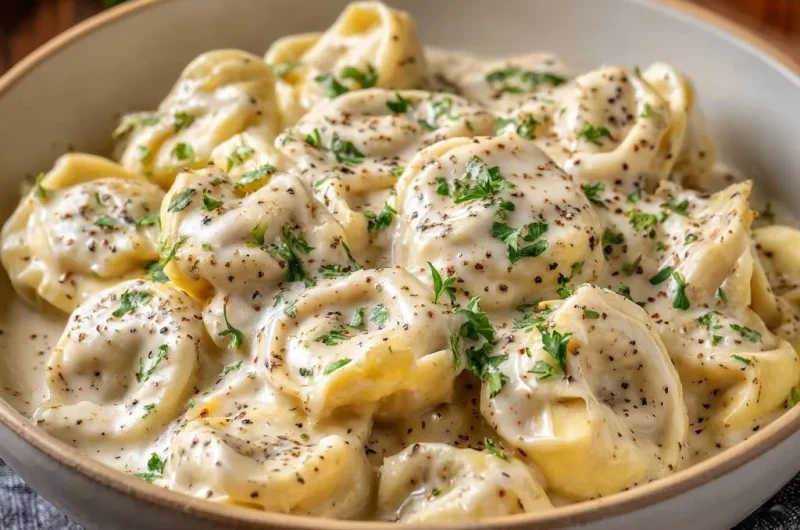
Creamy Garlic Parmesan Tortellini
Course: Main CourseCuisine: Italian-AmericanDifficulty: easy4
servings5
minutes15
minutes20
MinutesItalian-American
Ingredients
20 ounces refrigerated cheese tortellini
2 cups heavy cream
1 cup freshly grated Parmesan cheese
2 tablespoons unsalted butter
4 cloves garlic, minced
1 1/2 teaspoons coarse cracked black pepper (plus more for garnish)
1/2 teaspoon salt
3 tablespoons fresh Italian parsley, finely chopped
1/2 cup reserved starchy pasta water
Directions
- Bring a large pot of salted water to a rolling boil. To prevent broken pasta, turn the heat down to a low simmer (small bubbles only) before adding the tortellini.
- Cook the tortellini for 2 to 3 minutes or until they just begin to float. Use a slotted spoon to gently transfer them directly from the water to a plate; do not dump them into a colander, as the weight and impact will tear the delicate skins. Reserve 1/2 cup of the pasta water.
- In a large skillet over medium heat, melt the butter. Add the minced garlic and cook for 1 minute until fragrant but not browned.
- Pour in the heavy cream and bring to a gentle simmer. Reduce the heat to medium-low and whisk frequently for 5-7 minutes until the cream has reduced by about a third and thickened naturally.
- Lower the heat to low and whisk in the Parmesan cheese and cracked black pepper. If the sauce becomes too thick or “tight,” whisk in the reserved pasta water one tablespoon at a time until a velvety, glossy consistency is reached.
- Gently add the cooked tortellini to the skillet. Using a silicone spatula, fold the pasta into the sauce with a lifting motion to ensure every crevice is coated without piercing the dough.
- Taste and add salt if needed. Serve immediately in warm bowls, topped with a heavy garnish of fresh parsley and an extra dusting of cracked black pepper to match the visual finish.
Notes
- To prevent breaking the pasta, avoid using a colander; the weight of the pasta can cause the delicate skins to tear. Always use a slotted spoon for transferring.