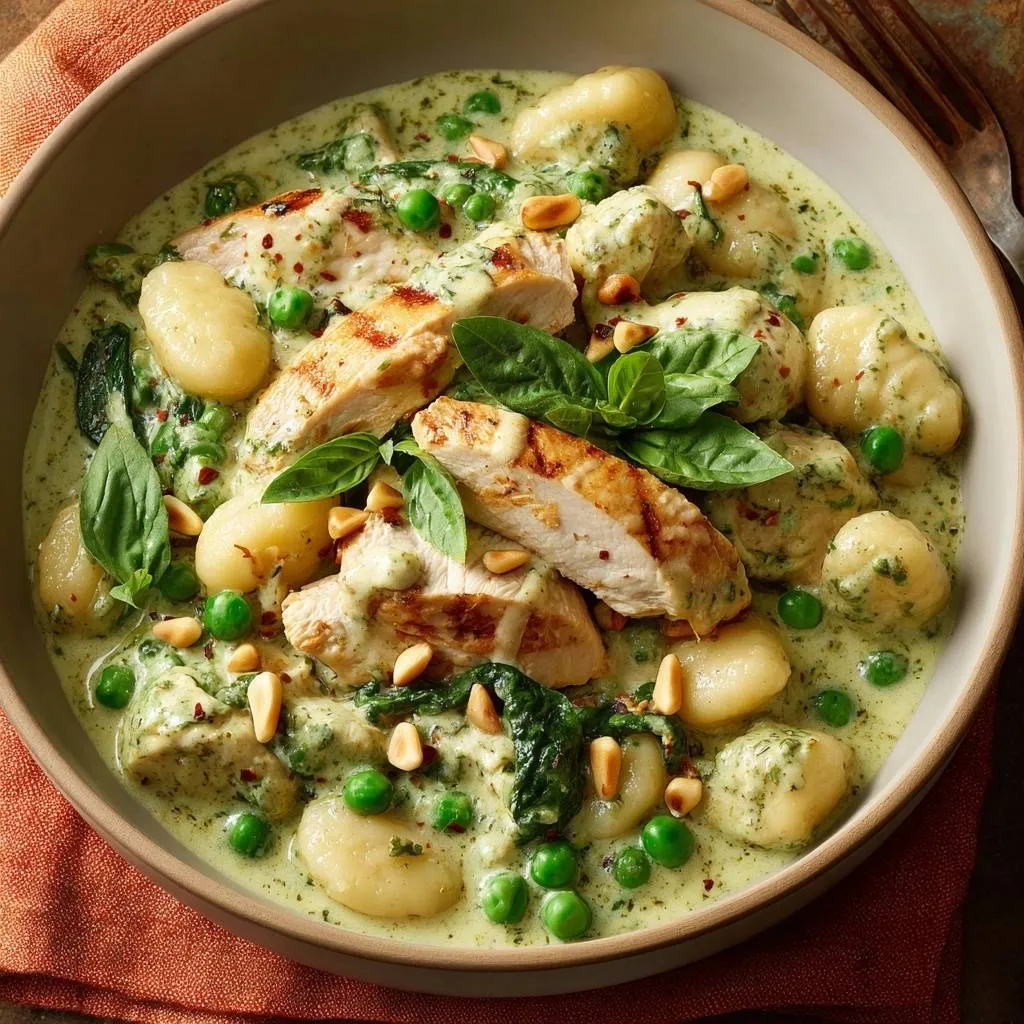
Forget everything you know about boiling water for pasta. If you’ve ever ended up with a plate of gummy, gluey potato lumps, you know how quickly a promising dinner can turn into a culinary disaster. The secret to restaurant-quality Creamy Pesto Chicken and Gnocchi isn’t in a fancy brand of pasta, but in a simple technique shift that swaps the stockpot for a searing-hot skillet.
By pan-frying the gnocchi directly in olive oil, you create a golden, slightly crisp exterior that acts as a structural shield. This barrier protects the pillowy interior from the rich sauce, ensuring every bite remains firm yet tender. It’s a 25-minute meal that feels like a labor of love, offering a sophisticated contrast of textures that boiling simply cannot replicate.
I’ve found that the real magic happens when you use the chicken broth to steam the gnocchi after the initial sear. This two-step process ensures the center is fully cooked and soft while the outside stays resilient. You’re essentially pressure-cooking the starch in a flavorful liquid rather than drowning it in plain water, which keeps the flavor concentrated and the texture perfect.
The Science of Searing: Why Boiling Ruins Gnocchi
Potato gnocchi are delicate little dumplings made primarily of starch and moisture. When you drop them into boiling water, the outer layer of starch hydrates instantly, turning into a sticky, gelatinous film. This is why they often clump together or feel slimy on the tongue. If you leave them in the water for even thirty seconds too long, that hydration reaches the core, and you’re left with mush.
Pan-searing triggers the Maillard reaction, which is the chemical marriage of heat and amino acids that creates browning. This process doesn’t just add a nutty, toasted flavor; it creates a physical crust. This crust is vital when working with a heavy cream sauce. Instead of the sauce soaking into the gnocchi and making it soggy, the sauce clings to the textured surface, maintaining the integrity of the dish until the very last bite.
Furthermore, searing allows the gnocchi to retain its shape. Boiling often causes the ridges or edges of the pasta to fray and dissolve into the water. When you sauté them, you lock in that plump, rounded shape. You’ll notice the difference immediately as the gnocchi bounce back against your fork rather than collapsing under the weight of the pesto cream.
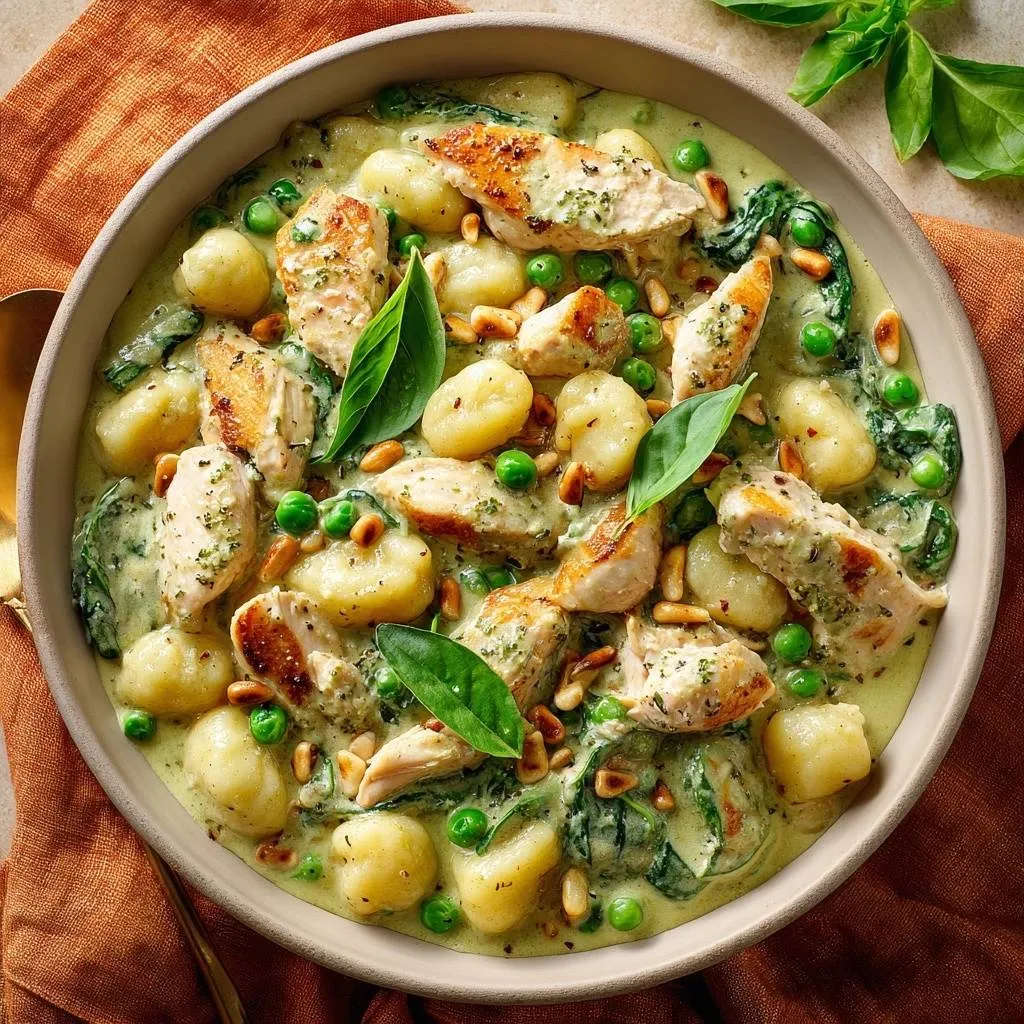
Essential Components for Creamy Pesto Chicken and Gnocchi
Quality ingredients are the backbone of this dish, especially since the cooking time is so short. For the best results with the searing technique, I recommend using shelf-stable or refrigerated gnocchi. These varieties have a slightly lower moisture content than homemade or frozen versions, which allows them to crisp up beautifully without sticking to the bottom of your pan.
The heavy cream acts as more than just a rich base; it serves as a stabilizer for the basil pesto. Pesto is essentially an emulsion of oil, nuts, and herbs. If you heat it alone, the oil often separates, leaving you with a greasy mess. Whisking it into the heavy cream keeps the sauce velvety and cohesive, ensuring the vibrant green color and fresh basil flavor are distributed evenly across the chicken and pasta.
Don’t skip the chicken broth. While it might seem like a small addition, it’s the bridge between the frying and steaming phases. It picks up the flavorful browned bits left behind by the chicken and provides just enough moisture to soften the gnocchi’s interior without compromising the golden crust you worked so hard to build.
Selecting the Right Pesto and Poultry
When shopping for pesto, look in the refrigerated section of your grocery store. These “fresh” pestos usually have a brighter green hue and a more pronounced garlic and basil punch than the shelf-stable jars found in the pasta aisle. If you do use a jarred version, check the ingredient list for extra virgin olive oil rather than sunflower or canola oil for a deeper flavor profile.
For the chicken, uniform thickness is your best friend. Chicken breasts are often tapered, meaning the thin end dries out before the thick end is safe to eat. I suggest butterflying the breasts or using a meat mallet to pound them to an even half-inch thickness. This ensures they sear quickly and stay juicy, matching the fast pace of the gnocchi cooking in the next step.
Vegetable Additions for Texture and Color
Frozen peas are a secret weapon in this recipe. Unlike canned peas, which are soft and dull, frozen peas retain a bright “pop” and a hint of sweetness that cuts through the richness of the cream. You don’t even need to thaw them; just toss them in at the end, and the residual heat of the sauce will bring them to the perfect temperature in seconds.
Fresh baby spinach adds a necessary earthy acidity. As it wilts into the sauce, it provides a beautiful color contrast and a silky texture. Because spinach is mostly water, it also helps thin the sauce just slightly as it cooks, preventing the heavy cream from becoming too thick or cloying as it simmers with the pesto.
Step 1: Achieving the Perfect Golden Chicken Sear
Heat management is the most important part of starting this dish. You want your skillet hot enough that the chicken sizzles the moment it touches the oil, but not so hot that the oil begins to smoke. A heavy cast-iron or stainless steel skillet is ideal here because it holds onto heat even when you add the cold meat, ensuring a consistent sear.
Once you lay the chicken in the pan, leave it alone. It’s tempting to move it around, but the meat needs uninterrupted contact with the heat to develop that deep golden-brown crust. You’ll know it’s ready to flip when it releases easily from the pan. If it’s sticking, it hasn’t formed a proper crust yet; give it another minute and try again.
After the chicken reaches 165°F, move it to a cutting board and let it rest for at least three minutes. This pause allows the juices to redistribute throughout the fibers. If you slice it immediately, all that moisture will run out onto the board, leaving you with dry medallions. Resting ensures every piece of chicken in your final bowl is succulent and tender.
Step 2: The No-Boil Pan-Frying Technique
This is where the magic happens. After wiping your skillet clean of any burnt bits, add a fresh tablespoon of oil and drop in the dry gnocchi. You want them in a single layer so they all get direct contact with the heat. You’ll hear a distinct crackling sound as the potato starch begins to toast and turn golden.
Use a “toss and wait” rhythm. Let them sit for about two minutes to brown on one side, then give the pan a good shake or use a spatula to flip them. You aren’t looking for every single side to be perfectly brown, but you want a good speckled appearance across the batch. The smell will be reminiscent of toasted hash browns or roasted potatoes.
Be careful not to overcrowd the pan. If you’re doubling the recipe, sear the gnocchi in two batches. If there are too many in the pan at once, they will trap steam between them, which leads back to that gummy texture we are trying to avoid. A little space between the dumplings ensures the edges stay crisp and distinct.
Step 3: Deglazing and Building the Pesto Cream Sauce
Once the gnocchi are toasted, pour in the chicken broth. This will cause a sudden burst of steam, which is exactly what you want. Use your spatula to scrape the bottom of the pan, lifting up the “fond” or the caramelized bits from the chicken and gnocchi. This liquid will quickly reduce, infusing the pasta with concentrated savory flavor.
As the broth disappears, lower the heat and pour in the heavy cream and pesto. Whisk gently to combine them into a smooth, pale green sauce. Adding the red pepper flakes now allows their heat to bloom in the fat of the cream, providing a subtle back-of-the-throat warmth that balances the cooling basil and rich dairy.
The sauce will thicken quickly as the starch from the gnocchi mingles with the cream. You’re looking for a velvety consistency that coats the back of a spoon. If it looks too thick, a tiny splash of broth or water will loosen it up. Once the spinach is wilted and the peas are bright, you’ve reached the finish line of the cooking process.
Troubleshooting Common Gnocchi Texture Issues
If your gnocchi still feels a bit too firm or “al dente” after the broth has reduced, don’t panic. Simply add another two tablespoons of broth or water and cover the pan with a lid for sixty seconds. This extra hit of steam will soften the core of the potato dumplings without ruining the exterior texture you’ve built.
If your sauce looks oily or appears to be “breaking,” it usually means the heat was too high after you added the pesto. To fix this, remove the pan from the heat entirely and add a tablespoon of room-temperature heavy cream or water. Whisk vigorously; the cooler liquid and the agitation should help the emulsion come back together into a smooth sauce.
Sometimes the sauce thickens too much while you’re waiting to serve. Because gnocchi is so starchy, it will continue to absorb liquid even after the heat is off. Always keep a little extra broth on hand to stir in right before you plate. This ensures the dish stays “saucy” rather than turning into a thick paste as it sits.
Flavor Variations and Dietary Adjustments
While basil pesto is the classic choice, you can easily pivot this dish by using a “Pesto Rosso” made with sun-dried tomatoes. This swap gives the dish a tangy, smoky depth that pairs beautifully with the cream. You can also experiment with the protein; seared salmon fillets or even sliced turkey breast work wonderfully with these flavors.
If you want a slightly lighter version of this meal, you can substitute half-and-half for the heavy cream. However, keep in mind that half-and-half has a higher water content and won’t thicken as naturally. You may need to simmer the sauce for an extra minute or two, and be extra careful not to let it boil, as lower-fat dairy curdles more easily.
For a bit of extra crunch, try adding the toasted pine nuts at the very last second. You can also swap the pine nuts for toasted slivered almonds or chopped walnuts if that’s what you have in your pantry. Each nut brings a different level of sweetness and oiliness that can subtly change the character of the pesto sauce.
What to Serve with Creamy Pesto Chicken
Because this dish is quite rich and starch-heavy, you want to pair it with sides that offer high acidity and crunch. A simple arugula salad with a sharp lemon vinaigrette is the perfect companion. The peppery bite of the greens and the citrus juice help cleanse your palate between bites of the creamy gnocchi.
Charred broccolini or roasted asparagus with a squeeze of fresh lemon also work well. These vegetables provide a bitter edge that balances the sweetness of the peas and the richness of the cream. I usually avoid serving heavy garlic bread with this meal, as the gnocchi provides plenty of carbohydrates on its own, but a light, crusty baguette is great for swiping up extra sauce.
If you want to keep the meal feeling fresh, garnish heavily with fresh basil leaves right before serving. The raw herb provides a floral aroma that the cooked pesto loses during the simmering process. A final sprinkle of red pepper flakes adds a pop of color and a reminder of the gentle heat hidden within the sauce.
Expert Tips for Storage and Reheating
Gnocchi is notoriously tricky to reheat because the microwave tends to turn the potato starch into a rubbery texture. If you have leftovers, store them in an airtight container in the fridge for up to three days. When you’re ready to eat, the best method is to put them back in a small skillet over low heat with a splash of milk or broth.
Gently stir the gnocchi as they warm through to loosen the sauce. This stovetop method helps maintain the integrity of the dumplings much better than the microwave. I strongly advise against freezing the finished dish. The heavy cream base will likely separate and become grainy when thawed, and the gnocchi will lose their signature “pillowy” feel.
If you find the sauce has been completely absorbed by the next day, don’t worry. Adding that extra splash of liquid during reheating will bring the creaminess back to life. Just be patient and use low heat so you don’t overcook the chicken medallions while waiting for the pasta to warm up.
Frequently Asked Questions
Can I use cauliflower gnocchi for this recipe?
Yes, you can use cauliflower gnocchi, but you must be extra careful with the moisture. Cauliflower versions tend to hold more water than potato versions. I recommend pan-searing them from frozen in a very hot pan with a bit more oil to ensure they get crispy. You may need to reduce the amount of chicken broth used for steaming, as they soften much faster than traditional potato gnocchi.
Why did my pesto turn brown?
Basil is extremely sensitive to heat. When pesto is boiled or simmered for too long, the chlorophyll in the basil leaves oxidizes and turns a muddy brown color. To keep your sauce a vibrant, appetizing green, only simmer the pesto and cream for a few minutes. Never let the sauce reach a rolling boil once the pesto has been added to the pan.
Do I need to defrost the peas first?
There is no need to defrost the peas. Adding them while frozen actually helps stop the cooking process of the sauce, preventing it from over-thickening. The peas are small enough that they will heat through completely in about 60 to 90 seconds of simmering. This method also ensures they stay bright green and have a firm, snappy texture rather than becoming mushy.
Can I use dried basil instead of fresh?
While you can use dried basil in a pinch, it will significantly change the flavor profile. Dried basil has a more minty, hay-like taste compared to the peppery, floral notes of fresh basil. If you don’t have fresh basil for the garnish, I recommend just sticking with the pesto in the sauce and skipping the dried herb on top, as the pesto already contains the concentrated flavor you need.
How do I know if the gnocchi is done without boiling it?
The gnocchi is done when it feels tender when pierced with a fork but still has a slight bounce. Since you are searing them first and then steaming them with broth and cream, they cook from the outside in. The total time in the pan (about 8-10 minutes across all steps) is more than enough to cook the potato starch through. If they look plump and the sauce is clinging to them, they are ready to eat.
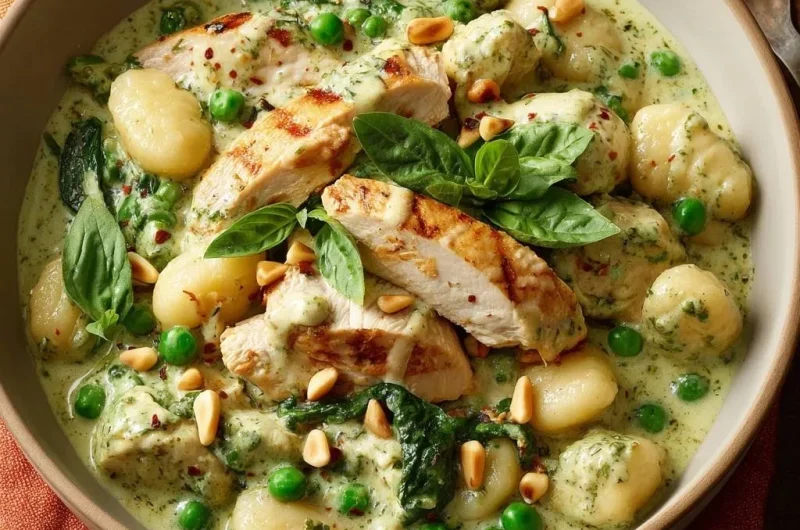
Creamy Pesto Chicken and Gnocchi
Course: Main CourseCuisine: Italian-AmericanDifficulty: easy4
servings10
minutes15
minutes25
Minutes540
kcalItalian-American
Ingredients
1 pound potato gnocchi (shelf-stable or refrigerated)
2 large chicken breasts
1 cup heavy cream
1/2 cup basil pesto
1/2 cup chicken broth (to ensure gnocchi cooks through)
1 cup frozen peas
2 cups fresh baby spinach
1/4 cup pine nuts, toasted
2 tablespoons olive oil
1/2 teaspoon red pepper flakes
Fresh basil leaves for garnish
Salt and black pepper to taste
Directions
- Season the chicken breasts with salt and pepper. Heat one tablespoon of olive oil in a large grill pan or heavy skillet over medium-high heat. Sear the chicken until deep golden brown grill marks appear and the chicken is cooked through (165°F), about 5-6 minutes per side. Remove chicken from the pan, let it rest for 3 minutes, then slice into thick medallions.
- To solve the gummy pasta problem, do not boil the gnocchi. Wipe the skillet clean and add the remaining tablespoon of olive oil. Add the dry gnocchi directly to the pan in a single layer. Sauté for 4 to 5 minutes, tossing occasionally, until the outsides are golden and slightly crisp.
- Lower the heat to medium. Pour in the chicken broth first, scraping up any browned bits from the bottom of the pan. This steam will finish cooking the center of the gnocchi without making them mushy. Once the broth has mostly reduced, pour in the heavy cream and whisk in the pesto and red pepper flakes.
- Add the frozen peas and baby spinach. Simmer for 2 to 3 minutes until the spinach is wilted, the peas are bright green, and the sauce has thickened to a velvety consistency that coats the back of a spoon.
- Return the sliced chicken medallions to the pan, nestling them into the sauce to warm through.
- Serve immediately in shallow bowls. Top with a generous sprinkle of toasted pine nuts, red pepper flakes, and fresh basil leaves. The gnocchi will remain perfectly plump and firm thanks to the pan-sear technique.
Notes
- The secret to avoiding gummy gnocchi is to sauté them directly in the pan rather than boiling them in water.