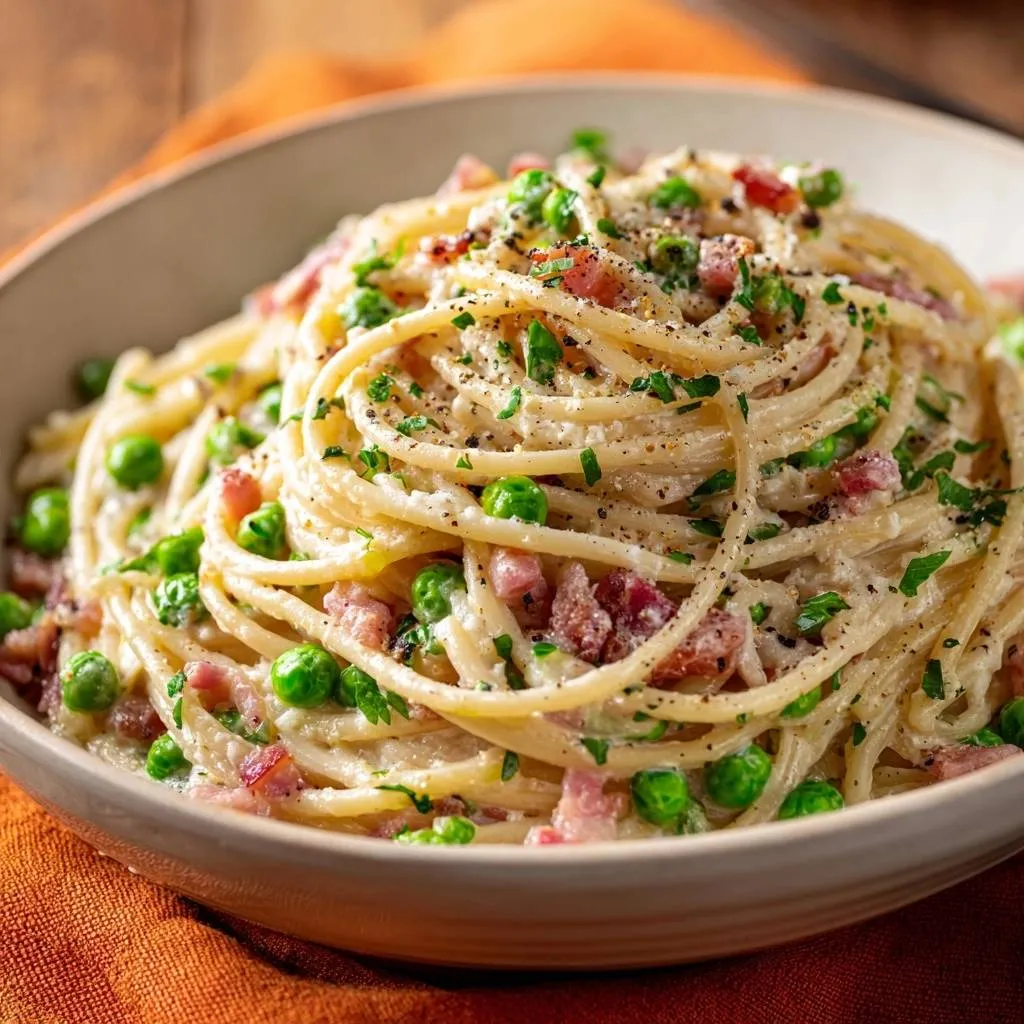
The biggest frustration with making a classic creamy pasta at home is ending up with a bowl of dry noodles and clumps of scrambled eggs. You expect a velvet-like coating, but instead, you get a grainy mess that feels more like breakfast than a decadent dinner. This recipe solves that heartbreak by using a specific temperature-control technique and a touch of heavy cream to ensure your sauce stays silky, glossy, and perfectly emulsified every single time.
By using the residual heat of the pasta water rather than direct stove heat, you lock in that professional restaurant texture without the risk of curdling. The result is a thick, opaque white sauce that clings to every strand of spaghetti, punctuated by the sweet pop of bright green peas. It is a foolproof approach that prioritizes a luxurious mouthfeel while keeping the process stress-free for any home cook.
The secret to this success lies in the thermal buffer created by the cream and the timing of the toss. Most traditional recipes rely solely on the heat of the noodles to cook the eggs, which can be unpredictable. However, by whisking the eggs with cream and cheese beforehand, you create a stable base that is much more forgiving. This method guarantees a glossy finish that won’t break, even if you aren’t a professional pasta chef.
The Science of Emulsification Without Scrambling
Understanding the physics of an egg-and-cheese emulsion is the key to mastering this dish. Egg yolks begin to coagulate at approximately 145°F to 150°F. Once they hit that threshold, the proteins tighten and bond together, creating those dreaded solid clumps. When you cook over a direct flame, the skillet surface can easily exceed 300°F, making it almost impossible to prevent the eggs from scrambling the moment they touch the pan.
Direct stove heat is the enemy of a smooth carbonara. Therefore, we rely on the gentle, residual heat of the boiled pasta to do the work. In addition, the heavy cream serves a vital scientific purpose beyond just flavor. It acts as a thermal buffer. The fats in the cream coat the egg proteins, effectively raising their coagulation temperature and providing a wider window of success. This prevents the proteins from clumping into curds, allowing them to stay in a liquid, creamy state while they thicken.
As you toss the pasta, you are creating an emulsion, which is a stable mixture of fats and liquids. The fat from the rendered bacon and the cheese must marry with the water-based proteins in the eggs. Without the right temperature and mechanical action, these elements would stay separate. By removing the pan from the heat, you control the environment, ensuring the sauce transforms into a thick, cohesive coating rather than a broken mess.
Essential Components for a Velvet Texture
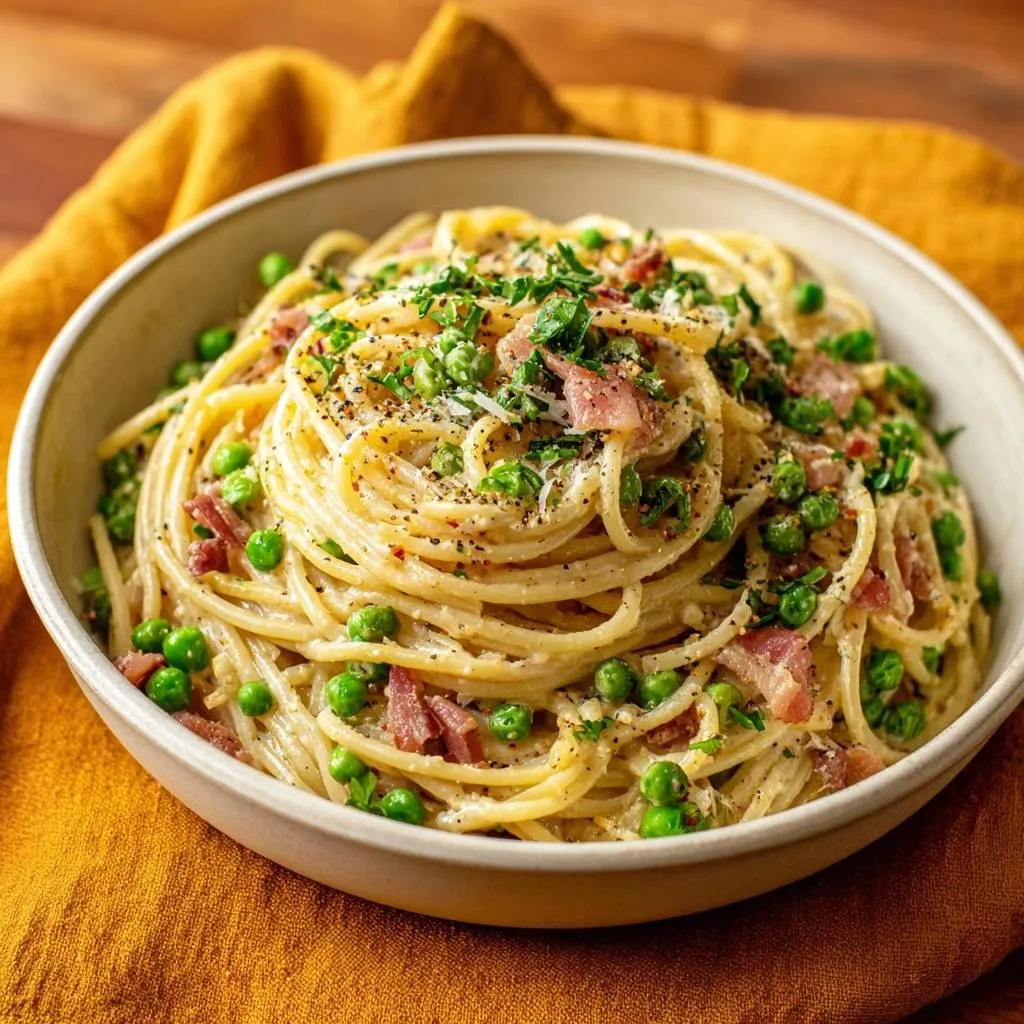
Quality ingredients and proper temperature management are non-negotiable for a superior sauce. Firstly, you must use room-temperature eggs. If you drop cold eggs into hot pasta, the temperature shock can cause the sauce to break or seize. Taking the eggs out of the fridge thirty minutes before cooking ensures they emulsify smoothly into the cream and cheese mixture.
The choice of protein also dictates the final texture. Using thick-cut bacon or pancetta provides a necessary chew and a significant amount of rendered fat. This fat is the foundation of the sauce’s flavor. When paired with the soft, tender peas, the crispy edges of the meat create a satisfying contrast that keeps the dish from feeling one-dimensional. It’s about balancing the richness of the cream with the saltiness of the cured meat.
Furthermore, you must grate your Parmesan cheese fresh from the block. Pre-shredded cheeses are coated in anti-caking agents like potato starch or cellulose. These additives are designed to keep the cheese from sticking together in the bag, but they also prevent it from melting smoothly into a sauce. Freshly grated cheese melts instantly, contributing to that signature velvet texture rather than leaving behind a gritty residue.
Selecting the Right Pasta Shape
Long, cylindrical strands like spaghetti or bucatini are the superior choice for this specific sauce weight. The surface area of a long noodle allows the thick, creamy emulsion to coat the entire length of the strand evenly. Short shapes like penne or rigatoni have large holes that can trap too much of the heavy sauce, making the dish feel overly weighted and clunky. Spaghetti provides the perfect balance, ensuring every bite has just the right ratio of pasta to cream.
The Role of Starchy Pasta Water
Never dump your pasta water down the drain; it is truly liquid gold. As the spaghetti boils, it releases starches into the water. This starchy liquid acts as a powerful binding agent. When you add a splash of this water to your skillet, it helps the fat from the bacon and the proteins in the egg mixture “marry” together. It is the final touch that turns a thick paste into a glossy, pourable sauce that clings to the noodles without being sticky.
Step-by-Step: Achieving the Perfect Emulsion
Achieving a restaurant-quality carbonara requires a rhythmic approach. You cannot rush the process, but you must move with intention once the pasta is cooked. By breaking the method into three distinct phases, you maintain total control over the texture and temperature of the final dish.
Phase 1: Rendering Fat and Searing Aromatics
Start by placing your diced bacon in a cold skillet and then turning the heat to medium. This allows the fat to render out slowly, resulting in perfectly crispy bits without burning the edges. Once the bacon is golden and the fat has pooled in the pan, add your minced garlic. You only need about 30 seconds here. You want the garlic to become fragrant and soft, not brown or bitter. Immediately turn the heat to the lowest setting to prepare for the pasta’s arrival.
Phase 2: The Off-Heat Integration Technique
This is the most critical instruction in the entire recipe. Once the pasta is al dente, drain it and add it directly to the skillet with the bacon. Toss in the frozen peas now. The heat from the noodles will thaw the peas in seconds, keeping them bright green and “poppy” rather than mushy. Now, remove the skillet entirely from the burner. Moving the pan to a cool part of the stove or a trivet ensures the metal isn’t hot enough to scramble the eggs when they hit the surface.
Phase 3: The Vigorous Toss and Water Adjustment
Pour your egg, cream, and cheese mixture over the pasta. Immediately begin tossing vigorously with tongs or a large fork. You want constant motion. This mechanical action, combined with the residual heat, thickens the eggs into a velvet-like sauce. If the sauce looks too thick or tacky, drizzle in your reserved pasta water one tablespoon at a time. Watch for the “gloss.” You are looking for a specific opaque, white consistency that looks like heavy silk. Once it coats every strand perfectly, stop adding water and serve immediately.
Troubleshooting Common Carbonara Obstacles
Even with the best technique, things can sometimes go wrong. If your sauce feels too thick or starts to look dry, it usually means the pasta has absorbed too much moisture. Simply whisk in an extra splash of warm pasta water or a teaspoon of heavy cream to loosen it back up. The extra fat in the cream can often “reset” the emulsion and bring back the shine.
If you notice the sauce starting to clump or look like it might scramble, you must act fast. Immediately move the pasta to a room-temperature bowl and whisk in a teaspoon of room-temperature cream. This lowers the overall temperature of the mixture instantly and can often save the sauce before the proteins fully bond. Remember, it is always easier to thin a sauce out than it is to thicken one that is too watery, so add your pasta water slowly.
Flavor Variations and Ingredient Swaps
While pancetta is traditional, you can easily modify the protein to suit your pantry. Smoked turkey or beef bresaola offer excellent alternatives that provide a deep, savory flavor without using pork. If you prefer a sharper, more pungent bite, swap half of the Parmesan for Pecorino Romano. This sheep’s milk cheese adds a salty tang that cuts through the richness of the heavy cream beautifully.
For a spring-inspired twist, consider adding a teaspoon of fresh lemon zest at the very end. The citrus oils provide a bright, high note that complements the sweetness of the peas and lightens the overall feel of the dish. You could also swap the parsley for fresh chives or basil if you want a different herbal profile. The base technique remains the same regardless of these small flavor adjustments.
What to Serve with Creamy Pasta
Because this carbonara is incredibly rich and savory, you want side dishes that offer a sharp, acidic contrast. A simple arugula salad tossed in a lemon-shallot vinaigrette is the perfect companion. The peppery bite of the greens cuts right through the cream. Alternatively, charred broccolini with a squeeze of fresh lemon and a pinch of red pepper flakes provides a nice textural change and a hit of bitterness that balances the salty bacon and sweet peas.
Expert Tips for Success
Can I use milk instead of heavy cream?
It is not recommended to use milk as a direct substitute. Heavy cream has a high fat content that provides the necessary “thermal buffer” to prevent the eggs from scrambling. Milk is mostly water and lacks the stability needed to create that thick, opaque sauce. If you must use milk, the sauce will be much thinner and the risk of the eggs curdling increases significantly.
How do I reheat leftovers without the eggs scrambling?
Reheating carbonara is tricky because high heat will cook the eggs. The best way is to place the leftovers in a skillet over very low heat with a splash of water or a tablespoon of cream. Stir constantly just until the sauce becomes glossy again and the pasta is warm. Avoid the microwave if possible, as it heats unevenly and will likely turn your sauce into scrambled eggs.
Why are my peas shriveled?
Shriveled peas are a sign of overcooking. If you boil the peas with the pasta, they lose their moisture and vibrant color. By adding frozen peas directly to the hot pasta in the skillet, you use residual heat to thaw them. This keeps them plump, sweet, and bright green, providing the best texture and visual appeal.
Is it safe to eat sauce made from eggs?
Yes, it is safe. When you toss the egg mixture with the hot pasta (which is roughly 212°F coming out of the water), the residual heat brings the sauce to a temperature of about 160°F. This is the temperature required to pasteurize eggs, making the sauce safe to consume while maintaining its creamy, liquid state.
Can I use pre-shredded cheese?
You should avoid pre-shredded cheese for this recipe. The cellulose coating used to prevent clumping in the package will prevent the cheese from melting into the egg and cream mixture. This results in a grainy, sandy texture rather than a smooth, velvet sauce. Always grate your cheese fresh from a block for the best results.
Creamy Spaghetti Carbonara with Peas
Course: Main CourseCuisine: Italian-AmericanDifficulty: easy4
servings10
minutes15
minutes25
Minutes620
kcalItalian-American
Ingredients
1 pound spaghetti
6 ounces thick-cut pancetta or bacon, diced
1 cup frozen sweet peas
3 large eggs plus 1 egg yolk, room temperature
1/2 cup heavy cream
1 cup freshly grated Parmesan cheese
2 cloves garlic, minced
1 teaspoon coarse cracked black pepper
1/4 cup fresh parsley, finely chopped
Salt for pasta water
Directions
- Bring a large pot of heavily salted water to a boil. Cook the spaghetti according to package directions until just al dente.
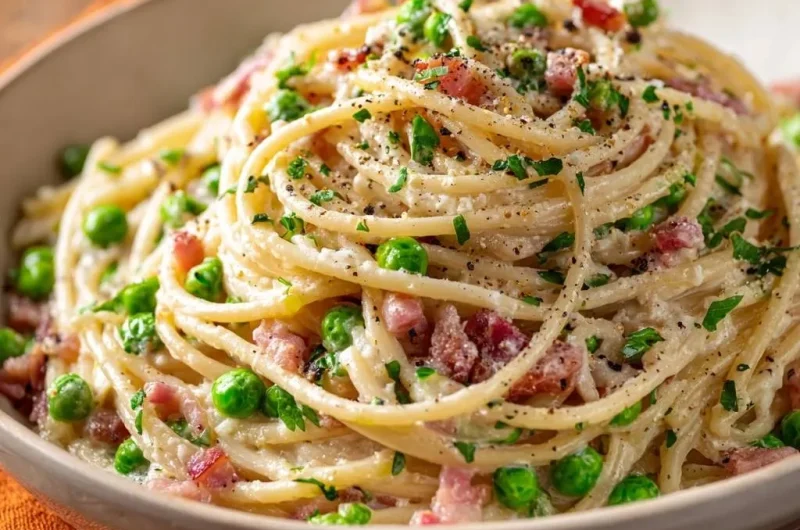
- While the pasta cooks, whisk the eggs, egg yolk, heavy cream, and grated Parmesan cheese together in a medium bowl until smooth. This mixture creates the thick, opaque white base seen in the final dish.
- In a large skillet over medium heat, fry the diced bacon until the fat is rendered and the edges are crispy. Add the minced garlic and cook for 30 seconds until fragrant. Turn the heat to the lowest setting.
- Crucial Step: Before draining the pasta, reserve 1 cup of the starchy pasta water. This liquid is essential for adjusting the final sauce consistency.
- Drain the pasta and immediately add it to the skillet with the bacon. Toss in the frozen peas; the heat from the pasta will thaw and cook them perfectly while maintaining their bright green color.
- Remove the skillet entirely from the heat source. This is the most important part to avoid scrambling the eggs.
- Pour the egg, cream, and cheese mixture over the pasta. Immediately begin tossing vigorously with tongs. The residual heat of the noodles will thicken the cream and eggs into a velvet-like sauce.
- If the sauce is too thick, slowly drizzle in the reserved pasta water, a tablespoon at a time, while continuing to toss until the sauce is glossy and coats every strand.
- Garnish heavily with coarse cracked black pepper and fresh parsley to match the visual texture of the dish. Serve immediately while the sauce is at its peak creaminess.
Notes
- Crucial Step: Remove the skillet entirely from the heat source before adding the egg mixture to avoid scrambling. Use reserved starchy pasta water to adjust the sauce consistency to your liking.