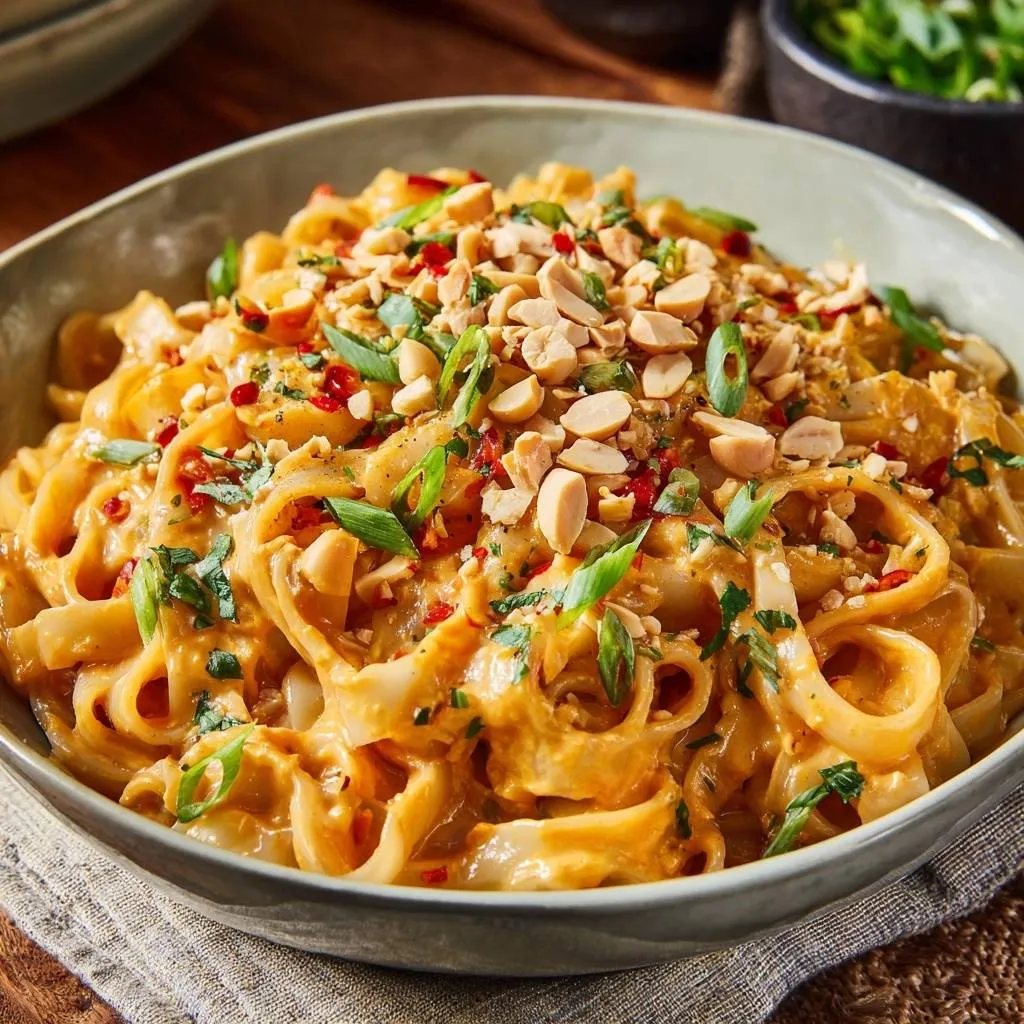
We’ve all been there. You crave that silky, restaurant-style peanut noodle dish, but when you try it at home, you end up with a congealed, sticky block of dough. It’s frustrating to watch beautiful ingredients turn into a gummy mess that sticks to the roof of your mouth.
The secret to perfect Creamy Spicy Peanut Noodles isn’t just in the spice levels; it’s a matter of temperature control and starch management. By mastering the relationship between hot pasta water and cold-rinsed noodles, you can achieve a glossy, velvety coating that stays fluid until the very last bite.
I’ve found that the biggest mistake home cooks make is tossing hot, unrinsed noodles directly into a thick peanut paste. This causes the starches to hydrate instantly, creating a glue-like bond. Instead, we use a specific emulsion technique that ensures every strand remains separate and perfectly coated.
The Physics of Non-Sticky Rice Noodles
Rice noodles are packed with amylopectin, a type of starch that becomes incredibly sticky when it’s agitated in hot water. If you drain your noodles and let them sit, they essentially “self-glue” as they cool. This is why your noodles often arrive at the bowl as a giant clump.
To combat this, we use the “Rinse and Emulsify” method. Rinsing the cooked noodles under cold water immediately stops the cooking process and washes away the excess surface starch. This creates a clean “canvas” for our sauce to cling to without the noodles sticking to each other.
The magic happens when we introduce starchy pasta water back into the peanut butter base. The heat from the water melts the fats in the peanut butter, while the starch acts as a bridge, creating a permanent emulsion. This results in a sauce that is pourable and smooth rather than thick and pasty.
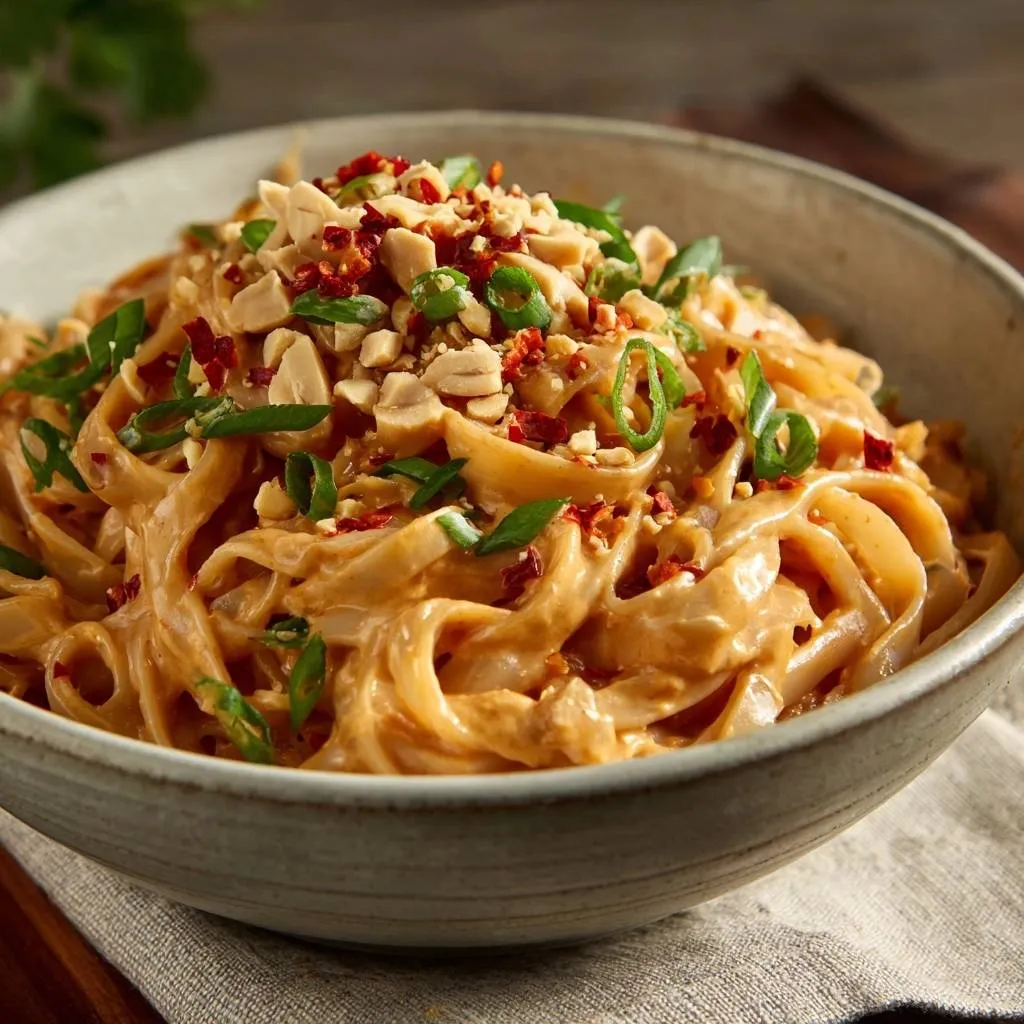
Essential Components for the Peanut Sauce Base
Your choice of peanut butter dictates the final texture of your sauce. I highly recommend using a standard “no-stir” creamy peanut butter for this recipe. These brands contain small amounts of stabilizers that help the sauce stay creamy and prevent the oil from separating when it hits the heat.
Natural peanut butters, where the oil sits on top, can be temperamental. They often result in a grainier mouthfeel or a sauce that “breaks,” leaving you with a puddle of oil. If you must use natural, ensure it is extremely well-stirred before measuring.
Acidity is the other non-negotiable factor. Fresh lime juice does more than add flavor; it physically cuts through the heavy fats of the peanuts. This brightens the entire dish and prevents the sauce from feeling too “heavy” on the palate.
Choosing the Right Rice Noodle Width
While you can technically use any rice noodle, wide ribbons (often labeled as “XL” or “Pad See Ew” style) are the gold standard here. The broader surface area allows the heavy peanut sauce to coat the noodle evenly without weighing it down.
Thin vermicelli noodles tend to snap or tangle under the weight of a thick sauce. Wide noodles provide a satisfying, chewy “bite” that stands up to the crunch of the roasted peanuts and the heat of the chili garlic sauce.
Fresh Aromatics vs. Jarred Substitutes
Freshly grated ginger is a game-changer for this sauce. It provides a sharp, peppery bite that ginger powder simply cannot replicate. The moisture in fresh ginger also helps thin the sauce naturally while adding a vibrant aroma.
Similarly, using fresh lime juice instead of the bottled stuff provides the necessary citric acid to balance the honey. If you use jarred substitutes, you might find the sauce tastes “flat” or overly sweet because the bright top notes are missing.
Step-by-Step: Preparing the Creamy Spicy Peanut Noodles
Success with this dish comes down to timing. You want to have your sauce base ready before the noodles finish boiling so you can move quickly through the emulsion phase.
Think of this as a three-part process: preparing the noodle structure, building the liquid gold sauce, and the final integration. If you follow these phases, you’ll never deal with gummy pasta again.
Phase 1: The Precision Boil and Cold Shock
Boil your water and add the rice noodles, but set your timer for one minute less than the package instructions. This is the “Minus One Minute” rule. The noodles should be slightly firm in the center because they will continue to soften slightly when tossed with the warm sauce.
Before you drain them, grab a measuring cup and scoop out at least a cup of that cloudy pasta water. This liquid is liquid gold; it contains the starch needed to bind the sauce. Once you’ve saved the water, drain the noodles and blast them with cold tap water until they are cool to the touch.
Don’t be afraid to move the noodles around with your hands while rinsing. You want to wash away that slippery starch film. Once they are cold, let them sit in the colander to drain thoroughly while you finish the sauce.
Phase 2: Building the Starch-Water Emulsion
In your large bowl, whisk the peanut butter, soy sauce, chili garlic sauce, honey, ginger, and sesame oil. It will look like a thick, unappealing paste at first. This is normal.
Now, start adding your hot reserved pasta water one tablespoon at a time. Whisk vigorously after each addition. You will see the sauce go through a “broken” phase where it looks curdled, but keep whisking.
As you add more water, the sauce will suddenly transform into a pale, smooth, and pourable liquid. Stop adding water once it reaches the consistency of heavy cream. It needs to be thin enough to coat the noodles without clumping.
Phase 3: The Final Toss and Absorption
Add your cold, drained noodles into the bowl with the warm sauce. Use tongs to lift and fold the noodles, ensuring every strand is submerged.
At first, it might look like there is too much liquid. Don’t panic! As the noodles sit for a minute or two, they will absorb the excess moisture and the flavors of the sauce. This “internal seasoning” is why the noodles taste so much better than if you just poured sauce over the top.
The result is a glossy finish where the noodles are slippery and separate. This is the exact texture you find in high-end noodle bars.
Troubleshooting Common Texture Issues
If your sauce feels too thick or “tacky” as you are tossing, simply add another splash of the reserved pasta water. The starch in the water helps maintain the slide, whereas plain tap water might make the sauce feel thin and watery.
If your noodles are breaking into small pieces, you likely overcooked them in the boiling phase. Rice noodles are delicate; if they spend even 60 seconds too long in boiling water, they lose their structural integrity. Always lean toward undercooking them.
Flavor Variations and Ingredient Swaps
This recipe is incredibly flexible. If you have a peanut allergy, you can substitute almond butter or even sunflower seed butter. Sunflower butter provides a unique, earthy flavor that pairs beautifully with soy sauce and lime.
For a vegan-friendly version, simply swap the honey for maple syrup or agave nectar. The maple syrup adds a lovely depth of flavor that complements the toasted sesame oil perfectly.
Adjusting the Heat Profile
Chili garlic sauce provides a chunky texture and a fermented tang. If you prefer a smoother heat, Sriracha is a great alternative. It’s a bit sweeter, so you might want to slightly reduce the honey in the recipe.
If you want a deeper, smokier heat, try using a teaspoon of Gochujang (Korean chili paste). It adds a rich umami backbone that makes the sauce feel even more complex.
Adding Protein and Fiber
To make this a full meal, you can add seared tofu cubes or edamame. If you want to add vegetables like bok choy or broccoli, blanch them in the same boiling water as the noodles during the last two minutes of cooking.
Just remember to drain the vegetables well. Any excess water clinging to the veggies will thin out your peanut sauce, so pat them dry if necessary before tossing them with the noodles.
The Importance of Crunchy Garnishes
Texture contrast is the secret to a professional-tasting dish. Because the noodles and sauce are so creamy and soft, you need a “shatter” component. Roughly chopped roasted peanuts provide that essential crunch.
The green onions and fresh cilantro aren’t just for color; they provide a hit of freshness that cuts through the richness of the peanut butter. I like to slice my green onions on a long bias to make the dish look more elegant.
What to Serve with Spicy Peanut Noodles
Since this dish is quite rich, it pairs best with something acidic and crisp. A smashed cucumber salad with rice vinegar and a pinch of sugar is the perfect sidekick. The cool, watery crunch of the cucumbers resets your palate between bites of spicy noodles.
A simple vinegar-based slaw with shredded cabbage and carrots also works wonders. Avoid creamy dressings for your side dishes, as you already have plenty of richness in the main event.
Storage and Reheating for Meal Prep
Peanut noodles are famous for thickening up in the fridge. The noodles will continue to absorb moisture as they sit, which can lead to a dry texture the next day.
To reheat, place the noodles in a bowl and add a tablespoon of water or a splash of lime juice. Microwave in 30-second intervals, tossing in between. The extra moisture will “reactivate” the emulsion and bring back that silky mouthfeel.
Expert Tips for Success
Why you should never use “Natural” oil-on-top peanut butter for this specific emulsion.
Natural peanut butter lacks the stabilizers needed to hold a smooth emulsion with pasta water. It often results in a grainy texture that feels “sandy” on the tongue. Stick to a standard creamy brand for the smoothest results.
The “Salt the Water” myth for rice noodles.
Unlike wheat pasta, rice noodles don’t absorb salt in the same way. While you can salt the water, it’s more important to ensure your sauce is well-seasoned with soy sauce, as that is where the noodles will get 90% of their flavor.
Why the red chili should be minced finely to distribute heat evenly.
Nobody wants to bite into a giant chunk of raw chili. Mincing it finely ensures that the heat is distributed throughout the dish, providing a consistent glow rather than sporadic “fire” moments.
Using a microplane for the ginger to avoid woody chunks.
Ginger can be fibrous. Using a microplane or the finest side of a box grater turns the ginger into a pulp. This allows the flavor to melt into the sauce without leaving behind any tough, woody bits.
The “Tongs vs. Chopsticks” debate for tossing.
Tongs are much more efficient for lifting and coating wide rice noodles. They allow you to gently aerate the noodles as you toss, which helps the sauce distribute evenly without breaking the delicate strands.
How do I store leftovers?
Store your peanut noodles in an airtight container in the refrigerator for up to 3 days. Do not freeze this dish; rice noodles become extremely grainy and mushy once thawed, and the peanut emulsion will break completely.
Why did my sauce turn into a thick paste when I added the noodles?
This usually happens if the noodles weren’t rinsed thoroughly with cold water or if you didn’t use enough reserved pasta water. The residual heat and starch from unrinsed noodles will “cook” the sauce into a thick glue. Always rinse until the noodles are cold!
Can I use a different type of nut butter?
Yes! Cashew butter is a fantastic, creamy alternative that is slightly sweeter. Almond butter works well too, though it has a stronger “toasted” flavor. Just ensure the nut butter you choose is a creamy variety for the best texture.
What if I don’t have chili garlic sauce?
You can substitute with a mix of red pepper flakes and a finely minced clove of garlic. However, the fermented flavor of the chili garlic sauce adds a specific depth that pepper flakes lack. A splash of extra lime juice can help mimic that fermented tang.
Can I make this dish ahead of time for a party?
You can prepare the sauce and boil/rinse the noodles ahead of time, but keep them separate. Toss them together just before serving. If you toss them too early, the noodles will absorb all the sauce and lose their silky texture by the time your guests arrive.
Is there a way to make this less spicy?
Absolutely. Simply reduce the chili garlic sauce to a teaspoon or omit it entirely. You can add a little extra ginger or a dash of white pepper to keep the flavor profile interesting without the “burn” of the chili.
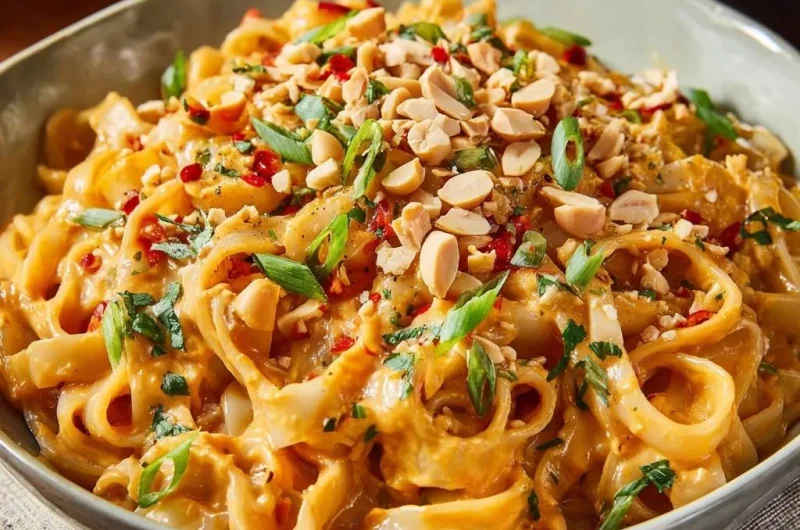
Creamy Spicy Peanut Noodles
Course: Main CourseCuisine: Asian-AmericanDifficulty: easy4
servings10
minutes10
minutes20
Minutes450
kcalAsian-American
Ingredients
12 ounces wide rice noodles
1/2 cup creamy peanut butter
3 tablespoons soy sauce
1 tablespoon chili garlic sauce or sriracha
1 tablespoon honey
1 tablespoon fresh lime juice
1 teaspoon grated ginger
1 teaspoon toasted sesame oil
1/2 cup reserved hot pasta water
1/2 cup roasted peanuts, roughly chopped
3 green onions, sliced on a bias
1 red chili, finely minced
1/4 cup fresh cilantro, chopped
Directions
- Boil your rice noodles in a large pot of salted water according to package directions, but pull them out exactly one minute before they reach al dente. They should still have a firm bite.
- Before draining, scoop out 1 cup of the hot, starchy pasta water. This is the most important step to prevent gumminess. Drain the noodles and immediately rinse them with cold water to stop the cooking process and remove excess surface starch. Let them drain thoroughly.
- In a large mixing bowl, whisk together the peanut butter, soy sauce, chili sauce, honey, lime juice, ginger, and sesame oil. The mixture will be very thick.
- Slowly whisk in the reserved hot pasta water, one tablespoon at a time, until the sauce is thin and pourable. The heat from the water melts the peanut butter while the starch creates a permanent emulsion that won’t break or get sticky.
- Add the cold, drained noodles to the bowl and toss gently. The noodles will absorb the remaining moisture from the sauce as they reach room temperature, resulting in a perfect, non-clumping texture.
- Top generously with the chopped roasted peanuts, sliced green onions, minced chili, and cilantro. Serve immediately for the best silky mouthfeel.
Notes
- The most important step is reserving the starchy pasta water and rinsing the noodles in cold water to stop the cooking process and remove excess surface starch.