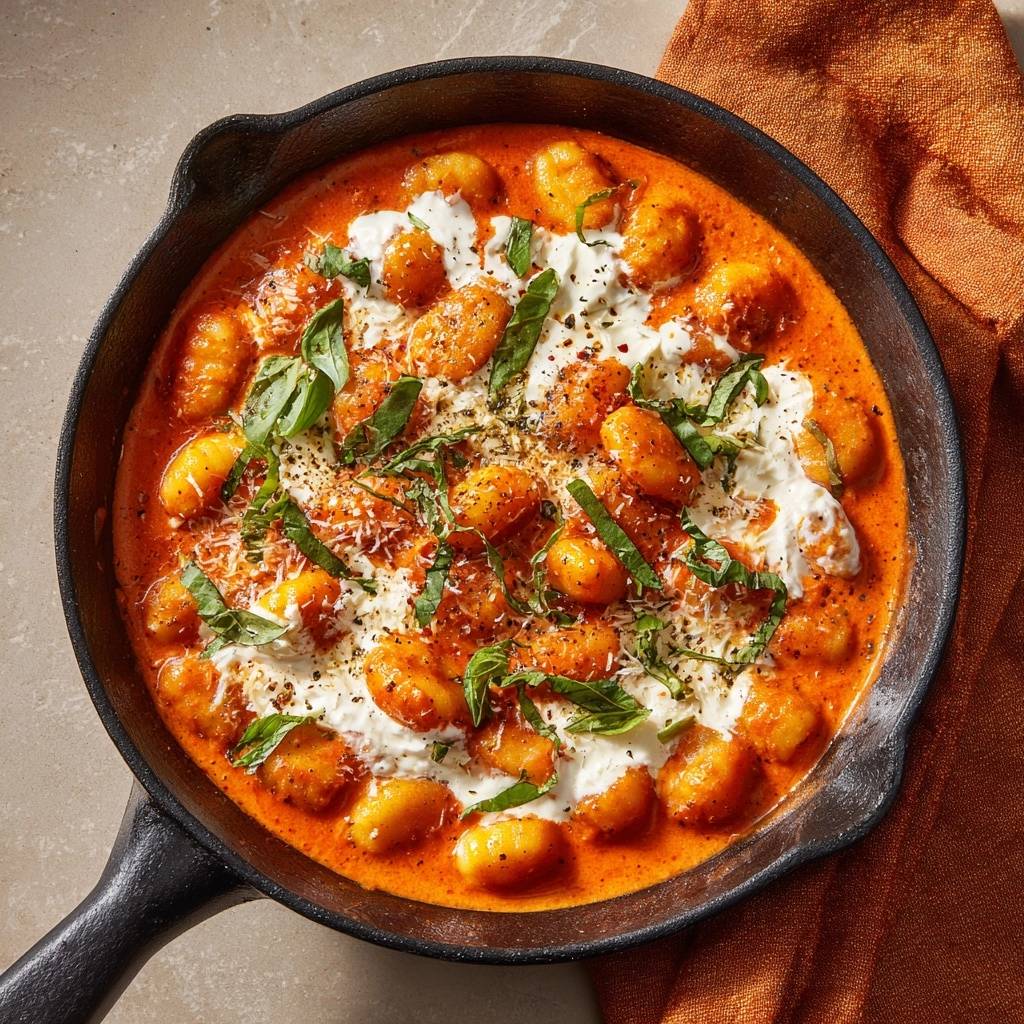
Stop boiling your gnocchi in a giant pot of water! That is the number one reason they turn into mushy, gummy blobs that feel more like wet dough than a gourmet meal. When you boil gnocchi, they absorb excess water, which destroys their delicate structure and leaves you with a heavy, unappealing texture.
This one-skillet method changes everything by using the starch from the gnocchi to thicken the sauce while high heat sears the outside. You get a pillowy center with a firm, golden crust every single time. Best of all, you can have this entire meal on the table in about 20 minutes, making it faster than ordering takeout.
The secret to success is starting with a dry pan and a mix of oil and butter. By searing the gnocchi while they are still firm, you create a structural barrier that prevents them from getting soggy once the tomato sauce hits the pan. It is a total game-changer for your weeknight dinner rotation.
The Science of Searing Potato Gnocchi
When you toss gnocchi into a hot skillet with fat, you trigger the Maillard reaction. This chemical process browns the potato starch and proteins, creating a complex, savory flavor profile that boiling simply cannot achieve. This golden crust acts as a protective shield for the soft interior.
Traditional boiling hydrates the starch far too quickly, which often leads to structural collapse and that dreaded “gummy” mouthfeel. By searing first, you lock in the shape of the gnocchi. The heat draws out just enough moisture from the surface to create a crisp shell while keeping the inside light and airy.
This moisture barrier is essential because it allows the gnocchi to simmer in the marinara sauce without absorbing too much liquid. Instead of the pasta becoming waterlogged, the sauce clings to the textured, seared surface. You end up with a dish where the pasta and sauce remain distinct yet perfectly harmonized.
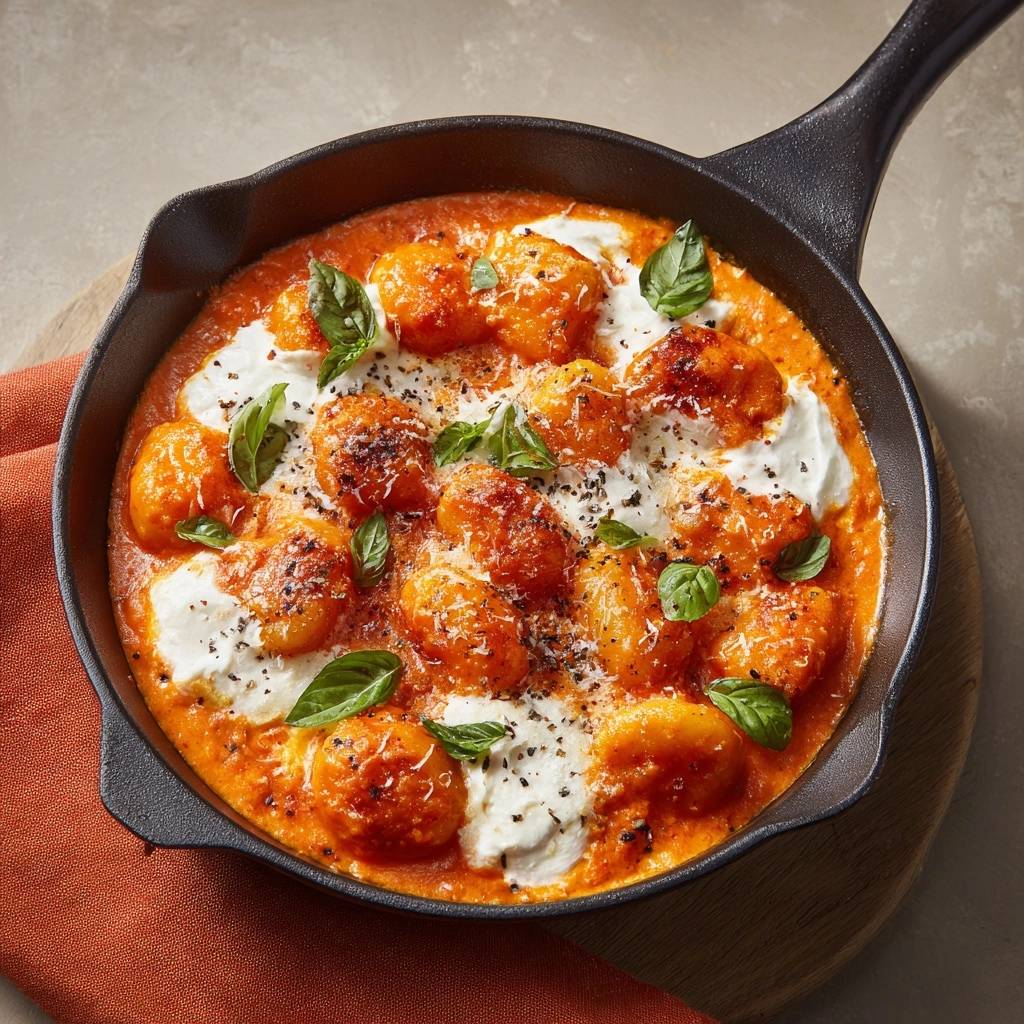
Essential Components for Creamy Tomato Skillet Gnocchi
Quality ingredients make a massive difference when the recipe is this simple. I recommend using shelf-stable or refrigerated gnocchi for this specific skillet method. These varieties have a lower moisture content than homemade dough, which helps them crisp up beautifully without sticking to the pan.
The heavy cream is another non-negotiable element because its high fat content stabilizes the acidity of the marinara. It creates a velvety mouthfeel that balances the bright tomato flavors. If you use a lower-fat milk, the sauce might break or turn watery, losing that luxurious “restaurant-style” finish.
I always reach for unsalted butter to start the sear. This gives you total control over the sodium levels, especially since jarred sauces and parmesan cheese already pack a salty punch. Using fresh garlic rather than the jarred kind ensures a pungent, sweet aroma that defines the base of the sauce.
Selecting the Right Marinara Base
Not all jarred sauces are equal, and for this dish, the sauce is the star. Look for a high-quality marinara with a San Marzano tomato base. These tomatoes are naturally sweeter and less acidic, providing a deeper flavor profile that doesn’t require added sugar.
Check the label for low sugar content to prevent the sauce from burning or caramelizing too quickly during the simmer phase. A clean ingredient list usually indicates a better-tasting sauce. If the sauce is too thick, you can always loosen it with a splash of water later.
Cheese Profiles: Burrata vs. Buffalo Mozzarella
Choosing between burrata and buffalo mozzarella depends on the texture you crave. Burrata features a solid mozzarella shell filled with soft, thickened cream. When you tear it over the hot gnocchi, it creates “cream cores” that melt into the sauce for an ultra-rich experience.
Buffalo mozzarella is slightly more traditional and offers a classic, elastic cheese pull. It has a higher moisture content than regular cow’s milk mozzarella, which results in a much creamier melt. Both options provide a fresh, milky contrast to the savory tomato and garlic base.
Step 1: Achieving the Golden Pan Sear
Start by heating your olive oil and butter in a large cast-iron skillet over medium-high heat. You want the butter to be foaming but not browning before you add the gnocchi. Place the dry gnocchi in the pan in a single layer to ensure every piece touches the hot surface.
The most important rule here is to leave them undisturbed for at least 3 minutes. Resist the urge to shake the pan! You are looking for a deep amber color rather than a pale yellow. This sear is what provides the structural integrity for the rest of the cooking process.
Be careful not to overcrowd the skillet. If the gnocchi are piled on top of each other, they will release steam and soften instead of frying. If your pan is small, it is much better to sear them in two batches to maintain that essential crispiness.
Step 2: Building the Aromatic Tomato Base
Once the gnocchi are golden, reduce the heat to medium and add your minced garlic, red pepper flakes, and dried oregano. This is called “blooming” the spices. The fat in the pan carries the flavors of the herbs and garlic directly into the gnocchi shells.
Sauté these aromatics for only about a minute. You want the garlic to turn fragrant and golden, but never dark brown or black, as burnt garlic tastes bitter. This quick step builds a foundation of flavor that makes the jarred sauce taste homemade.
Pour in the marinara sauce carefully to deglaze the pan. Use a wooden spoon to gently scrape up any browned bits stuck to the bottom. Those bits are concentrated flavor that will now be incorporated into your creamy tomato sauce.
Step 3: The Steam and Simmer Technique
After adding the sauce, cover the skillet with a tight-fitting lid for about 3 minutes. This “lid-on” phase is crucial because the trapped steam finishes cooking the interior of the potato dough. It ensures the gnocchi are tender all the way through without losing the sear.
Remove the lid and stir in the heavy cream. You will see the sauce transform from a bright red to a beautiful, pale orange. This is the emulsification process where the fats and liquids bind together to create a signature velvet texture.
Simmer the mixture uncovered for another minute or two. This allows the sauce to reduce slightly and thicken until it perfectly clings to each individual gnocchi. The starch released from the pasta during this phase acts as a natural thickener for the cream.
Step 4: Finishing with Residual Heat
Now it is time for the cheese. Dollop the torn burrata or buffalo mozzarella across the surface and sprinkle with the grated parmesan. Do not stir the cheese into the sauce! You want to maintain distinct pockets of melted creaminess rather than a homogenous blob.
Cover the pan one last time for about 60 seconds. The residual heat from the skillet is enough to partially melt the cheese while keeping its fresh shape. This creates a beautiful presentation and a variety of textures in every single bite.
Take the pan off the heat before adding your fresh basil chiffonade. Adding basil to a boiling sauce causes it to oxidize and turn black. By adding it at the very end, you preserve its bright green color and peppery, fresh aroma.
Avoiding Common Skillet Gnocchi Mistakes
If you find your sauce thickening too quickly, don’t panic. Simply stir in a tablespoon of water or vegetable broth to loosen it back up. The starch in the gnocchi is powerful, and it will continue to soak up liquid as the dish sits.
If the gnocchi are sticking to the pan during the initial sear, it usually means the pan wasn’t hot enough or you tried to flip them too early. Wait for the crust to form naturally; once it is ready, the gnocchi will release from the surface on their own.
Using a heavy cast-iron skillet is highly recommended over thin stainless steel. Cast iron retains heat evenly, which is vital for getting that uniform golden crust. Thin pans often have “hot spots” that can burn the garlic while leaving the gnocchi pale.
Customizing Your Creamy Tomato Gnocchi
This recipe is a fantastic canvas for extra vegetables. You can stir in a handful of fresh baby spinach or chopped kale during the simmering phase. The greens will wilt perfectly into the creamy sauce, adding color and nutrients without extra effort.
For a bit of crunch, try topping the finished dish with toasted pine nuts or even some toasted breadcrumbs. If you prefer a smokier flavor profile, you can blend a few roasted red peppers into your marinara sauce before adding it to the skillet.
If you want more heat, increase the red pepper flakes or add a teaspoon of Calabrian chili paste. The creaminess of the sauce handles spice exceptionally well, creating a “pink sauce” with a kick that pairs beautifully with the mild potato gnocchi.
Optimal Side Dish Pairings
Since this dish is rich and creamy, you want side dishes that offer acidity and crunch. A simple arugula salad tossed in a sharp lemon vinaigrette is the perfect palate cleanser. The bitterness of the greens cuts through the heavy cream and cheese.
Charred broccolini with plenty of lemon zest and garlic is another excellent choice. The snap of the vegetable provides a nice textural contrast to the soft, pillowy gnocchi. It keeps the meal feeling balanced rather than overly heavy.
Finally, you cannot go wrong with a piece of crusty sourdough bread. It is the best vessel for swiping up every last drop of the creamy tomato sauce left in the skillet. Just be sure to serve everything immediately while the gnocchi are at their crispiest.
Storage and Reheating for Best Texture
Gnocchi will naturally soften as they sit in the refrigerator because they continue to absorb the sauce. Store any leftovers in an airtight container for up to 3 days. While they won’t be as crispy as they were fresh, the flavor actually deepens overnight.
Avoid using the microwave to reheat this dish, as it can make the potato dough rubbery and tough. Instead, place the leftovers in a small pan over medium-low heat. Add a splash of water or milk to loosen the sauce and cover the pan until heated through.
I do not recommend freezing this dish once it is cooked. The texture of the gnocchi becomes grainy upon thawing, and the cream-based sauce may separate. This meal is best enjoyed fresh from the skillet for the ultimate texture and flavor.
Expert Troubleshooting
Can I use frozen gnocchi for this method?
Yes, you can use frozen gnocchi without thawing them first. However, you will need to increase the initial searing time by about 2 minutes. The extra time ensures the centers are fully defrosted and heated through before you add the sauce and lid.
Why is my sauce separating or looking oily?
This usually happens if the heat is too high after you add the heavy cream. High heat can cause the fats in the cream and cheese to break away from the liquids. Always reduce the heat to a low simmer once the dairy is introduced to keep the sauce smooth and emulsified.
Can I make this dairy-free?
You can substitute the heavy cream with full-fat coconut cream or a cashew-based cream. For the cheese, use a high-quality vegan mozzarella alternative and nutritional yeast instead of parmesan. The searing method remains exactly the same and still produces a great texture.
My garlic burned, what happened?
Garlic burns very quickly because of its low moisture and high sugar content. If your pan is still screaming hot from the searing phase, the garlic can burn in seconds. Make sure to lower the heat and let the pan cool for a moment before adding the minced garlic.
Is a lid strictly necessary for this recipe?
Yes, the lid is essential. While the sear cooks the outside, the steam trapped by the lid is what actually cooks the dense potato dough in the center. Without the lid, you might end up with gnocchi that are crunchy on the outside but raw and floury in the middle.
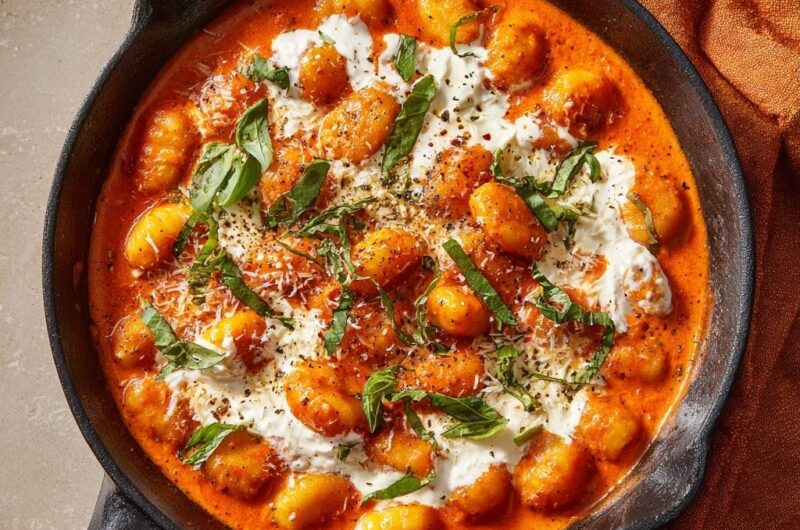
Creamy Tomato Skillet Gnocchi
Course: Main CourseCuisine: Italian-AmericanDifficulty: easy4
servings5
minutes15
minutes20
Minutes410
kcalItalian-American
Ingredients
1 pound potato gnocchi (shelf-stable or refrigerated)
2 tablespoons extra virgin olive oil
1 tablespoon unsalted butter
3 cloves garlic, minced
1 jar (24 oz) high-quality marinara sauce
1/2 cup heavy cream
1/2 cup fresh burrata or buffalo mozzarella, torn into large pieces
1/4 cup finely grated parmesan cheese
1/2 teaspoon red pepper flakes
1/2 teaspoon dried oregano
Fresh basil leaves, chiffonade
Coarse black pepper and sea salt to taste
Directions
- Heat the olive oil and butter in a large cast-iron skillet over medium-high heat. Once the butter is foaming, add the dry gnocchi directly to the pan in a single layer.
- Sauté the gnocchi undisturbed for 3 minutes to develop a deep golden-brown crust. Toss and cook for another 2 minutes. This searing process creates a structural barrier that prevents the pasta from becoming soggy once the sauce is added.
- Reduce heat to medium. Add the minced garlic, red pepper flakes, and dried oregano. Sauté for 1 minute until the garlic is fragrant and golden.
- Pour in the marinara sauce and stir gently to coat the seared gnocchi. Bring to a light simmer. Cover the skillet with a lid for 3 minutes; this allows the steam to cook the interior of the gnocchi through while maintaining the exterior texture.
- Remove the lid and stir in the heavy cream. Simmer uncovered for 1-2 minutes until the sauce thickens and clings to the gnocchi.
- Dollop the torn burrata or mozzarella across the surface and sprinkle with grated parmesan. Do not stir. Cover for 1 minute or until the cheese is partially melted and creamy.
- Remove from heat. Garnish with a generous amount of fresh basil, cracked black pepper, and an extra sprinkle of parmesan. Serve immediately directly from the skillet to preserve the crisp texture of the gnocchi.
Notes
- Searing the gnocchi undisturbed is the key to preventing a gummy texture. Use a cast-iron skillet for the best golden-brown crust.