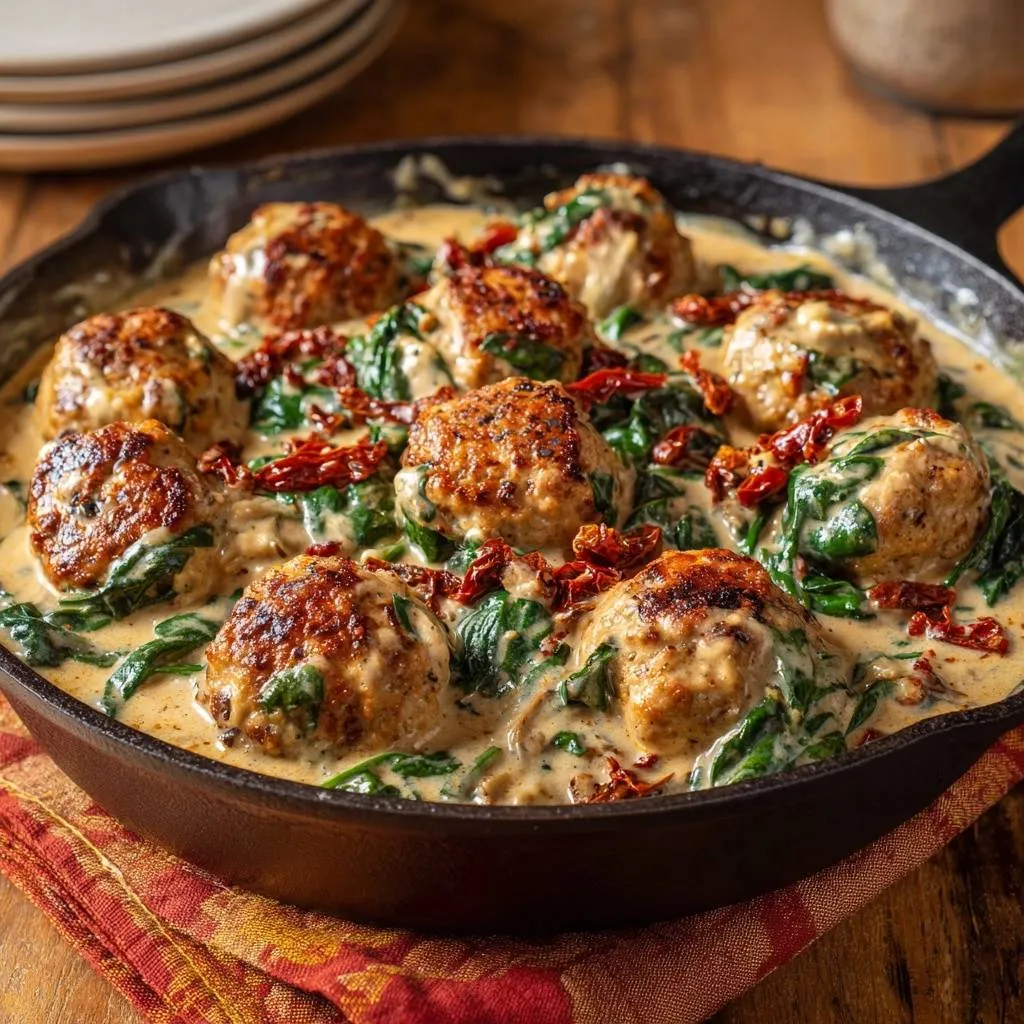
Most home cooks avoid ground chicken because it has a reputation for being notoriously dry and rubbery. Since poultry is so lean, it lacks the built-in fat that makes beef or lamb so forgiving under high heat. However, these Creamy Tuscan Chicken Meatballs solve that problem by using a specific moisture-locking technique that results in a tender, melt-in-your-mouth texture every single time.
The secret lies in the balance of a golden, pan-seared crust and a gentle finish in a velvety sauce. By browning the exterior quickly, you develop deep savory flavors without overcooking the delicate interior. Therefore, the meatballs stay juicy while they soak up a rich base of heavy cream, sun-dried tomatoes, and aromatic garlic.
I’ve found that the real trick to success is using a gentle hand when mixing your ingredients. If you overwork the meat, the proteins bond too tightly and create a dense, bouncy texture rather than a soft one. Just a few light tosses with your hands are all you need to incorporate the parmesan and breadcrumbs for a perfect result.
The Science of Tender Ground Poultry
Ground chicken has a much finer protein structure than ground beef, which means it reacts differently to heat. When you cook chicken, the proteins tend to shrink and squeeze out moisture much faster than other meats. To combat this, we use a “panade” style mixture of breadcrumbs and egg to create a physical barrier that traps juices inside the meatball.
In addition to the binder, the parmesan cheese adds a necessary dose of fat and salt directly into the meat mixture. This fat lubricates the protein strands, preventing them from tightening up into a rubbery mass. Consequently, the meatballs remain tender even after they undergo the high-heat searing process in the skillet.
Why Thigh Meat Outperforms Breast Meat
If you have the choice at the butcher counter, always reach for ground chicken thigh meat over breast meat. Thighs contain more natural fat and connective tissue, which provides a much-needed safety net during the cooking process. This extra fat ensures the meat stays succulent even if the internal temperature climbs slightly past the target.
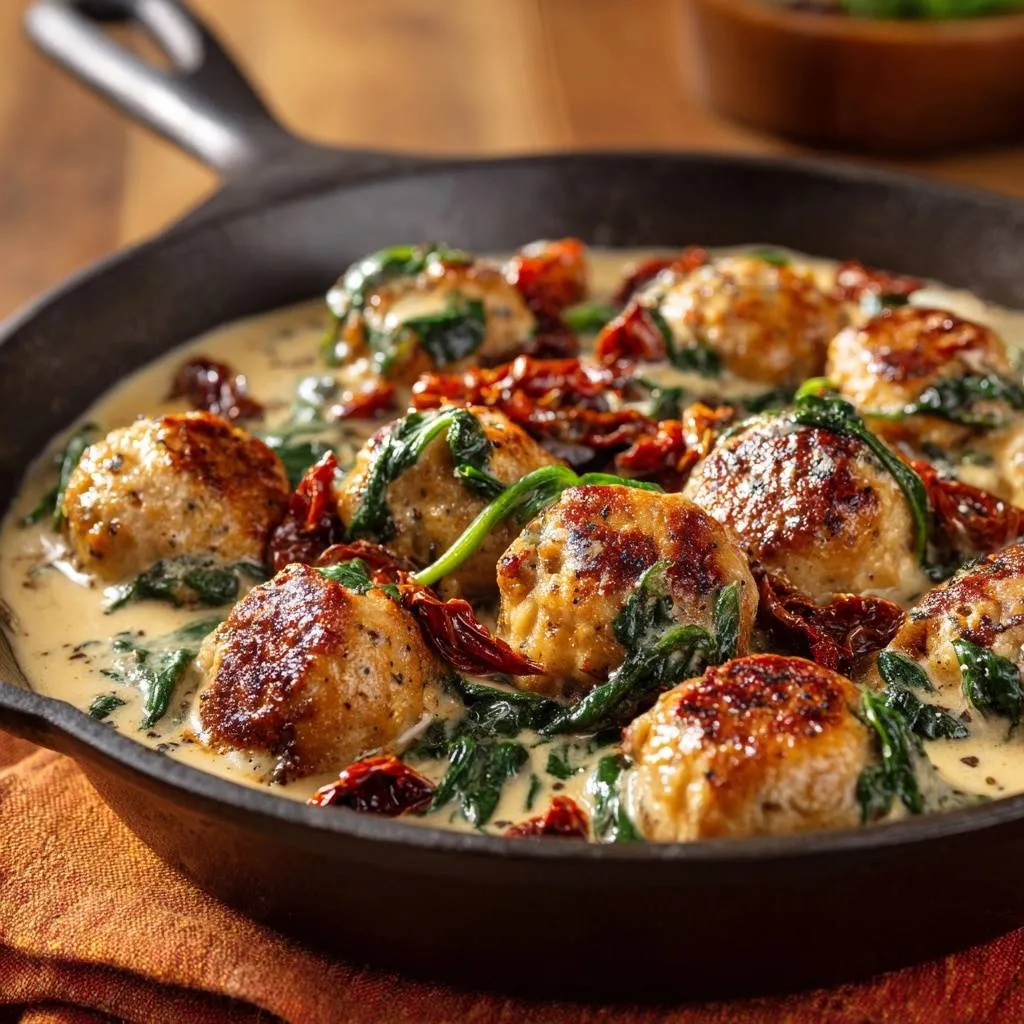
Ground breast meat is extremely lean and can turn from juicy to chalky in a matter of seconds. While you can certainly use it, you’ll need to be much more vigilant with your meat thermometer. Using thigh meat allows for a more relaxed cooking experience and a significantly richer flavor profile that stands up to the bold Tuscan sauce.
Essential Components for the Tuscan Cream Sauce
The success of a Tuscan sauce depends entirely on the quality of your sun-dried tomatoes and cheese. I highly recommend using sun-dried tomatoes packed in oil rather than the dry-packed variety found in pouches. The oil-packed tomatoes are softer, more intensely flavored, and provide a lovely tinted oil that adds depth to the entire dish.
Furthermore, you should always grate your Parmesan cheese fresh from the block. Pre-shredded cheeses are coated in potato starch or cellulose to prevent clumping in the bag, which can make your cream sauce feel gritty or prevent it from emulsifying properly. Freshly grated cheese melts into the heavy cream instantly, creating a glossy, professional-grade finish.
Choosing the Right Heavy Cream and Broth
Heavy cream is the backbone of this recipe because its high fat content makes it stable under heat. If you try to substitute half-and-half or milk, the sauce is much more likely to “break” or curdle when it hits the acidic sun-dried tomatoes. The heavy cream creates a thick, luxurious coating that clings perfectly to the meatballs.
In addition to the dairy, a splash of chicken broth is essential for balancing the richness. The broth thins the sauce just enough to allow it to simmer without burning, while also providing a savory saltiness. It acts as a bridge between the heavy cream and the bright, tangy notes of the garlic and tomatoes.
Step-by-Step: Mixing and Shaping for Success
When you begin mixing your meatball base, treat the ingredients with care. I like to whisk the egg, garlic, and spices together first before adding the chicken and breadcrumbs. This ensures the seasonings are evenly distributed so you don’t have to over-mix the meat to get the flavor right.
Aim for meatballs that are roughly 1.5 inches in diameter, which is about the size of a golf ball. This specific size is the “sweet spot” for chicken meatballs because it allows for a beautiful sear on the outside while the inside stays raw. This is exactly what we want, as the centers will finish cooking gently in the sauce later.
The Searing Phase: Developing Deep Umami Flavor
The Maillard reaction is your best friend when working with poultry. This chemical reaction occurs when the proteins and sugars in the meat hit a hot, oiled pan, creating that signature golden-brown crust. This crust isn’t just for looks; it provides a massive boost of umami flavor that a simple poached meatball lacks.
Heat your olive oil until it shimmers before adding the meatballs to the skillet. Sear them for about 3 to 4 minutes, turning them just enough to brown the surface. Don’t worry that they are still raw in the middle at this stage. Removing them early prevents the outer layers from becoming tough while the centers reach the safe temperature.
Deglazing and Building the Velvety Base
After you remove the meatballs, you’ll notice brown bits stuck to the bottom of your skillet. This is called “fond,” and it is concentrated flavor gold. When you pour in your chicken broth, use a wooden spoon to scrape those bits up so they dissolve into the liquid. This step ensures that every drop of flavor from the searing phase ends up in your sauce.
As you add the garlic and sun-dried tomatoes to the pan, the aroma will shift from savory meat to sweet, earthy Mediterranean notes. Sautéing the garlic for just a minute before adding the liquids prevents it from burning. Once the cream hits the pan, the sauce will take on a beautiful orange hue from the tomato oil.
The Simmering Secret to Juicy Chicken Meatballs
The most critical part of this recipe is the final simmer. By nestling the seared meatballs back into the bubbling cream sauce, you are essentially poaching them. This gentle heat allows the meat fibers to relax and actually absorb some of the moisture from the sauce. It is the ultimate insurance policy against dry chicken.
Use a meat thermometer to check for an internal temperature of 165°F. This usually takes about 5 to 7 minutes of simmering. During this time, the sauce will reduce and thicken into a velvety consistency that coats the back of a spoon. If the sauce thickens too quickly, simply add a tablespoon of broth to loosen it back up.
Integrating Fresh Spinach Without Wilting
Spinach is a delicate green that can turn slimy and gray if it’s cooked for too long. To keep it vibrant and fresh, stir it into the skillet at the very last second. The residual heat of the cream sauce is more than enough to wilt the leaves in under a minute.
By adding the spinach at the end, you preserve its bright green color and slightly crisp texture. This provides a necessary visual and textural contrast to the rich, heavy sauce. It also ensures the spinach tastes sweet and mild rather than bitter, which can happen if it’s over-boiled in the liquid.
Troubleshooting Common Sauce and Texture Issues
If you find that your sauce is too thin after simmering, don’t panic. Simply remove the meatballs to a plate and turn the heat up to medium-high for two minutes. This will evaporate the excess water and concentrate the fats, thickening the sauce naturally without the need for flour or cornstarch.
On the other hand, if your sauce “breaks” and looks oily or curdled, it usually means the heat was too high. You can often fix this by whisking in a tiny splash of room-temperature heavy cream or water. This helps re-emulsify the fats and liquids, bringing that smooth, glossy texture back to life in seconds.
Optimal Pairings for Creamy Tuscan Chicken Meatballs
This dish is incredibly versatile when it comes to serving. If you want a classic comfort meal, serve the meatballs over a bed of wide noodles like pappardelle or fettuccine. The broad surface area of the pasta is perfect for catching the sun-dried tomatoes and thick cream sauce.
For a lighter option, jasmine rice works beautifully as it absorbs the sauce like a sponge. If you are watching your carbs, zucchini noodles or a simple side of roasted asparagus provide a fresh crunch that cuts through the richness. Regardless of your choice, make sure you have some crusty bread on hand to mop up every last drop of sauce.
Make-Ahead Strategies and Storage Logistics
These meatballs actually taste even better the next day as the flavors have more time to meld. You can store leftovers in an airtight container in the refrigerator for up to three days. When reheating, do so gently on the stovetop over low heat, adding a splash of water or broth to loosen the sauce back to its original consistency.
If you want to prep ahead, you can shape the raw meatballs and keep them in the fridge for 24 hours before cooking. I don’t recommend freezing the finished dish, as cream-based sauces often separate and become grainy once thawed. However, you can freeze the seared meatballs (without the sauce) for up to two months and make the fresh sauce whenever you’re ready to eat.
Expert Tips for Flavor Customization
While the classic Tuscan flavors are hard to beat, you can easily tweak this recipe to suit your palate. If you love heat, double the amount of red pepper flakes or add a teaspoon of Calabrian chili paste. For a more herbaceous note, swap the dried oregano for fresh basil or chopped thyme added at the very end.
You can also experiment with the greens. If you find spinach too mild, try using chopped kale or Swiss chard. Just keep in mind that heartier greens like kale will need to simmer in the sauce for 3 to 4 minutes to soften properly. Finally, adjusting the garlic levels is the easiest way to customize the dish—don’t be afraid to add an extra clove if you’re a garlic lover!
Frequently Asked Questions
Can I use ground turkey instead of ground chicken?
Yes, ground turkey is an excellent substitute for ground chicken in this recipe. Like chicken, turkey is lean, so the same rules apply regarding over-mixing and using a panade. Turkey has a slightly stronger flavor, which actually pairs quite well with the bold sun-dried tomatoes and garlic in the Tuscan sauce.
How do I make this dish dairy-free?
To make this dairy-free, you can substitute the heavy cream with full-fat canned coconut milk. While it will add a slight coconut undertone, the sun-dried tomatoes and garlic usually mask it well. You should also swap the parmesan cheese for a nutritional yeast or a dairy-free parmesan alternative to maintain that salty, savory element.
Why are my meatballs tough even though I followed the recipe?
Tough meatballs are almost always the result of over-mixing the meat or over-cooking it. Ensure you are mixing just until the ingredients are combined. Additionally, use a meat thermometer to pull the meatballs at exactly 165°F. Even a few extra minutes of simmering can cause the lean poultry proteins to tighten and become rubbery.
Can I bake these meatballs instead of frying them?
You can bake the meatballs at 400°F for about 12 to 15 minutes, but you will miss out on the deep flavor created by the pan-sear. If you choose to bake them, you won’t have any “fond” in the skillet to build your sauce. To compensate, you might want to add a little extra garlic or a dash of Worcestershire sauce to the cream base to boost the savory profile.
What is the best way to reheat the cream sauce without it curdling?
The best way to reheat a cream-based sauce is slowly on the stovetop over low heat. Avoid the microwave, as it creates hot spots that can cause the dairy to separate. Add a tablespoon of water or chicken broth to the pan as it heats up, and stir constantly to help the sauce re-emulsify into a smooth texture.
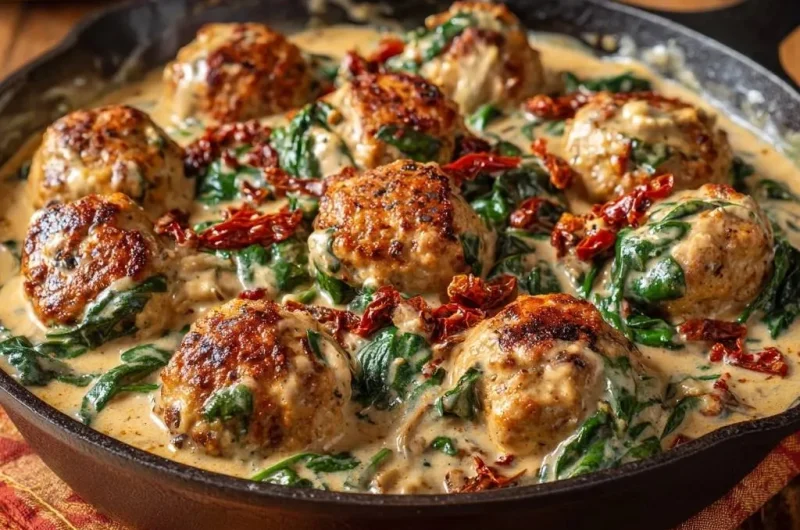
Creamy Tuscan Chicken Meatballs
Course: Main CourseCuisine: Italian-AmericanDifficulty: easy4
servings15
minutes20
minutes35
Minutes450
kcalItalian-American
Ingredients
1 pound ground chicken (preferably thigh meat for moisture)
1/2 cup panko breadcrumbs
1/4 cup grated parmesan cheese
1 egg, beaten
3 cloves garlic, minced (divided)
1 teaspoon dried oregano
1/2 teaspoon salt
1/4 teaspoon black pepper
2 tablespoons olive oil
1 cup heavy cream
1/2 cup chicken broth
1/2 cup sun-dried tomatoes, julienned (packed in oil)
3 cups fresh baby spinach
1/4 teaspoon red pepper flakes (optional)
Directions
- In a large bowl, combine ground chicken, breadcrumbs, parmesan, egg, half of the minced garlic, oregano, salt, and pepper. Mix gently with your hands just until combined. Do not overwork the meat, as this leads to a rubbery texture.
- Shape the mixture into 12 to 14 even meatballs.
- Heat olive oil in a large cast iron skillet over medium-high heat. To achieve the golden crust shown in the image and solve the dry meat problem, sear the meatballs for 3 to 4 minutes, turning occasionally until deeply browned on all sides. They do not need to be cooked through yet. Remove them from the pan and set aside.
- In the same skillet, lower the heat to medium. Add the remaining garlic and the sun-dried tomatoes. Sauté for 1 minute until fragrant.
- Pour in the chicken broth and scrape up any browned bits (fond) from the bottom of the pan with a wooden spoon.
- Stir in the heavy cream and red pepper flakes. Bring to a gentle simmer.
- Add the meatballs back into the sauce. This simmering step is the secret to juicy chicken; the meat absorbs the moisture from the sauce as it finishes cooking.
- Simmer for 5 to 7 minutes until the meatballs reach an internal temperature of 165°F and the sauce has thickened to a velvety consistency.
- Stir in the fresh spinach and cook for 1 minute until just wilted and vibrant green. Serve immediately directly from the skillet over pasta, rice, or with crusty bread.
Notes
- To ensure the juiciest results, use ground chicken thigh meat rather than breast meat. Do not overmix the meatball mixture to avoid a rubbery texture.