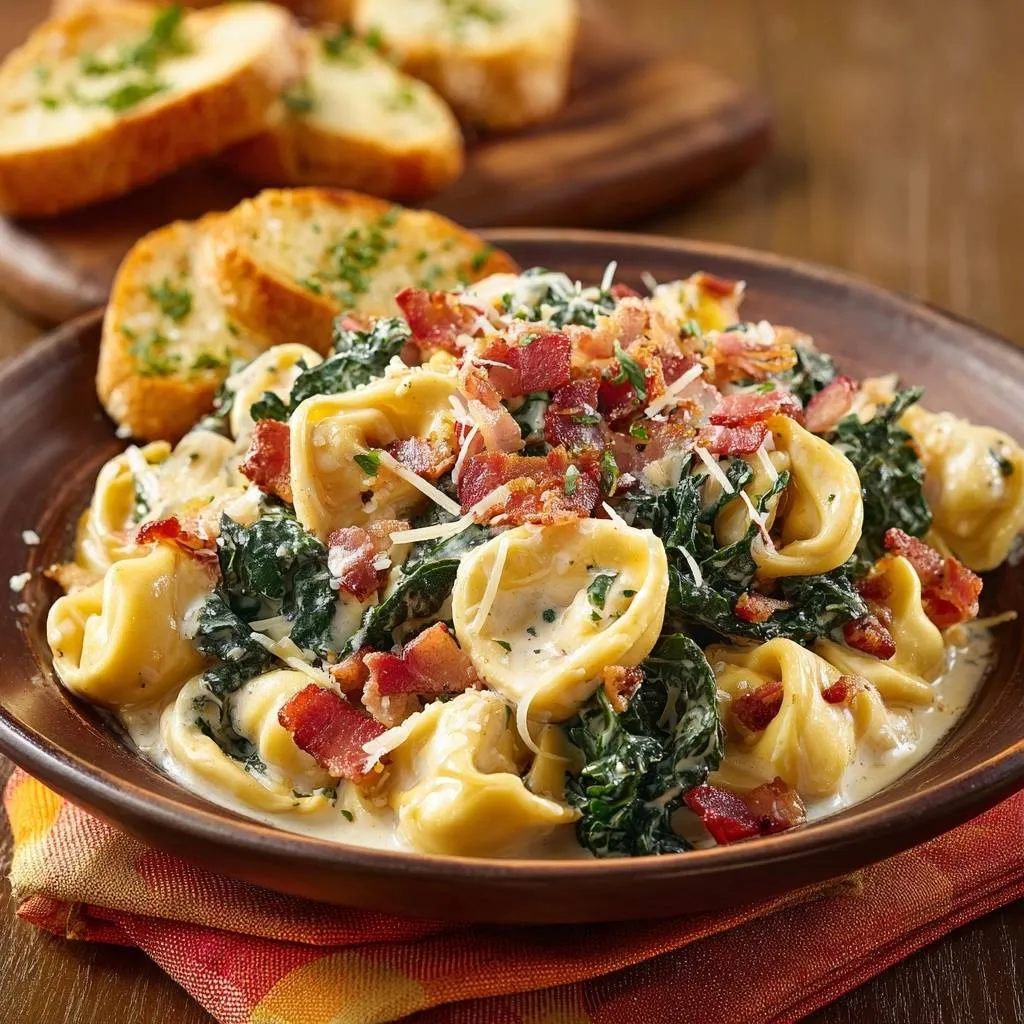
Few things are more disappointing than a plate of pasta sitting in a pool of thin, milky liquid. You want a sauce that hugs the tortellini, a velvety coating that carries the punch of garlic and the earthy depth of kale. When done right, this dish is the ultimate comfort food, balancing the richness of heavy cream with the slight bitterness of dark leafy greens.
The secret to this restaurant-grade meal lies in how you handle the moisture. Most home cooks make the mistake of adding raw greens directly to the sauce, which then “bleed” water and ruin the emulsion. By focusing on a specific reduction technique and prepping your kale correctly, you can achieve a thick, glossy finish every single time.
I’ve found that the real trick is the “minus-one-minute” rule for your pasta. If you boil the tortellini until it’s fully soft, it won’t have any room left to soak up the seasoned cream. Under-cooking it slightly allows the pasta to act like a sponge, pulling the sauce into the dough and locking the flavors together.
The Science of a Stable Cream Sauce
Creating a stable cream sauce is an exercise in chemistry. You are essentially trying to keep fats and liquids in a happy, permanent marriage. Heavy cream is the best tool for this job because it has a high fat content, usually around 36% to 40%. This fat acts as a stabilizer, making it much less likely to “break” or curdle when you add heat or acidic ingredients like garlic.
Reduction is the next critical step in the process. As you simmer the cream, water evaporates, leaving behind a higher concentration of fats and solids. You are looking for a “nappe” consistency, which is a fancy culinary term meaning the sauce is thick enough to coat the back of a metal spoon. If you can run your finger through the sauce on the spoon and the line stays clean, you’ve hit the jackpot.
When you finally stir in the Parmesan cheese, the proteins in the cheese bind with the fats in the reduced cream. This creates a cohesive, stretchy, and thick texture. However, this bond is delicate. If the heat is too high when the cheese goes in, the proteins can clump together, leaving you with an oily mess instead of a smooth sauce.
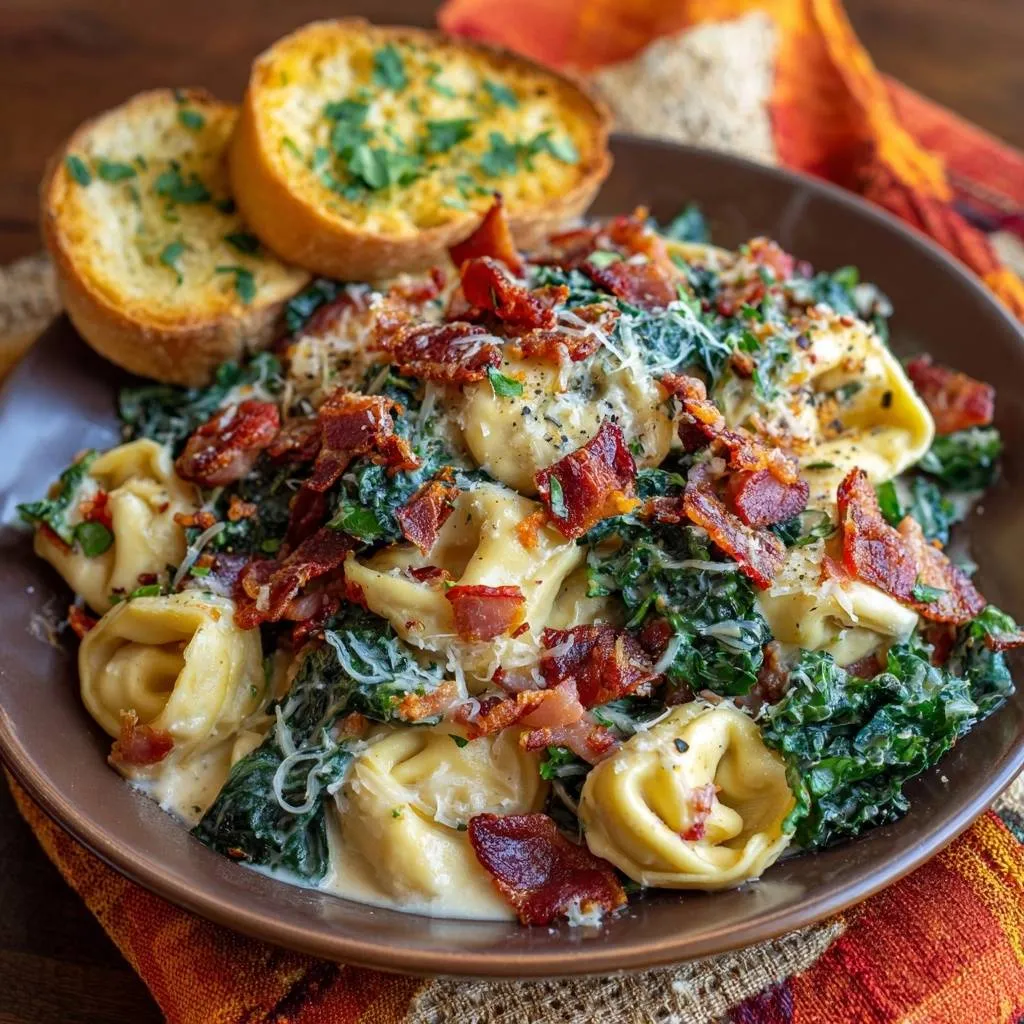
Why Your Pasta Sauce Usually Turns Runny
The most common culprit for a runny sauce is the kale itself. Leafy greens are packed with water, and if they aren’t wilted and “dried” in the pan first, that water releases directly into your cream. This dilutes the fat content and breaks the emulsion instantly.
Another mistake is failing to reduce the liquid base before adding the pasta. If the cream is still thin when the tortellini hits the pan, the starch from the pasta won’t be enough to save it. Finally, skipping the reserved pasta water means you lose out on the natural binding agents that help the sauce cling to the smooth surface of the tortellini.
Essential Components for Creamy Tuscan Kale and Tortellini
Quality ingredients are the backbone of this dish. For the best texture, reach for refrigerated tortellini rather than the shelf-stable bags found in the dry pasta aisle. Refrigerated pasta has a higher moisture content in the dough, which results in a more tender, pillowy bite that feels much closer to handmade pasta.
When it comes to the greens, Lacinato kale, also known as Dino or Tuscan kale, is the superior choice. Its leaves are flatter and more tender than the curly variety, and it lacks the tough, fibrous texture that can sometimes make kale feel like a chore to eat. It wilts beautifully while still maintaining enough structure to provide a nice contrast to the soft cheese filling of the pasta.
Don’t settle for the powdered cheese in a green shaker bottle. You need freshly grated Parmesan, preferably Parmigiano-Reggiano. Pre-shredded cheeses are often coated in potato starch or cellulose to prevent clumping in the bag. While that’s great for storage, those anti-caking agents can prevent the cheese from melting smoothly into your sauce, leading to a grainy texture.
Selecting the Right Tortellini Variety
While cheese-filled tortellini is the classic choice, you can experiment with different fillings to change the profile of the dish. Spinach and ricotta fillings add an extra layer of creaminess, while mushroom-filled tortellini brings a deep, umami earthiness that pairs perfectly with the kale. Just keep in mind that denser fillings might require an extra thirty seconds of simmer time in the sauce to heat through completely.
The Role of Rendered Fat and Aromatics
Since we are avoiding pork, using high-quality beef bacon or smoked turkey bacon is essential for building a flavor base. As the protein crisps up, it renders out fat that is liquid gold for your kale. Sautéing the kale in this fat infuses the greens with a smoky, savory depth that you simply can’t get from olive oil alone. The garlic and red pepper flakes then bloom in this fat, ensuring the spice and aroma are distributed evenly throughout the entire skillet.
Step-by-Step: Building the Perfect Emulsion
Building a sauce that doesn’t break requires a bit of patience and a watchful eye. You aren’t just tossing things in a pan; you are layering flavors and managing moisture levels at every stage of the process.
Phase 1: Prepping the Pasta and Crisping the Protein
Start by boiling your water with plenty of salt. It should taste like the sea. Drop your tortellini and set a timer for exactly one minute less than the package instructions. While that’s working, get your beef or turkey bacon into a cold skillet and turn the heat to medium. Starting with a cold pan allows the fat to render out slowly, resulting in a much crispier texture without burning the edges.
Phase 2: Wilting the Kale to Remove Excess Moisture
Once you’ve removed the crispy protein, toss the chopped kale into the remaining fat. You’ll hear a loud sizzle—that’s the sound of moisture leaving the leaves. Sauté the kale until it turns a vibrant, dark green and shrinks significantly in volume. By the time you add the garlic, the kale should be soft and the bottom of the pan should be relatively dry. This ensures no extra water ends up in your cream.
Phase 3: The Reduction and Starch Bind
Pour in the heavy cream and turn the heat down to a gentle simmer. You don’t want a rolling boil, just small bubbles breaking the surface. Watch the edges of the pan; as the cream reduces by about a third, it will start to look thicker and more opaque. When you add the undercooked tortellini and that splash of starchy pasta water, the starch acts as a bridge. It helps the fat in the cream and the water in the pasta water bond together, creating a thick, glossy coating that won’t slide off the pasta.
Troubleshooting Common Sauce Failures
If your sauce looks too thick or starts to look “tight,” don’t panic. Simply add another tablespoon of your reserved pasta water and stir gently. The heat should be on low at this point. If the sauce looks oily or has “split,” it usually means the heat was too high when the cheese was added. You can sometimes fix this by removing the pan from the heat and whisking in a tiny splash of cold cream to bring the temperature down and re-emulsify the fats.
Clumping cheese is another common headache. This happens if the cheese is added all at once or if it’s too cold. To avoid this, make sure your Parmesan is at room temperature and sprinkle it in gradually, stirring constantly until each handful is fully melted before adding the next.
Flavor Variations and Ingredient Swaps
If you want to add a bit of brightness to the dish, sun-dried tomatoes are a fantastic addition. Their acidity cuts through the heavy cream beautifully. If you can’t find Lacinato kale, baby spinach is a fine substitute, but be warned: it has a much higher water content. You’ll need to sauté it even more thoroughly to ensure your sauce stays thick.
For those wanting more protein, grilled chicken breast or sautéed shrimp can be tossed in at the very end. Just make sure they are already cooked through, as you don’t want to simmer them in the sauce for too long and risk overcooking the tortellini.
What to Serve with Creamy Tortellini
Because this dish is so rich and decadent, you need sides that offer a sharp contrast. A toasted baguette rubbed with garlic and topped with fresh parsley is the perfect vessel for scooping up any leftover sauce. For a balanced meal, serve a simple side salad with a sharp lemon vinaigrette. The acidity of the lemon will cleanse your palate between bites of the creamy pasta, making the whole meal feel lighter and more refreshed.
Make Ahead and Storage Instructions
Cream-based pastas are notoriously tricky to store because the pasta continues to absorb moisture as it sits. If you have leftovers, store them in an airtight container in the fridge for up to two days. I do not recommend freezing this dish; the cream will likely separate when thawed, and the tortellini will become mushy and lose its structure.
Expert Tips for Reheating Without Separation
Avoid the microwave if possible. Instead, reheat the pasta in a small skillet over low heat. Add a splash of milk or a small pat of butter to the pan to help loosen the sauce and restore the emulsion. Stir gently and constantly just until it’s warmed through. This slow method prevents the cheese from turning oily and keeps the sauce looking as fresh as the day you made it.
Frequently Asked Questions
How do I store leftovers and can I freeze this?
Store any leftovers in an airtight container in the refrigerator for up to 2 days. I strongly advise against freezing this dish. The dairy in the sauce will likely separate and become grainy upon thawing, and the tortellini will lose its firm texture and become unpleasantly soft.
Why did my sauce turn out thin and watery?
This usually happens for one of two reasons: either the kale wasn’t sautéed long enough to evaporate its moisture, or the heavy cream wasn’t reduced sufficiently before adding the cheese. Make sure the cream has simmered down by about a third of its original volume before you move on to the final steps.
Can I use half-and-half instead of heavy cream?
You can, but it is much riskier. Half-and-half has a lower fat content and is far more likely to curdle or break when heated. If you must use it, you will likely need to add a teaspoon of cornstarch mixed with water (a slurry) to help it thicken, as it won’t reduce into a thick sauce on its own like heavy cream does.
What is the best way to clean and prep the kale?
Always remove the tough woody stem that runs through the center of the kale leaf. You can do this by holding the stem and pulling your hand along the leaf to “strip” it. Wash the leaves thoroughly in cold water and pat them completely dry with a kitchen towel before chopping. Any water left on the leaves will steam the kale rather than sautéing it.
My sauce is clumping, how do I fix it?
Clumping usually happens when the cheese is added to a sauce that is too hot. To fix it, remove the pan from the heat immediately. Add a tiny splash of room-temperature cream and whisk vigorously. For future batches, ensure you grate your own cheese finely and stir it in over low heat.
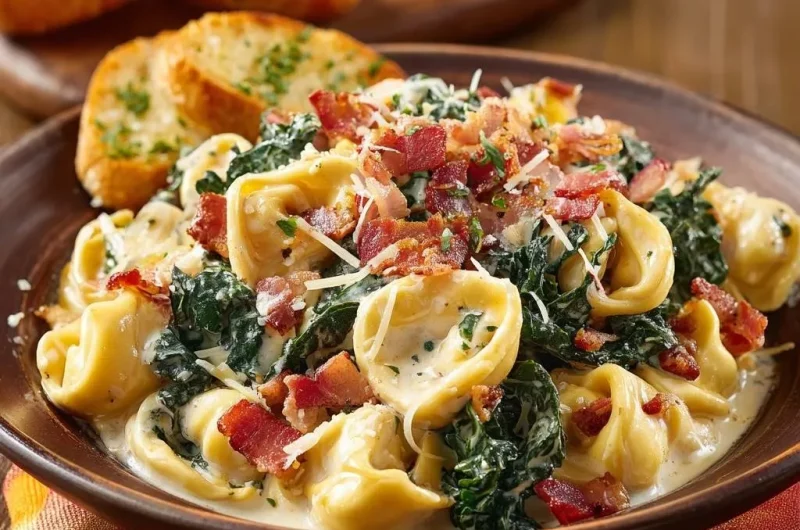
Creamy Tuscan Kale and Tortellini
Course: Main CourseCuisine: Italian-AmericanDifficulty: easy4
servings10
minutes15
minutes25
Minutes580
kcalItalian-American
Ingredients
1 pound refrigerated cheese tortellini
4 cups chopped Lacinato kale, stems removed
6 slices thick-cut bacon, chopped
3 cloves garlic, minced
1.5 cups heavy cream
1/2 cup freshly grated Parmesan cheese, plus extra for garnish
1/4 teaspoon red pepper flakes
1 tablespoon fresh parsley, finely chopped
Salt and black pepper to taste
1 baguette, sliced and toasted with garlic butter and parsley
Directions
- Bring a large pot of salted water to a boil. Cook the tortellini for 1 minute less than the package directions. This is crucial because the pasta will finish cooking in the sauce, absorbing flavor rather than releasing excess water.
- While the water boils, cook the chopped bacon in a large skillet over medium heat until crispy. Remove the bacon with a slotted spoon and set aside on a paper towel, but keep 1 tablespoon of the rendered fat in the pan.
- To solve the watery sauce problem, add the chopped kale directly to the skillet with the bacon fat. Sauté for 3 to 4 minutes until the kale is fully wilted and its natural moisture has evaporated. This prevents the greens from “bleeding” water into your cream later.
- Add the minced garlic and red pepper flakes to the kale and cook for 30 seconds until fragrant.
- Pour in the heavy cream. Bring to a gentle simmer and let it reduce by one-third. Reducing the cream before adding the cheese is the key to a stable, thick consistency that won’t break or turn runny.
- Drain the tortellini, reserving 1/4 cup of the starchy pasta water. Add the tortellini and the reserved pasta water to the skillet. The starch in the water acts as a natural bridge between the fats and liquids, locking the sauce together.
- Stir in the Parmesan cheese and half of the crispy bacon. Toss gently over low heat for 2 minutes until the sauce is thick, glossy, and coats the back of a spoon. Season with salt and black pepper to taste.
- Serve immediately in shallow bowls. Top generously with the remaining crispy bacon, fresh parsley, and extra Parmesan shavings. Serve with the garlic-parsley toasted baguette slices on the side.
Notes
- To prevent a watery sauce, sauté the kale until moisture evaporates and reduce the heavy cream by one-third before adding cheese. Always reserve a bit of starchy pasta water to help the sauce emulsify.