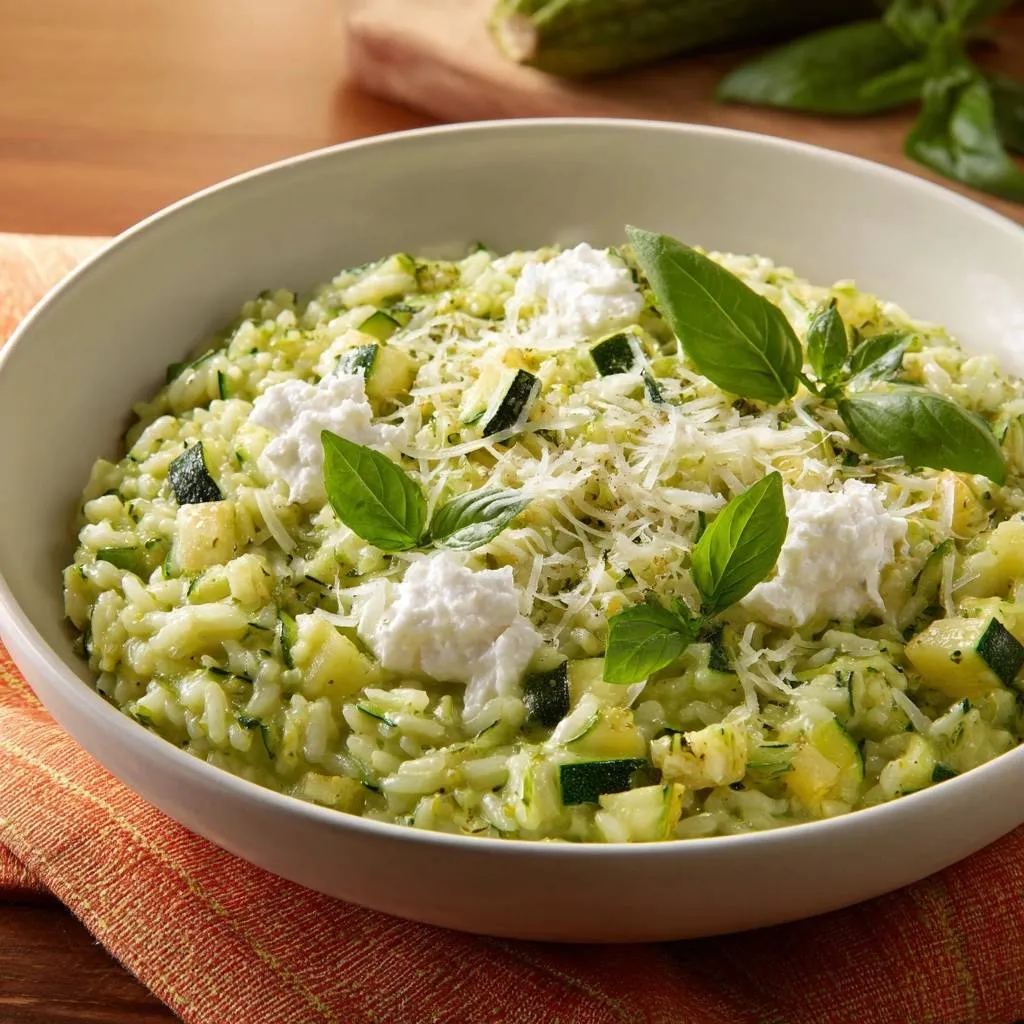
Most home cooks approach zucchini risotto with a bit of trepidation, and for good reason. Zucchini is notorious for releasing a massive amount of water as it cooks, which often turns a promising pot of rice into a gummy, grey, and overcooked mess. If you’ve ever ended up with a bowl of mush instead of those distinct, velvety grains you see in high-end Italian spots, you aren’t alone. The struggle is usually a result of moisture imbalance and timing.
The secret to fixing this is my “Two-Part Zucchini Method.” Instead of just tossing chopped squash into the pot and hoping for the best, we treat the vegetable as two different ingredients. By blending half into a vibrant, concentrated base and sautéing the other half separately, you control the moisture perfectly. This technique ensures every grain of rice is coated in a bright green essence while maintaining the structural integrity of the vegetable.
To get that authentic restaurant-quality finish, you must respect the “Al Dente” bite. In the world of Italian rice, this means the grain should be tender on the outside but still offer a firm, distinct resistance in the center. My biggest tip for success is to keep your vegetable broth at a constant simmer on the back burner. Adding cold broth shocks the rice and stops the starch release, which is exactly what leads to that dreaded “crunchy yet soggy” texture.
The Anatomy of a Perfect Arborio Grain
When you’re making a Creamy Zucchini Risotto, the type of rice you choose is the most important decision you’ll make. Arborio is the gold standard for a reason. It contains a high amount of amylopectin, a type of starch that dissolves during the cooking process to create a natural, silky sauce. While long-grain rice is high in amylose, which keeps grains separate and fluffy, Arborio is designed to do the opposite.
You might also see Carnaroli rice at the store, which many chefs actually prefer because it has an even higher starch content and holds its shape better. Whichever you choose, there is one cardinal rule you must follow: never rinse your risotto rice. Rinsing washes away the very starch we need to create that creamy mouthfeel. If you strip that starch away, you’ll end up with a thin, watery liquid rather than a rich, cohesive sauce.
Essential Components for Vibrant Green Risotto
Since this dish relies on a few simple ingredients, the quality of each one really shines through. Your vegetable broth is the backbone of the flavor, so use a high-quality version or a homemade stock if you have it. Because the rice absorbs several cups of this liquid, a broth that is too salty or metallic will ruin the delicate sweetness of the zucchini. I always recommend tasting your broth before you start; if it doesn’t taste good on its own, it won’t taste good in your rice.
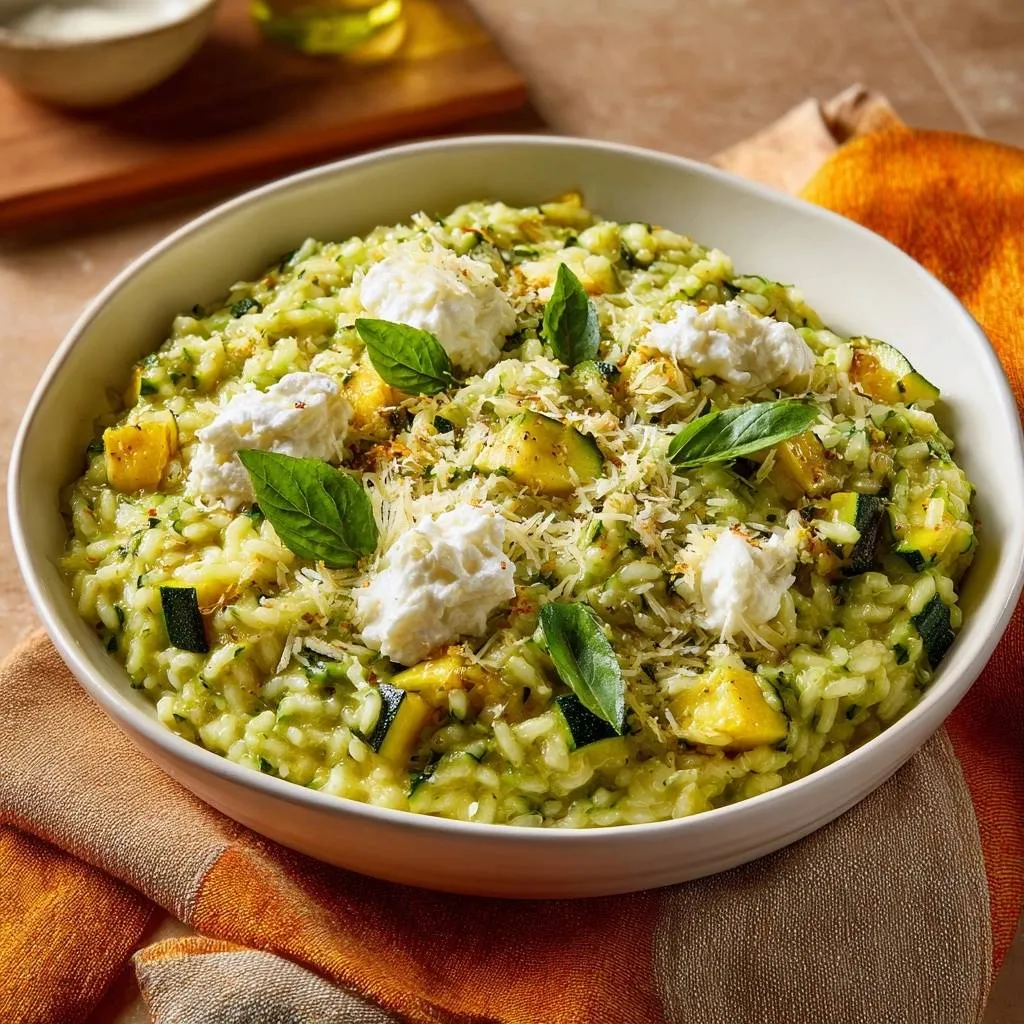
The fats in this recipe are equally vital. We use a combination of unsalted butter and olive oil to create a complex flavor profile. The butter provides that classic dairy richness, while the olive oil adds a fruity, peppery note. Finally, the addition of fresh ricotta and Parmesan at the very end isn’t just for flavor. These fats emulsify with the rice starch to create a luxurious “mantecatura,” which is the Italian term for that final, creamy finish that defines a perfect risotto.
Selecting and Prepping Your Zucchini
When you’re at the market, look for small to medium zucchinis. The giant ones might look impressive, but they are often full of large seeds and excess water, which can make your puree taste bland. Smaller zucchinis have a tighter cell structure and a more concentrated, sweet flavor. For this recipe, we divide the prep: one zucchini gets roughly chopped for the blender, and the other two are diced into uniform cubes for sautéing.
The Role of Fat: Butter vs. Olive Oil
Using both butter and olive oil is a strategic move. Olive oil has a higher smoke point, which allows us to sauté the shallots and garlic without the fat breaking down too quickly. However, butter contains milk solids that provide a toasted, nutty aroma that olive oil simply can’t replicate. By mixing them, you get the best of both worlds: a stable cooking fat and a deep, savory flavor base that carries the aromatics through the entire dish.
Step-by-Step: Executing the Two-Part Zucchini Method
This method is all about layering flavors and textures so that the zucchini doesn’t just disappear into the rice. It requires a bit more focus than a standard “one-pot” meal, but the results are night and day. You’ll start by creating a liquid flavor bomb, then move into searing, toasting, and the gradual hydration of the grains. Each phase serves a specific purpose in building the final masterpiece.
Phase 1: Creating the Chlorophyll Base
First, take your roughly chopped zucchini and toss it into a blender with a splash of warm broth. Blend it until it’s completely smooth. You’re looking for a bright, electric green liquid. This puree is the secret to the dish’s color. By blending it with warm broth rather than cold water, you preserve the chlorophyll, ensuring the risotto stays a vibrant green rather than turning a dull, muddy olive color during the cooking process.
Phase 2: Sautéing for Texture and Maillard Reaction
Next, you’ll sauté the diced zucchini cubes in a hot skillet with olive oil. The goal here is the Maillard reaction—you want golden-brown edges and a slightly caramelized exterior. This step is crucial because it “sets” the zucchini. If you boiled these cubes with the rice, they would turn to mush. By searing them quickly and removing them from the pan, you ensure they stay firm and provide a nice textural contrast in every bite.
Phase 3: Toasting the Rice (Tostatura)
Once your aromatics are soft, stir in the dry Arborio rice. This is called the “tostatura” phase. You want to toast the grains for about three minutes until the edges look translucent but the center is still white. You’ll know it’s ready when you smell a distinct nutty aroma. This toasting creates a protective shell around each grain, which allows the starch to release slowly and prevents the rice from falling apart into a porridge-like consistency.
Phase 4: The Gradual Addition of Broth
Now comes the meditative part. Add your warm broth one ladle at a time. You must stir frequently! The friction of the rice grains rubbing against each other is what actually coaxes the starch out into the liquid. Wait until the rice has absorbed almost all the liquid before adding the next ladle. If you drown the rice in broth all at once, it will simply boil, and you’ll lose that signature creaminess that only comes from patient agitation.
Troubleshooting Common Risotto Textural Issues
If you find that your rice is still crunchy but you’ve run out of broth, don’t panic. You can use warm water to finish the cooking process; just add it in small increments so you don’t dilute the flavor too much. On the flip side, if your risotto looks a bit too “soupy” when the rice is done, simply turn up the heat for thirty seconds and stir vigorously to evaporate the excess moisture before adding your cheese.
One of the best-kept restaurant secrets is the “rest.” Once you’ve stirred in your butter and Parmesan, take the pan off the heat and let it sit, covered, for about sixty seconds. This allows the temperature to even out and the starches to fully set. When you lift the lid, you’ll notice the texture has become even more cohesive and velvety. It’s a small step that makes a massive difference in the final presentation.
Flavor Variations and Seasonal Swaps
While this Creamy Zucchini Risotto is incredible on its own, it’s also a great canvas for other flavors. You can stir in some fresh lemon zest at the very end to add a bright, acidic pop that cuts through the richness of the ricotta. If you don’t have basil, fresh mint is a surprising and traditional Italian pairing for zucchini. You could also toss in a handful of sweet peas during the last five minutes of cooking for extra pops of sweetness and color.
Optimal Pairings for a Balanced Vegetarian Meal
Because risotto is quite rich and starchy, it pairs beautifully with something bright and crisp. A simple arugula salad with a sharp lemon vinaigrette is the perfect companion. The bitterness of the greens and the acidity of the dressing act as a palate cleanser between bites of the creamy rice. You could also serve this alongside some roasted carrots or asparagus to add more earthy depth to the meal.
The garnish of cold ricotta is a game-changer here. When you plate the hot risotto, the dollops of cold cheese provide a temperature contrast that is incredibly satisfying. As you eat, the ricotta slowly melts into the rice, creating little pockets of extra creaminess. It balances the heat of the dish and adds a fresh, milky finish that ties all the vegetable flavors together.
Managing Leftovers and Reheating Techniques
Risotto is famous for thickening up significantly as it cools. If you have leftovers, don’t expect them to have that same “wave” consistency the next day. To reheat it properly, put the rice in a small saucepan over low heat and add a splash of broth or water. Stir gently but constantly as it warms up to “loosen” the starch back into a sauce. Avoid the microwave if possible, as it tends to make the rice rubbery.
If your leftovers are just too thick to return to their original glory, you have the perfect base for Arancini. Roll the cold risotto into balls, stuff a little extra cheese in the middle, coat them in breadcrumbs, and fry them until golden. The starch in the chilled rice acts as a natural binder, making them easy to handle. It’s a delicious way to transform yesterday’s dinner into a completely new appetizer.
Expert Tips for Restaurant-Quality Plating
To plate like a pro, use a flat plate rather than a deep bowl. When you spoon the risotto onto the plate, give the bottom of the dish a few firm taps with the palm of your hand. A perfectly cooked risotto should spread out slightly—this is what Italians call “all’onda,” or “like a wave.” If it stays in a stiff mound, it’s too dry; if it runs to the edges of the plate, it’s too wet.
Once you’ve achieved the perfect spread, add three small dollops of the fresh ricotta in a triangular pattern. Tear your fresh basil leaves by hand rather than chopping them with a knife to prevent bruising and to release more of their aromatic oils. A final, light dusting of freshly grated Parmesan and a crack of black pepper will make the dish look like it came straight out of a professional kitchen.
Frequently Asked Questions
Can I use brown rice instead of Arborio?
Technically you can cook brown rice in a similar style, but it will not result in a creamy risotto. Brown rice still has the bran and germ attached, which prevents the starch from being released into the liquid. You will end up with separate, chewy grains in a thin broth rather than a cohesive, velvety sauce. For the texture described in this recipe, Arborio or Carnaroli are essential.
Why is my risotto grey instead of vibrant green?
This usually happens if the zucchini puree is overcooked or if the zucchini itself was very large and watery. To keep that bright green color, ensure you are blending the zucchini with warm (not boiling) broth and only adding the puree during the final five minutes of cooking. If you add the puree too early, the heat will break down the chlorophyll and turn the dish a dull olive color.
Do I really have to stir the whole time?
You don’t need to stir every single second, but you should be stirring for the majority of the time. The agitation is what creates the creaminess. If you just let the rice sit in the liquid, it will cook, but it won’t develop that signature sauce. Think of it as a rhythmic process: add broth, stir for a minute, let it settle for thirty seconds, and repeat.
Can I make this vegan?
Yes, you can easily adapt this recipe. Swap the butter for a high-quality vegan butter alternative or just use extra olive oil. For the Parmesan, use nutritional yeast or a vegan cashew-based “parm.” Instead of the ricotta dollops on top, you can use a dollop of unsweetened cashew cream or a squeeze of fresh lemon juice to provide that necessary hit of acidity and creaminess.
How do I know exactly when the rice is done?
The best way is the “bite test.” Around the 18-minute mark, start tasting a few grains. You are looking for a texture that is soft on the outside but has a tiny, firm “pinprick” of resistance in the very center. If the rice sticks to your teeth, it needs another minute or two. If it’s completely soft all the way through, it’s slightly overcooked, so remove it from the heat immediately.
Creamy Zucchini Risotto
Course: Main CourseCuisine: Italian-AmericanDifficulty: easy4
servings15
minutes25
minutes40
Minutes385
kcalItalian-American
Ingredients
1.5 cups Arborio rice
3 medium zucchinis (2 diced into small cubes, 1 roughly chopped for the base)
4 to 5 cups warm vegetable broth
1/2 cup grated Parmesan cheese, plus extra for garnish
1/2 cup fresh ricotta cheese
2 tablespoons olive oil
2 tablespoons unsalted butter
1 small shallot, finely minced
2 cloves garlic, minced
1/2 cup dry white wine (optional)
Fresh basil leaves for garnish
Salt and black pepper to taste
Directions
- Prepare the Zucchini Base: Place the roughly chopped zucchini in a blender with 1/2 cup of the warm vegetable broth. Blend until completely smooth and bright green. Set aside.
- Sauté the Cubes: Heat 1 tablespoon of olive oil in a large, wide skillet over medium-high heat. Add the diced zucchini cubes and sauté for 3-4 minutes until golden on the edges but still firm. Remove the cubes from the pan and set aside.
- Build the Flavor: In the same pan, add the remaining olive oil and the butter. Sauté the shallots and garlic for 2 minutes until translucent and fragrant.
- Toast the Rice: Stir in the Arborio rice. Toast the dry rice for 3 minutes, stirring constantly, until the edges are translucent and it smells slightly nutty. If using wine, add it now and stir until fully evaporated.
- The Risotto Method: Begin adding the warm broth one ladle at a time. Stir frequently; this friction is what releases the starch to create the creamy sauce. Wait until the liquid is almost fully absorbed before adding the next ladle.
- Incorporate the Green: When the rice is about 5 minutes away from being finished (tender with a slight bite), stir in the blended zucchini base. This will turn the risotto a vibrant green and add intense creaminess.
- Final Assembly: Stir the sautéed zucchini cubes back into the pan. Once the rice is al dente, remove from heat. Vigorously stir in the Parmesan cheese and a final knob of butter if desired. Season generously with salt and black pepper.
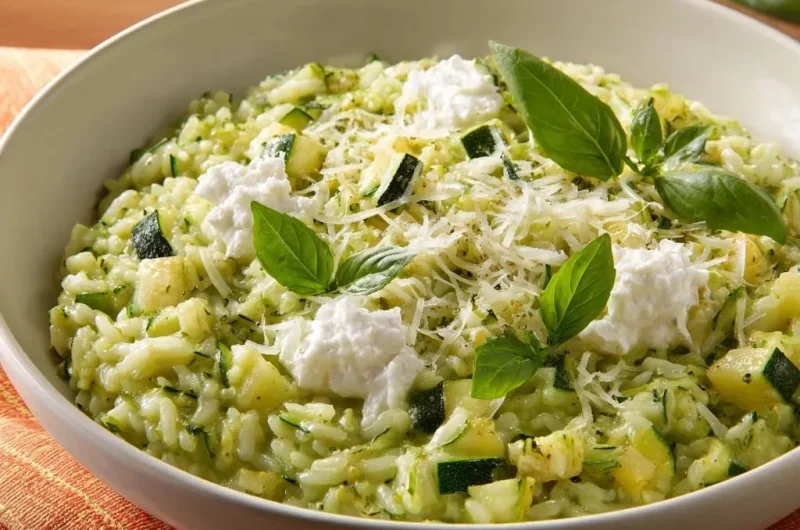
- Garnish and Serve: Plate the risotto immediately. Top with dollops of fresh ricotta, a sprinkle of extra Parmesan, and fresh basil leaves as shown in the image. The cold ricotta provides a perfect temperature and texture contrast to the warm, velvety rice.
Notes
- The secret to avoiding mushy rice is the two-part zucchini method and constant stirring to release the natural starches of the Arborio rice.