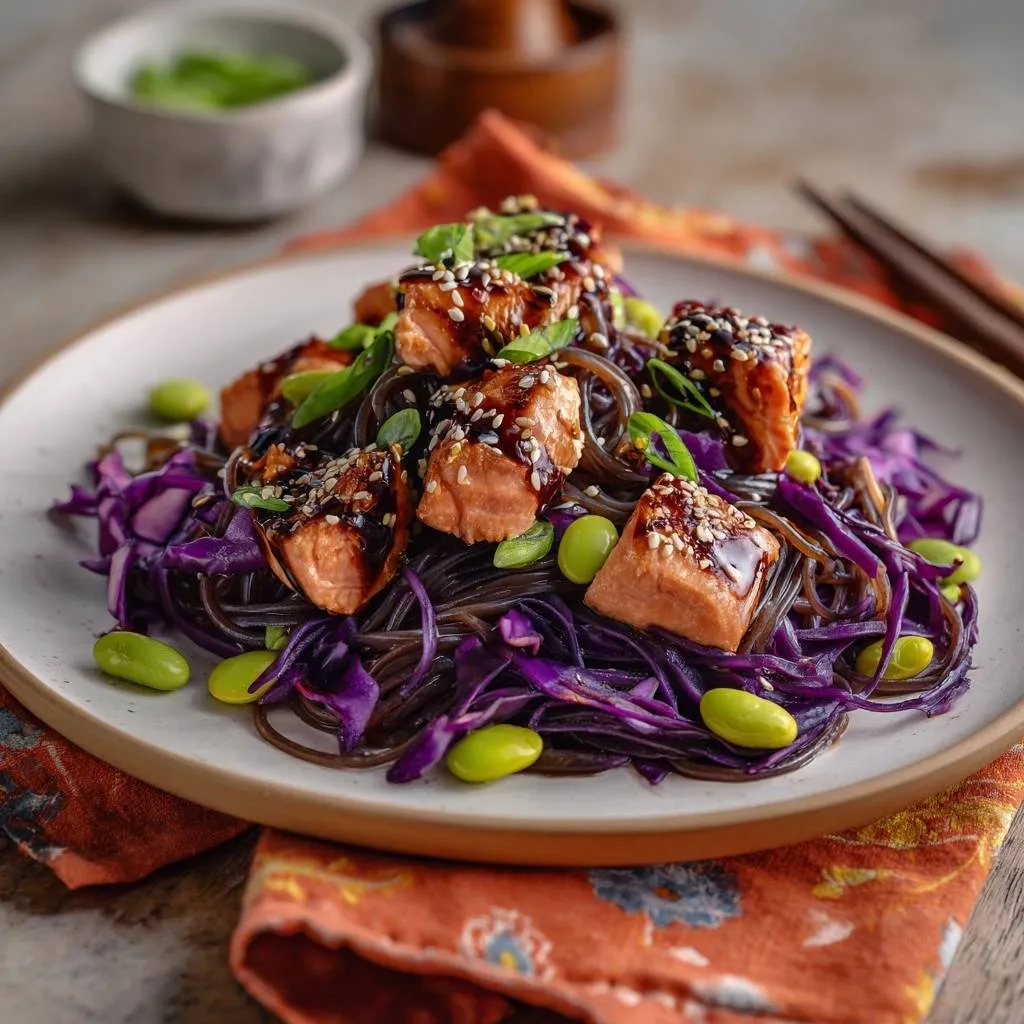
Most home cooks avoid making soba at home because they’ve been burned by a sticky, gummy mess that looks more like a ball of dough than a refined Japanese pasta. You want every strand to be distinct, silky, and firm to the bite. This Glazed Salmon and Soba Noodle Salad solves that texture crisis while delivering a high-protein meal that feels like a splurge from a high-end bistro.
The beauty of this dish lies in the temperature play. You have the chilled, nutty buckwheat noodles and crunchy purple cabbage acting as a refreshing base for the warm, honey-glazed salmon. It’s a balance of sweet, salty, and earthy flavors that hits every part of your palate. Plus, it’s a powerhouse of nutrition that doesn’t leave you feeling heavy or sluggish after lunch.
The secret to restaurant-quality soba isn’t the brand of noodle, but how you treat them after they leave the boiling water. Most people just drain them and walk away, but that’s a recipe for disaster. You have to physically wash the starch off the noodles in an ice bath. This stops the cooking process instantly and ensures that “slurpable” texture that makes Japanese noodle dishes so addictive.
The Anatomy of High-Quality Soba Ingredients
When you’re shopping for this recipe, the noodle aisle can be confusing. You’ll likely see “Nagasoba,” which is a blend of buckwheat and wheat flour. These are easier to handle and have a smoother texture. However, if you want that deep, earthy flavor, look for a higher buckwheat percentage. Just keep in mind that 100% buckwheat noodles are more fragile and require a gentle touch.
For the salmon, freshness is your best friend. I always recommend buying a whole fillet and cubing it yourself rather than buying pre-cut pieces. Fresh salmon has a firm cell structure that holds up during the searing process. If the fish is too old or has been frozen and thawed poorly, those beautiful cubes will likely flake apart and turn into mush in your skillet.
Don’t skimp on the aromatics for your glaze. Freshly grated ginger and minced garlic provide a sharp, spicy backbone that cuts through the richness of the fish. While powdered versions are convenient, they lack the essential oils that make this glaze aromatic and vibrant. A microplane is your best tool here to get that ginger into a fine paste that melts into the sauce.
Selecting the Right Salmon Cut
Atlantic or King salmon are the gold standards for this dish because of their high fat content. That fat acts as a buffer, keeping the inside of the cube juicy while the outside develops a crisp crust. Avoid the thin tail pieces for this specific recipe. They’re too skinny to get a good sear without overcooking the center into a dry, chalky texture.
Buckwheat vs. Wheat: Choosing Your Noodle
Soba literally translates to “buckwheat” in Japanese, but many commercial brands are actually 80% wheat. If you want the authentic experience, check the ingredient list. The higher the buckwheat content, the more “nutty” and gray the noodles will appear. These are packed with fiber and have a much more complex flavor than standard white pasta.
The Science of Starch: Eliminating Gummy Noodles
Buckwheat is incredibly starchy. As the noodles boil, they release a thick, cloudy film that acts like glue once the water is drained. If you don’t remove that film, your salad will become one giant clump. This is why the “Wash and Scrub” method is the most important part of the entire recipe. It’s a technical step that changes the chemistry of the dish.
Plunging the hot noodles into ice water creates a thermal shock. This immediately firms up the exterior of the noodle and prevents the residual heat from overcooking the core. By the time you’re done rinsing, the noodles should feel cold to the touch and slippery, not sticky. This is the foundation of a professional-grade cold noodle salad.
The “Vigorous Scrub” Technique
Don’t be afraid to get your hands in the bowl! You want to pick up handfuls of noodles in the ice water and gently rub them against each other. You’ll actually feel the slick starch washing away. Soba masters in Japan do this with great care to ensure every strand is polished. Once the water in your rinsing bowl stays relatively clear, you’ve succeeded.
The Role of Toasted Sesame Oil as a Barrier
After the final drain, tossing the noodles with a teaspoon of toasted sesame oil is a strategic move. Oil is hydrophobic, meaning it repels water. This light coating prevents any leftover moisture from soaking back into the noodle and re-activating those starches. It also adds a layer of toasted, savory aroma that complements the buckwheat perfectly.
Reducing the Soy and Honey Glaze
Creating the glaze is all about patience and evaporation. As the soy sauce and honey simmer, the water content disappears, leaving behind concentrated sugars and salts. This is where the Maillard reaction happens, creating those deep, savory flavors. You’re looking for the bubbles to transition from small and thin to large, slow-popping “lava” bubbles.
Be careful not to walk away from the stove during this step. Because of the honey and brown sugar, the glaze can go from perfect to burnt in about thirty seconds. If it smells slightly bitter or looks like dark molasses, pull it off the heat immediately. The rice vinegar is the secret weapon here, providing a bright acidity that prevents the honey from feeling cloying.
Step-by-Step: Searing Salmon for Maximum Texture
The biggest mistake people make with salmon is putting it into the pan while it’s still damp. Moisture creates steam, and steam prevents browning. Use a paper towel to pat those cubes until they are bone-dry. When that dry skin hits the hot oil, it will sizzle and crisp up instantly, creating a beautiful golden crust that traps the juices inside.
Use a non-stick skillet or a very well-seasoned cast iron pan. Salmon is delicate, and if it sticks, you’ll lose that gorgeous crust you worked so hard for. Heat the oil until it shimmers but isn’t smoking. You want the pan hot enough to sear the fish on contact, but not so hot that the oil breaks down and tastes acrid.
Achieving the Golden Crust
When you drop the salmon into the pan, leave it alone! It’s tempting to move the pieces around, but they need direct, undisturbed contact with the heat to form a crust. If you try to flip them too early and they resist, they aren’t ready. Once the protein has properly seared, the fish will naturally release from the surface of the pan.
Timing the Glaze Application
We drizzle the glaze at the very end for a reason. If you toss the salmon in the glaze while it’s still in the high-heat skillet, the sugars will burn and turn black before the fish is cooked through. By spooning the thickened syrup over the plated salmon, you keep the flavors clean and the texture of the crust intact.
Assembling the Soba Noodle Salad
Assembly is where the textures come together. Start with a generous bed of the chilled soba noodles tossed with the shredded red cabbage and edamame. The cabbage provides a necessary “crunch” that contrasts with the soft noodles. It’s a structural element that keeps the salad from feeling one-dimensional in your mouth.
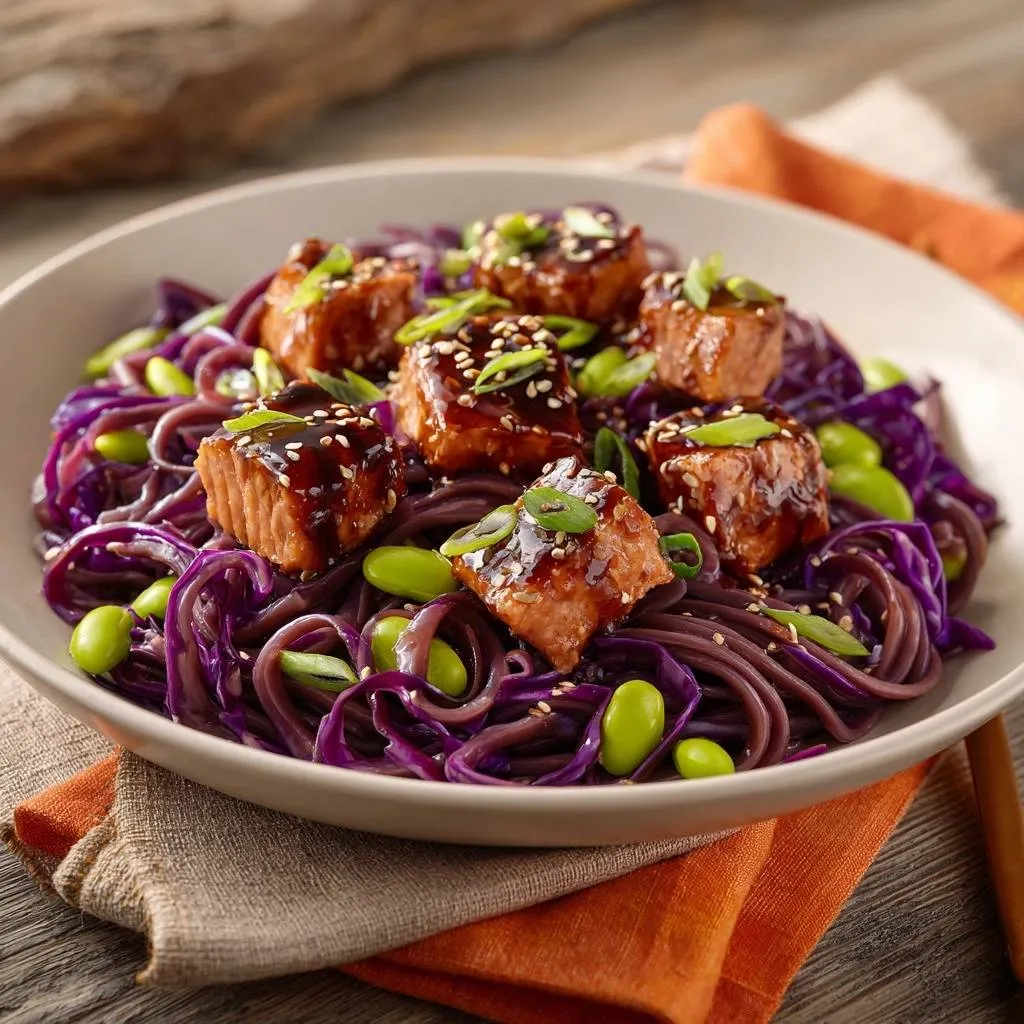
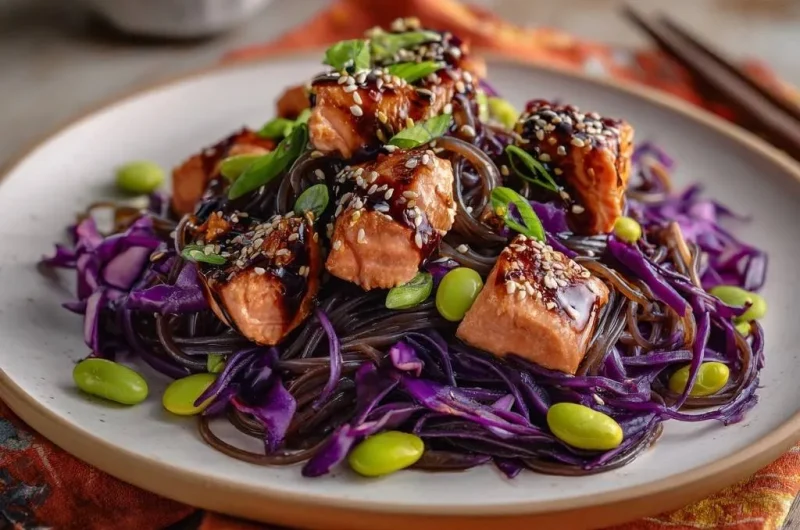
Place the warm salmon cubes on top and let that dark, glossy glaze drip down into the noodles. The way the sauce pools slightly at the bottom creates little “flavor pockets” as you eat. The visual contrast of the deep purple cabbage, green edamame, and the dark glaze makes this dish look like it came straight out of a professional kitchen.
Flavor Variations and Ingredient Swaps
If you need a gluten-free version, simply swap the soy sauce for Tamari and ensure your soba noodles are 100% buckwheat. For those who like a bit of heat, a sprinkle of red chili flakes or Japanese Togarashi (a chili pepper blend) over the finished dish adds a wonderful kick. You can also add thinly sliced radishes or snap peas if you want even more crunch.
If you aren’t a fan of salmon, this recipe works beautifully with large shrimp or even firm cubes of tofu. If using tofu, make sure to press it for at least 20 minutes beforehand to remove excess water. This ensures the tofu gets just as crispy as the fish would. The glaze is versatile enough to handle almost any protein you throw at it.
Troubleshooting Common Soba Obstacles
If you accidentally overcook your noodles and they feel mushy, don’t panic. Rinse them in even colder water (add extra ice) for a longer period. This can sometimes “rescue” the texture by tightening the starches back up. However, the best fix is to watch the clock like a hawk next time—soba waits for no one!
If your glaze becomes too thick and turns into a hard candy consistency as it cools, just whisk in a teaspoon of warm water. This will loosen the sugars and bring it back to a pourable state. If the salmon sticks to the pan, it usually means the pan wasn’t hot enough or you didn’t use enough oil. Let it sit for another 30 seconds; often, it will release once the crust forms.
Why is my glaze too salty?
The saltiness usually comes from the brand of soy sauce used. Some traditional soy sauces are much more concentrated than others. If it tastes too salty, balance it out with an extra squeeze of fresh lime juice or a tiny bit more honey. The acid or sugar will mask the salt without ruining the flavor profile of the sauce.
How to prevent salmon from breaking?
Patience is the key to intact salmon cubes. Use a thin fish spatula or a pair of tongs to gently turn each piece. If you feel any resistance, stop and wait. The fish will tell you when it’s ready to be flipped. Also, make sure your cubes are at least one inch thick; smaller pieces are much more likely to fall apart.
Expert Tips for Professional Presentation
To get that restaurant look, use a large carving fork to twirl the soba noodles into a neat “nest” in the center of the bowl before adding the toppings. This adds height to the dish, which always looks more appetizing. When cutting your green onions, slice them on a sharp diagonal (a bias cut) to create long, elegant slivers rather than boring little circles.
For a final touch of color contrast, use a mix of toasted white sesame seeds and black sesame seeds. The black seeds pop against the orange salmon and the light-colored noodles. It’s a small detail, but it’s these little things that elevate a home-cooked meal into something truly special. Serve it immediately while the salmon is still warm and the noodles are perfectly chilled.
Frequently Asked Questions
Can I make this salad ahead of time for meal prep?
Yes, but you must store the components correctly. Keep the rinsed and oiled soba noodles in one container and the cabbage and edamame in another. Store the glaze in a small jar at room temperature. Sear the salmon fresh if possible, or store it separately and eat it cold. Do not dress the noodles until you are ready to eat, or they will absorb the liquid and lose their texture.
Is it safe to eat soba noodles cold?
Absolutely! In Japan, “Zaru Soba” is a very popular traditional dish where the noodles are served chilled on a bamboo mat with a dipping sauce. Soba is actually often preferred cold because it highlights the subtle, nutty flavor of the buckwheat and maintains a better “al dente” bite than when served in hot broth.
Can I substitute the salmon with another protein?
Firm tofu is an excellent plant-based substitute. You can also use chicken breast cut into small bite-sized pieces, though you may need to cook them a minute or two longer than the salmon. Shrimp is another fantastic option; they cook very quickly and pair perfectly with the soy-honey glaze. Just ensure whatever protein you use is patted dry before searing.
How do I store leftovers without the noodles getting soggy?
The key is the sesame oil coating we applied earlier. This helps, but soba will naturally soften over time as it sits in the fridge. Store leftovers in an airtight container for up to two days. If the noodles seem a bit stiff when you take them out, a quick 10-second rinse under cold water can help loosen them up before you add the glaze.
What is the best way to reheat the salmon without overcooking it?
Reheating salmon is tricky because it dries out so fast. The best method is to use a toaster oven at a low temperature (around 275°F) just until it’s warmed through. Alternatively, you can eat the salmon cold! Cold glazed salmon is actually delicious and maintains a much better texture than salmon that has been nuked in a microwave.
Glazed Salmon and Soba Noodle Salad
Course: Main CourseCuisine: Asian-AmericanDifficulty: easy2
servings15
minutes10
minutes25
Minutes495
kcalAsian-American
Ingredients
1 pound fresh salmon fillet, cut into 1-inch cubes
6 ounces buckwheat soba noodles
2 cups shredded red cabbage
1/2 cup shelled edamame
1/4 cup soy sauce
2 tablespoons honey
1 tablespoon brown sugar
1 tablespoon rice vinegar
1 teaspoon grated fresh ginger
1 teaspoon garlic, minced
1 tablespoon toasted sesame oil
1 tablespoon vegetable oil
1 tablespoon toasted sesame seeds
2 green onions, thinly sliced
Directions
- To solve the gummy noodle problem, bring a large pot of water to a rolling boil. Add soba noodles and cook for 4 to 5 minutes until al dente. Immediately drain and plunge the noodles into a large bowl of ice water. Use your hands to vigorously scrub the noodles under the water for 30 seconds. This removes the excess surface starch that causes sticking. Drain again and toss with 1 teaspoon of sesame oil to lock in the texture.
- In a small saucepan, whisk together the soy sauce, honey, brown sugar, rice vinegar, ginger, and garlic. Bring to a simmer over medium heat for 3-4 minutes until it reduces into a thick, dark syrupy glaze (as seen in the image). Set aside.
- Heat the vegetable oil in a non-stick skillet over medium-high heat. Pat the salmon cubes completely dry with a paper towel to ensure a good sear.
- Place salmon in the skillet and cook for 2 minutes per side until golden and the edges are crisp. Do not crowd the pan.
- In a large serving bowl, combine the rinsed soba noodles, shredded red cabbage, and edamame. Toss with the remaining sesame oil and a splash of soy sauce if desired.
- Plate the noodle and cabbage mixture. Top with the seared salmon cubes. Using a spoon, generously drizzle the thickened dark glaze directly over the salmon pieces so it pools slightly on the noodles. Garnish with toasted sesame seeds and sliced green onions before serving.
Notes
- To prevent gummy noodles, vigorously scrub them in ice water for 30 seconds after cooking to remove excess surface starch. Ensure salmon is patted completely dry before searing for the best crust.