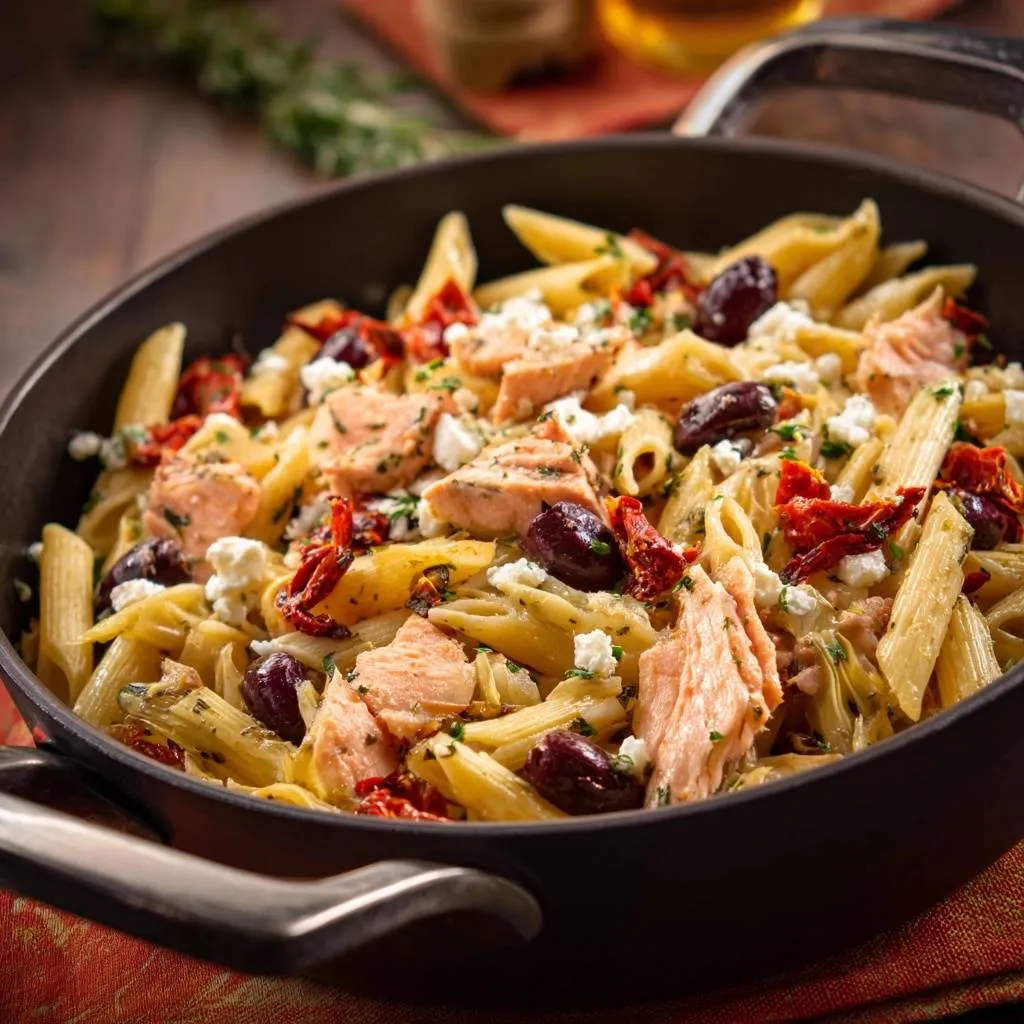
Nothing ruins a beautiful dinner faster than biting into a piece of dry, chalky salmon. It’s a common tragedy in pasta dishes where the fish is treated as an afterthought or boiled alongside the noodles until it loses all its buttery glory. Most recipes instruct you to cook the salmon until it’s “done” before even starting the sauce, which is a guaranteed recipe for overcooked seafood.
This Mediterranean Salmon Penne flips the script by focusing on the delicate nature of the fish. We’re aiming for a high-protein, heart-healthy meal that feels indulgent but remains light. By balancing the salty punch of feta and Kalamata olives with the bright acidity of marinated artichokes, you create a flavor profile that is sophisticated yet incredibly simple to pull off on a weeknight.
The secret to success here is all about timing and moisture control. I’ve found that the most important step is patting your salmon fillets bone-dry with paper towels before they ever touch the pan. This ensures you get a gorgeous golden sear without steaming the fish, locking in those juices before the salmon meets the pasta. It’s a small detail that makes the difference between a soggy mess and a restaurant-quality meal.
The Secret to Moist Mediterranean Salmon Penne
We use a technique called the “Residual Heat Method” to ensure the salmon stays succulent. Instead of cooking the fish all the way through in the skillet, you’ll sear it just enough to develop a crust while leaving the center slightly translucent. This prevents the proteins from tightening up and becoming tough.
Carry-over cooking is your best friend in the kitchen. When you fold those flaked pieces into the hot penne, the ambient heat from the pasta and the starchy water finishes the cooking process gently. This results in salmon that flakes at the touch of a fork and melts in your mouth, contrasting perfectly with the al dente bite of the penne.
Essential Components for the Pasta Base
The pantry staples in this dish do the heavy lifting for the flavor profile. I always recommend using oil-packed sun-dried tomatoes rather than the dry-packed variety. The oil-packed version has a much softer texture and carries a concentrated tomato essence that helps build the base of your sauce.
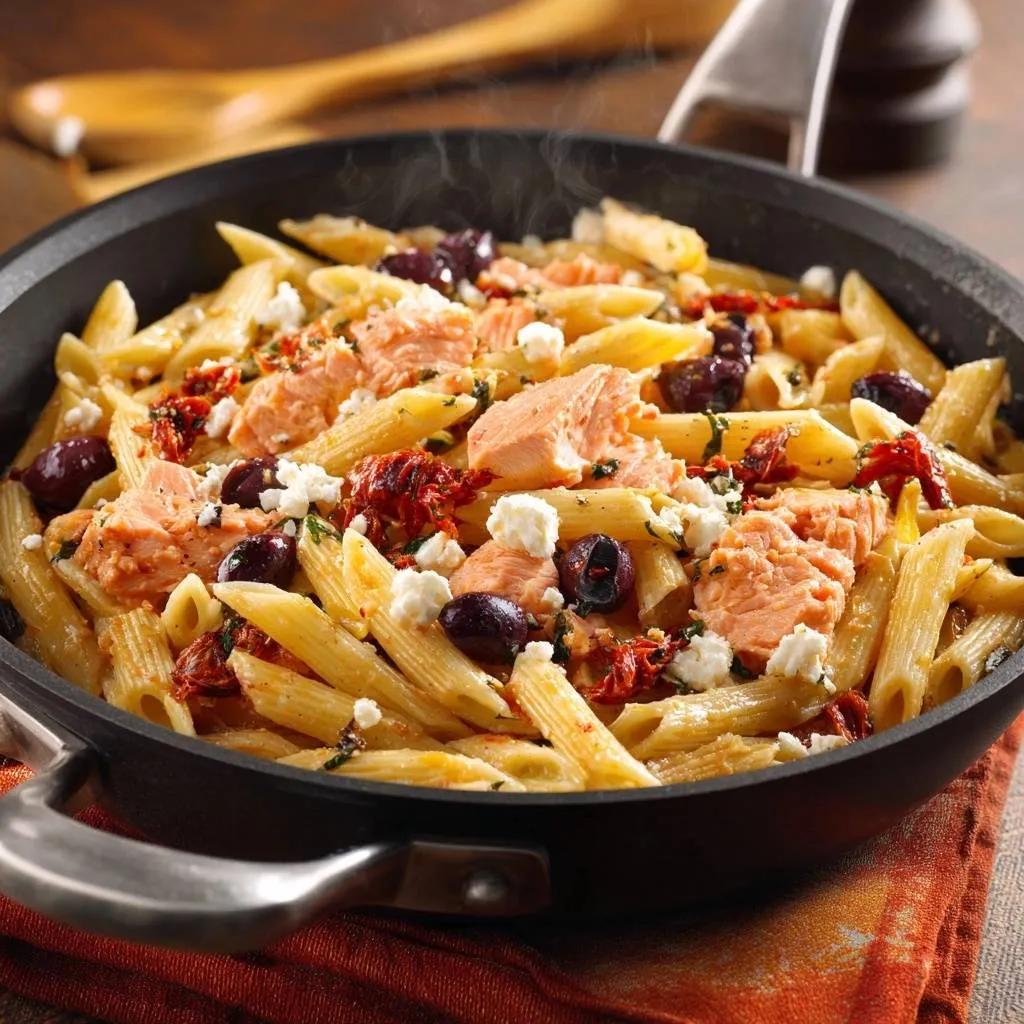
Kalamata olives are non-negotiable here because they provide a deep, briny saltiness that cuts through the richness of the fish. Similarly, marinated artichoke hearts add a necessary layer of vinegar-based acidity. These ingredients work together to ensure every bite is balanced between savory, salty, and tangy.
Selecting High-Quality Salmon Fillets
When you’re at the fish counter, look for King or Sockeye salmon if you want a richer, more robust flavor. Coho is a great middle-ground option that is slightly milder but still holds its shape well. Regardless of the variety, ensure the flesh is firm to the touch and has a vibrant, consistent color without any “fishy” odor.
I prefer skinless fillets for this penne dish because it allows for a more uniform sear on both sides. If you can only find skin-on salmon, simply sear it skin-side down first, then slide a spatula between the skin and the flesh to remove it before flaking. Freshness is key, so try to buy your fish the same day you plan to cook it.
The Role of Starchy Pasta Water
Never pour all your pasta water down the drain! That cloudy, salty liquid is liquid gold for creating a cohesive sauce. The starch released by the penne acts as a natural emulsifier, helping the extra virgin olive oil and garlic bind together into a silky coating.
This emulsion is what allows the flavors to cling to the ridges of the penne without the need for heavy cream or butter. It creates a light, elegant sauce that feels rich on the tongue but won’t leave you feeling weighed down. Just a half-cup is usually all you need to transform dry noodles into a glossy masterpiece.
Step-by-Step: Searing and Flaking the Fish
Start by heating your skillet until the oil is shimmering but not smoking. Place your seasoned salmon fillets in the pan and leave them alone for at least two minutes. You want to see a light golden crust form on the bottom before you even think about flipping them.
Once you’ve seared both sides, move the salmon to a plate and use two forks to flake it into large, chunky pieces. Resist the urge to shred the fish into tiny bits. Keeping the chunks large preserves the moisture and provides a much better mouthfeel when you’re eating the pasta later.
Building the Aromatics and Vegetable Base
After removing the salmon, lower the heat before adding your garlic. Garlic burns incredibly fast in a hot pan, and burnt garlic will turn your entire dish bitter. You’re looking for a soft, fragrant sizzle that releases the aroma without changing the color of the cloves too much.
As soon as the garlic smells amazing, toss in the sun-dried tomatoes and artichokes. You’ll notice the kitchen immediately starts to smell like a Mediterranean bistro. Sautéing these vegetables for just a couple of minutes helps them release their oils and integrate with the garlic-infused base.
The Critical Assembly: Emulsifying the Sauce
This is where the dish comes together. Add your drained penne and the whole Kalamata olives directly into the skillet with the vegetables. Pour in that reserved starchy water and start tossing everything together over medium-low heat.
Use a wooden spoon or tongs to keep the pasta moving. You’ll see the water and oil begin to thicken slightly, creating a thin, shimmering sauce that fills the hollow centers of the penne. This step only takes about a minute, but it’s vital for ensuring the pasta isn’t dry.
Finishing the Dish with Residual Heat
Now for the most important rule: turn off the burner completely. The skillet and the pasta are already holding plenty of heat. Gently fold in your salmon chunks and about half of the crumbled feta cheese, being careful not to break the fish up too much.
Let the dish sit for about 60 to 90 seconds. You will see the salmon transition from translucent to a perfect, opaque medium. The feta will soften just enough to become creamy without completely melting away. This gentle finish is the “pro move” that keeps the fish incredibly moist.
Troubleshooting Common Texture Issues
If you find the pasta looks a bit dry after tossing, don’t panic. Simply add another splash of pasta water or a drizzle of high-quality olive oil to loosen things up. The noodles will continue to soak up liquid as they sit, so it’s better to have it a little “saucy” at first.
If you accidentally over-seared the salmon and it feels firm, break it into smaller pieces so it can absorb more of the sauce. For feta that won’t soften, you can put a lid on the skillet for 30 seconds to trap the steam. Just be careful not to leave the heat on, or you’ll end up with that chalky fish we’re trying to avoid.
Flavor Variations and Ingredient Swaps
This recipe is quite flexible if you need to make adjustments. If you’re avoiding gluten, a high-quality brown rice or chickpea penne works beautifully, though you may need a little extra pasta water as those varieties tend to be starchier. You can also swap the salmon for chunks of firm white fish like halibut or cod.
For those who want more greens, tossing in a few handfuls of fresh baby spinach during the assembly phase is a great move. The heat from the pasta will wilt the spinach in seconds. If feta is too salty for your palate, try using dollops of goat cheese for a creamier, tangier finish that complements the salmon perfectly.
Optimal Side Dishes for Mediterranean Salmon Penne
Since this pasta is quite savory and rich, I love pairing it with something crisp and bright. A simple arugula salad with a lemon-shallot vinaigrette provides a peppery crunch that cleanses the palate between bites. Roasted asparagus with a squeeze of lemon is another fantastic, earthy companion.
If you want to lean into the comfort food aspect, a piece of crusty sourdough bread is essential. It’s the perfect tool for swiping up any leftover garlic oil or stray crumbles of feta from the bottom of your bowl. Keep the sides simple so the salmon remains the star of the show.
Storage and Reheating Without Drying Out
Leftover salmon can be tricky, but it’s doable if you’re careful. Store the pasta in an airtight container in the fridge for up to two days. I don’t recommend freezing this dish, as the texture of the salmon and the artichokes will become mushy and unpleasant once thawed.
When it’s time to reheat, stay away from the microwave if possible. Instead, put the pasta in a small skillet over low heat with a tablespoon of water or broth. Cover it with a lid and let it steam gently until warmed through. This method preserves the moisture in the fish and keeps the pasta from getting rubbery.
Expert Tips for Professional Results
Firstly, salt your pasta water until it tastes like the sea. This is your only chance to season the actual noodles from the inside out. Secondly, always pat the salmon dry with paper towels; moisture on the surface of the fish is the enemy of a good sear.
Thirdly, use fresh flat-leaf parsley and add it at the very last second. The volatile oils in fresh herbs disappear quickly with heat, so adding them at the end keeps the flavor vibrant. Finally, use the widest skillet you have. A wide surface area allows for better evaporation and ensures every piece of penne gets evenly coated in the sauce.
Frequently Asked Questions
Can I use frozen salmon for this recipe?
Yes, you can definitely use frozen fillets. The key is to thaw them completely in the refrigerator overnight. Once thawed, make sure to spend extra time patting them dry with paper towels, as frozen fish tends to release more moisture than fresh. This ensures you still get that vital golden sear in the pan.
What is the best pasta shape besides penne?
If you don’t have penne on hand, look for other shapes with ridges or holes. Rigatoni is a fantastic substitute because its large center can trap the olives and feta. Fusilli or rotini are also great choices because the spirals do an excellent job of holding onto the garlic-infused oil and small bits of sun-dried tomato.
How do I prevent the feta from disappearing into the sauce?
To keep those distinct, salty pockets of cheese, make sure you turn the heat off before adding the feta. If the pasta is boiling hot, the cheese will melt into a creamy sauce. By using the residual heat method and keeping your feta crumbles on the larger side, you’ll maintain that wonderful texture contrast.
Is this dish suitable for meal prep?
It is best enjoyed fresh because salmon texture changes when chilled and reheated. However, if you do meal prep it, undercook the salmon slightly more than usual during the initial sear. When you reheat it later, the fish will finish cooking without becoming overly dry. Eat it within 48 hours for the best quality.
Can I add fresh tomatoes instead of sun-dried?
You can use fresh cherry tomatoes, but the flavor profile will shift from deep and umami-rich to bright and sweet. If using fresh, toss them into the skillet with the garlic and sauté until they just begin to burst. You may need to add a pinch more salt since you’ll lose the concentrated saltiness of the sun-dried version.
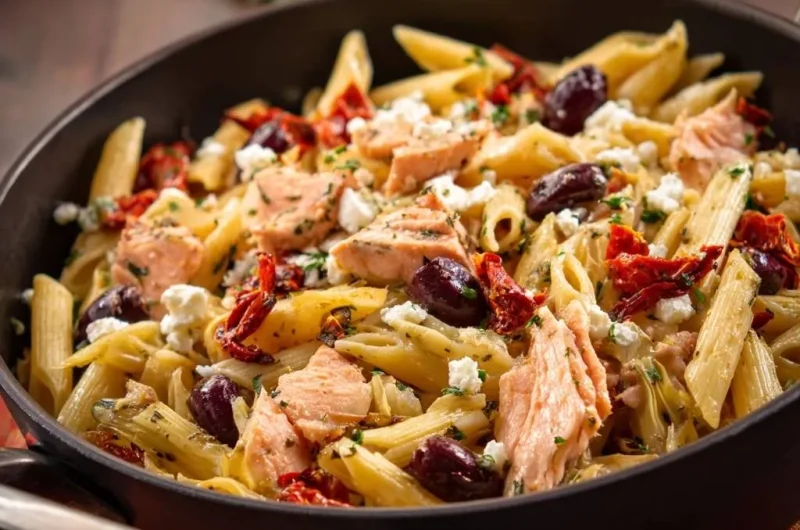
Mediterranean Salmon Penne
Course: Main CourseCuisine: MediterraneanDifficulty: easy4
servings10
minutes15
minutes25
Minutes560
kcalMediterranean
Ingredients
12 ounces penne pasta
1 pound fresh salmon fillet, skin removed
1/2 cup sun-dried tomatoes (oil-packed), sliced
1/2 cup kalamata olives, whole or halved
1/2 cup marinated artichoke hearts, chopped
4 ounces feta cheese, crumbled
3 tablespoons extra virgin olive oil
3 cloves garlic, minced
1 teaspoon dried oregano
1/2 cup reserved pasta water
Fresh parsley, finely chopped for garnish
Salt and black pepper to taste
Directions
- Bring a large pot of salted water to a boil. Add the penne and cook until just al dente.
- While the pasta cooks, pat the salmon dry and season with salt, pepper, and oregano. In a large skillet over medium-high heat, sear the salmon in 1 tablespoon of olive oil for 2-3 minutes per side. It should have a light golden crust but remain translucent and undercooked in the center. Remove from the pan and gently flake into large, chunky pieces.
- In the same skillet, lower the heat to medium. Add the remaining olive oil, minced garlic, sun-dried tomatoes, and artichoke hearts. Sauté for 2 minutes until the garlic is fragrant and the vegetables are heated through.
- Before draining the pasta, reserve 1/2 cup of the starchy cooking water. Drain the pasta.
- Add the drained pasta and kalamata olives to the skillet. Pour in the reserved pasta water and toss over medium-low heat for 1 minute to create a light, silky emulsion that coats the noodles.
- The Critical Step: Turn off the heat completely. Gently fold in the salmon chunks and half of the crumbled feta. The residual heat from the pasta and the skillet will finish cooking the salmon to a perfect, moist medium in about 60-90 seconds without drying it out.
- Garnish with the remaining feta cheese and fresh parsley. Serve immediately while the salmon is at its peak texture.
Notes
- The critical step is turning off the heat before folding in the salmon; the residual heat from the pasta ensures the fish remains buttery and moist rather than overcooked.