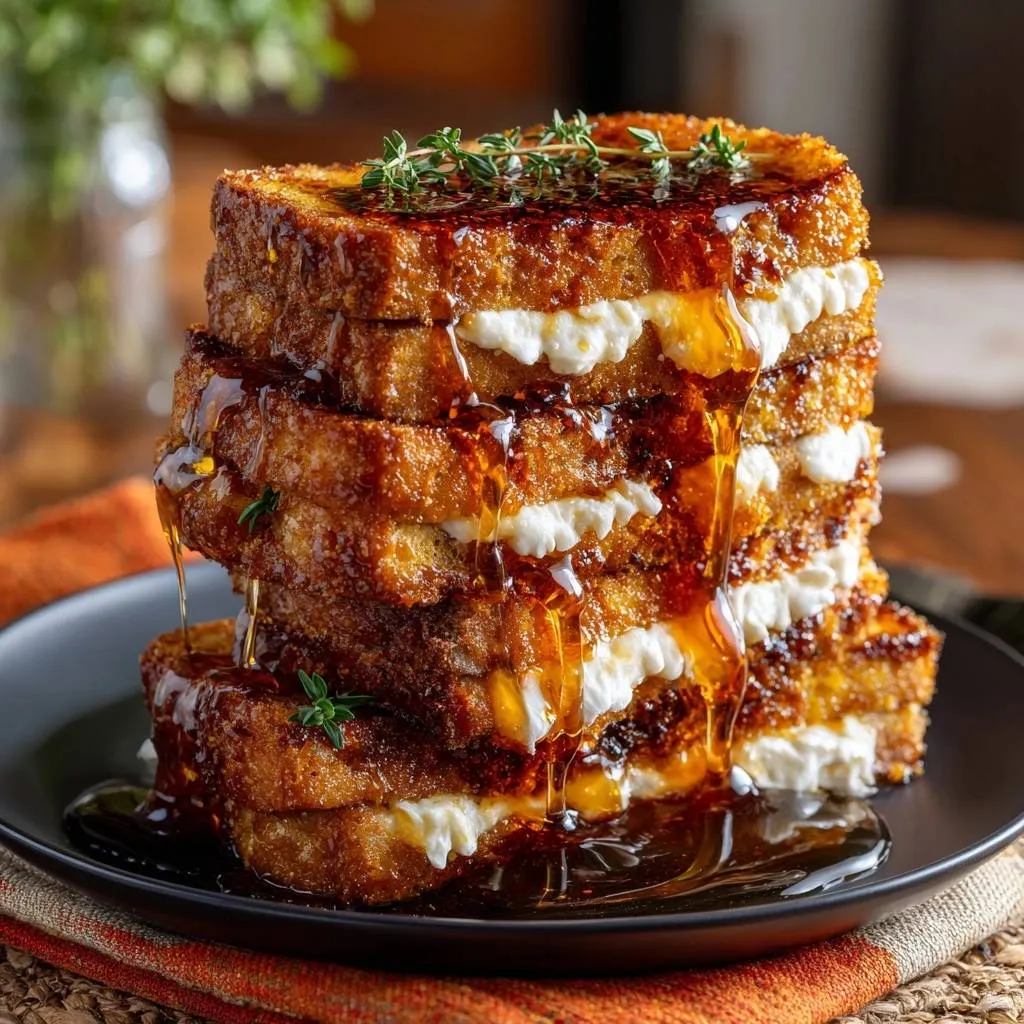
Forget everything you know about soggy, limp French toast that collapses under the weight of a little syrup. We’ve all been there, cutting into a promising slice only to find a mushy, undercooked center that feels more like bread pudding than a breakfast staple. The secret to avoiding this culinary heartbreak is the “Double-Crust” method, a technique that builds a structural fortress around your bread.
By using thick-cut brioche and a specialized coating of crushed cornflakes or panko, you create a shatteringly crisp exterior that protects the fluffy interior. This isn’t just breakfast; it’s a study in texture, contrasting a golden, crunchy shell with a molten, honey-sweetened ricotta center. It’s the kind of dish that makes you realize you’ve been settling for less for far too long.
The real magic happens when you master the temperature control. Most home cooks crank the heat too high, scorching the crust while the inside stays cold. I’ve found that a patient, medium-low fry in a blend of butter and neutral oil ensures the ricotta warms through completely without sacrificing that signature crunch. Trust the process, and you’ll never go back to basic slices again.
The Structural Integrity of Thick-Cut Brioche
Brioche is the undisputed king of French toast because it’s essentially a bread-pastry hybrid. Its high egg and butter content gives it a sturdy yet tender crumb that can handle a heavy soak without disintegrating. Unlike sourdough, which can be too chewy, or standard white bread, which turns to paste, brioche holds its shape even when stuffed with creamy cheese.
However, even the best brioche needs a little help to reach its full potential. You want your bread to be slightly stale so it acts like a thirsty sponge. If your loaf is fresh and soft, don’t worry. Simply lay the slices on a wire rack in a 300°F oven for about 5 to 10 minutes per side. You’re looking for the bread to feel dry and slightly firm to the touch, which ensures it absorbs the custard flavor rather than just the moisture.
Essential Components for Ricotta Stuffed Brioche French Toast
Quality ingredients are the backbone of this recipe, starting with the ricotta. Always reach for whole milk ricotta; part-skim versions have a higher water content that can release steam during cooking, leading to a soggy sandwich. If your ricotta looks watery in the container, strain it through a fine-mesh sieve for 10 minutes to ensure a thick, stable filling.
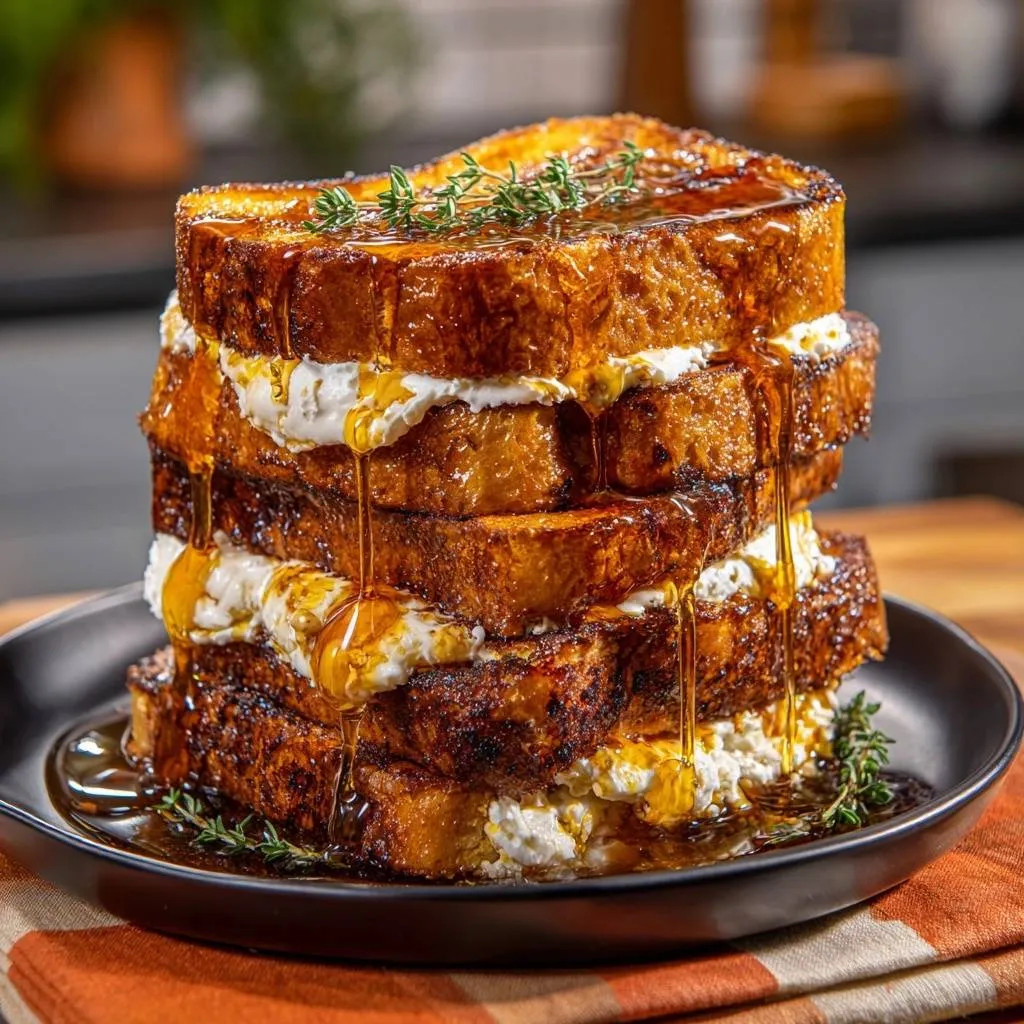
The flavor profile relies on the balance of honey and lemon zest within the cheese. The honey provides a mellow sweetness, while the lemon zest cuts through the heavy fats of the brioche and heavy cream. Additionally, using a blend of unsalted butter and neutral oil (like grapeseed) is vital. The oil raises the smoke point, allowing you to fry the toast long enough to melt the center without the butter solids burning and turning bitter.
Selecting the Right Coating: Cornflakes vs. Panko
You have two excellent paths for your “Double-Crust” finish. Cornflakes offer a nostalgic, malty sweetness and a deep golden color that looks incredible on the plate. Panko breadcrumbs, on the other hand, provide a more neutral flavor and a jagged, airy crunch that is exceptionally light. Both work beautifully, so choose based on your personal preference for sweetness.
Regardless of which you choose, the texture of the crush is paramount. Do not pulse them into a fine powder. You want a coarse grit with varying sizes of crumbs. This uneven texture creates more surface area, which translates to more “crunch points” once the toast hits the hot fat in your skillet.
The Science of the Anti-Soggy Custard Base
A common mistake is using too much milk in the custard, which results in a “weeping” toast that never quite firms up. This recipe uses a specific ratio of 4 large eggs to 1/2 cup of heavy cream. The higher fat content in the cream, combined with the protein in the eggs, creates a custard that sets quickly and provides a rich, velvety mouthfeel.
Vanilla extract and ground cinnamon aren’t just there for scent; they act as aromatic bridges. They tie the savory, buttery notes of the fried bread to the bright, citrusy ricotta filling. When these aromatics hit the hot pan, they bloom, filling your kitchen with a scent that is far more complex than a standard diner breakfast.
Step-by-Step: Preparing the Ricotta Stuffed Brioche French Toast
Success with stuffed French toast comes down to the assembly. You aren’t just making a sandwich; you’re building a sealed vessel for the cheese. If you rush the preparation, the filling will escape, and the crust will slide off. Follow these three phases for a perfect result every time.
Phase 1: Creating the Ricotta Seal
When spreading your ricotta mixture, leave a 1/4 inch border around the edges of the brioche. This “dry zone” is essential because it allows the two slices of bread to press together and form a seal. If the cheese reaches the very edge, the egg wash won’t be able to “glue” the bread shut, and the ricotta will leak into the pan and burn.
Once you’ve topped the filling with the second slice of bread, give the sandwich a firm press with the palm of your hand. You want the ricotta to move slightly toward the edges without spilling over. This pressure creates a structural bond that makes the sandwich much easier to handle during the dipping and coating stages.
Phase 2: The Controlled Soak and Coating
The “10-second rule” is your best friend here. Submerge each side of the sandwich in the egg custard for exactly 10 seconds. This is just enough time for the liquid to penetrate the outer layers of the brioche without reaching the center and making it mushy. Remember to dip the edges of the sandwich as well to ensure the entire surface is sticky.
Immediately move the soaked sandwich into your dish of crushed cornflakes or panko. Press down firmly so the crumbs adhere to the egg wash. Make sure to roll the sides of the sandwich in the crumbs too. This encapsulation is what creates that “shatteringly” crisp barrier that protects the bread from the steam of the cooking ricotta.
Phase 3: The Shallow-Fry Technique
Heat your butter and oil over medium heat until the fat is shimmering. You can test this by dropping a single cornflake into the pan; if it sizzles immediately, you’re ready. Place the sandwiches in the pan and immediately turn the heat down to medium-low. This lower temperature is the secret to heating the thick sandwich all the way through.
Fry for about 4 to 5 minutes per side. You are looking for a deep, mahogany gold color. Because the sandwich is so thick, the slow fry allows the heat to migrate to the center, turning the ricotta into a warm, creamy delight. Resist the urge to flip multiple times; one good flip per side is all you need to keep the crust intact.
Troubleshooting Common French Toast Failures
If your center is still cold but the outside is dark, your heat is too high. Simply move the toast to a wire rack on a baking sheet and pop it into a 300°F oven for 5 minutes to finish warming through. If the crust is falling off, it usually means the bread was too wet or you didn’t press the crumbs firmly enough into the egg wash.
For those dealing with smoking butter, your oil-to-butter ratio might be off. Adding a splash more neutral oil will stabilize the fat. If the bread feels mushy despite the crunchy crust, you likely used fresh bread without drying it out first. Next time, ensure the bread feels like a dry sponge before you start the dipping process.
Flavor Variations and Seasonal Swaps
Once you master the base technique, you can get creative with the fillings. For a berry-forward version, fold a tablespoon of macerated strawberries or raspberries directly into the ricotta. The fruit will soften and release its juices into the cheese as it cooks, creating a beautiful marbled effect when you cut the toast open.
If you prefer something less sweet, try a savory-leaning twist. Omit the honey and lemon zest, and instead mix the ricotta with cracked black pepper, fresh chives, and a pinch of salt. For an extra layer of texture in the crust, you can mix finely crushed pecans or walnuts into your cornflake base for a nutty, earthy finish.
Optimal Pairings for a Balanced Brunch
This French toast is rich, clocking in at about 610 calories per serving, so you want sides that offer acidity and brightness. A simple fruit salad with grapefruit segments and lime juice works wonders as a palate cleanser. Alternatively, a side of bitter greens like arugula with a light lemon vinaigrette can balance the decadence of the brioche.
When it comes to toppings, high-quality maple syrup is a must, but don’t overdo it. The ricotta is already sweetened with honey, so a light drizzle is usually enough. I love garnishing with fresh thyme sprigs; the earthy, herbal aroma provides an unexpected lift that makes the whole dish feel like it came from a high-end bistro.
Make-Ahead Strategies and Storage
While this dish is best served immediately to enjoy the “shatteringly crisp” texture, you can prep ahead. You can assemble the sandwiches with the ricotta filling up to 24 hours in advance and keep them wrapped in the fridge. However, do not dip them in the egg wash or crumbs until you are ready to fry, or the bread will become far too soggy.
If you have leftovers, avoid the microwave at all costs, as it will turn the crust into a rubbery mess. Instead, reheat the toast in an air fryer at 350°F for about 3 to 5 minutes, or in a toaster oven. This will revive the crunch of the cornflakes while gently warming the ricotta center back to its creamy state.
Expert Tips for Restaurant-Quality Presentation
To get that professional look, use the “Stacking” technique. Instead of laying the slices flat, stack two halves on top of each other. Always cut the toast on a sharp bias (diagonally). This diagonal cut exposes the beautiful white ricotta layer and the golden crust, making the dish look much more appetizing and voluminous.
When it comes to the final touches, I prefer a light dusting of powdered sugar followed by a targeted drizzle of syrup. If you pour the syrup over the entire stack, the crust will soften faster. By drizzling it carefully, you allow the diner to experience the crunch of the “Double-Crust” alongside the sweetness of the syrup in every bite.
Frequently Asked Questions
Can I use low-fat ricotta for the filling?
It is not recommended to use low-fat or part-skim ricotta for this recipe. Low-fat dairy has a significantly higher water content, which will release steam as the sandwich cooks. This internal steam will make the brioche soggy from the inside out. Whole milk ricotta provides the necessary fat to stay creamy and stable under heat. Always strain your ricotta if you see any liquid in the container.
How do I prevent the cornflakes from burning?
The key to preventing a burnt crust is the combination of a butter-oil blend and strict temperature management. Butter provides flavor but has a low smoke point; the neutral oil helps stabilize it. You must use medium-low heat. If the pan is too hot, the sugar in the cornflakes will caramelize and burn before the thick brioche and ricotta center have a chance to warm through. Flip the sandwich only once to keep the crust bonded to the bread.
What is the best substitute for Brioche?
If you can’t find brioche, Challah is your best alternative. It has a similar egg-rich, sturdy structure that holds up well to stuffing. Thick-cut Texas Toast is another option, though it lacks the buttery depth of brioche. Avoid using standard sandwich bread or artisanal loaves with large air holes (like ciabatta), as the filling will leak out and the bread will collapse during the soaking process.
Can this recipe be made gluten-free?
Yes, you can adapt this recipe for a gluten-free diet. Use a sturdy gluten-free brioche or white bread substitute. For the coating, replace the cornflakes or panko with crushed gluten-free rice cereal or certified gluten-free panko. Ensure your vanilla extract and other flavorings are certified gluten-free as well. The cooking technique remains exactly the same.
Why add lemon zest to the cheese?
Lemon zest provides “brightness,” a culinary concept used to balance heavy, fatty flavors. Between the butter in the brioche, the heavy cream in the custard, and the whole milk ricotta, this is a very rich dish. The citric acid and oils in the lemon zest act as a palate cleanser, preventing the richness from becoming overwhelming and making each bite feel fresh rather than heavy.
Ricotta Stuffed Brioche French Toast
Course: BreakfastCuisine: AmericanDifficulty: easy4
servings15
minutes15
minutes30
Minutes610
kcalAmerican
Ingredients
8 thick slices of brioche bread (1 inch thick)
1.5 cups whole milk ricotta cheese (strained of excess liquid)
2 tablespoons honey
1 teaspoon lemon zest
4 large eggs
1/2 cup heavy cream
1 teaspoon vanilla extract
1/2 teaspoon ground cinnamon
2 cups crushed cornflakes or panko breadcrumbs (for the visual crust)
4 tablespoons unsalted butter
2 tablespoons neutral oil (grapeseed or vegetable)
Maple syrup for serving
Fresh thyme sprigs for garnish
Directions
- In a small bowl, whisk together the ricotta cheese, honey, and lemon zest until smooth. Set aside.
- In a shallow dish, whisk the eggs, heavy cream, vanilla, and cinnamon. Place the crushed cornflakes or panko in a separate shallow dish.
- To ensure the “Anti-Soggy” result, use slightly stale bread. If fresh, toast the slices in a 300°F oven for 5 minutes per side until they feel dry to the touch.
- Spread a thick, generous layer of the ricotta mixture onto four slices of bread, leaving a 1/4 inch border at the edges. Top with the remaining four slices to create sandwiches. Press down firmly to seal.
- Dip each sandwich into the egg mixture for 10 seconds per side, ensuring the edges are coated.
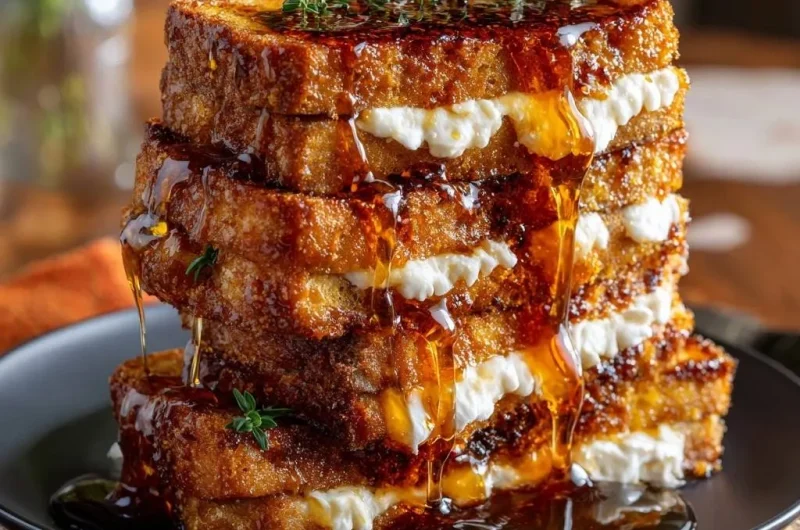
- Immediately press the soaked sandwich into the crushed cornflakes/panko, coating all sides thoroughly. This creates the golden, textured crust seen in the image.
- Heat a large skillet over medium heat with the butter and oil. The oil prevents the butter from burning during the longer cook time required for stuffed toast.
- Once the fat is shimmering, place the sandwiches in the pan. Fry for 4 to 5 minutes per side. Use medium-low heat to ensure the heat penetrates to the ricotta center without burning the crust.
- Once the exterior is deep golden brown and “shatteringly” crisp, remove from the pan.
- Stack the sandwiches high, drizzle generously with maple syrup, and garnish with fresh thyme. Serve immediately.
Notes
- To prevent sogginess, use slightly stale bread or dry fresh slices in a 300°F oven for 5 minutes per side. The addition of oil to the butter prevents burning during the frying process.