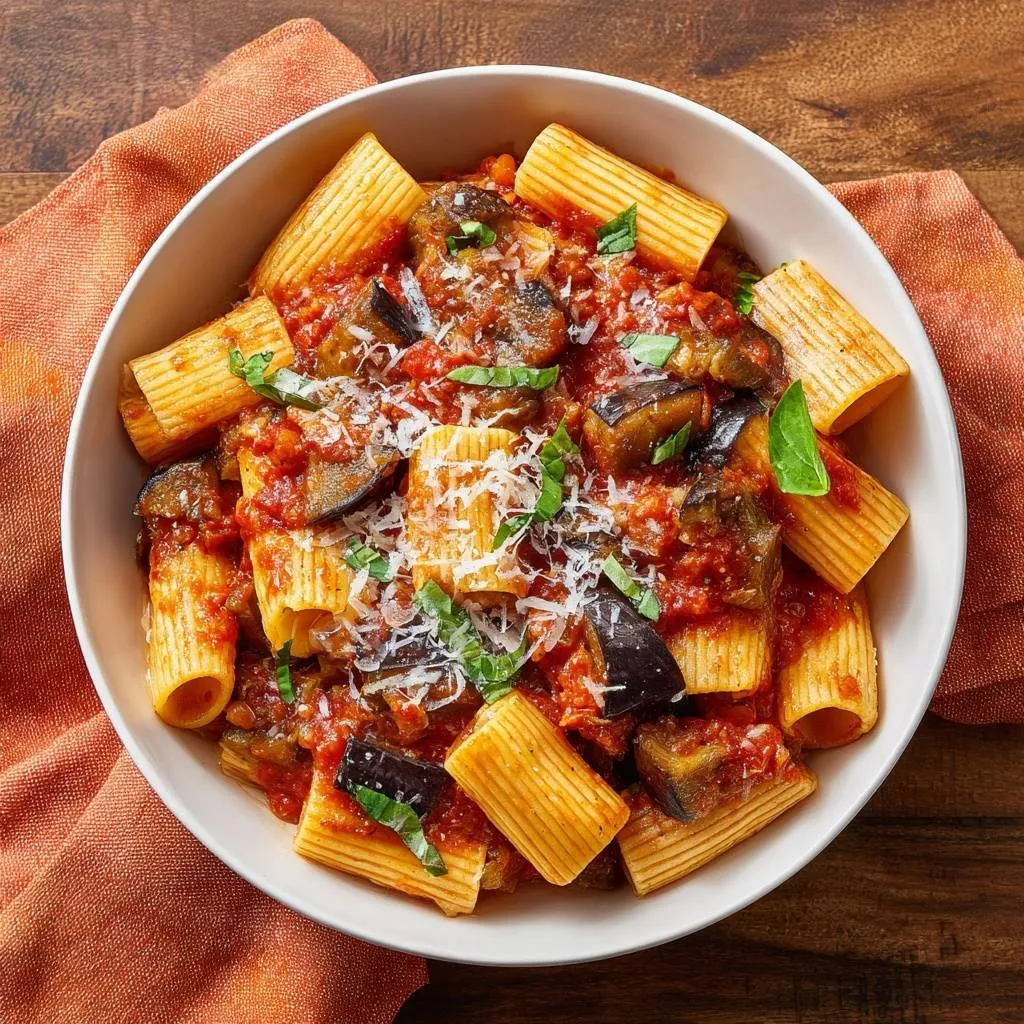
Rigatoni alla Norma is the crown jewel of Sicilian pasta dishes, born in the sun-drenched city of Catania. It represents a perfect culinary balance, where the sweetness of tomatoes meets the salty punch of aged cheese and the meaty richness of fried eggplant. However, many home cooks end up with a greasy, grey mess because they treat the eggplant like a standard vegetable rather than the star of the show.
The goal here is a “skyscraper” of flavor and texture. You want structured, golden-brown cubes of eggplant that hold their shape against the ridges of the pasta. When executed correctly, this dish isn’t just a meal; it’s a vibrant masterpiece of Mediterranean soul that feels both indulgent and incredibly fresh.
The secret to restaurant-quality results is all about the moisture-draw technique and high-heat searing. By properly prepping the eggplant before it ever hits the pan, you ensure every piece stays meaty and perfectly textured. Most people skip the salting step, but that is exactly why their eggplant turns into a sponge for oil.
The Architecture of Authentic Rigatoni alla Norma
While you can technically use any pasta, rigatoni is the undisputed champion for this recipe. The word “rigate” refers to the ridges on the outside of the tube, which act like tiny gutters to catch the thick tomato sauce. Because the eggplant is cut into substantial cubes, you need a pasta shape with enough diameter and “chew” to stand up to the vegetable’s weight.
Using high-quality durum wheat semolina pasta is non-negotiable here. This type of pasta releases the perfect amount of starch into the cooking water, which we will later use to bind the sauce. A flimsy or thin pasta would simply get lost under the hearty chunks of seared eggplant and the sharp dusting of cheese.
Why Texture Defines This Sicilian Classic
The most common complaint with this dish is “soggy eggplant.” Traditional recipes often call for deep-frying the cubes in a vat of oil, which is delicious but difficult to manage at home without making the dish feel heavy. We are moving away from that greasy pitfall by focusing on structural integrity.

By using a controlled high-heat sear, we create a caramelized crust on the outside of the eggplant while keeping the interior creamy. This method ensures the eggplant remains a distinct component of the dish rather than dissolving into a mushy brown paste that disappears into the tomatoes.
Essential Components for the Perfect Sauce
Since this recipe has very few ingredients, the quality of each one is amplified. San Marzano tomatoes are the gold standard for the sauce because they have a natural sweetness and low acidity. They create a thick, jammy base that doesn’t require hours of simmering to taste “done.”
Extra virgin olive oil is also a primary flavor carrier in this dish. You aren’t just using it to prevent sticking; you are using it to coat the pasta and carry the aroma of the garlic and red pepper flakes. Use a bottle that tastes good enough to dip bread into, as you will definitely taste it in the final bite.
Selecting and Prepping the Globe Eggplant
When you’re at the market, look for a globe eggplant that feels heavy for its size with skin that is shiny and tight. If the skin is wrinkled, the eggplant is old and will likely be full of bitter seeds. Give it a gentle squeeze; it should have a little give but spring back immediately, much like a ripe tomato.
Globe eggplants are ideal for Rigatoni alla Norma because they have a high flesh-to-skin ratio. This gives you those big, beautiful white cubes that transform into golden nuggets once they hit the hot oil. Smaller varieties like Japanese eggplant are often too thin to provide the “meaty” chunks this specific pasta shape requires.
The Role of Ricotta Salata vs. Standard Cheeses
This is the most important distinction in the recipe. Ricotta Salata is not the creamy, spreadable cheese you find in lasagna. It is an aged, salted, and pressed sheep’s milk cheese that is firm enough to grate. It has a funky, piquant profile that provides a necessary sharp contrast to the rich, fried eggplant.
If you use a standard melting cheese like mozzarella, the dish will become a stringy mess. Ricotta Salata is meant to be a “snow” on top of the pasta. It stays in its grated form, providing little bursts of saltiness that wake up the sweetness of the San Marzano tomatoes and the earthiness of the basil.
The Science of the Anti-Mush Prepping Method
Eggplants are structurally similar to sponges, filled with tiny air pockets. When you cook them raw, those pockets act like vacuums, sucking up every drop of oil in the pan. This results in an eggplant that is both greasy on the outside and tough on the inside. We use osmosis to fix this.
By sprinkling the cubes with salt and letting them sit for 30 minutes, we draw out the excess moisture and collapse those air cells. This “pre-shrinks” the eggplant so it can’t absorb excessive oil. You’ll actually see beads of bitter liquid forming on the surface of the cubes as they sit in the colander.
Step-by-Step: Salting and Drying for Success
After the 30-minute salting window, you must rinse the cubes quickly under cold water. This removes the excess salt so the final dish isn’t an salt-bomb. However, the most critical part of this entire process is the drying phase. You need to pat those cubes bone-dry with paper towels or a clean kitchen cloth.
If the eggplant is even slightly damp when it hits the oil, it will steam instead of sear. Steaming leads to that rubbery, pale texture we are trying to avoid. You want the surface of the eggplant to be as dry as possible so the heat of the oil can immediately begin the Maillard reaction, creating that beautiful golden crust.
Executing the High-Heat Eggplant Sear
Heat your olive oil until it is shimmering and just about to smoke. When you add the eggplant, you should hear a loud, aggressive sizzle. If the pan is quiet, it isn’t hot enough. Work in batches if you have to; if you crowd the pan, the temperature will drop, and the eggplant will start to stew in its own juices.
Watch for the transformation from raw white flesh to a deep, mahogany brown. You only need to toss them occasionally. Let them sit undisturbed for a minute or two at a time to develop a crust. Once they are tender in the middle and crispy on the edges, move them to a paper-towel-lined plate to drain any surface oil.
Building the Garlic and Tomato Base
Thinly sliced garlic is the secret to a sophisticated sauce. Unlike minced garlic, which can burn in seconds and turn bitter, slices infuse the oil slowly. They soften into little “chips” of flavor that melt into the tomatoes. Add the red pepper flakes at the same time to “bloom” them, which distributes their heat evenly throughout the oil.
Once the garlic is golden and fragrant, pour in your crushed tomatoes. Be careful, as the moisture in the tomatoes will react with the hot oil and might splatter. Stir everything together and turn the heat down to a gentle simmer. This is where the flavors begin to marry and deepen.
Simmering for Emulsification and Depth
Let the sauce simmer for about 15 minutes. You are looking for a specific visual cue: the oil will begin to separate slightly from the tomatoes, appearing as little red droplets on the surface. This signals that the water has evaporated, leaving behind a concentrated, rich sauce that will actually stick to your pasta.
If the sauce looks too thick or pasty, don’t worry. We will fix the texture later with the pasta water. At this stage, you just want to ensure the raw metallic taste of the canned tomatoes has been cooked out, replaced by a mellow, savory sweetness.
The Marriage of Pasta and Sauce
Always cook your rigatoni in water that tastes like the sea. This is your only chance to season the pasta itself. Pull the rigatoni out of the water about a minute before the package says “al dente.” The pasta should still have a very firm bite in the center because it will finish cooking inside the sauce.
Transfer the pasta directly from the pot to the skillet using a slotted spoon. This allows a little bit of the water to travel with the pasta, which helps the sauce start to emulsify immediately. Never rinse your pasta! You need that surface starch to make the sauce cling to the ridges.
The Importance of Starchy Pasta Water
Before you drain the rest of the pasta, scoop out a cup of the cloudy, starchy cooking water. This is “liquid gold.” If your sauce looks a bit dry or isn’t coating the rigatoni evenly, add a splash of this water and toss vigorously over medium heat. The starch acts as a bridge between the oil and the water.
This process creates a glossy, silky coating that stays on the pasta rather than pooling at the bottom of the bowl. You want the rigatoni to look shiny and well-dressed. Keep adding water a tablespoon at a time until the sauce reaches a velvety consistency that flows into the center of the rigatoni tubes.
Folding Techniques to Preserve Eggplant Integrity
The very last step is adding the eggplant back into the pan. Do not do this while the sauce is simmering for a long time, or the tomato acids will break down the crispy exterior you worked so hard to create. Gently fold the cubes into the pasta using a spatula.
You want the eggplant to be warmed through by the heat of the pasta, but you don’t want to mash it. The goal is for a diner to be able to spear a piece of rigatoni and a cube of eggplant on the same fork. This final “gentle fold” preserves the visual contrast that makes this dish so famous.
Troubleshooting Common Rigatoni alla Norma Pitfalls
If your eggplant tastes bitter even after cooking, it usually means the salting step was too short or the eggplant was very old. To fix this in the future, try “zebra-peeling” the eggplant (removing strips of skin) to reduce the amount of bitter skin in the dish. For the current batch, a tiny pinch of sugar in the sauce can help mask the bitterness.
If the final dish feels dry, you likely didn’t use enough pasta water or olive oil. Remember, this is a Mediterranean dish; it relies on healthy fats for mouthfeel. Don’t be afraid to drizzle a little fresh olive oil over the plates right before serving to restore that luscious texture.
Lastly, if the flavor feels “flat,” it’s almost always a salt issue. Between the pasta water, the eggplant salting, and the Ricotta Salata, there is a lot of salt involved, but sometimes the tomatoes need an extra pinch to really pop. Taste the sauce one last time before adding the cheese to ensure it’s vibrant.
Regional Variations and Ingredient Swaps
While Ricotta Salata is traditional, it can sometimes be hard to find in local grocery stores. If you’re in a pinch, Pecorino Romano is the best substitute. It has the same salty, sheep’s milk tang, though it is a bit harder and sharper. Avoid using Parmesan if possible, as it is too nutty and sweet for this specific profile.
Some Sicilian families like to add a spoonful of capers or a few oil-cured olives to the sauce for an extra briny kick. While this moves the dish slightly toward a “Puttanesca” style, it complements the eggplant beautifully. However, if you want the true “Norma” experience, keep it simple with tomatoes, eggplant, basil, and cheese.
Expert Tips for Presentation and Service
Presentation is everything with a dish this colorful. Serve the rigatoni in wide, shallow bowls that have been slightly warmed in the oven. This prevents the olive oil in the sauce from congealing as you eat. Top each bowl with a fresh handful of torn basil leaves right at the table for the best aroma.
Don’t skimp on the cheese. The Ricotta Salata should look like a heavy dusting of snow over the red sauce. The contrast of the white cheese, green basil, and deep red tomatoes is what makes this dish a showstopper. Serve it immediately while the eggplant is still at its textural peak.
Frequently Asked Questions
Can I bake the eggplant instead of searing it?
You can roast the eggplant cubes at 425°F with a generous coating of olive oil until they are brown. While this is easier and uses less oil, the texture is slightly different. Roasted eggplant tends to have a tougher, more leathery skin and a less creamy interior compared to the quick, high-heat sear in a skillet. If you choose to bake, ensure the cubes are in a single layer with plenty of space between them so they brown rather than steam.
How do I store and reheat leftovers?
Store leftovers in an airtight container in the refrigerator for up to 3 days. To reheat, avoid the microwave if possible, as it will make the eggplant rubbery and the pasta mushy. Instead, place the pasta in a skillet with a splash of water or a little extra tomato sauce. Cover and heat over medium-low, tossing gently until warmed through. This helps the sauce emulsify again and keeps the eggplant from drying out.
Is it necessary to peel the eggplant?
It is not necessary to peel the eggplant, and the skin actually helps the cubes hold their shape during the searing and folding process. The skin also contains most of the eggplant’s nutrients and fiber. However, if you are using a very large, older globe eggplant, the skin can sometimes be a bit tough. In that case, you can “zebra-strip” it by peeling off every other vertical strip of skin before cubing.
What can I use if I cannot find Ricotta Salata?
The best substitute is a firm, aged Pecorino Romano or a very dry Feta that has been rinsed of its brine. You need a cheese that is salty and crumbly rather than something that melts into a gooey mass. Avoid fresh mozzarella or Monterey Jack, as they will change the fundamental texture of the dish. If you want to keep it vegan, a salty almond-based “feta” or a generous sprinkle of nutritional yeast with sea salt can work in a pinch.
Why is my sauce too acidic?
Tomato acidity varies wildly between brands. If your sauce tastes too sharp or sour, the first fix is a longer simmer time, which allows the sugars in the tomatoes to caramelize. If it’s still too acidic after 15 minutes, add a tiny pinch of granulated sugar (no more than 1/4 teaspoon). This won’t make the sauce sweet, but it will chemically balance the pH of the tomatoes and make the sauce taste more rounded and savory.

Rigatoni alla Norma
Course: Main CourseCuisine: ItalianDifficulty: easy4
servings15
minutes25
minutes40
Minutes460
kcalItalian
Ingredients
1 pound rigatoni pasta
1 large globe eggplant (about 1.25 lbs), cut into 1-inch cubes
28 ounces crushed tomatoes (preferably San Marzano)
4 cloves garlic, thinly sliced
1/2 teaspoon red pepper flakes
6 tablespoons extra virgin olive oil, divided
1/2 cup Ricotta Salata, crumbled or coarsely grated
1/2 cup fresh basil leaves, torn
Kosher salt and freshly cracked black pepper to taste
Directions
- The Anti-Mush Method: Place eggplant cubes in a colander and sprinkle generously with salt. Let sit for 20-30 minutes. This draws out the bitter liquid and collapses the air cells that act like a sponge for oil. Rinse the cubes quickly under cold water to remove excess salt, then pat them bone-dry with paper towels.
- Heat 4 tablespoons of olive oil in a large non-stick or cast-iron skillet over medium-high heat until shimmering. Add the eggplant in a single layer (work in batches if necessary to avoid crowding). Sear, tossing occasionally, until the edges are deeply browned and the centers are tender, about 8 to 10 minutes. Remove eggplant and set aside on a paper-towel-lined plate.
- In the same skillet, add the remaining 2 tablespoons of oil. Sauté the sliced garlic and red pepper flakes for 1 minute until the garlic is golden and fragrant.
- Pour in the crushed tomatoes and a pinch of black pepper. Simmer the sauce on medium-low for 12 to 15 minutes until it thickens and the oil begins to separate slightly from the tomatoes.
- While the sauce simmers, cook the rigatoni in a large pot of heavily salted boiling water until al dente. Reserve 1/2 cup of the starchy pasta water before draining.
- Add the drained rigatoni directly into the sauce. Toss to coat. Add the reserved eggplant back into the pan at the very end, folding gently so the cubes remain intact and visible.
- If the sauce is too thick, add a splash of the reserved pasta water to emulsify the sauce so it clings to the ridges of the rigatoni.
- Serve immediately in a large bowl. Top with the torn basil and a generous dusting of Ricotta Salata to match the visual finish of the dish.
Notes
- The secret to avoiding mushy eggplant is the salt-and-sit method which draws out bitter liquid and prevents the vegetable from absorbing too much oil. Ensure the eggplant is patted bone-dry before searing.