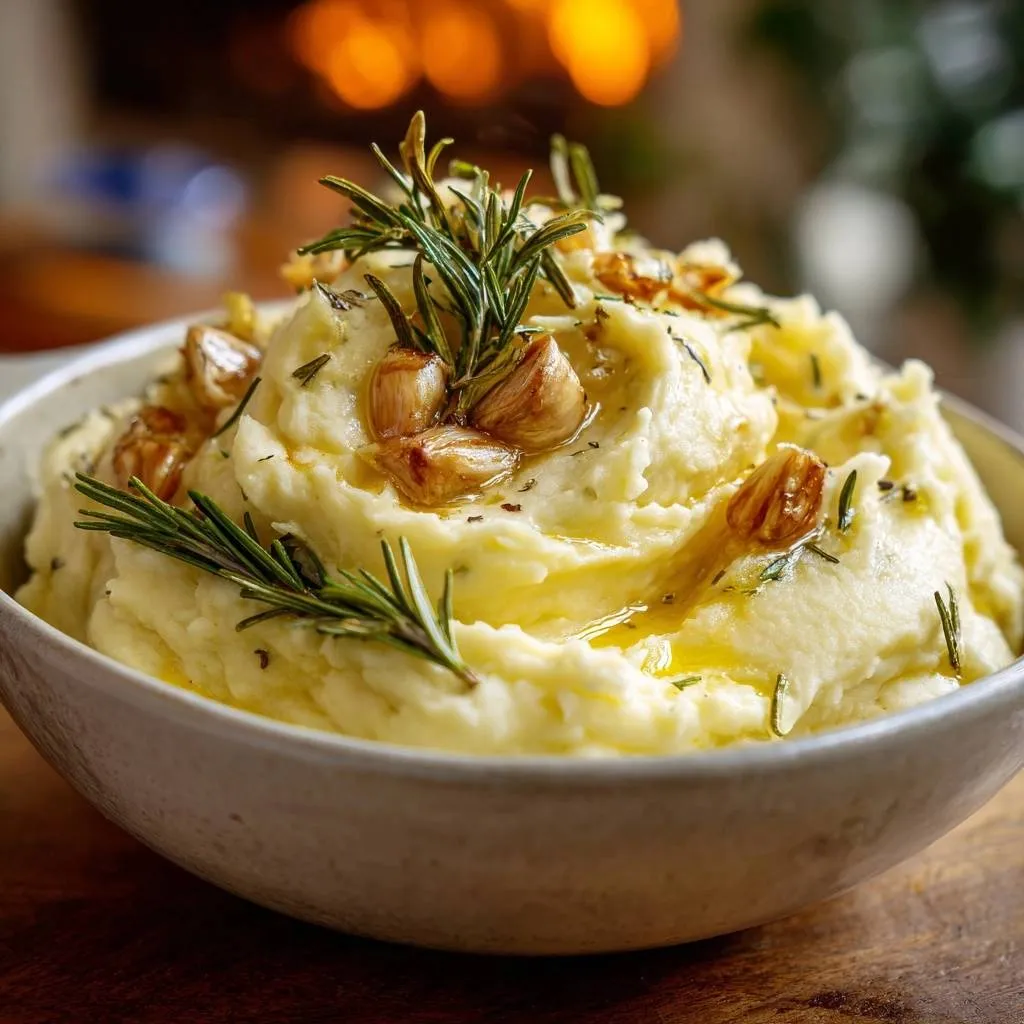
Nothing ruins a holiday dinner or a cozy Sunday roast faster than a scoop of gluey, sticky mashed potatoes. You know the kind—they have the consistency of wallpaper paste and a heavy, gummy mouthfeel that sticks to the roof of your mouth. It is a common kitchen heartbreak, but I promise you that achieving professional, cloud-like results is actually quite simple once you understand one specific secret.
The key to these Roasted Garlic and Rosemary Mashed Potatoes isn’t just about how much butter you use, though we certainly don’t skimp there. Instead, the secret lies in the “Steam-Dry” method. By removing every drop of excess water before you add your fats, you create a potato that is structurally superior and ready to soak up flavor like a sponge. This dish is earthy, aromatic, and carries a velvety texture that feels incredibly luxurious.
If you want to ensure your potatoes stay fluffy and light, you must treat the starch with respect. My biggest tip for success is to ditch the electric mixer or food processor entirely. High-speed blades shear the starch molecules, turning a beautiful side dish into a sticky mess. Stick to a ricer or a hand masher, and you will see a massive difference in the final result. Let’s get into the science of why this works so well.
The Science of Starch: Why Potatoes Turn Gummy
To understand a great mash, we have to look at the cellular biology of the potato. Potatoes are packed with starch granules composed of two molecules: amylose and amylopectin. When you boil a potato, these granules swell and soften. However, if you agitate them too aggressively—like using a blender—those granules burst. This releases the amylose into the surrounding liquid, creating a literal “glue” that results in that dreaded gummy texture.
The type of potato you choose also dictates the starch behavior. I always reach for Yukon Golds for this specific recipe. While Russets are very starchy and “floury,” they can sometimes fall apart too easily and become watery. Waxy Red potatoes, on the other hand, hold their shape too well and can be difficult to mash smoothly. Yukon Golds sit right in the middle; they have a natural buttery flavor and a medium starch content that yields a creamy yet stable consistency.
By using the right tool and the right potato, you control how much starch is released. You want just enough to hold the cream and butter together, but not so much that the dish becomes elastic. Think of it as building a delicate structure rather than just smashing vegetables. When you treat the starch gently, the reward is a mash that feels light on the tongue but rich in flavor.
Essential Components for Roasted Garlic and Rosemary Mashed Potatoes
Quality ingredients make a world of difference when the recipe is this focused. For the rosemary, you really want to use fresh sprigs rather than the dried stuff in the jar. Dried rosemary can feel like eating pine needles even after it’s cooked, whereas fresh minced rosemary softens beautifully and releases a floral, woodsy aroma that permeates the warm potatoes.
Temperature management is another crucial factor for a silky finish. You should always warm your heavy cream and melt your butter before they ever touch the potatoes. If you pour cold cream into hot, mashed potatoes, it can cause the starches to seize and the temperature of the dish to plummet. Warmed liquids emulsify much more easily, ensuring every bite is consistently creamy and seasoned throughout.
Selecting and Preparing the Garlic Bulbs
Garlic undergoes a total chemical transformation in the oven through the Maillard reaction. Raw garlic contains allicin, which gives it that sharp, pungent bite. However, when you roast the whole bulb, those compounds break down and the natural sugars caramelize. What was once sharp becomes a sweet, nutty, and spreadable paste that blends seamlessly into the mash.
When you are at the grocery store, look for garlic bulbs that feel heavy for their size and are firm to the touch. Avoid any bulbs that have green sprouts peeking out or feel papery and hollow. You want high oil content in the cloves so they turn into a rich “confit” style paste in the oven. This provides the backbone of flavor for the entire dish.
The Roasting Phase: Developing Deep Aromatics
Roasting the garlic is the first step because it takes the longest, but it is entirely hands-off. By cutting the tops off the bulbs, you expose the individual cloves to the heat and the olive oil. Wrapping them tightly in foil creates a mini-steamer environment. At 400°F, the garlic softens to a jam-like consistency without the exterior skins burning or becoming bitter.
Don’t throw away the golden oil that collects at the bottom of the foil packet! That oil is now infused with roasted garlic flavor. I love to save it and drizzle it over the finished potatoes right before serving. It adds a beautiful sheen and an extra punch of aromatics that makes the dish look like it came straight out of a high-end bistro.
The Boiling Process: Cold Water Start and Salting
It might be tempting to drop your potatoes into already boiling water to save time, but that is a mistake. Starting potatoes in cold water ensures that the outside and the inside of the cube cook at the same rate. If you start with hot water, the exterior will overcook and turn mushy before the center is even tender, leading to an uneven texture in your mash.
You also need to season the water heavily with sea salt. Think of it like cooking pasta; this is your only chance to season the potato from the inside out. As the potatoes hydrate and soften, they pull that salt into their cellular structure. If you only salt at the very end, the flavor will sit on the surface rather than being deeply integrated into the dish.
The Steam-Dry Method: Eliminating Excess Moisture
This is the most important step for anyone who wants to avoid watery potatoes. After you drain the potatoes in a colander, do not immediately start mashing them. Instead, put the drained potatoes back into the hot pot and place it over low heat for about two minutes. Shake the pot constantly so the potatoes don’t stick or brown.
You will see steam rising rapidly from the pot—this is the excess surface moisture evaporating. By “drying” the potatoes this way, you are essentially making room within the starch cells. When you finally add the butter and cream, the potatoes will drink them up instantly. This results in a much more intense flavor and a texture that stays fluffy even as it sits on the table.
Mechanical Breakdown: Ricers vs. Hand Mashers
If you are looking for that perfectly smooth, lump-free, “cloud” texture, a potato ricer is the gold standard. It pushes the cooked potato through tiny holes, breaking it down into small grains without overworking the starch. It is the secret weapon of professional chefs. If you don’t have one, a traditional hand masher works well too, though it will leave a bit more rustic texture.
When using a hand masher, use a firm, vertical pressing motion. Avoid the temptation to “whip” the potatoes or stir them vigorously with the masher. The goal is to break the chunks down with as few strokes as possible. Whatever you do, stay away from electric hand mixers. They are far too aggressive and will almost certainly trigger that gummy starch release we worked so hard to avoid.
Step-by-Step: Integrating Fats and Herbs
Once your potatoes are riced or mashed, it is time to fold in the flavor. I always add the melted butter first. The fat coats the starch granules, which helps prevent them from bonding together and becoming sticky when the liquid is added. It is a protective layer that ensures a silky mouthfeel. Use a flexible spatula to gently fold the butter in until it is just absorbed.
Next, slowly pour in the warmed heavy cream, the roasted garlic paste, and the minced rosemary. Use a light hand here. You aren’t beating the potatoes; you are gently incorporating the ingredients until the mixture looks glossy and smooth. If you see the potatoes starting to look shiny or “long” when you lift the spatula, stop immediately—that is a sign of over-mixing.
Plating for Visual Impact and Texture
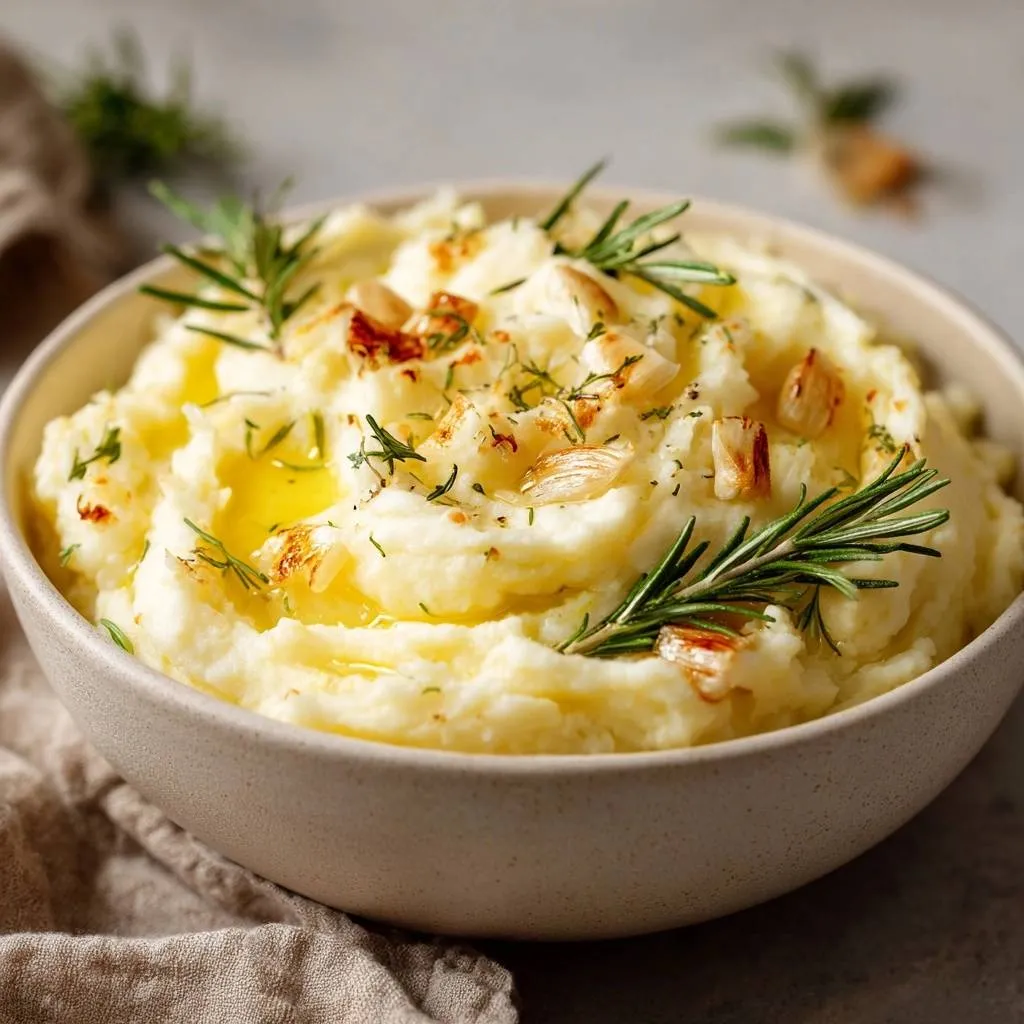
Presentation is half the fun with a dish this aromatic. Transfer the mash to a wide, shallow serving bowl rather than a deep one. Use the back of a large spoon to create deep, swirling “valleys” across the surface. These ridges aren’t just for looks; they provide the perfect place for olive oil or extra melted butter to pool, ensuring every scoop gets a bit of that liquid gold.
Top the dish with the whole roasted garlic cloves you set aside earlier. They look stunning and offer a concentrated burst of flavor for anyone lucky enough to snag one. Add a few fresh sprigs of rosemary for a pop of green and a final crack of black pepper. The contrast between the white, fluffy potatoes and the golden garlic makes for a centerpiece-worthy side dish.
Troubleshooting Common Texture Issues
Even the best cooks run into trouble sometimes. If your mash feels too thick or stiff, don’t panic. Simply whisk in a tablespoon or two of warm cream until it reaches your desired consistency. If you accidentally over-salted the water, you can balance the flavor by adding a bit more unsalted butter or a tiny splash of cream to mellow out the saltiness.
However, if the potatoes have already become gummy, there is no way to “un-glue” them. The starch molecules have already been sheared. In this case, your best bet is to repurpose them. Spread the gummy potatoes into a pan, let them cool, and then fry them up as potato pancakes the next morning. The crispy exterior will hide the interior texture perfectly!
Pairing Suggestions for Earthy Side Dishes
These potatoes are quite bold thanks to the rosemary and roasted garlic, so they pair best with hearty, savory proteins. They are a match made in heaven for roasted lamb or a slow-braised beef short rib. The acidity in a red meat gravy cuts through the richness of the heavy cream and butter beautifully, creating a balanced plate.
You could also serve these alongside an herb-crusted chicken or a thick-cut roasted cauliflower steak. I generally recommend avoiding other heavy starches like pasta or rice on the same plate. Instead, round out the meal with something bright and crisp, like a lemon-dressed arugula salad or some sautéed green beans, to provide a fresh contrast to the earthy potatoes.
Make-Ahead Logistics and Reheating Protocols
If you are hosting a big dinner, you can absolutely make these an hour or two in advance. The best way to keep them warm without drying them out is to place them in a slow cooker on the “warm” setting. If you don’t have one, you can place the bowl over a pot of simmering water (a double boiler) and cover it tightly with foil. This keeps them hot and moist without scorching the bottom.
For leftovers, the stovetop is your friend. Put the potatoes in a small saucepan over low heat and add a splash of milk or cream. Stir gently as they warm up to restore the emulsion. Avoid the microwave if possible, as it tends to heat unevenly and can make the edges of the potatoes dry and crusty. A little extra moisture and low heat will make them taste just as good as day one.
Frequently Asked Questions
Can I use Red potatoes instead of Yukon Gold?
You can use Red potatoes, but the texture will be significantly different. Red potatoes are waxy and hold their shape very well, which makes them harder to mash into a smooth, fluffy consistency. You will likely end up with a more “chunky” or rustic mash. If you use them, be extra careful not to overwork them while trying to get the lumps out, or they will turn gummy quickly.
How do I prevent the rosemary from being too crunchy?
The key is to mince the rosemary as finely as possible. You want it to be almost a dust. When you fold the rosemary into the hot, steaming potatoes, the residual heat will soften the herb and release its oils. If you find the texture distracting, you can steep the rosemary sprigs in the heavy cream while you warm it, then strain the herbs out before adding the infused cream to the potatoes.
Can I substitute the heavy cream for a non-dairy alternative?
Yes, you can use alternatives, but keep in mind that heavy cream provides a specific fat content and thickness. Full-fat oat milk or a plain, unsweetened soy milk are the best substitutes because they have a neutral flavor profile. Avoid coconut milk unless you want a distinct coconut flavor in your potatoes. Always ensure the alternative is warmed before adding it to the mash to maintain the temperature.
Why did my garlic turn bitter in the oven?
Garlic turns bitter if it burns. This usually happens if the oven temperature is too high or if the bulb isn’t wrapped tightly enough in foil, allowing the delicate skins to scorch. Ensure your oven is calibrated to 400°F and that the garlic is tucked away in a sealed foil pouch. If the cloves look dark brown or black rather than golden, they are likely burnt and should be discarded.
Is it necessary to peel the potatoes?
For this specific recipe, peeling is highly recommended. The goal is a silky, professional, “cloud-like” texture, and potato skins will interrupt that smoothness. If you prefer a rustic, farmhouse-style mash, you can leave the skins on, but you won’t be able to use a potato ricer. If you leave the skins on, make sure to scrub the potatoes very well before boiling to remove any dirt or grit.
Roasted Garlic and Rosemary Mashed Potatoes
Course: Side DishCuisine: AmericanDifficulty: easy6
servings15
minutes40
minutes55
MinutesAmerican
Ingredients
3 pounds Yukon Gold potatoes, peeled and cubed
2 heads of garlic (one for the mash, one for whole-clove garnish)
4 tablespoons olive oil, divided
1/2 cup unsalted butter, melted
1 cup heavy cream, warmed
3 sprigs fresh rosemary, finely minced
2-3 additional sprigs fresh rosemary, for garnish
1 teaspoon sea salt (plus more for boiling water)
1/2 teaspoon cracked black pepper
Directions
- Preheat your oven to 400°F. Cut the tops off both garlic heads to expose the cloves. Place them on a piece of foil, drizzle with 2 tablespoons of olive oil, wrap tightly, and roast for 35-40 minutes until the cloves are soft, fragrant, and golden brown.
- While garlic roasts, place cubed potatoes in a large pot and cover with cold water by at least an inch. Add a generous pinch of salt. Bring to a boil, then reduce heat and simmer for 15 to 20 minutes until fork-tender.
- To solve the gummy texture problem, drain the potatoes thoroughly in a colander. Return the drained potatoes to the hot pot over low heat for 2 minutes. Shake the pot constantly to evaporate every drop of excess surface moisture. This ensures the potatoes absorb the fats rather than becoming watery.
- Squeeze the roasted garlic cloves out of their skins. Take the cloves from one head and mash them into a smooth paste. Keep the cloves from the second head whole for the final visual presentation.
- Use a potato ricer or a hand masher to break down the potatoes into a bowl. Never use a blender or food processor, as the high speed shears the starch molecules and creates a gummy mess.
- Gently fold in the melted butter, warmed heavy cream, roasted garlic paste, and minced rosemary. Use a spatula to incorporate until just combined and silky. Season with salt and pepper.
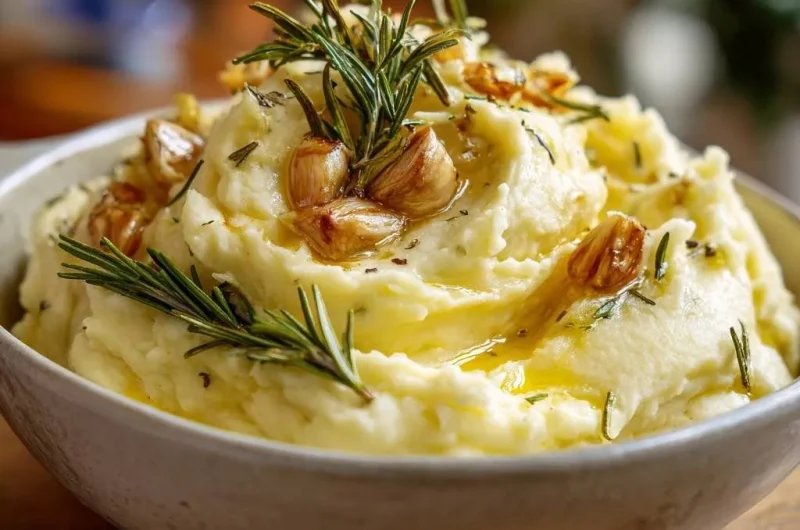
- Transfer to a serving bowl. To match the visual finish, create deep swirls with a spoon. Top with the reserved whole roasted garlic cloves and fresh rosemary sprigs. Finish with a generous drizzle of the remaining olive oil (or the garlic-infused oil from the foil packet) so it pools in the ridges.
Notes
- To avoid a gummy texture, never use a food processor or blender. Ensure potatoes are steam-dried in the pot for 2 minutes after draining to remove excess moisture.