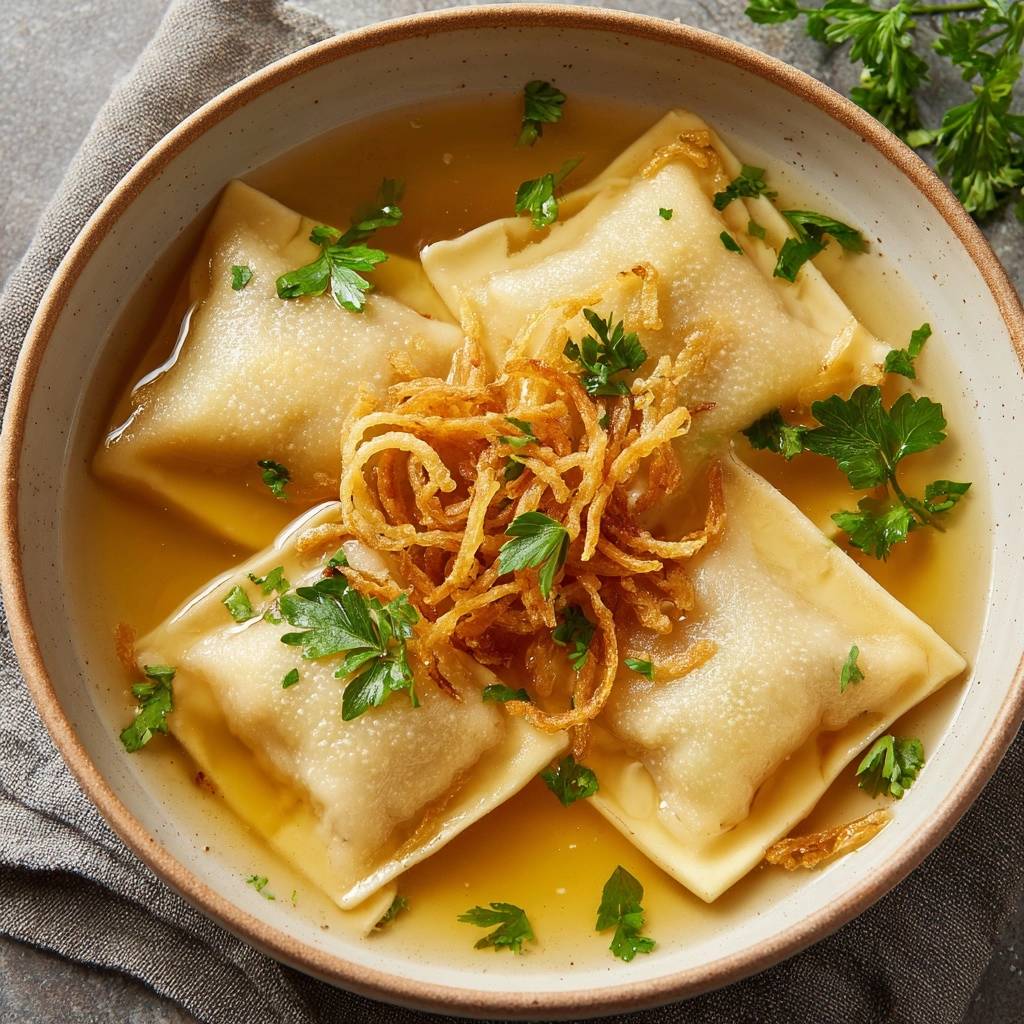
Imagine a bowl of steaming, golden broth where oversized, silky pasta pillows rest just beneath the surface. As you take your first bite, the rich, savory filling melts away, contrasted sharply by the intense, salty crunch of golden fried onions. This is the soul of Swabian comfort food, a dish that feels like a warm hug on a chilly afternoon.
While these German “giant ravioli” are incredibly satisfying, many home cooks struggle with the delicate dough. There is nothing more frustrating than watching your beautiful stuffed pasta explode in the pot, leaving you with a bowl of empty dough and loose filling. The secret to perfect Maultaschen is all about the simmer temperature, not the intensity of the boil.
I’ve found that the most common mistake is treating these like dried penne. Because the filling is already dense and the dough is fresh or par-cooked, a rolling boil creates internal steam pressure that rips the seams apart. By using a gentle poaching method, you ensure the seals stay intact and the filling remains juicy and flavorful every single time.
The Anatomy of Traditional Stuffed Pasta
Maultaschen are often called the German answer to ravioli, but they carry a much heartier presence. These large, square pockets are traditionally stuffed with a mixture of minced meat, smoked meat, spinach, and breadcrumbs. They are significantly larger and denser than their Italian cousins, making them a true centerpiece rather than a side dish.
Legend calls them “Herrgottsbescheißerle,” or “God-cheaters,” because the monks who created them supposedly hid meat inside the dough to eat it during Lent. While you can find many ways to serve them, presenting them in a crystal-clear broth is the gold standard. This method highlights the quality of the pasta and allows the clean flavors of the filling to shine without being masked by heavy sauces.
Essential Components for Savory Maultaschen in Clear Broth
Since this recipe relies on just a few elements, the quality of your ingredients will dictate the final result. You want a broth that is deeply flavorful but visually clear. A cloudy broth often tastes muddy, whereas a clarified, high-quality base provides a sophisticated backdrop for the savory pasta.
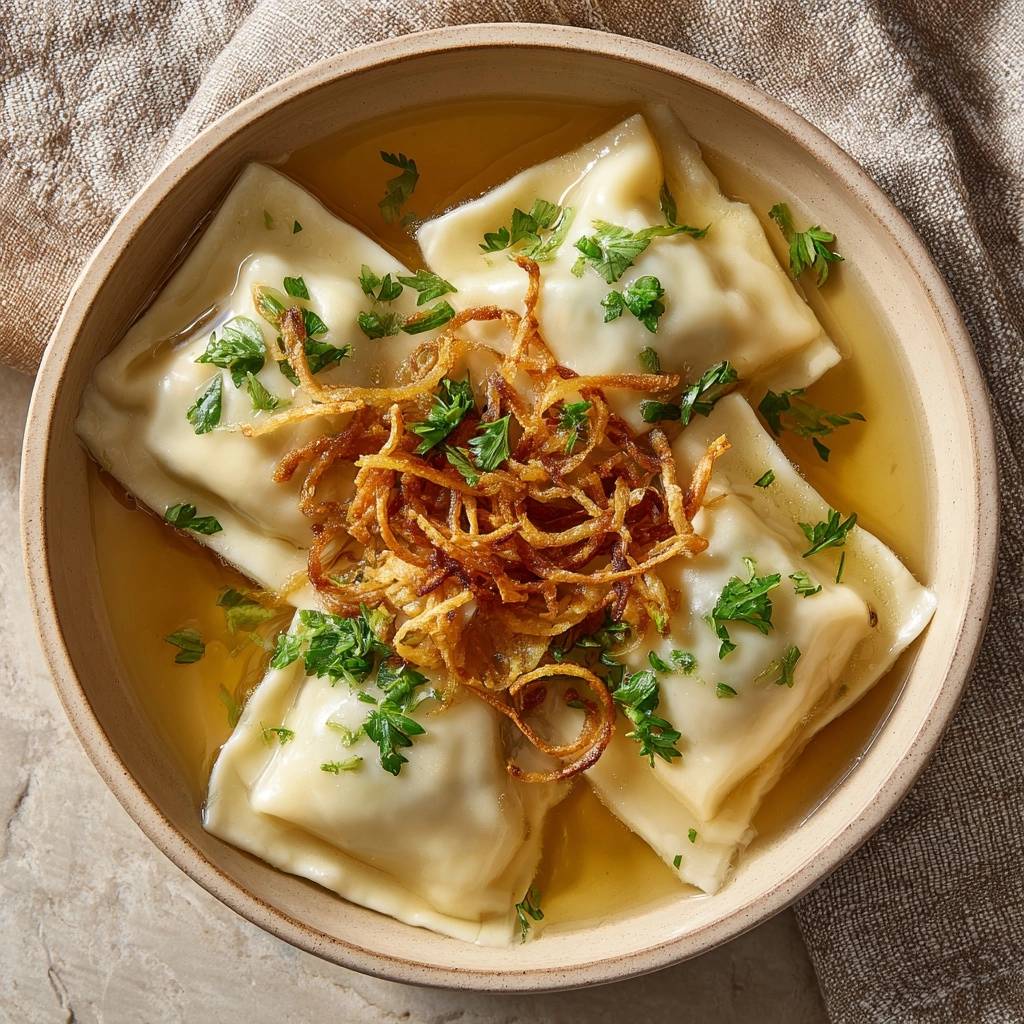
Fresh Italian parsley is another non-negotiable. Unlike curly parsley, which can be tough, the flat-leaf variety offers a bright, peppery hit that cuts through the richness of the meat. When you tear the leaves by hand rather than mincing them into dust, you release the oils more effectively, adding a fresh aroma the moment the herb hits the hot liquid.
Selecting the Right Broth Base
A high-quality beef broth offers a robust, traditional flavor that pairs perfectly with meat-filled pasta. However, if you are using vegetable-stuffed Maultaschen, a rich mushroom or vegetable stock works beautifully. The broth acts as the primary seasoning agent for the dough, so it must be well-balanced.
If you’re using store-bought broth, look for “low sodium” versions. This gives you total control over the salt levels. As the broth simmers and evaporates slightly, the saltiness concentrates, so it’s always better to season at the very end of the process.
The Role of Flour-Dusted Onions
The crispy onion garnish isn’t just for decoration; it provides the essential texture that makes this dish addictive. Tossing the thinly sliced onions in all-purpose flour is the secret to that “shatter-crisp” finish. The flour absorbs surface moisture, allowing the onion to dehydrate and crisp up quickly in the oil.
Without the flour, onions tend to go limp the moment they hit the steam rising from the broth. This light coating creates a protective barrier, ensuring that even the last bite of your meal still has a bit of that satisfying crunch.
The Science of the Gentle Poach
Cooking Maultaschen is an exercise in patience. When water boils vigorously, the physical agitation knocks the pasta against the sides of the pot and other pieces of pasta. More importantly, the high heat causes the air and moisture inside the filling to expand rapidly, creating pressure that the dough seams simply cannot hold.
The “sweet spot” for poaching is around 180°F (82°C). At this temperature, the liquid is barely shimmering with tiny bubbles. This gentle heat penetrates the thick filling of the Maultaschen without causing the structural failure that leads to a “burst” pasta. You want the dough to hydrate and the center to get hot, not for the pasta to fight for its life in a whirlpool.
Step-by-Step: Achieving the Perfect Simmer
Start by preparing your onions, as they need a moment to drain and crisp up fully. Use a mandoline to get paper-thin slices; uniform thickness ensures they all fry at the same rate. Once they are coated in flour and shaken free of excess, fry them in small batches. You’ll know they’re ready when they turn a deep, autumnal gold.
While the onions rest on a paper towel, bring your broth to a boil in a wide pot. A wider pot is better than a deep one because it gives the Maultaschen more “personal space,” preventing them from sticking together. Once the broth reaches a boil, taste it. It should be seasoned enough to enjoy as a soup on its own.
Immediately turn the heat down to low. Wait for the rolling bubbles to subside into a gentle shimmer. Carefully slide the pasta into the liquid. You’ll notice the dough looks opaque at first, but as it poaches for 8 to 10 minutes, it will become slightly more translucent and supple. When they float to the top, they are heated through and ready for the bowl.
Avoiding Common Maultaschen Mistakes
If your broth looks cloudy after cooking the pasta, it’s usually because too much flour from the dough or the onions found its way into the pot. You can fix this by straining the broth through a fine-mesh sieve or cheesecloth before serving. It takes an extra minute but restores that “restaurant-quality” clarity.
For those using frozen Maultaschen, do not thaw them first. Thawing makes the dough gummy and prone to tearing. Instead, slide them directly into the shimmering broth and add 3 to 4 minutes to the poaching time. Just keep a close eye on the temperature to ensure the broth doesn’t accidentally climb back up to a boil.
Flavor Variations and Regional Swaps
While the clear broth is the most elegant preparation, you can customize the flavor profile easily. A tiny pinch of freshly grated nutmeg in the broth adds a classic Germanic warmth that complements the meat filling. Some regions also add a splash of apple cider vinegar to the broth for a subtle tang.
If you have leftovers, the most popular way to eat them the next day is “Maultaschen in der Pfanne.” Simply slice the cold pasta into strips and sauté them in butter with eggs. However, for a first-time experience, nothing beats the purity of the broth version to appreciate the craftsmanship of the stuffed pasta.
Make-Ahead Strategies and Storage
If you are hosting a dinner, you can fry the onions up to two hours in advance. Just keep them uncovered at room temperature; sealing them in a container while warm will make them soggy. The broth can also be prepared a day ahead and kept in the fridge.
Never store the cooked Maultaschen inside the broth. The dough will continue to absorb liquid like a sponge, becoming bloated and falling apart. Store the pasta and broth in separate airtight containers in the fridge for up to three days. When reheating, warm the broth first, then gently drop the pasta in just long enough to take the chill off.
What to Serve with Savory Maultaschen
Because this dish is quite hearty, you don’t need heavy side dishes. A traditional German cucumber salad (Gurkensalat) with a vinegar and dill dressing provides a refreshing, acidic contrast to the savory broth. The crispness of the cucumbers echoes the crunch of the fried onions.
A simple green salad with a sharp mustard vinaigrette also works wonders. Avoid serving bread on the side, as the Maultaschen already contain plenty of carbohydrates. The goal is to keep the sides light so the rich, meaty pockets remain the star of the show.
Expert Tips for Restaurant-Quality Presentation
To get that professional look, use wide, shallow bowls. Place three or four Maultaschen in the center first, then carefully ladle the broth around them. You want the pasta to look like little islands peeking out of the liquid rather than being completely drowned. This keeps the tops dry so the onions stay crunchy.
Mound the crispy onions right in the center of the pasta “islands.” This keeps them out of the broth for as long as possible. Finally, scatter the torn parsley leaves from a height to get an even, artistic distribution. The green against the golden broth and brown onions makes the dish pop visually.
Troubleshooting the Clear Broth
Why is my broth cloudy?
Cloudiness usually happens if the broth was boiled too hard or if the pasta was covered in excess flour. To keep it clear, always simmer gently and shake off any loose flour from the pasta before adding it to the pot. If it’s already cloudy, pouring it through a coffee filter or cheesecloth can help clear it up.
Can I use frozen Maultaschen for this recipe?
Yes, you can use frozen pasta without any issues. Do not thaw them beforehand, as this makes the dough sticky and fragile. Simply add them to the simmering broth while frozen and increase the poaching time by about 3 to 5 minutes. Use a meat thermometer to ensure the center has reached at least 165°F.
How do I keep the fried onions crispy for a crowd?
The key is to let them drain thoroughly on paper towels in a single layer. Do not stack them while they are hot, or the steam will make them soft. If you need to crisp them up again right before serving, put them in a 300°F oven for 2 to 3 minutes. Always salt them the second they come out of the oil to lock in the flavor.
What is the best way to cut the parsley for maximum flavor?
Avoid using a knife to finely mince the parsley. Instead, pick the leaves and roughly tear them with your hands. This bruises the leaves just enough to release their aromatic oils without turning them into a paste. The larger pieces also provide a better textural contrast and a more rustic, authentic look.
Optimal Serving Temperatures
This dish must be served immediately. The contrast between the hot broth, the tender pasta, and the cold, crunchy onions is the highlight of the experience. I highly recommend warming your bowls in a low oven or by rinsing them with hot water before plating. This prevents the broth from cooling down too quickly, giving you more time to enjoy the meal at its peak.
Savory Maultaschen in Clear Broth
Course: Main CourseCuisine: GermanDifficulty: easy4
servings20
minutes15
minutes35
Minutes380
kcalGerman
Ingredients
1 package (approx. 12-16 oz) large square meat or vegetable stuffed pasta (Maultaschen)
6 cups high-quality beef or vegetable broth
1 large yellow onion, very thinly sliced (preferably using a mandoline)
1/2 cup neutral oil (for frying)
2 tablespoons all-purpose flour
1 bunch fresh Italian parsley, leaves picked and roughly torn
Salt and black pepper to taste
Directions
- Prepare the Crispy Onions: Toss the thinly sliced onions in a bowl with the flour until every strand is evenly coated. Shake off any excess flour. In a small skillet or saucepan, heat the oil over medium-high heat. Once the oil is shimmering, fry the onions in small batches until they are a deep golden brown and crispy. Use a slotted spoon to transfer them to a paper-towel-lined plate. Season immediately with a pinch of salt.
- Heat the Broth: In a large, wide pot, bring the broth to a boil. Taste the broth and season with salt and pepper as needed. Once boiling, immediately reduce the heat to low. You want the liquid to be barely shimmering with tiny bubbles, not a rolling boil.
- Poach the Pasta: Carefully slide the Maultaschen into the hot broth. This is the critical step: do not let the liquid return to a boil. A hard boil creates internal steam pressure and physical agitation that rips the dough seams apart.
- Simmer Gently: Poach the pasta for 8 to 10 minutes. The Maultaschen are ready when they float to the surface and the centers are heated through.
- Assemble: To match the visual presentation, place 3 to 4 large pasta squares in a wide, shallow bowl. Ladle the hot, clear broth over them until the pasta is partially submerged but the tops are still visible.
- Garnish: Top the center of the pasta with a generous mound of the crispy fried onions. Finish by scattering fresh parsley leaves over the entire bowl for a bright, herbal contrast. Serve immediately while the onions are still crunchy.
Notes
- The secret to perfect Maultaschen is avoiding a rolling boil. Use a gentle poaching method to ensure the seals stay intact and the filling remains juicy.