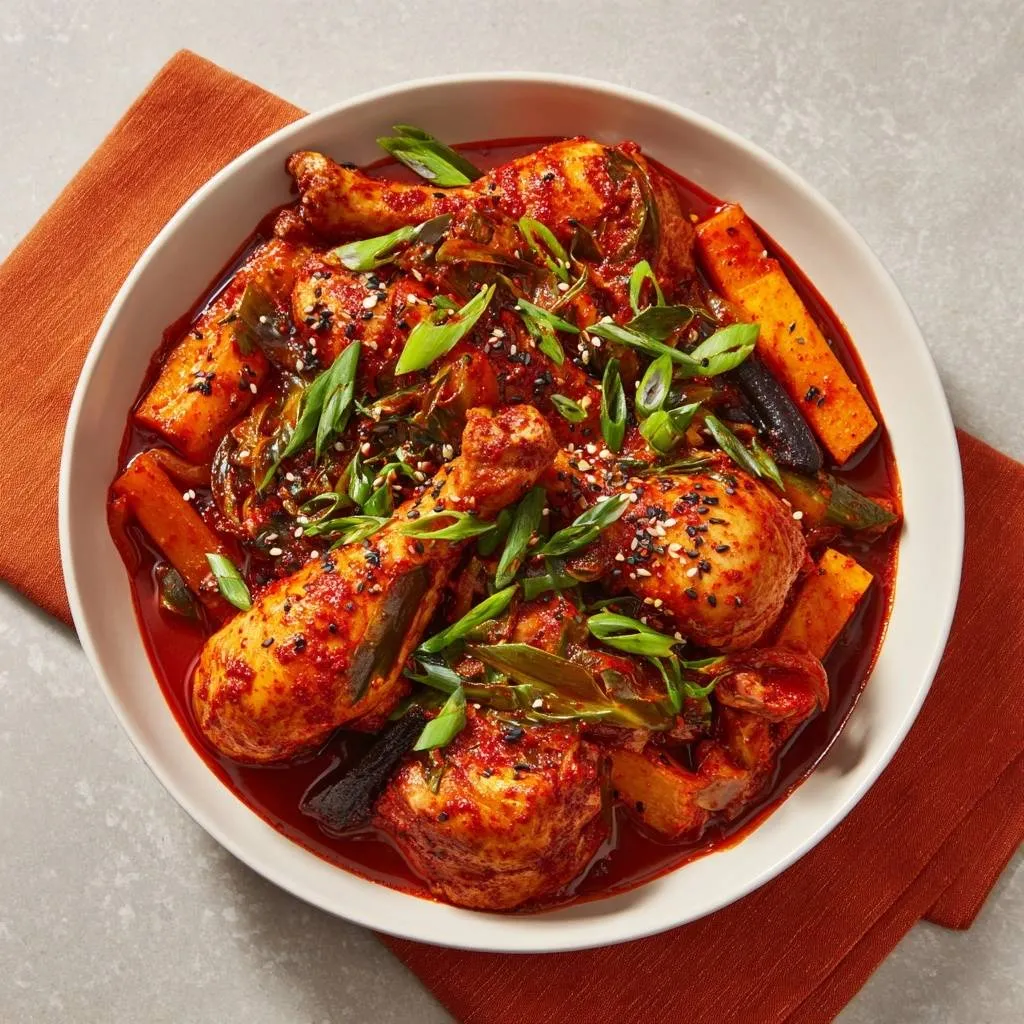
Imagine a deep, crimson glaze that clings to every curve of tender, bone-in chicken. As you lift a piece from the pot, the sauce doesn’t run off; it stays thick and vibrant, promising a punch of savory heat. This is Dakdoritang, a beloved Korean comfort food that turns humble ingredients into a communal masterpiece.
While many home versions end up as a thin, watery soup, this recipe focuses on a specific reduction technique. We’re aiming for a rich, concentrated braise where the vegetables are soft but intact. It’s the kind of meal that fills the kitchen with a warm, garlicky aroma and brings everyone to the table with an appetite.
The secret to that restaurant-quality finish isn’t a hidden ingredient, but a simple two-step process. By par-boiling the chicken first and finishing the simmer without a lid, you control the clarity and thickness of the sauce. This ensures the gochugaru and potato starches create a heavy, velvet-like cling rather than a muddy broth.
The Anatomy of a Perfect Spicy Korean Glaze
A truly great Spicy Korean Braised Chicken balances three distinct pillars: heat, salt, and a subtle, rounded sweetness. The foundation of this flavor profile relies on the interplay between gochujang and gochugaru. Gochujang, the fermented chili paste, provides the thick body and deep umami, while gochugaru, the dried flakes, adds a clean, smoky heat and that iconic bright red color.
Using bone-in chicken is absolutely non-negotiable for this dish. As the drumsticks and thighs simmer, the collagen and marrow break down, releasing natural gelatin into the liquid. This gelatin adds a silky mouthfeel that boneless breasts simply cannot provide. It also prevents the meat from drying out during the 45-minute cooking process.
The sauce undergoes a transformation as it cooks. Initially, it looks like a thin tea, but as the water evaporates and the sugars in the mirin and onion caramelize, it darkens. The result is a complex glaze that tastes like it spent all day on the stove, even though it only takes under an hour.
Essential Components for Authentic Dakdoritang
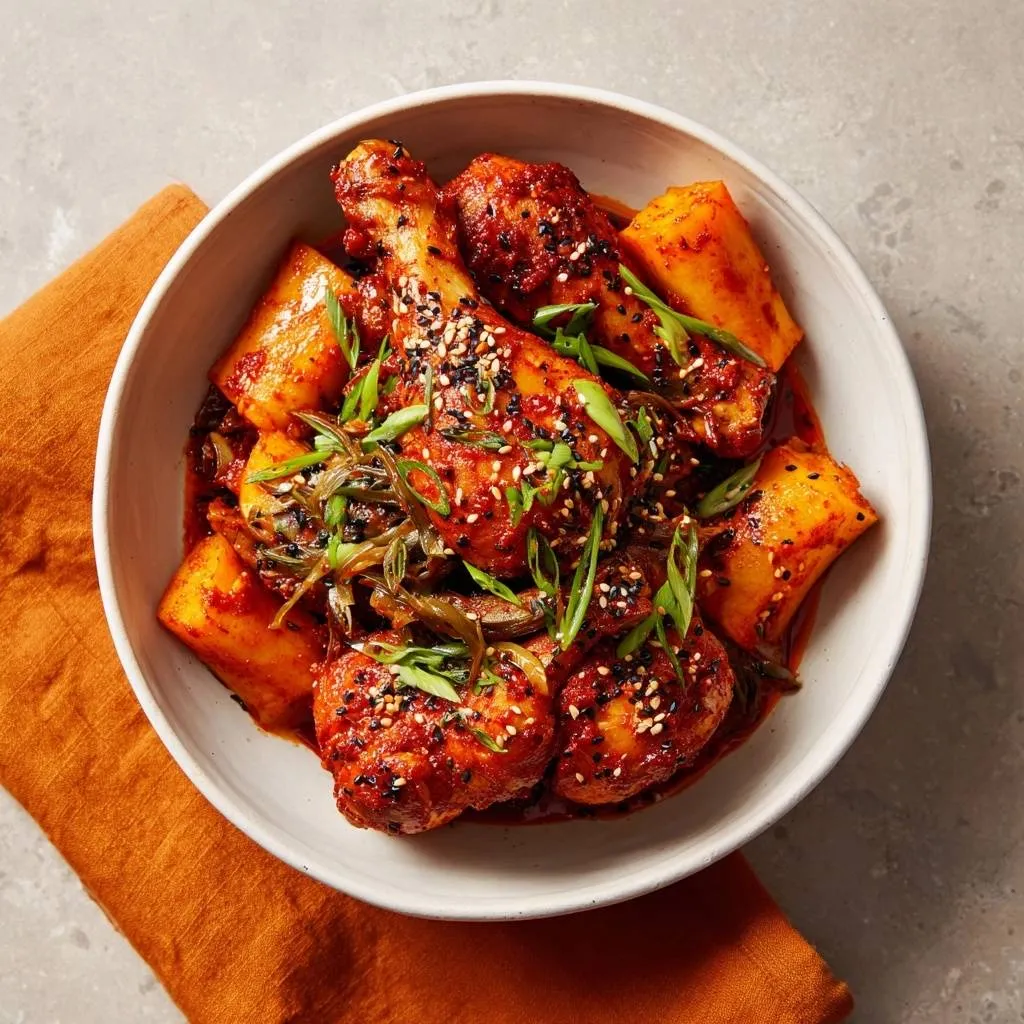
Success starts with how you prep your vegetables. You must cut the potatoes and carrots into thick, substantial pieces. If you slice them too thin, they’ll disintegrate into mush before the chicken is fully cooked. Large batons or rounds can withstand the long braise, absorbing the spicy sauce while maintaining their creamy centers.
Aromatics are the heartbeat of this dish. You’ll want to use fresh garlic and ginger rather than the powdered stuff from the pantry. Freshly minced garlic provides a sharp, pungent bite that cuts through the richness of the chicken fat, while ginger adds a subtle floral note that brightens the entire pot.
Don’t overlook the onions. As they simmer, they melt into the sauce, providing a natural sweetness that balances the fiery chili flakes. This creates a layered flavor where the heat doesn’t just burn; it glows with a savory depth.
Why Par-Boiling is the Secret to Clarity
If you’ve ever noticed gray foam or oily slick on top of your stews, those are denatured proteins and excess fats. In Korean cooking, par-boiling the chicken for five minutes is a pro move that changes everything. This quick boil coaxes out the “impurities” that usually make a sauce look muddy or dull.
After the five-minute boil, you must drain the chicken and rinse it under cold water. This stops the cooking process and washes away any lingering bits of bone or fat. It might seem like an extra step, but it’s the difference between a “home-style” stew and a professional-grade braise.
By starting with clean, par-boiled meat, your final sauce remains a vibrant, translucent red. The flavors of the ginger and garlic can shine through without being masked by a heavy, greasy aftertaste. It’s a technical deep-dive that pays off in every single bite.
Step-by-Step: Preparing the Spicy Korean Braised Chicken
Phase 1: Creating the Concentrated Seasoning Paste
Before you even turn on the stove, whisk your gochujang, gochugaru, soy sauce, sugar, mirin, garlic, and ginger in a small bowl. Creating this concentrated paste ensures that every ingredient is perfectly emulsified. If you toss them into the pot separately, you risk clumps of chili paste that don’t dissolve evenly.
The sugar and mirin play a vital role here beyond just sweetness. They act as a bridge between the salty soy sauce and the spicy peppers. This pre-mixing step allows the flavors to begin melding together, ensuring a consistent heat level throughout the entire dish.
Phase 2: The Initial Covered Simmer
Once your par-boiled chicken and vegetables are in the pot, pour the paste over them and add the water. For the first 20 minutes, you must keep the lid on tight. This traps the steam inside, which is essential for softening the dense fibers of the carrots and the starchy core of the potatoes.
During this phase, the chicken begins to absorb the seasoning. The steam ensures the meat stays moist and succulent. You aren’t looking for much reduction yet; you’re simply building the foundation of the dish and ensuring everything is cooked through to the center.
Phase 3: The Uncovered Reduction for Maximum Cling
Now comes the most critical part of the “Never Watery” promise. Remove the lid and keep the heat at a steady medium simmer. Without the lid, the excess water begins to evaporate, concentrating the flavors. At the same time, the edges of the potatoes will start to slough off into the liquid.
These tiny particles of potato starch act as a natural thickener. Watch as the liquid transforms from a thin broth into a heavy, glossy glaze. You’ll know it’s ready when the sauce reaches the “nappe” stage, meaning it’s thick enough to coat the back of a spoon without immediately dripping off.
Troubleshooting Common Braising Obstacles
Sometimes potatoes cook faster than expected depending on the variety. If you notice your potatoes are becoming too soft before the sauce has thickened, simply scoop them out with a slotted spoon and set them aside. You can add them back in during the final two minutes to warm through.
If the sauce reduces too quickly and starts to look dry, don’t panic. Add a splash of water, a tablespoon at a time, to loosen it back up. Remember that different brands of gochugaru have varying heat levels; if it’s too spicy, a tiny extra pinch of sugar can help mellow the burn.
Optimal Texture: Managing the Potato Starch
The type of potato you choose matters. Waxy potatoes like Yukon Golds hold their shape beautifully, while starchy Russets will break down more and thicken the sauce faster. Most traditional recipes favor a middle-ground potato that offers a creamy texture without turning into mashed potatoes in the pot.
For a truly polished look, try “rounding” the edges of your potato batons with a peeler or knife. Removing the sharp corners prevents them from bumping into each other and breaking off into the sauce. This keeps the braising liquid smooth and prevents it from feeling “gritty” or overly starchy.
Traditional Pairings for Spicy Korean Braised Chicken
To fully enjoy that incredible sauce, you need a vehicle to soak it up. Short-grain white rice is the classic choice, but many Korean households serve this with heukmi-bap, which is a nutty, purple rice. The chewiness of the rice provides a perfect textural contrast to the tender chicken.
Since this dish is quite rich and spicy, serving it with cooling side dishes, or Banchan, is a great idea. Pickled radish (mu-ssam) or a simple seasoned bean sprout salad (sukju-namul) offers a refreshing crunch. These acidic and mild sides cleanse the palate between spicy bites of chicken.
Storage, Reheating, and Make-Ahead Strategies
Like many stews, Dakdoritang often tastes even better the next day. As it sits in the fridge, the spicy, garlicky flavors penetrate deeper into the chicken meat. Store any leftovers in an airtight container for up to three days for the best quality.
When reheating, do it on the stovetop over medium-low heat. The sauce will have thickened significantly in the fridge, so add a splash of water to help it return to its original glossy consistency. Avoid freezing this dish if possible, as cooked potatoes often become grainy and mealy once thawed.
Expert Tips for Spicy Korean Braised Chicken
How can I make this dish less spicy?
The best way to control the heat is to reduce the amount of gochugaru (chili flakes) while keeping the gochujang (paste) the same. The paste provides the essential body and saltiness of the sauce. You can also add an extra onion or more carrots, as their natural sugars will help balance the spice level.
Can I use chicken breast instead of thighs?
Chicken breast is much leaner and tends to dry out during a 45-minute braise. If you must use it, cut the breast into very large chunks so they take longer to overcook. However, for the most authentic and juicy results, bone-in thighs and drumsticks are highly recommended for their fat content and flavor.
What if my sauce is still too thin?
If you’ve reached the end of the cooking time and the sauce is still watery, try mashing one of the cooked potato pieces directly into the liquid. Stir it in well, and the released starch will instantly thicken the glaze. Alternatively, let it simmer uncovered for an extra five minutes on slightly higher heat.
Is there a substitute for Mirin?
If you don’t have mirin on hand, you can substitute it with a mixture of water and a pinch of sugar. Some cooks also use a splash of white grape juice. The goal is to provide a hint of sweetness and acidity that helps cut through the heavy fermented flavors of the chili paste.
Spicy Korean Braised Chicken
Course: Main CourseCuisine: KoreanDifficulty: easy4
servings15
minutes45
minutes60
Minutes440
kcalKorean
Ingredients
2 lbs chicken drumsticks and thighs (bone-in)
2 large potatoes, peeled and cut into thick batons/rectangles
1 large onion, sliced
2 carrots, cut into thick rounds
4 green onions, cut into 2-inch pieces (plus extra sliced diagonally for garnish)
1/2 cup gochujang (Korean red chili paste)
3 tablespoons gochugaru (Korean red chili flakes)
3 tablespoons soy sauce
2 tablespoons sugar
1 tablespoon rice wine (mirin)
4 cloves garlic, minced
1 teaspoon minced ginger
1.5 cups water
1 tablespoon sesame oil
1 tablespoon toasted black and white sesame seeds
Directions
- In a small bowl, whisk together the gochujang, gochugaru, soy sauce, sugar, rice wine, garlic, and ginger to create a thick seasoning paste.
- Place the chicken in a large pot of boiling water for 5 minutes to par-boil. Drain and rinse the chicken under cold water to remove excess fat and impurities. This ensures the final sauce is vibrant red and not muddy.
- Clean the pot and return the chicken to it. Add the potatoes, carrots, and onion.
- Pour the seasoning paste over the ingredients and add 1.5 cups of water. Stir to ensure the paste is distributed.
- Bring to a boil over medium-high heat. Once boiling, reduce heat to medium, cover with a lid, and simmer for 20 minutes.
- Remove the lid. This is the critical step for the “Never Watery” promise. Continue to simmer uncovered for another 15-20 minutes. The liquid will reduce, and the starch from the potatoes will thicken the sauce into a heavy glaze.
- During the last 5 minutes, add the 2-inch green onion pieces. Stir gently to coat them in the sauce without breaking the tender potatoes.
- Once the sauce is thick enough to coat the back of a spoon and the chicken is fully cooked, turn off the heat and stir in the sesame oil.
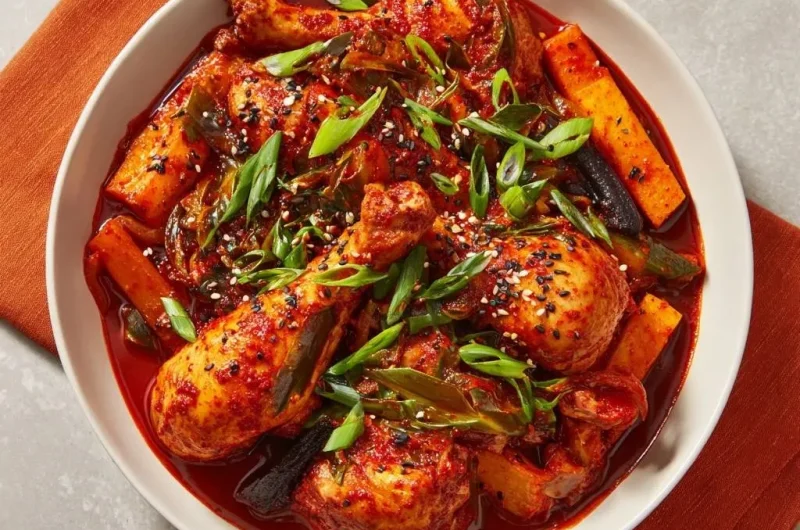
- Transfer to a shallow bowl. Garnish heavily with the black and white sesame seeds and the fresh diagonally sliced green onions as seen in the image.
Notes
- Par-boiling the chicken for 5 minutes is essential for a clean, vibrant red sauce. Simmering uncovered in the final stage allows potato starches to naturally thicken the glaze.