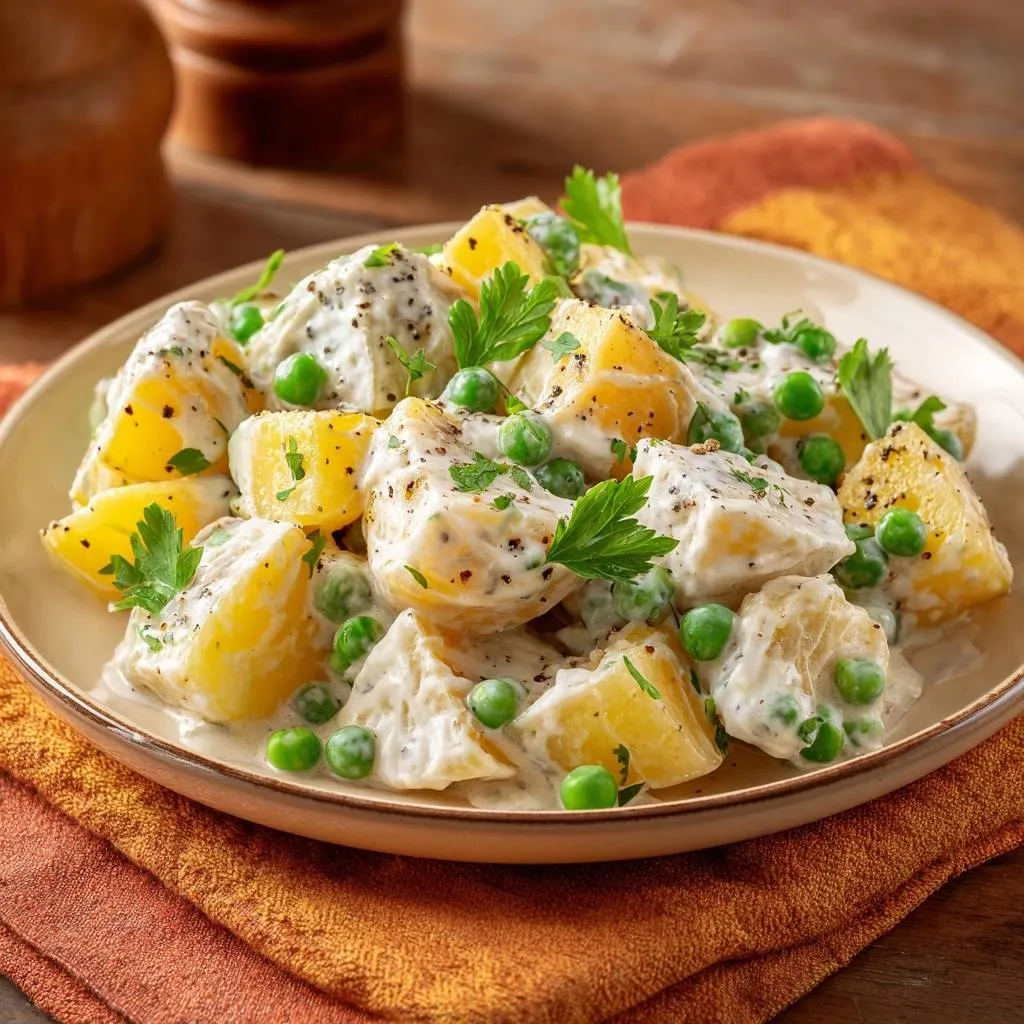
Imagine biting into a potato salad where every cube is perfectly tender, yet holds its shape with a velvety, thick coating that never slides off. You get the buttery richness of Yukon Golds paired with the bright, sweet pop of garden peas and a punch of fresh Italian parsley. It is the ultimate side dish for any gathering, but achieving that specific texture is often harder than it looks.
Most home cooks struggle with the dreaded “soggy bottom” where a pool of watery dressing collects at the base of the bowl. This happens because potatoes are full of internal moisture that leaks out as they cool, thinning your beautiful sauce. We are going to fix that today by using a professional technique that ensures your dressing stays exactly where it belongs.
The secret to this Creamy Herb and Pea Potato Salad is the “Steam-Dry” method. By letting the potatoes rest in a warm pot after draining, you allow the excess water to evaporate. This creates a slightly rough, starchy exterior that acts like a magnet for the mayonnaise and sour cream. It is a simple change that makes a massive difference in the final result.
The Science of the Steam-Dry Technique
When you boil a potato, the starch granules swell and absorb water. If you toss them with dressing immediately after draining, that trapped moisture eventually escapes and breaks the emulsion of your sauce. This results in a thin, oily mess rather than a rich, creamy coating. Therefore, the drying phase is the most important part of the entire process.
By returning the drained potatoes to the warm pot for five minutes, you use the residual heat to pull moisture away from the surface. You will actually see the potatoes turn from shiny and wet to a matte, slightly dusty appearance. This matte surface is essentially “starchy velcro.” It allows the fats in the mayonnaise and sour cream to bind tightly to the vegetable, ensuring every bite is perfectly seasoned.
Essential Components for a Balanced Potato Salad
A great salad requires a careful balance of fat, acid, and salt. We use high-quality mayonnaise for the base, but the addition of sour cream provides a necessary tang and a thicker body. Apple cider vinegar and Dijon mustard cut through the richness, providing a bright finish that keeps the dish from feeling too heavy on the palate.
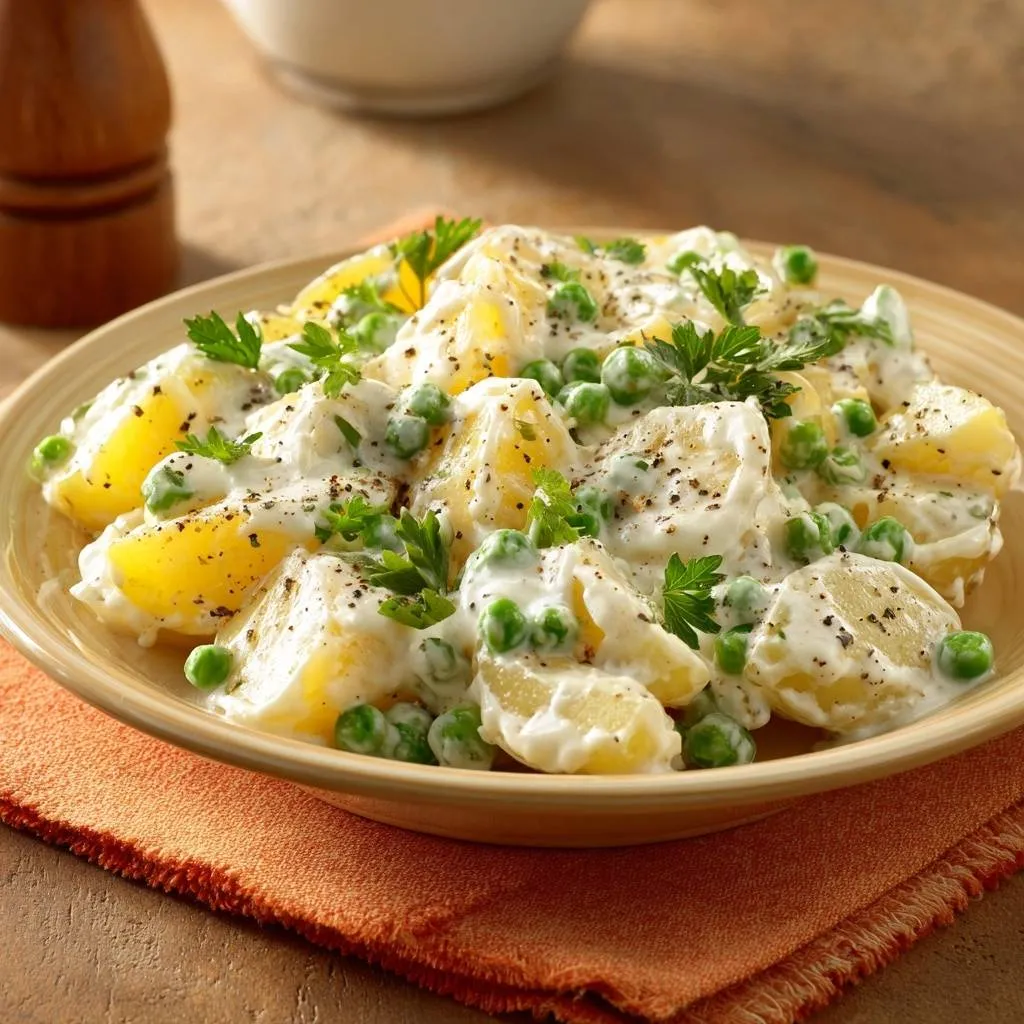
Texture is just as important as flavor in this recipe. We want a contrast between the soft, buttery potatoes and the firm, snappy peas. Using freshly cracked black pepper instead of fine table pepper adds a subtle heat and a nice visual speckle. These small details elevate the dish from a standard deli side to a centerpiece-worthy salad.
Selecting and Prepping Yukon Gold Potatoes
Yukon Golds are the gold standard for this recipe because they sit right in the middle of the starch spectrum. They are waxier than Russets, so they won’t crumble into mashed potatoes, but they are starchier than Red Bliss, which helps the dressing stick. Their natural buttery flavor means you don’t have to rely solely on the dressing for taste.
When prepping, aim for uniform 1.5-inch chunks. If your pieces vary too much in size, the small ones will turn to mush before the large ones are even cooked through. Consistency is the key to that perfect “fork-tender” bite where the potato yields easily but doesn’t fall apart when tossed.
The Role of Fresh Herbs and Sweet Peas
Fresh Italian parsley is non-negotiable here because it provides a grassy, clean flavor that dried herbs simply cannot replicate. It wakes up the heavy dressing and adds a vibrant green color. If you want to experiment, you can mix in some chives, but parsley should remain the primary aromatic for that classic profile.
Frozen sweet peas are actually superior to fresh or canned versions for this specific dish. They are flash-frozen at their peak, so they retain a bright green hue and a structural snap. Canned peas are far too soft and will likely get crushed during the folding process, turning your salad a muddy grey-green color.
Step-by-Step: Preparing the Creamy Herb and Pea Potato Salad
Boiling and Blanching for Maximum Texture
Always start your potatoes in a pot of cold, heavily salted water. If you drop potatoes into boiling water, the outside cooks too fast and becomes grainy while the inside stays raw. Starting cold ensures the potato heats evenly from the core to the skin. Once the water hits a boil, turn it down to a simmer so the potatoes don’t knock against each other and break.
Keep a close eye on the clock around the 10-minute mark. You want to pull them out the second a fork can slide in with just a tiny bit of resistance. During the final 60 seconds of cooking, toss your frozen peas right into the boiling water. This brief blanching “sets” their color and takes the chill off without making them mushy.
Executing the Five-Minute Steam-Dry Phase
After draining the potatoes and peas into a colander, give them a good shake to remove as much water as possible. Immediately dump them back into the pot you used for boiling, but keep it off the heat. The pot is still hot enough to act as a drying chamber. Let them sit there, uncovered, for five full minutes.
Give the pot a gentle shake every minute or so. This moves the potatoes around so the steam can escape from the pieces at the bottom. You are looking for the edges of the potatoes to look a little “fuzzy” or dry. This is the sign that the surface starch is ready to soak up your dressing like a sponge.
Whisking the Emulsified Herb Dressing
While the potatoes are drying, grab a small bowl and whisk together your mayo, sour cream, vinegar, mustard, and spices. You want this mixture to be completely smooth before it touches the potatoes. If you add the ingredients separately to the pot, you risk over-mixing the potatoes while trying to get the dressing even.
Use coarsely cracked black pepper for this step. The larger flakes provide little bursts of flavor that contrast beautifully with the creamy sauce. Once the potatoes have cooled slightly but are still warm, pour the dressing over them. Use a rubber spatula to fold everything together gently, lifting from the bottom so you don’t break the potato chunks.
Avoiding Common Potato Salad Mistakes
The most common mistake is overcooking the potatoes until they are falling apart. If you see the edges of the cubes rounding off in the boiling water, they are already too far gone. Another pitfall is under-salting the water. Potatoes are incredibly bland on their own, and they need to absorb salt while they cook, as seasoning them later only flavors the surface.
Finally, never skip the cooling period. If you add a mayonnaise-based dressing to piping hot potatoes, the heat will break the emulsion of the mayo. This causes the oil to separate, leaving you with a greasy salad. Wait until the potatoes are warm to the touch, but no longer emitting active steam, before you start mixing.
Flavor Variations and Ingredient Swaps
If you need a dairy-free version, you can use a high-quality vegan mayonnaise and swap the sour cream for a thick cashew-based cream. The flavor will be slightly nuttier, but the texture remains excellent. For those who love a bit of crunch, finely diced celery or radishes add a great structural contrast without interfering with the creaminess.
You can also play with the herb profile depending on what you are serving. Fresh dill is a fantastic addition if you are pairing the salad with grilled fish. If you want a bit of a kick, a teaspoon of prepared horseradish stirred into the dressing adds a sophisticated heat that pairs perfectly with roast beef or steak.
Optimal Pairings for a Summer Spread
This salad is quite rich, so it pairs best with main courses that have a bit of char or smoke. Grilled chicken thighs or a slow-smoked brisket are perfect partners. The acidity from the apple cider vinegar in the dressing helps cleanse the palate between bites of heavy, fatty meats.
It also works beautifully alongside charred summer vegetables like corn on the cob or grilled zucchini. Because the salad is served chilled or at room temperature, it provides a refreshing temperature contrast to food coming straight off the grill. It is a versatile side that feels at home at both a casual backyard burger night and a more formal outdoor dinner party.
Storage and Make-Ahead Preparation
You can absolutely make this salad ahead of time. In fact, letting it chill in the refrigerator for at least an hour allows the flavors to meld and the dressing to set even further. If you make it the day before, you might find the potatoes have soaked up a lot of the dressing. Simply stir in an extra tablespoon of sour cream before serving to loosen it back up.
Store leftovers in an airtight container in the fridge for up to three days. However, do not freeze this potato salad. The freezing process destroys the cellular structure of the potatoes, making them mealy, and the mayonnaise dressing will break and separate upon thawing. Always keep the bowl on ice if you are serving it outdoors to keep the mayonnaise at a safe temperature.
Expert Troubleshooting and Preparation Tips
Can I use Red Bliss potatoes instead of Yukon Gold?
Yes, you can use Red Bliss potatoes, but the texture will be slightly different. Red potatoes are very waxy and have less starch, so the dressing might not cling quite as heavily as it does to the Yukon Golds. If you use them, leave the skins on for a nice pop of color, but make sure to follow the steam-dry step strictly to help the dressing adhere.
Why is my dressing disappearing into the potatoes?
If the dressing seems to vanish, it usually means the potatoes were too hot when you mixed them. Hot potatoes are very porous and will drink up the liquid in the dressing. To fix this, let the salad cool completely, then fold in a little extra mayonnaise or a splash of milk to bring back that creamy exterior look.
How do I fix a salad that is too tangy?
If the vinegar or mustard tastes too sharp, you can balance it out with a tiny pinch of sugar. Don’t make it sweet, but a half-teaspoon of sugar can neutralize excess acidity. Alternatively, adding a bit more mayonnaise will increase the fat content, which naturally mellows out the sharp vinegary notes.
Can this potato salad be served warm?
While this recipe is designed to be served chilled or at room temperature, you can serve it warm. If you choose to do this, be very careful when folding the dressing in, as warm potatoes are much more fragile and prone to breaking. The dressing will also appear thinner when warm, so it won’t have that same thick, white coating.
How do I keep the peas from wrinkling?
Peas wrinkle when they are overcooked or exposed to air for too long while hot. By blanching them for only 60 seconds and then immediately mixing them with the dressing, you coat them in fats that help lock in their moisture. This keeps them looking plump and bright green even after a day in the refrigerator.
Creamy Herb and Pea Potato Salad
Course: Side DishCuisine: AmericanDifficulty: easy6
servings15
minutes15
minutes30
MinutesAmerican
Ingredients
3 pounds Yukon Gold potatoes, peeled and cut into 1.5-inch chunks
1 cup frozen sweet peas
1 cup high-quality mayonnaise
1/4 cup sour cream (for added thickness and tang)
2 tablespoons apple cider vinegar
1 tablespoon Dijon mustard
1/2 cup fresh Italian parsley, roughly chopped (reserve some whole leaves for garnish)
1 1/2 teaspoons coarsely cracked black pepper
1 teaspoon sea salt
1/2 teaspoon garlic powder
Directions
- Place the cubed potatoes in a large pot and cover with cold salted water. Bring to a boil, then reduce heat and simmer for 10 to 12 minutes until fork-tender but still holding their shape.
- During the last 60 seconds of boiling, add the frozen peas directly into the pot with the potatoes to blanch them.
- Drain the potatoes and peas thoroughly in a colander. Now, for the critical step to prevent sogginess: return the hot, drained mixture to the warm pot (off the heat). Let them sit uncovered for 5 full minutes. Shake the pot occasionally. This allows the steam to evaporate from the surface of the potatoes, creating a dry, starchy exterior that will “lock in” the dressing.
- While the potatoes steam-dry, whisk together the mayonnaise, sour cream, vinegar, mustard, garlic powder, salt, and 1 teaspoon of the cracked black pepper in a small bowl.
- Once the potatoes are no longer steaming and have cooled slightly (warm but not hot), add the chopped parsley to the pot.
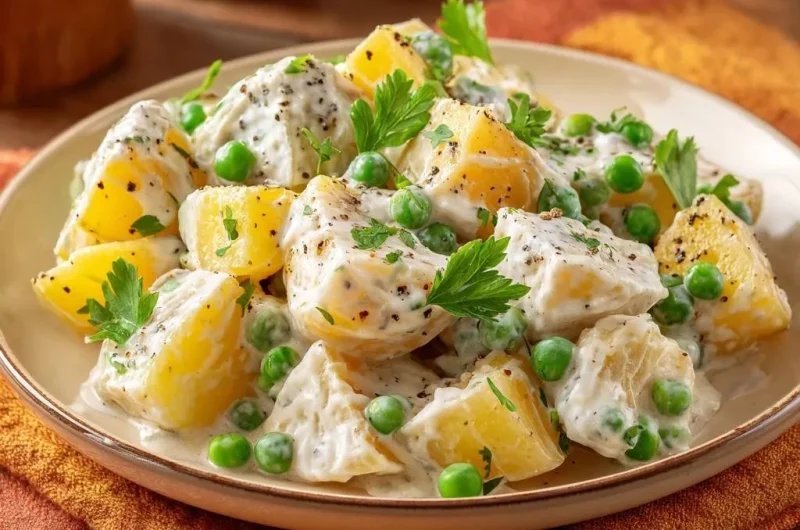
- Pour the dressing over the mixture and fold gently with a rubber spatula. Because the potatoes were properly dried, the dressing will emulsify with the surface starch to create the thick, velvety white coating seen in the image.
- Transfer to a serving bowl. Top with the remaining 1/2 teaspoon of coarsely cracked black pepper and reserved whole parsley leaves for a professional visual finish. Serve immediately or chill for one hour.
Notes
- The secret is the ‘Steam-Dry’ method: letting the potatoes sit for 5 minutes after draining allows moisture to evaporate so the dressing clings perfectly to the starch.