Most home cooks approach risotto with a sense of dread, fearing the dreaded “gummy” texture that turns a gourmet meal into a bowl of wallpaper paste. You’ve likely been told you have to stir the pot until your arm falls off, but that’s actually the fastest way to ruin your dinner. This recipe fixes the mushy mess by focusing on grain integrity and temperature control.
The secret to a perfect Creamy Roasted Mushroom Risotto lies in the balance between the earthy, meaty sear of the fungi and the velvet-smooth finish of the rice. We aren’t looking for a thick porridge; we want a flowing, glossy consistency where every grain of rice still holds its own shape. It’s about finesse, not force.
I’ve found that the real trick is keeping your broth at a low simmer on the burner right next to your risotto pot. If you add cold liquid to hot rice, you shock the starches and the outside of the grain sloughs off while the inside stays hard. By keeping the temperature consistent, you ensure the rice cooks evenly from the outside in, resulting in that perfect al dente bite.
The Science of Starch: Why Risotto Becomes Gummy
To master this dish, you have to understand the two types of starch found in Arborio rice: amylose and amylopectin. Arborio is a short-grain rice packed with amylopectin, which is the sticky starch that creates that signature creaminess. However, if you treat it like long-grain Basmati, you’ll end up with a disaster.
The “Gummy Trap” happens when you over-stir the rice or use cold liquid. Aggressive stirring acts like a sandpaper, rubbing the delicate exterior of the grains together until they dissolve into a thick, gluey paste. You want to release just enough starch to create a sauce, but not so much that the grains lose their structural identity.
We also aim for a technique called “Mantecatura.” This is the Italian tradition of finishing the dish off the heat. By vigorously folding in cold butter and Parmesan at the very end, you create a natural emulsion. This binds the residual cooking liquid and the rice starches into a luxurious, glossy coating that feels rich without being heavy.
Essential Components for Creamy Roasted Mushroom Risotto
Quality ingredients are the backbone of this dish because there are so few of them. You cannot substitute long-grain rice like Jasmine or Basmati here. Those varieties lack the necessary starch content and will simply result in a wet rice pilaf rather than a creamy risotto.
Cremini mushrooms, often sold as “Baby Bellas,” are the best choice for this recipe. They have a much lower moisture content than white button mushrooms, which means they’ll brown beautifully instead of releasing a pool of water in your pan. Their deeper, woodsy flavor stands up well to the richness of the butter.
For the liquid base, use a high-quality vegetable broth. Since the rice absorbs nearly five cups of liquid, the flavor of the broth becomes the flavor of the rice. I always recommend a low-sodium version so you can control the salt levels yourself. Finally, don’t skip the acid. A splash of lemon water or dry white wine cuts through the fat of the cheese and brightens the whole palate.
Selecting and Prepping Your Mushrooms
When you’re at the store, look for mushrooms that are firm and dry to the touch. Avoid any that feel slimy or have dark, soft spots. To prep them, don’t ever soak them in water. Mushrooms act like sponges and will soak up liquid, making it impossible to get a good sear.
Instead, wipe them down with a damp paper towel to remove any dirt. Slice them thick—about half an inch. If you slice them too thin, they’ll shrivel up into nothing during the roasting process. You want meaty, substantial bites that provide a textural contrast to the soft rice.
The Maillard Reaction: Searing Mushrooms for Maximum Flavor
The biggest mistake people make is throwing raw mushrooms directly into the rice. This leads to rubbery, gray fungi that lack flavor. To get that deep mahogany crust, you need the Maillard reaction. Heat your olive oil until it’s shimmering, then add the mushrooms in a single layer.
If you crowd the pan, the mushrooms will steam in their own moisture rather than sear. Leave them alone for at least three minutes. You’ll hear a sizzle and smell a rich, nutty aroma. Once they have a golden-brown crust, flip them. This separate searing step ensures the mushrooms stay firm and flavorful rather than becoming soggy bits lost in the starch.
Building the Foundation: Toasting the Arborio Grains
Before a drop of liquid touches the pot, you must perform the “Tostatura,” or the toasting of the rice. After sautéing your onions in butter until they are soft and translucent, toss in the dry rice. You’re looking for a specific visual cue: the edges of the grains should become clear like glass, while the center remains a bright, opaque white.
This toasting step is vital because it creates a protective thermal barrier around each grain. It seals the surface slightly, which prevents the rice from dissolving into mush the moment you start adding broth. It also adds a subtle, toasted nutty flavor that defines a professional-grade risotto.
The Warm Liquid Rule: Maintaining Constant Temperature
Physics plays a huge role in the kitchen. If your rice is cooking at a steady 212°F and you dump in a cup of room-temperature broth, the temperature of the pot plummets. This halts the cooking process and causes the rice grains to expand and contract rapidly, which leads to cracking and a “chalky” texture.
Keep your vegetable broth in a small saucepan on the burner right next to your risotto pot. It should be at a bare simmer—just a few bubbles breaking the surface. When you add a ladle of hot broth, the rice never stops cooking. This constant heat allows for a steady, predictable release of starch, which is the key to that velvet mouthfeel.
Step-by-Step: Executing the Anti-Gummy Stirring Method
Once you deglaze the pan with your lemon water or wine, the 20-minute clock starts. For the first five minutes, the rice will absorb the liquid quickly. Add your first ladle of hot broth and stir gently. You’ll see the liquid bubble and slowly disappear into the grains.
During the middle phase, from minutes 6 to 15, resist the urge to stir constantly. You only need to move the rice every minute or so to ensure it doesn’t stick to the bottom. Aggressive agitation is the enemy of texture. You want “gentle agitation” which coaxes the starch out without bruising the rice grains.
Around the 18-minute mark, start tasting. You are looking for the “al dente” moment. The rice should be tender on the outside but still have a tiny, firm core in the center. If it’s crunchy, add another half-ladle of broth. If it’s soft all the way through, stop immediately—you’ve reached the finish line.
Achieving the Perfect Mantecatura Finish
The most important rule of risotto is to finish it off the heat. If you keep the pot on the flame while adding the cheese and butter, the heat can cause the fats to separate, leaving you with an oily mess. Move the pot to a cool burner or a trivet before you start the final mix.
Add your remaining butter and the freshly grated Parmesan. Now, you can be vigorous. Use a wooden spoon to beat the butter and cheese into the rice. This motion incorporates air and creates a creamy, glossy emulsion. The risotto should be “all’onda,” meaning it should move like a wave when you shake the pan, rather than sitting in a stiff clump.
Troubleshooting Common Risotto Textural Issues
If your rice is still crunchy but you’ve run out of broth, don’t panic. You can use plain hot water to finish the cooking process. Just make sure the water is boiling before it hits the pan so you don’t drop the temperature of the rice.
If the dish tastes too salty, it’s usually because the broth reduced too much. You can balance this by adding a tiny squeeze of fresh lemon juice at the end. The acid masks the saltiness and lightens the heavy fats from the butter and cheese.
If your risotto looks more like a soup than a creamy dish, let it rest. Cover the pot for two minutes after the Mantecatura. The rice will continue to absorb the remaining liquid, and the starches will set slightly, giving you that perfect, pourable consistency.
If your mushrooms feel rubbery, you likely added them too early. Always fold the majority of the mushrooms in at the very end. This keeps them meaty and prevents them from soaking up too much liquid from the rice, which preserves that beautiful seared texture.
Flavor Variations and Herb Substitutions
While cremini mushrooms are the standard, you can easily swap them for Shiitake or Oyster mushrooms for a more exotic, woodsy profile. Shiitakes offer a much more intense umami flavor, while Oyster mushrooms provide a delicate, velvety texture that mimics the rice itself.
If rosemary feels too strong for your palate, fresh sage is a classic pairing with mushrooms and butter. You can also use thyme for a more subtle, floral note. If you want to brighten the dish even further, a teaspoon of fresh lemon zest folded in at the end works wonders.
For a truly decadent finish, a few drops of truffle oil can be drizzled over the top just before serving. Be careful, though—truffle oil is potent and can easily overwhelm the delicate flavor of the sautéed onions and herbs if you use too much.
Optimal Pairings for Mushroom-Forward Dishes
Since risotto is quite rich and creamy, you want to pair it with something that offers a sharp contrast. A simple arugula salad with a lemon-shallot vinaigrette is perfect. The peppery bite of the greens and the acidity of the dressing cut right through the Parmesan and butter.
Roasted root vegetables, like carrots or parsnips, also make a great side dish. Their natural sweetness complements the earthy tones of the roasted mushrooms. If you want to add a protein, a simple roasted chicken breast seasoned with lemon and thyme keeps the meal cohesive without overshadowing the risotto.
Storage, Reheating, and Repurposing Leftovers
Risotto is best eaten immediately, as the starches continue to set as it cools. It does not freeze well because the freezing process breaks down the rice grains, leaving them grainy and mushy once thawed. However, it will stay fresh in an airtight container in the fridge for up to three days.
To reheat, don’t just microwave it. Put the risotto in a small saucepan with a splash of broth or water over medium-low heat. Stir gently as it warms up to loosen the starches and restore that creamy consistency. You may need to add a tiny pat of butter to bring back the gloss.
If you have cold leftovers, the best thing you can do is make Arancini. Roll the cold, stiff risotto into balls, stuff a little mozzarella in the center, coat them in breadcrumbs, and fry them until golden. It’s a completely different meal that celebrates the starchiness of the rice.
How do I store leftover risotto?
Store your leftover risotto in an airtight container in the refrigerator for up to 3 days. Do not freeze it, as the rice grains will lose their structure and become unpleasantly grainy when thawed. When you’re ready to eat, reheat it on the stovetop with a splash of broth to bring back the creamy texture.
Why is my risotto rice still hard after 20 minutes?
This usually happens if your broth wasn’t hot enough or if the heat on your stove was too low. If the rice is still crunchy but the liquid is gone, add a half-cup of boiling water and keep cooking for another 2-3 minutes. Always ensure your broth is at a steady simmer before adding it to the pot.
Can I use a different type of rice like Basmati?
No, you cannot use Basmati or Jasmine rice for risotto. These are long-grain varieties that are meant to stay fluffy and separate. They lack the high amylopectin starch content required to create a creamy sauce. If you can’t find Arborio, Carnaroli is the only other acceptable substitute.
What can I use instead of white wine?
If you don’t want to use wine, simply use an equal amount of water mixed with one tablespoon of fresh lemon juice. The goal of the wine is to provide acidity to balance the heavy fats from the butter and cheese, and lemon water performs this task perfectly without changing the cooking chemistry.
Why did my risotto turn out gummy?
Gummy risotto is usually the result of over-stirring or using cold broth. Constant stirring breaks the outside of the rice grain into a paste. To fix this next time, stir only occasionally and ensure your broth is simmering. Also, make sure you toast the rice in butter first to create a protective shell around each grain.
How do I know when the mushrooms are perfectly seared?
You’ll know the mushrooms are ready when they have a deep, mahogany-brown color on the edges and feel firm rather than floppy. The key is to avoid stirring them for the first 3 minutes in the pan. If they start releasing a lot of liquid, your pan isn’t hot enough or you’ve crowded too many mushrooms into the space.

Creamy Roasted Mushroom Risotto
Course: Main CourseCuisine: Italian-AmericanDifficulty: easy4
servings10
minutes35
minutes45
Minutes410
kcalItalian-American
Ingredients
1.5 cups Arborio rice
1 pound cremini mushrooms, sliced thick
5 cups vegetable broth, kept at a low simmer
2 tablespoons olive oil
4 tablespoons unsalted butter, divided
1 small yellow onion, finely diced
3 cloves garlic, minced
1/2 cup dry white wine (or 1/2 cup water with 1 tablespoon lemon juice)
3/4 cup freshly grated Parmesan cheese
2 sprigs fresh rosemary (one chopped, one for garnish)
1 teaspoon fresh thyme leaves
Salt and black pepper to taste
Directions
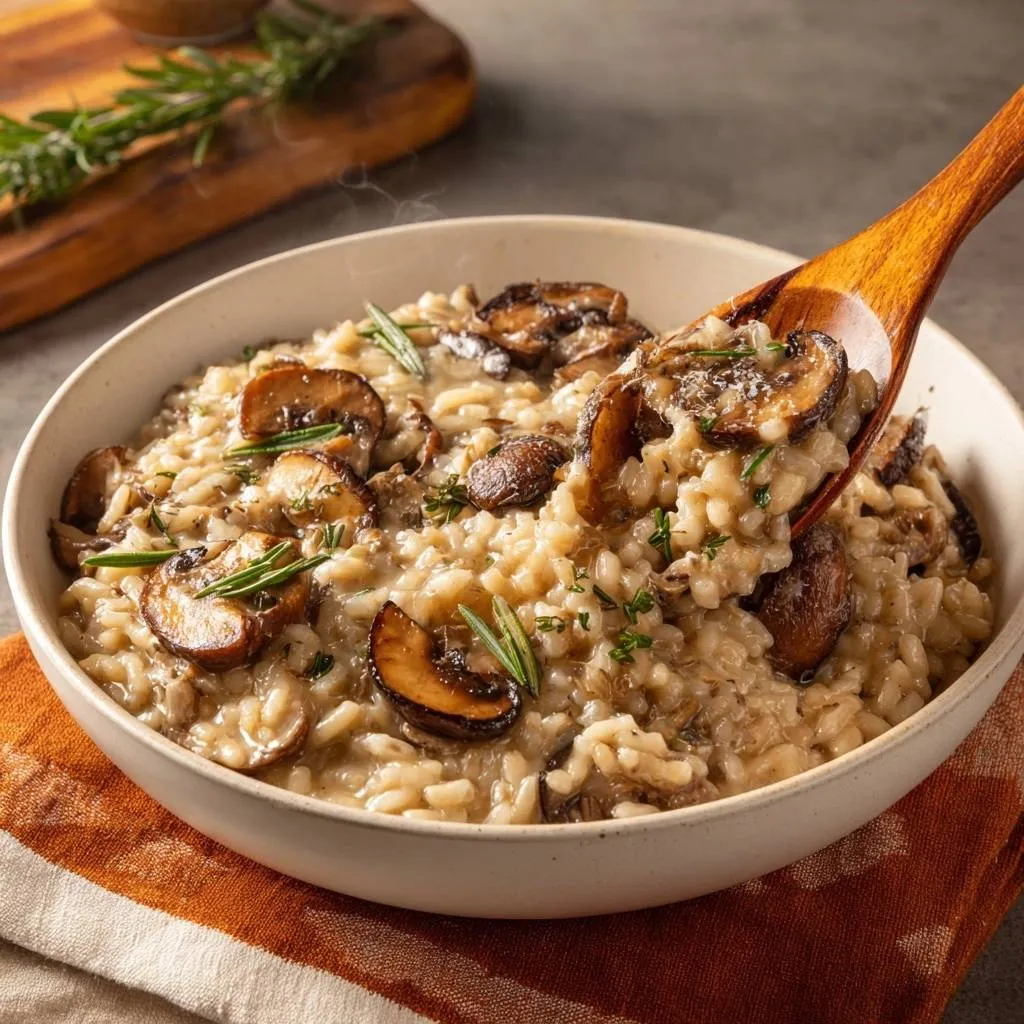
- Sear the Mushrooms: The secret to avoiding mush starts with the mushrooms. Heat olive oil in a large skillet over medium-high heat. Add the sliced mushrooms in a single layer. Sear without stirring for 3 minutes to get the deep golden-brown crust seen in the image. Flip and cook for another 2 minutes. Season with salt and pepper, then remove from the pan and set aside.
- Toast the Rice: In a heavy-bottomed pot or Dutch oven, melt 2 tablespoons of butter over medium heat. Add the onion and cook until translucent (about 4 minutes). Add the Arborio rice and stir to coat in butter. Toast the grains for 2-3 minutes until the edges are translucent but the center is still white. This “toasting” creates a protective shell that prevents the grains from becoming gummy.
- Deglaze: Add the garlic and the wine (or lemon water). Stir constantly until the liquid is fully absorbed.
- The Warm Liquid Rule: To ensure a perfect texture, keep your broth simmering in a separate pot. Adding cold broth shocks the rice, causing the outside to fall apart while the inside stays hard. Add one ladle (about 1/2 cup) of hot broth at a time.
- The Anti-Gummy Stir: Stir gently and only occasionally. Constant, aggressive stirring bruises the rice and creates a glue-like consistency. Stir just enough to keep it from sticking. Wait until the liquid is almost gone before adding the next ladle.
- The Texture Check: Continue adding broth for 18-22 minutes. Taste the rice; it should be tender with a slight “al dente” bite in the center. You may not need all 5 cups of broth.
- The Finish: Remove from heat while the risotto still looks slightly loose (it will thicken as it sits). Vigorously fold in the remaining 2 tablespoons of butter, the Parmesan cheese, the chopped rosemary, and the thyme. This “mantecatura” creates the creamy emulsion without needing heavy cream.
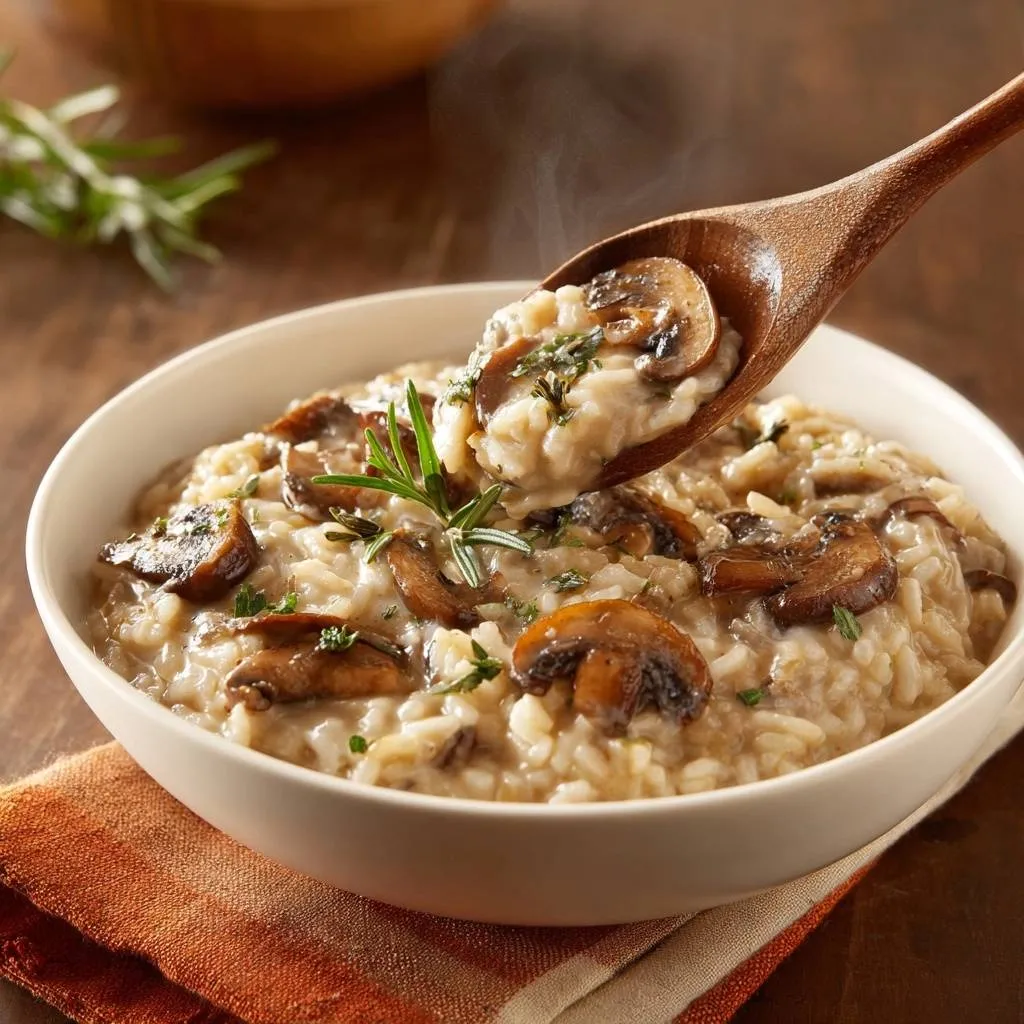
- Assemble: Gently fold in 3/4 of the seared mushrooms. Serve immediately in warm bowls, topping with the remaining golden mushrooms and a sprig of fresh rosemary to match the visual presentation.
Notes
- To prevent a gummy texture, always keep your broth at a low simmer before adding it to the rice. Avoid over-stirring; stir just enough to prevent sticking to maintain the integrity of the rice grains.