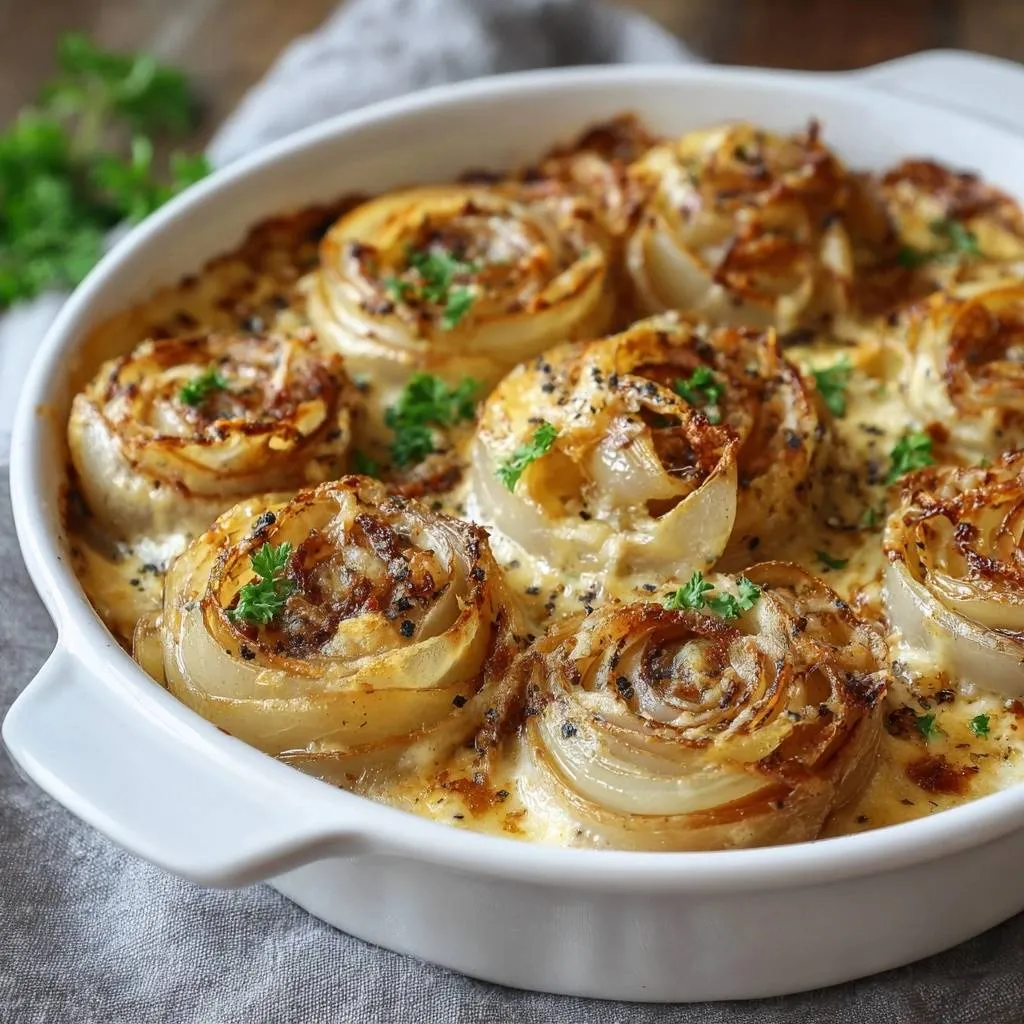
If you have ever pulled a tray of roasted onions from the oven only to find the edges charred and the centers stubbornly raw and crunchy, you know the frustration of a failed side dish. Most recipes treat onions like potatoes, but their high water content and layered structure require a more nuanced approach to heat. This Creamy Roasted Onion Gratin solves that puzzle by focusing on thermal physics to ensure every bite is as soft as butter.
The sensory experience of this dish is truly unmatched, offering a deep contrast between the sharp, nutty tang of melted Gruyere and the mellow, jammy sweetness of slow-cooked yellow onions. We aren’t just tossing vegetables in a pan; we are building a “skyscraper” of flavor where the cream reduces into a thick, savory velvet that clings to every ring. It’s the kind of dish that makes people forget about the main course entirely.
The secret to success lies in the moisture retention during the first half of the cook time. By using a covered baking method, we create a pressurized steam chamber that breaks down the tough pectin in the onion cores before the dry heat ever touches them. This ensures that by the time the cheese starts bubbling, the onions have already reached a perfect, translucent tenderness. I’ve found that skipping this step is the number one reason gratins fail, so don’t be tempted to leave the foil off!
The Anatomy of a Perfect Onion Gratin
A truly great gratin relies on the Maillard reaction, a chemical process where heat transforms the natural sulfur compounds and sugars in the onion into something complex and sweet. As the onions roast, they lose their sharp bite and develop a deep, caramelized profile that pairs beautifully with dairy. This transformation is what gives the dish its “Sunday dinner” soul and comforting aroma.
The heavy cream and beef broth serve a dual purpose in this recipe. Initially, they act as a braising liquid, gently poaching the onions from the bottom up to keep them moist. As the oven’s heat works its magic, the liquid reduces and emulsifies with the onion juices, concentrating into a rich, savory sauce. This reduction is what separates a watery onion dish from a professional-grade gratin.
Essential Components for the Creamy Roasted Onion Gratin
Choosing the right onion is the foundation of this recipe. I always reach for large yellow onions because they have a higher sugar content than white onions and hold their shape better than red ones during long roasting periods. As they cook, those sugars break down into a rich sweetness that balances the salty cheese perfectly.
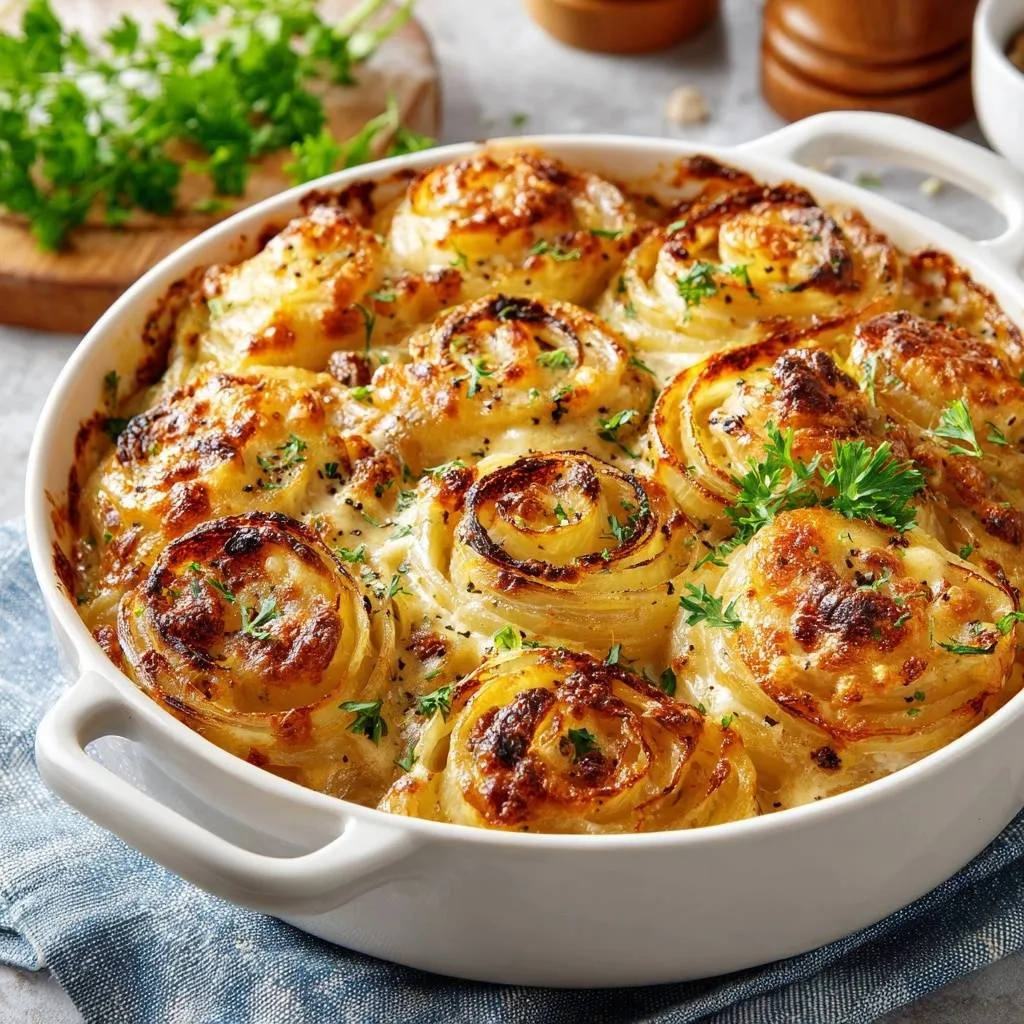
The cheese blend is equally vital for the texture of the crust. Gruyere is the gold standard here because of its incredible melting point and nutty flavor, but it can be a bit oily on its own. Adding freshly grated Parmesan provides the structural integrity needed for a crispy, golden-brown topping. Always grate your own cheese from a block; the pre-shredded stuff is coated in potato starch, which prevents it from melting into that smooth, gooey layer we want.
You might be surprised to see Dijon mustard on the list, but it’s a total game-changer. It acts as a natural emulsifier, helping the heavy cream and beef broth stay bonded so the sauce doesn’t “break” or become greasy under high heat. Finally, the beef broth adds a massive punch of umami. While you could use water, the broth provides a dark, savory backbone that makes the cream taste much more expensive than it actually is.
Selecting and Prepping Your Onions
When you’re prepping your onions, aim for thick rounds between 1 and 1.5 inches. This is the “Goldilocks” zone—thick enough to stand up to an hour in the oven without disintegrating, but thin enough for the cream to penetrate the center. If you slice them too thin, they’ll turn into mush; too thick, and you’re back to the crunchy center problem.
Try to keep the rounds intact as you move them into the baking dish. Packing them tightly together is a pro move because it prevents the rings from separating and floating away during the steaming phase. When they are snug, they support each other, ensuring the final presentation looks like a series of beautiful, caramelized medallions rather than a messy pile of onion rings.
The Science of the Two-Stage Bake
The “Steam then Sear” philosophy is what makes this recipe foolproof. If you put raw onions in a hot, dry oven, the outer layers lose their moisture and burn before the heat can ever penetrate the dense, cool center. It’s a classic case of uneven heat distribution that ruins many vegetable gratins.
By covering the dish tightly with aluminum foil for the first 30 minutes, you trap the evaporating moisture from the cream and the onions themselves. This creates a humid environment that softens the cell walls of the onion rings uniformly. Once that structural breakdown happens, you can safely remove the foil to let the dry heat of the second stage begin the caramelization process without fear of a raw middle.
Step-by-Step: Achieving the Melt-In-Your-Mouth Texture
The first phase is all about the infusion. When you whisk the Dijon, garlic powder, and thyme into the cream and broth, you’re creating a seasoned bath that will flavor the onions from the inside out. Make sure the mixture is smooth before pouring it in; you want those spices distributed evenly so every bite has that herbal, peppery kick.
During the second phase, the softening happens. After 30 minutes under the foil, the onions should look translucent and slightly slumped. If you poke one with a knife, it should slide in with very little resistance. This is the signal that the “steam” portion of our program was a success and the onions are ready for their cheesy crown.
The final phase is the reduction. As the dish bakes uncovered, the cream sauce will bubble and thicken, losing volume but gaining intense flavor. This is when the Maillard reaction takes over the top of the onions, turning them a deep, golden brown. You’ll see the sauce transform from a thin liquid into a thick, bubbling gravy that coats the back of a spoon.
Refining the Finish: The Broiler Technique
The final three minutes under the broiler are the most critical for visual appeal. You are looking for “leopard spotting”—those dark, toasted bubbles on the cheese that signal a perfect crust. Stay right by the oven door during this time, as the transition from golden to scorched happens in seconds.
The goal is to char the very edges of the onion rings and the peaks of the cheese while keeping the delicate cream sauce underneath from breaking. This high-heat blast adds a smoky depth that cuts through the richness of the dairy. Once you see those dark gold edges, pull it out immediately.
Troubleshooting Common Gratin Obstacles
If your sauce looks a bit thin when you first pull it out of the oven, don’t panic. The resting period is mandatory. As the gratin sits for five minutes, the proteins in the cream and cheese begin to set, and the sauce will thicken significantly. It’s just like resting a steak; patience results in a much better texture.
If you find the onions are still firm after the covered bake, it might be because you’re using older onions with lower moisture content. Simply pop the foil back on for another 10 minutes. Also, if the cheese looks oily, it’s usually a sign of using pre-shredded cheese or the oven being slightly too hot. Using high-quality block cheese and following the temperature guide will keep the fats and solids perfectly combined.
Flavor Variations and Ingredient Swaps
You can easily customize this dish to fit your personal taste or what’s in your pantry. If you want a woodier, more autumnal profile, swap the dried thyme for fresh chopped rosemary or sage. These hardier herbs stand up beautifully to the long roasting time and add a wonderful fragrance to the kitchen.
For a more complex allium flavor, try tucking some sliced shallots or leeks into the gaps between the large onion rounds. They will melt down even faster than the yellow onions, creating a “jam” that fills the spaces in the dish. If you need a vegetarian version, substitute the beef broth with a high-quality mushroom stock. It provides that same deep, earthy umami without the meat base.
Optimal Pairings for Rich Onion Sides
Because this gratin is incredibly rich and dairy-forward, it pairs best with proteins that have a bit of a crust or a salty sear. A simple roasted chicken or a pan-seared steak works beautifully. The sweetness of the onions acts almost like a built-in sauce for the meat, making every bite feel like a complete meal.
To balance the plate, I always serve this alongside a crisp, acidic green salad. A simple vinaigrette with plenty of lemon juice or apple cider vinegar acts as a necessary palate cleanser. The brightness of the greens cuts through the heavy cream and cheese, making the whole meal feel balanced rather than overwhelming.
Make-Ahead Strategies and Reheating Instructions
This is a fantastic dish for entertaining because you can do most of the work in advance. You can prep the onions and the cream mixture the night before, or even complete the first 30-minute covered bake ahead of time. Just let the dish cool, refrigerate it, and then add the cheese and do the final bake right before you’re ready to eat.
When it comes to leftovers, the oven is your best friend. Reheating in the microwave will almost certainly cause the cream sauce to separate and turn oily. Instead, put the gratin back in a 350°F oven for about 15 minutes. This maintains the integrity of the onion rounds and keeps the cheese topping nice and crisp.
How do I store leftovers?
Store any leftover gratin in an airtight container in the refrigerator for up to 3 days. I do not recommend freezing this dish, as the heavy cream and onions will change texture significantly when thawed, often becoming grainy or watery. For the best results, enjoy it within a few days of cooking.
Why are my onions still crunchy in the middle?
This usually happens if the foil wasn’t sealed tightly enough or if the onions were sliced much thicker than 1.5 inches. The steam needs to be trapped to soften the core. If you notice they are still firm after the first 30 minutes, simply extend the covered baking time by 10-15 minutes before adding the cheese.
Can I use a different type of cheese?
Yes, you can substitute the Gruyere with Swiss, Emmental, or even a sharp white cheddar. However, keep the Parmesan in the mix, as it provides the salty “crunch” that softer cheeses lack. Avoid using mozzarella alone, as it can become too stringy and won’t develop the same caramelized crust.
What can I use instead of beef broth?
If you don’t have beef broth on hand, a high-quality chicken stock or mushroom stock is the best substitute. In a pinch, you can use water mixed with a teaspoon of Worcestershire sauce to mimic that savory depth. Avoid using plain water if possible, as the sauce will lose a lot of its character.
Is there a way to make this less rich?
While the heavy cream is traditional for a gratin, you can use half-and-half for a slightly lighter version. Note that the sauce will be thinner and may take longer to reduce. I don’t recommend using skim or 2% milk, as the lack of fat will likely cause the sauce to curdle under the high heat of the oven.
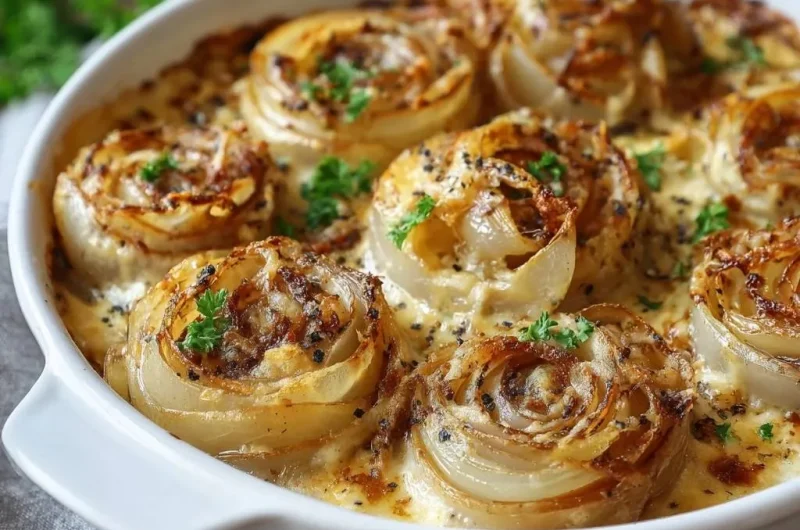
Creamy Roasted Onion Gratin
Course: Side DishCuisine: French-AmericanDifficulty: easy6
servings15
minutes55
minutes70
Minutes345
kcalFrench-American
Ingredients
4 large yellow onions, peeled and ends trimmed
2 tablespoons unsalted butter, melted
1 cup heavy cream
1/2 cup beef broth
1 tablespoon Dijon mustard (to help emulsify and thicken the sauce)
1 cup shredded Gruyere or Swiss cheese
1/2 cup freshly grated Parmesan cheese
1 teaspoon dried thyme
1/2 teaspoon garlic powder
1/2 teaspoon coarse black pepper
Salt to taste
Fresh parsley, chopped for garnish
Directions
- Preheat your oven to 375°F (190°C). Slice the onions into thick rounds, approximately 1 to 1.5 inches thick. Place them into a greased white ceramic baking dish, keeping the rounds intact and packed closely together.
- In a small bowl, whisk together the heavy cream, beef broth, Dijon mustard, garlic powder, thyme, salt, and black pepper until smooth.
- Pour the cream mixture into the dish around the onions. The liquid should reach about halfway up the sides of the onion rounds. Brush the exposed tops of the onions with the melted butter.
- To solve the crunchy center problem, cover the dish tightly with aluminum foil. Bake for 30 minutes. This creates a steam chamber that softens the tough inner layers of the onion.
- Remove the dish from the oven and discard the foil. The onions should be translucent and tender.
- Mix the shredded Gruyere and Parmesan together. Generously top each onion round with the cheese blend, allowing some to fall into the surrounding cream sauce.
- Return the dish to the oven, uncovered, for another 20-25 minutes. This allows the cream to reduce into a thick, golden gratin sauce and the onion tops to deeply caramelize.
- For the visual finish shown in the image, turn the broiler to high for the final 2-3 minutes until the cheese is bubbling and the edges of the onion rings are charred and dark gold.
- Remove from the oven and let rest for 5 minutes to allow the sauce to set. Garnish with fresh parsley and extra cracked pepper before serving.
Notes
- The secret to avoiding crunchy centers is the initial 30-minute covered bake which steams the onion cores. Ensure the foil is sealed tightly to trap moisture.