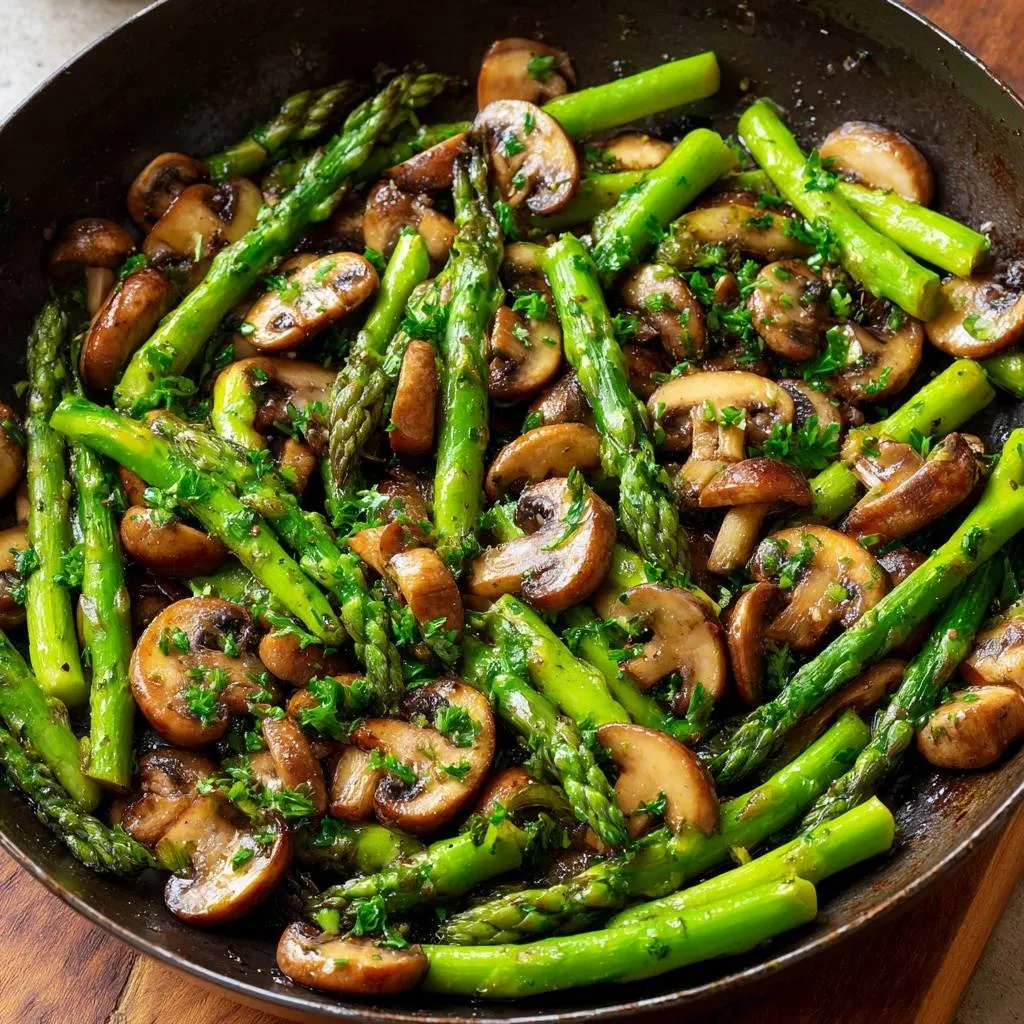
There is a specific, audible sizzle that happens when a cold mushroom hits a ripping hot pan. It’s a sharp, energetic sound that promises a deep, golden crust and a meaty bite. Most home cooks, however, end up with a pile of grey, rubbery mushrooms swimming in a pool of grey liquid. This “Soggy Veggie Syndrome” happens because vegetables like mushrooms and asparagus are packed with water just waiting to escape.
The secret to a restaurant-quality Garlic Butter Mushroom and Asparagus Sauté lies in the mastery of heat and timing. You aren’t just heating these vegetables; you’re performing a high-heat sear that locks in the snap of the asparagus while caramelizing the exterior of the mushrooms. It’s a delicate balance between the earthy, savory depth of the fungi and the bright, grassy crunch of the stalks.
I’ve found that the biggest mistake people make is crowding the pan, which drops the temperature and turns a sauté into a steam. To get that perfect finish, you must use a heavy-bottomed skillet and resist the urge to stir for the first few minutes. This patience allows the Maillard reaction to work its magic, creating a complex flavor profile that a quick toss simply cannot achieve.
The Science of Searing: Why High Heat Matters
When you cook at high temperatures, you trigger the Maillard reaction, a chemical process between amino acids and reducing sugars that gives browned food its distinctive flavor. For mushrooms, this is vital because they are roughly 90% water. If your pan isn’t hot enough, the mushrooms will release their moisture and sit in it, essentially boiling themselves until they become rubbery.
High heat causes that moisture to evaporate the second it touches the pan surface. This allows the sugars on the surface of the mushroom to caramelize rather than stew. Therefore, the material of your pan plays a massive role in your success. A heavy cast iron or stainless steel skillet is superior because it holds onto heat even when you add cold vegetables.
Thin, cheap pans lose their temperature the moment food hits the surface. This leads to a “weeping” effect where the vegetables dump their internal juices. By using a heavy pan and maintaining medium-high heat, you ensure the thermal energy stays high enough to keep the searing process active from the first mushroom to the last asparagus tip.
Essential Components for the Perfect Sauté
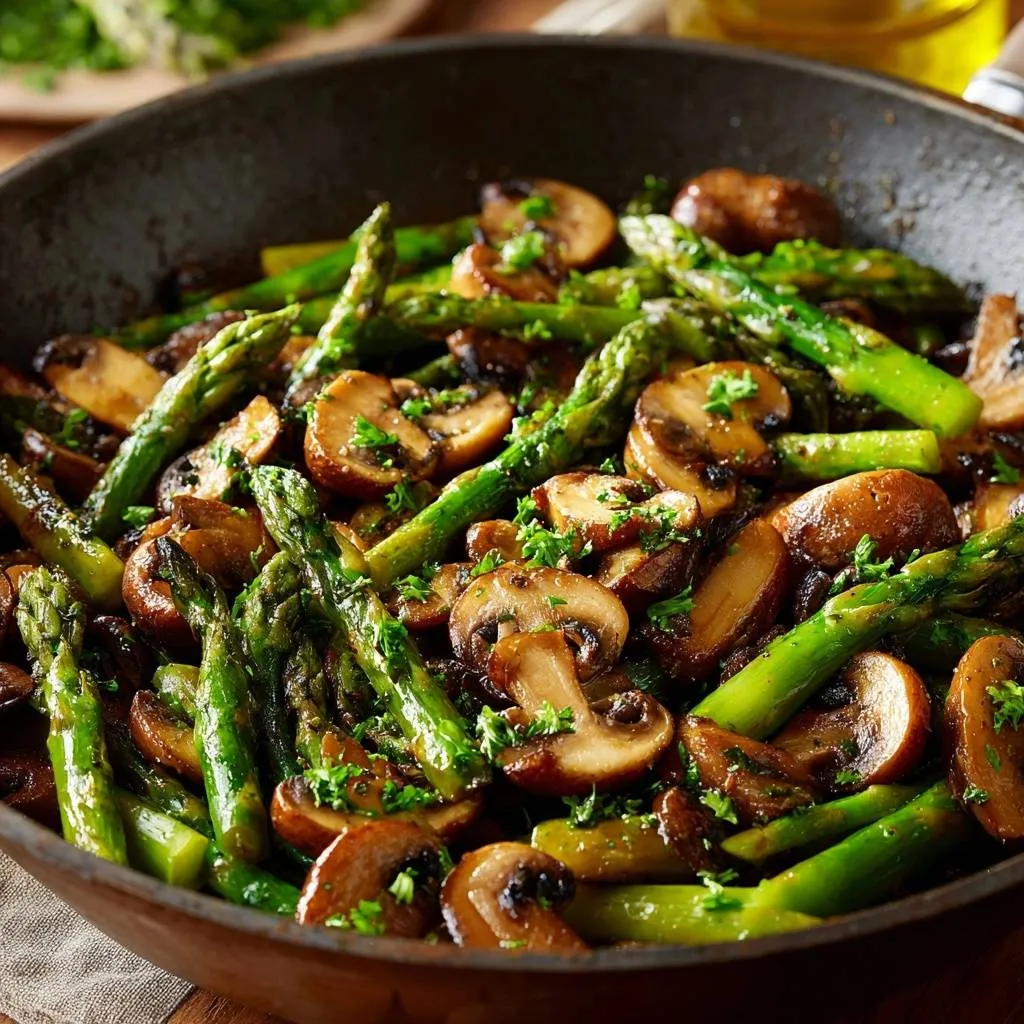
Quality ingredients are the foundation of this dish. While white button mushrooms work in a pinch, I highly recommend using Cremini mushrooms (often sold as Baby Bellas). They are slightly older than white buttons, meaning they have less water content and a much deeper, more savory flavor that stands up well to the garlic butter.
For the asparagus, look for firm, bright green stalks with tightly closed buds. If the tips look mushy or the stalks feel limp, the dish will never achieve that signature “snap.” The fat you choose is equally important. I use a 50/50 split of olive oil and unsalted butter because the oil has a higher smoke point, which prevents the butter from burning while still providing that rich, creamy mouthfeel.
Fresh garlic is non-negotiable here. The pre-minced stuff in jars often has a metallic or acidic aftertaste that can ruin the delicate balance of the vegetables. Crushing and mincing your own cloves right before they hit the pan ensures the oils are potent and sweet rather than bitter.
Selecting and Prepping Your Asparagus
Asparagus comes in various sizes, from pencil-thin to jumbo stalks. For a sauté, medium-thickness stalks are ideal because they offer a great ratio of crunchy exterior to tender interior. To prep them, you need to remove the woody, fibrous ends that are impossible to chew.
You can find the natural breaking point by gently bending a stalk until it snaps; it will naturally break right where the tender part begins. Once you’ve found that point, line up the rest of the bunch and slice them all at that same level. Cut the remaining tender stalks into uniform 3-inch pieces so they cook at the exact same rate.
Mushroom Varieties and Moisture Control
Never soak your mushrooms in a bowl of water. Because they act like little sponges, they will absorb that liquid and release it later in your pan, ruining your sear. Instead, use a damp paper towel or a soft brush to wipe away any dirt or debris.
When slicing, aim for a thickness of about 1/4 inch. If you slice them too thin, they will shrivel up into nothingness under the high heat. A thicker slice allows the mushroom to develop a crust on the outside while remaining juicy and “meaty” on the inside.
Step-by-Step: Executing the Garlic Butter Mushroom and Asparagus Sauté
This 12-minute cook is a fast-paced process that requires your full attention. You’ll start by heating your oil and a portion of the butter until the foam subsides. This is your cue that the pan is hot enough to begin the first phase of the sear.
The process is divided into three distinct stages: the mushroom sear, the asparagus snap, and the aromatic finish. By staggering the entry of the ingredients, you respect the different cooking times of each vegetable, ensuring nothing ends up overcooked or under-seasoned.
Phase One: Achieving the Golden Mushroom Crust
Add your mushrooms to the hot skillet in a single layer. If you hear a loud, aggressive sizzle, you’re doing it right. Now, the hardest part: do not touch them. Let them sit undisturbed for at least 3 to 4 minutes.
You might see a little steam, but as long as the pan is hot, it will dissipate quickly. After a few minutes, lift one mushroom. If it’s a deep, chestnut brown, give the pan a toss or flip them over. This initial sear develops the base flavor for the entire dish.
Phase Two: Timing the Asparagus for Maximum Snap
Once the mushrooms are browned, push them to the outer edges of the pan where the heat is slightly lower. Add the remaining butter to the center and toss in your asparagus. The asparagus needs less time than the mushrooms, usually about 4 to 5 minutes.
Watch the color change. The asparagus will turn from a dull, dusty green to a vibrant, neon green almost instantly. You want to cook them until they are “fork-tender,” meaning a fork can pierce the stalk with just a little resistance. If they turn olive-drab, they are overcooked.
Phase Three: The Garlic and Herb Finish
Garlic burns incredibly fast, especially in a hot skillet. Add the minced garlic, salt, pepper, and thyme only in the last 60 seconds of cooking. Toss everything constantly to ensure the garlic coats every inch of the vegetables without sitting in one spot for too long.
As soon as you smell that unmistakable aroma of toasted garlic, pull the pan off the heat. Squeeze fresh lemon juice over the top. This juice acts as a deglazer, pulling up all the browned bits (the fond) from the bottom of the pan and turning it into a glossy sauce that clings to the vegetables.
Avoiding Common Sautéing Pitfalls
The number one reason this recipe fails is overcrowding. If you put too many vegetables in the pan at once, the temperature drops and the moisture has nowhere to go but up, steaming the food. If you’re doubling the recipe, cook in two separate batches to maintain the integrity of the sear.
If you notice the pan looking dry or the garlic starting to brown too quickly, don’t be afraid to add a tiny splash of water or broth. This creates a quick burst of steam that can help finish the interior of the asparagus without burning the exterior aromatics.
Flavor Variations and Herb Substitutions
While garlic and parsley are the classic duo, you can easily pivot the flavor profile. For a Mediterranean twist, use lemon zest and dried oregano, then top with a sprinkle of feta cheese before serving. The salty cheese pairs beautifully with the earthy mushrooms.
If you want something more “woodsy,” swap the parsley for fresh rosemary or sage. These heartier herbs should be added at the same time as the garlic so their oils can infuse into the butter. For a sweeter, more refined finish, use minced shallots in place of half the garlic.
What to Serve with Your Vegetable Sauté
This sauté is incredibly versatile. It’s a natural partner for seared sea bass or roasted chicken, where the lemon in the vegetables cuts through the richness of the protein. The garlic butter sauce also makes it a fantastic topping for a bowl of creamy polenta or fluffy quinoa.
I often serve this alongside a simple steak. The mushrooms act almost like a built-in steak topping, while the asparagus provides the necessary green component to balance the meal. Because it’s so savory, it also works well as a vegetarian main course when served over a thick slice of toasted sourdough bread.
Storage and Reheating for Best Texture
Vegetable sautés are always best served immediately. As they sit, the residual heat continues to soften the asparagus, and the mushrooms may lose their crisp exterior. However, if you have leftovers, store them in an airtight container in the fridge for up to three days.
Avoid the microwave for reheating, as it will turn the asparagus into mush and make the mushrooms rubbery. Instead, do a “flash reheat” by tossing them in a very hot, dry skillet for 2 minutes. This helps evaporate any accumulated moisture and restores some of the original texture.
Expert Troubleshooting and Technical FAQ
Why did my mushrooms release so much water?
This usually happens for two reasons: the pan wasn’t hot enough or you salted them too early. Salt draws out moisture through osmosis. If you salt the mushrooms the moment they hit the pan, they will weep. Always wait until the mushrooms have developed a brown crust before adding salt to the skillet.
Can I use frozen asparagus or mushrooms?
I strongly recommend against using frozen vegetables for this specific method. Freezing breaks down the cell walls of vegetables. When they thaw, they are naturally soft and watery. You will never achieve a “snap” or a “sear” with frozen produce; they are much better suited for soups or casseroles.
How do I prevent the butter from burning?
Butter contains milk solids that burn at relatively low temperatures. By mixing the butter with olive oil, you raise the overall smoke point of the fat. Additionally, adding the bulk of the butter halfway through the cooking process (when the asparagus goes in) ensures it doesn’t spend too much time under high heat.
What is the best pan for a 12-inch sauté?
A cast iron skillet is the gold standard because of its incredible heat retention. Stainless steel (tri-ply) is the second-best option as it allows for great browning and is easier to maneuver. Avoid non-stick pans for this recipe, as they generally cannot be used safely at the high temperatures required for a proper sear.
My asparagus is still tough, what should I do?
If your asparagus stalks were particularly thick, they might need an extra minute or two. You can add a tablespoon of water to the pan and cover it with a lid for 60 seconds. This creates a concentrated steam environment that softens the fibers quickly without losing the vibrant color.
Can I substitute the lemon juice?
If you don’t have a lemon, a teaspoon of white vinegar or apple cider vinegar can provide the necessary acidity. The goal is to cut through the heavy butter and “brighten” the earthy flavors of the mushrooms. Without that acid, the dish can feel a bit too heavy on the palate.
Garlic Butter Mushroom and Asparagus Sauté
Course: Side DishCuisine: AmericanDifficulty: easy4
servings10
minutes12
minutes22
Minutes185
kcalAmerican
Ingredients
1 pound fresh asparagus, woody ends trimmed and cut into 3-inch pieces
1 pound cremini or button mushrooms, sliced thick (approx. 1/4 inch)
3 tablespoons unsalted butter
2 tablespoons olive oil
4 cloves garlic, minced
1 teaspoon salt
1/2 teaspoon black pepper
1/4 cup fresh parsley, finely chopped
1 tablespoon lemon juice
1/2 teaspoon dried thyme (optional, for depth)
Directions
- The key to avoiding mushy vegetables is starting with a dry surface. Pat your washed mushrooms and asparagus completely dry with paper towels before they hit the pan.
- Heat a large (12-inch) heavy-bottomed skillet or cast iron pan over medium-high heat. Add the olive oil and 1 tablespoon of the butter. Wait until the butter is foaming and the pan is very hot.
- Add the mushrooms in a single layer. Do not crowd the pan; if your skillet is small, work in two batches. Let them sit undisturbed for 3 to 4 minutes to develop a deep golden-brown crust. Flip and sear the other side for 2 minutes. This prevents the rubbery texture common in boiled or steamed mushrooms.
- Push the mushrooms to the edges of the pan and add the remaining 2 tablespoons of butter to the center. Once melted, toss in the asparagus pieces.
- Sauté the asparagus for 4 to 5 minutes, tossing frequently. By adding the asparagus after the mushrooms have already seared and reduced their moisture, you ensure the stalks stay crisp-tender and vibrant green rather than soaking up water and turning soft.
- Stir in the minced garlic, salt, pepper, and dried thyme (if using). Toss everything together so the garlic coats the vegetables. Cook for just 60 seconds until the garlic is fragrant and golden, but not burnt.
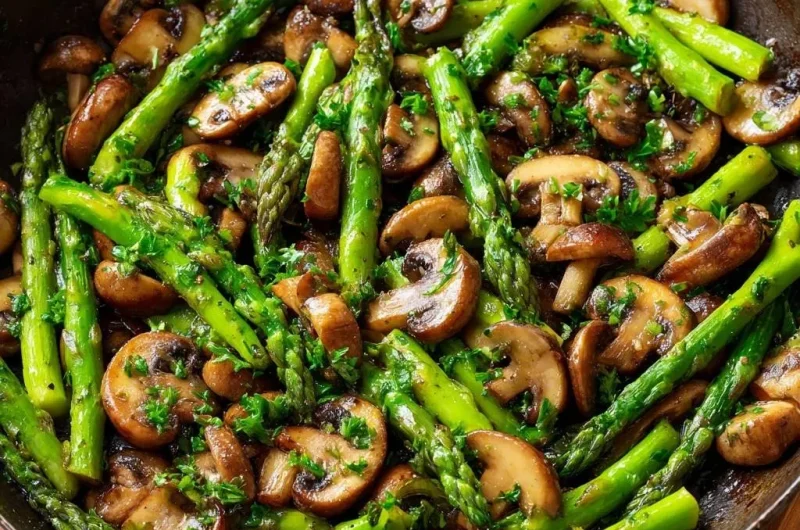
- Remove from heat immediately. Squeeze the lemon juice over the top to brighten the flavors and deglaze the pan bits. Fold in the fresh parsley generously so it clings to the butter sauce. Serve right away to maintain the perfect snap and glossy finish shown in the image.
Notes
- The secret to avoiding mushy vegetables is to pat them completely dry before cooking and to avoid crowding the pan during the searing process.