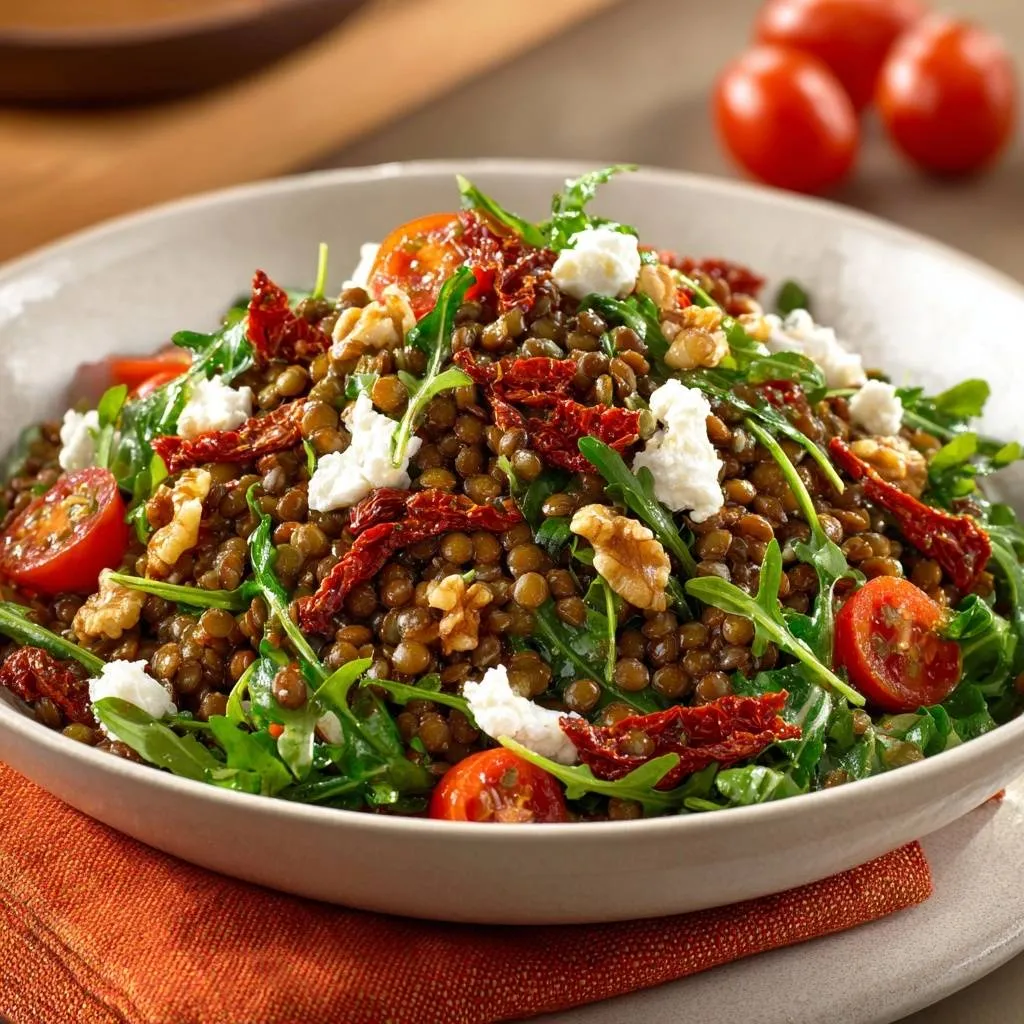
Forget everything you know about those sad, mushy lentil salads that look more like gray porridge than a vibrant meal. The secret to a truly spectacular Mediterranean Lentil and Goat Cheese Salad lies in the bite. When you get the texture right, you experience a satisfying pop from the lentils followed by the creamy, tangy melt of fresh goat cheese.
This dish isn’t just a side; it’s a nutritional powerhouse packed with plant-based protein and fiber. It draws inspiration from the longevity diets of the Mediterranean, where pulses are treated with respect rather than as an afterthought. By balancing earthy tones with bright acidity, you create a meal that feels light yet keeps you full for hours.
The real trick to professional results is the “cold start” method. Most home cooks drop lentils into boiling water, which causes the skins to explode while the centers stay hard. Starting with cold water allows the heat to penetrate the grain evenly, ensuring every single lentil stays perfectly round and intact. It’s a small change that makes a massive difference in your final presentation.
The Science of the Cold Start Simmer
When you plunge a dry lentil into boiling water, the exterior experiences a thermal shock. This sudden heat causes the outer skin to expand and rupture before the starch in the center has a chance to hydrate. The result is a “blown-out” lentil that releases starch into the water, creating a gummy, unappealing mess.
By starting with cold water, you allow the temperature to rise gradually. This slow transition lets the water seep into the core of the lentil at the same rate the skin is softening. Therefore, the entire pulse cooks uniformly from the outside in, maintaining its structural integrity throughout the simmering process.
You’ll notice that the water stays clearer with this method because you aren’t forcing starch out of the lentils. This technique is the gold standard for any salad where you want the pulses to look like little jewels rather than a mashed side dish. It requires a bit more patience, but the textural payoff is undeniable.
Why French Green and Puy Lentils Matter
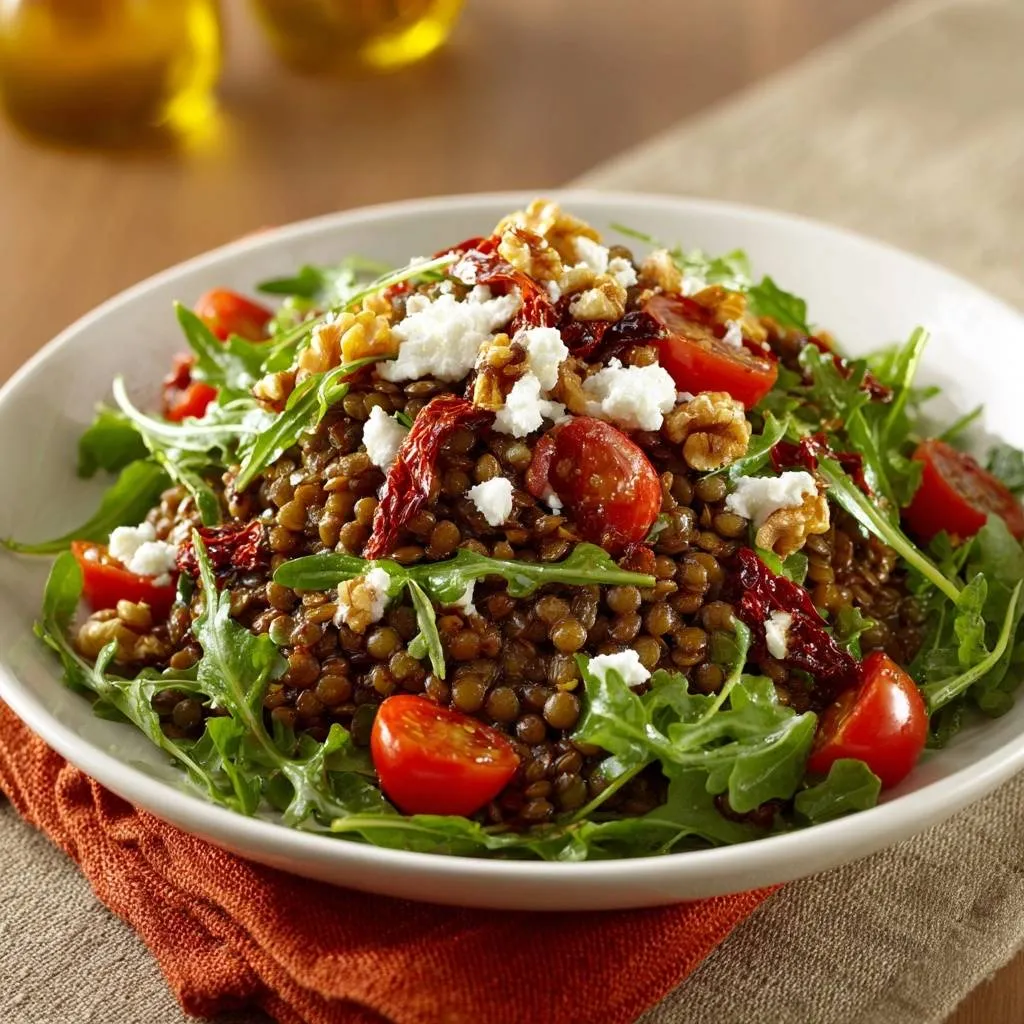
Not all lentils are created equal, especially when it comes to salads. While red lentils are great for thickening soups because they disintegrate, they are a disaster in a Mediterranean Lentil and Goat Cheese Salad. You need French Green or Lentilles du Puy for this specific recipe.
These varieties are grown in volcanic soil, which gives them a distinct peppery flavor and a much higher mineral content. More importantly, they have a thicker skin and a denser texture than common brown lentils. This botanical advantage means they hold their shape even after being tossed with heavy dressings and creamy cheeses.
Essential Components for the Base and Texture
A great salad is only as good as its dressing, and for this dish, high-quality extra virgin olive oil is non-negotiable. You want an oil that has a slightly peppery finish to complement the earthy lentils. When paired with the sharp, fruity acidity of balsamic vinegar, it creates a bright base that cuts through the richness of the cheese.
Texture is further enhanced by using two types of tomatoes. Fresh cherry tomatoes provide a juicy, sweet burst, while julienned sun-dried tomatoes offer a concentrated umami punch. These sun-dried bits act like little flavor bombs, providing a chewy contrast to the crunch of the walnuts and the softness of the lentils.
Don’t skip the garlic, but make sure it’s minced as finely as possible. You want the garlic to perfume the entire salad without anyone biting into a large, spicy chunk. If you have time, let the minced garlic sit in the vinegar for five minutes before adding the oil; this “mellows” the raw bite while keeping the flavor bold.
Selecting and Handling Creamy Goat Cheese
When shopping for goat cheese, look for a fresh Chèvre that feels soft but not runny. The goal is to have distinct crumbles that slowly soften as they hit the room-temperature lentils. If the cheese is too hard, it won’t integrate; if it’s too soft, it will turn the whole salad into a creamy gray mixture.
Pro tip: Crumble your goat cheese while it is straight out of the fridge. Cold cheese breaks into clean, beautiful shards. However, let those crumbles sit on top of the salad for a few minutes before serving. This allows the cheese to lose its chill, which significantly improves the creamy mouthfeel and brings out its signature tang.
Step-by-Step: Achieving the Perfect Al Dente Lentil
Before you even turn on the stove, give your lentils a thorough rinse in a fine-mesh sieve. You’re looking to remove any dust or small debris that might have hitched a ride from the bulk bin. Once they’re clean, get them into the pot with your cold water and a pinch of salt.
Watch the pot closely as it comes to a simmer. You aren’t looking for a rolling, violent boil; you want a “gentle simmer,” which looks like small, lazy bubbles breaking the surface. If the water is moving too much, the lentils will bash against each other and break their delicate skins.
The most important rule is the 15-minute tasting rule. Set a timer, and at exactly 15 minutes, fish out a few lentils and bite them. They should be tender but still have a slight “snap” in the middle. If they feel crunchy, give them another two minutes. Catching them at this exact moment is the difference between a good salad and a great one.
The Immediate Cold Rinse Technique
Once your lentils hit that perfect al dente stage, you must act fast. Drain them immediately into your sieve and run cold tap water over them for at least thirty seconds. This “shocks” the lentils, stopping the internal cooking process instantly so they don’t carry over into mushiness.
After rinsing, let them sit in the sieve for a full five minutes. This is a step many people skip, but it’s vital. If the lentils are still dripping with water, your balsamic vinaigrette won’t stick to them. Instead, the water will dilute the dressing, leaving you with a puddle at the bottom of the bowl and flavorless lentils.
You can even spread them out on a clean kitchen towel if you’re in a hurry. The drier the surface of the lentil, the better it will absorb the garlic and oil. This ensures every bite is seasoned from the outside in, rather than just being coated in a watery film.
Emulsifying the Garlic and Balsamic Vinaigrette
Creating a stable emulsion is the key to a silky dressing that coats every ingredient. Start by whisking your balsamic vinegar, minced garlic, salt, and pepper in a large bowl. Slowly stream in the olive oil while whisking vigorously. You’ll see the mixture thicken and turn slightly opaque as the oil and vinegar bond.
The garlic actually helps this process. It contains natural compounds that act as mild emulsifiers, helping the oil and vinegar stay together longer. Once the dressing is thick and glossy, it’s ready for the lentils. Don’t wait until the lentils are ice cold to dress them.
Adding the lentils while they are still slightly warm—but not hot—is a chef’s secret. The warmth allows the lentils to “drink” in the vinaigrette. As they finish cooling, they pull the flavors of the garlic and balsamic deep into their centers, making the salad taste much more integrated and complex.
Assembling the Mediterranean Lentil and Goat Cheese Salad
Now that your lentils are dressed and flavorful, it’s time to build the rest of the salad. Add the sun-dried tomatoes, cherry tomatoes, and walnuts first. Use a large spoon or a spatula to fold them in gently. You want to distribute the ingredients without smashing the lentils you worked so hard to keep whole.
The baby arugula should always be the very last thing you add. Arugula is delicate and will wilt the moment it hits the acidic vinegar. By folding it in just before serving, you ensure it stays crisp and peppery. This provides a fresh, leafy contrast to the dense lentils and crunchy walnuts.
Finally, resist the urge to stir the goat cheese into the mix. If you stir it too much, the white cheese will pick up the dark color of the balsamic and lentils, making the dish look muddy. Instead, scatter the crumbles over the top. This keeps the colors bright and allows the diner to get a pure hit of creamy cheese in every forkful.
Flavor Variations and Ingredient Swaps
If you don’t have walnuts on hand, toasted pine nuts or slivered almonds make excellent substitutes. They still provide that necessary crunch but offer a slightly different nutty profile. For those who prefer a saltier, firmer cheese, crumbled feta works beautifully in place of the goat cheese.
You can also lean further into the Mediterranean theme by adding sliced Kalamata olives or roasted red peppers. The olives add a briny depth that pairs perfectly with the earthy lentils. If you want a bit of heat, a pinch of red pepper flakes in the dressing can provide a nice back-of-the-throat warmth without overpowering the other flavors.
For a heartier version, try adding some roasted cubes of butternut squash or sweet potato. The sweetness of the root vegetables balances the tang of the balsamic vinegar. Just make sure to roast them until they are firm-tender so they don’t compromise the overall texture of the salad.
Troubleshooting Common Lentil Texture Issues
If you find your lentils are still a bit too crunchy after the 20-minute mark, don’t panic. Add a quarter cup of hot water to the pot and continue simmering for two-minute increments. Sometimes older lentils take longer to hydrate, so your palate is the best judge of doneness, not the clock.
On the flip side, if you accidentally overcook them and they start to fall apart, don’t toss them out! You can’t use them for this salad, but you can pulse them in a food processor with some tahini and lemon juice to make a delicious lentil dip. It’s a great way to save your ingredients and still enjoy the flavor.
Keep in mind that altitude can also play a role in your cooking time. If you live in a high-altitude area, water boils at a lower temperature, meaning your lentils might need an extra five to ten minutes to reach that perfect al dente state. Always start tasting early to be safe.
Optimal Pairings for a Complete Meal
This salad is quite filling on its own, but it pairs wonderfully with a thick slice of toasted sourdough bread. The bread is perfect for swiping up any leftover dressing and goat cheese at the bottom of the bowl. For a lighter side, consider a plate of roasted carrots seasoned with cumin and honey.
When it comes to drinks, look for something with high acidity to match the balsamic. A sparkling water infused with fresh lemon and a sprig of rosemary is incredibly refreshing. The herbal notes of the rosemary complement the earthiness of the French green lentils perfectly.
If you’re serving this as part of a larger spread, it sits beautifully next to grilled chicken or roasted salmon. The lentils act as a sophisticated starch replacement that feels much more special than plain rice or potatoes. It’s a versatile dish that fits in at a casual lunch or a fancy dinner party.
Make-Ahead Strategies and Storage Standards
This is one of those rare salads that actually tastes better after it sits for a couple of hours. The flavors have time to meld and the lentils continue to soak up the dressing. If you’re meal prepping, you can cook the lentils and toss them with the dressing up to three days in advance.
However, keep the arugula, walnuts, and goat cheese in separate containers. Add the greens and the crunch right before you eat to prevent wilting and sogginess. The dressed lentils will stay firm and delicious in an airtight container in the fridge for about four days.
I don’t recommend freezing this salad. The texture of the fresh tomatoes and the goat cheese will change significantly once thawed, becoming watery and grainy. Stick to the fridge, and you’ll have a high-protein lunch ready to go all week long.
Expert Tips for Professional Presentation
To make this look like it came from a high-end bistro, use a wide, shallow serving bowl rather than a deep one. This allows you to see all the different colors and textures—the bright green arugula, the red tomatoes, and the white cheese—rather than having them buried at the bottom.
Finish the dish with a final crack of fresh black pepper and a very light drizzle of your best olive oil right before it hits the table. This gives the salad a beautiful sheen that looks incredibly appetizing. If you have some fresh parsley or mint, a few torn leaves on top add a pop of color and a fresh aroma.
Remember that we eat with our eyes first. By layering the ingredients carefully and keeping the lentils whole, you’re signaling to your guests that this isn’t just another bean salad. It’s a thoughtfully prepared, texture-rich Mediterranean masterpiece.
How do I prevent the lentils from turning the whole salad gray?
The gray color usually comes from overcooked lentils or from stirring the goat cheese in too vigorously. To keep the colors vibrant, ensure you use the cold-start method and rinse the lentils in cold water immediately after cooking. This removes excess starch that can create a cloudy appearance. Also, always crumble the goat cheese on top at the very end rather than mixing it in, which keeps the white cheese and green arugula looking fresh and distinct.
Can I use canned lentils for this recipe?
While you can use canned lentils in a pinch, the texture will not be the same. Canned lentils are often overcooked and soft, which leads to the “mushy” problem this recipe aims to avoid. If you must use them, rinse them very thoroughly in cold water and skip the simmering steps. However, for the best Mediterranean Lentil and Goat Cheese Salad, taking 20 minutes to cook dry French Green lentils is highly recommended for that signature al dente bite.
What is the best way to store leftovers?
Store any leftovers in an airtight container in the refrigerator for up to 3 to 4 days. If you know you will have leftovers, try to keep the arugula separate, as it will wilt once it sits in the dressing overnight. The lentils themselves actually improve in flavor as they marinate in the balsamic vinaigrette. When you’re ready to eat the leftovers, give them a quick toss and perhaps add a fresh handful of greens to revive the texture.
Why are my lentils still crunchy after 20 minutes?
Lentils can stay crunchy for a few reasons, the most common being their age. Older dried lentils take longer to soften. Additionally, if your water is particularly “hard” (high in minerals), it can interfere with the softening of the pulse’s skin. If they are still too firm, simply add a bit more water and continue to simmer, checking every 2 minutes. Never add acidic ingredients like vinegar or lemon juice to the cooking water, as acid toughens the lentils and prevents them from softening properly.
Can I substitute the balsamic vinegar?
Yes, you can use red wine vinegar or apple cider vinegar if you don’t have balsamic. However, balsamic vinegar is preferred because its natural sweetness balances the earthy lentils and tangy goat cheese perfectly. If you use a different vinegar, you might want to add a tiny pinch of sugar or a drop of honey to the dressing to mimic that characteristic balsamic sweetness. Lemon juice is another great alternative for a brighter, more citrus-forward flavor profile.
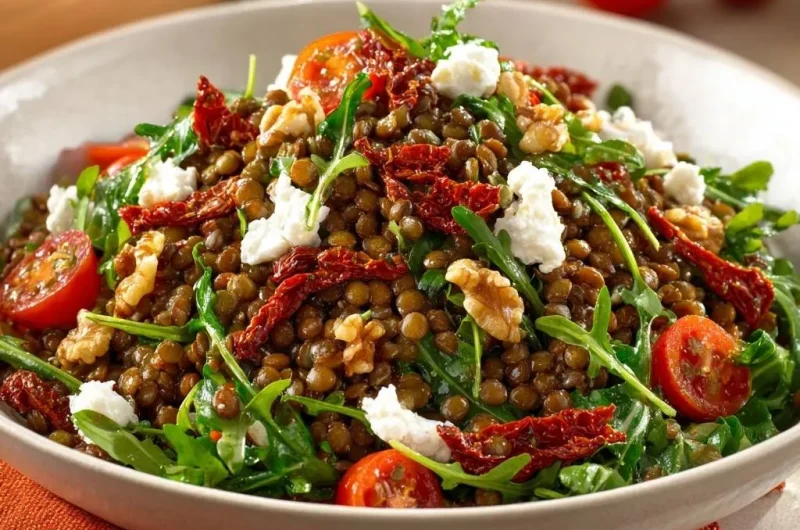
Mediterranean Lentil and Goat Cheese Salad
Course: SaladCuisine: MediterraneanDifficulty: easy4
servings10
minutes20
minutes30
Minutes340
kcalMediterranean
Ingredients
1 cup dry French Green or Puy lentils, rinsed
3 cups cold water
1 teaspoon salt
2 cups fresh baby arugula
1/2 cup cherry tomatoes, halved
1/2 cup sun-dried tomatoes (packed in oil), julienned
1/2 cup walnut halves
4 ounces goat cheese, crumbled
3 tablespoons extra virgin olive oil
1 tablespoon balsamic vinegar
1 clove garlic, minced
Black pepper to taste
Directions
- To solve the mushy lentil problem, place rinsed lentils in a pot with 3 cups of cold water. Do not use boiling water to start. Bring to a gentle simmer over medium heat, then immediately reduce heat to low.
- Simmer uncovered for 18 to 20 minutes. Start tasting at the 15-minute mark. You want them al dente, meaning they have a slight snap and the skins remain intact.
- Drain the lentils immediately in a fine-mesh sieve and rinse with cold water to stop the cooking process instantly. This prevents residual heat from softening the centers. Let them drain thoroughly for 5 minutes; excess water will dilute the dressing.
- While lentils drain, whisk together the olive oil, balsamic vinegar, minced garlic, salt, and pepper in a large mixing bowl.
- Add the cooled, firm lentils to the dressing and toss gently. This allows the lentils to absorb the vinaigrette while they are fresh.
- Add the baby arugula, cherry tomatoes, sun-dried tomatoes, and walnut halves to the bowl. Fold gently to combine so the greens are lightly coated but not bruised.
- Transfer to a serving bowl and top with the crumbled goat cheese. Serve immediately to maintain the contrast between the firm lentils and creamy cheese.
Notes
- The secret to non-mushy lentils is starting with cold water and rinsing them with cold water immediately after draining to stop the cooking process.