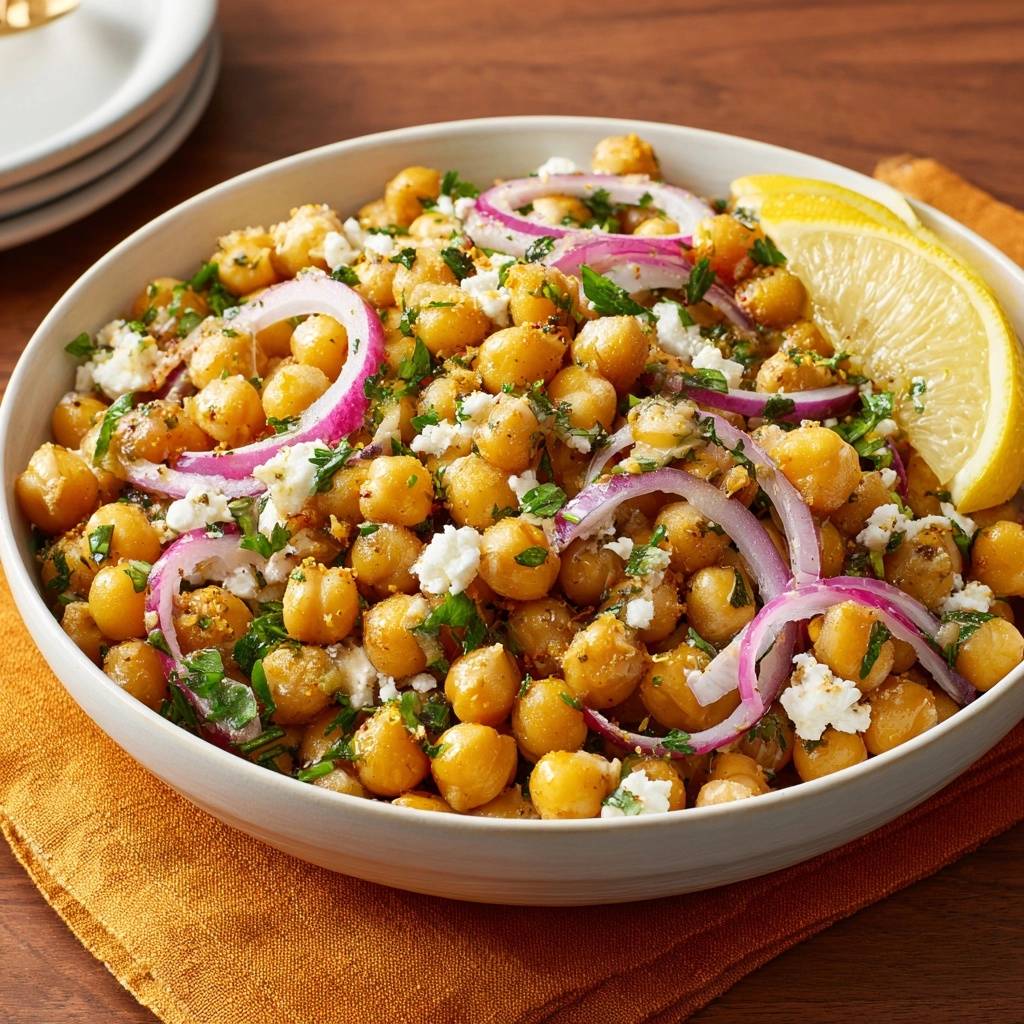
Most chickpea salads start with a bang but end with a whimper, sitting in a pool of watery liquid after just thirty minutes. You’ve likely seen it happen: the vegetables weep, the beans become bland, and that vibrant dressing turns into a thin, flavorless soup. This Mediterranean Zesty Chickpea Salad solves that frustration by using a specific order of operations that locks in crunch and punchy flavor.
The secret to this recipe lies in the balance of bright acidity, earthy legumes, and creamy feta cheese. However, it isn’t just about the ingredients; it’s about the “Anti-Soggy Hack” that transforms a standard side dish into a meal-prep powerhouse. You’ll get a salad that stays crisp and bold, whether you’re eating it immediately or pulling it out of the fridge for lunch the next day.
I’ve found that the real trick to professional-grade salad texture is managing moisture before it manages you. By treating the onions and chickpeas with specific techniques before they ever meet the oil, you ensure the dressing clings to every surface. This creates a flavor-packed experience where the feta stays chunky and the herbs stay bright, rather than dissolving into a grainy, muddy mess.
The Chemistry of the Anti-Soggy Dressing Hack
Maceration sounds like a fancy culinary term, but it’s actually a simple chemical process that saves your salad from mediocrity. When you soak thinly sliced red onions in lemon juice and salt, the acid begins to break down the harsh sulfur compounds that give raw onions their aggressive “bite.” This softens the onion’s texture and mellows the flavor, making it a complementary part of the dish rather than an overwhelming one.
Furthermore, this process draws out the excess water from the onions before they are mixed with the other ingredients. If you skip this, the salt in the dressing will pull that water out later, creating that dreaded puddle at the bottom of your bowl. By macerating first, you create a stable, acidic base that helps the olive oil emulsify directly on the surface of the chickpeas, ensuring a consistent coating that won’t slide off.
Essential Components for Mediterranean Zesty Chickpea Salad
Quality is everything when you’re working with a handful of simple ingredients. While dried chickpeas are great for some dishes, high-quality canned chickpeas are actually preferred here for their consistent, tender-yet-firm texture. Look for brands that list only chickpeas, water, and salt; if the liquid in the can looks overly cloudy or thick, give them an extra-thorough rinse to remove that metallic “canned” aftertaste.
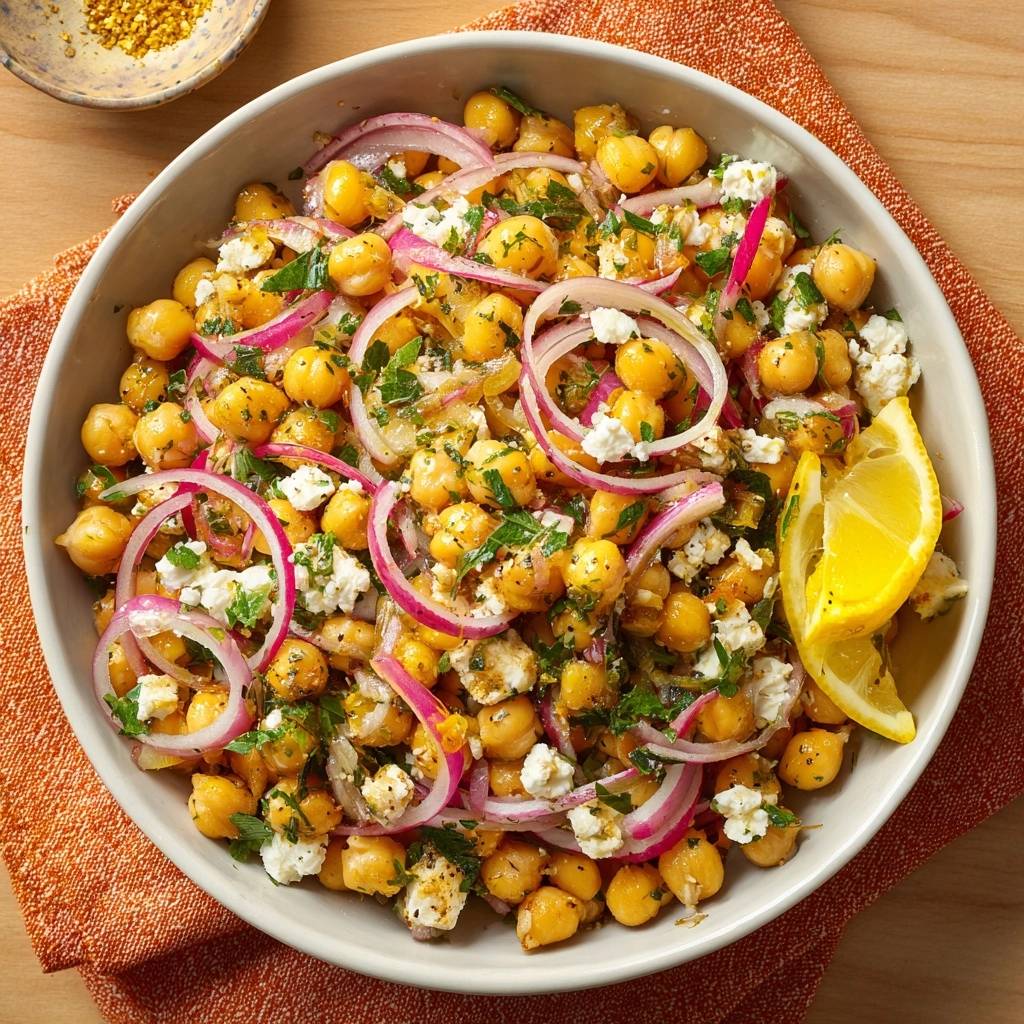
The secret weapon in this lineup is sumac, a deep red spice common in Middle Eastern cooking. It offers a unique, tannic tartness that lemon juice alone can’t provide. In addition, always reach for the best Extra Virgin Olive Oil (EVOO) you have. Since we aren’t cooking the oil, its peppery, fruity notes will be front and center, acting as the primary flavor carrier for the dried oregano and garlic.
Selecting the Right Chickpea Texture
When shopping, give the can a gentle shake; you want to hear the chickpeas moving freely in the liquid. If it feels like a solid mass, they might be overcooked and mushy, which won’t hold up to the vigorous stirring required for this recipe. I recommend checking the sodium content as well, as lower-sodium options often have a firmer skin that provides a better “pop” when you bite into them.
The Role of Fresh Herbs and Aromatics
Flat-leaf Italian parsley is non-negotiable here because its soft texture and clean, peppery flavor integrate seamlessly into the salad. Curly parsley tends to be tough and can feel like eating grass if it isn’t chopped into dust. For the red onion, aim for paper-thin rings; the thinner they are, the faster they macerate and the better they distribute their sweetness throughout the bowl.
Phase One: Macerating and Prepping the Base
Start by tossing your sliced red onions into your largest mixing bowl with the lemon juice and a healthy pinch of salt. As they sit for those crucial five minutes, you’ll notice a visual transformation. The onions will turn a vibrant, translucent pink, and they will lose their rigid structure, becoming soft and pliable.
Therefore, don’t rush this window of time. This five-minute rest is the foundation of the entire flavor profile. If you add the oil too early, it will coat the onions and prevent the lemon juice from doing its job, leaving you with crunchy, sharp onions that will likely give you “onion breath” for the rest of the afternoon.
Phase Two: Achieving the Perfect Chickpea Dryness
Water is the absolute enemy of flavor in this recipe. If your chickpeas are even slightly damp, the olive oil and spices will simply slide off the beans and pool at the bottom of the bowl. After rinsing your chickpeas, spread them out on a clean kitchen towel or several layers of paper towels.
I like to use the “towel-roll” method: gently roll the chickpeas around under the towel to buff away every drop of moisture. You might even see some of the thin, papery skins come off—that’s perfectly fine! The drier the surface of the chickpea, the better the oil and garlic powder will adhere, creating a concentrated crust of flavor on every single bean.
Phase Three: Layering Spices and Oil Barriers
Once the chickpeas are bone-dry, add them to the bowl with the macerated onions. Now, drizzle the olive oil over the top and add your oregano, garlic powder, sumac, and black pepper. Stir vigorously with a large spoon. You want to see a glossy sheen on every chickpea, which indicates the oil has successfully encapsulated the spices.
This step creates a “moisture barrier.” By coating the legumes in oil before adding the high-moisture fresh herbs or the cheese, you protect the chickpeas from getting soggy. The oil acts as a sealant, keeping the lemon juice on the outside and the firm texture of the bean on the inside. You’ll smell the oregano and sumac bloom as they hit the oil, signaling that the flavors are fully activated.
Phase Four: Incorporating Texture and Creaminess
The final step requires a delicate touch. Gently fold in the chopped parsley and the crumbled feta cheese using a spatula or a large spoon. You aren’t looking to beat the ingredients together; instead, use a lifting and turning motion to distribute the green and white throughout the gold and red base.
If you mix too aggressively at this stage, the feta will break down and turn into a grainy paste that coats everything in a dull gray film. You want distinct, creamy chunks of cheese that provide a salty contrast to the zesty dressing. The goal is a vibrant, high-contrast salad where every ingredient maintains its individual identity and texture.
Flavor Variations and Ingredient Swaps
This salad is a fantastic canvas for whatever you have in the pantry. If you want a protein boost, adding a can of high-quality tuna or some chilled grilled chicken breast makes this a very filling main course. For those who crave a bit of crunch, diced Persian cucumbers or a handful of toasted pine nuts add a wonderful structural variety to the soft chickpeas.
However, if you need a vegan alternative, simply swap the feta for salty Kalamata olives or a dollop of creamy vegan cashew cheese. If you like a spicy kick, a teaspoon of Aleppo pepper or red chili flakes provides a slow, warm heat that plays beautifully against the cool lemon juice. You can also swap the parsley for fresh mint or dill if you want to lean into a more herbaceous, Greek-inspired profile.
What to Serve with Mediterranean Zesty Chickpea Salad
This salad is incredibly versatile and pairs perfectly with warm, charred pita bread for a light lunch. If you’re serving dinner, it acts as a bright, acidic counterpoint to rich, fatty meats like grilled lamb skewers or roasted chicken thighs. The lemon and sumac cut right through the richness, cleansing your palate between bites.
In addition, it works beautifully alongside roasted eggplant or a spread of hummus and baba ganoush for a full mezze platter. For a refreshing beverage pairing, try a glass of sparkling botanical water with a sprig of fresh mint. The bubbles and herbal notes complement the zesty profile of the salad without competing with the bold flavors of the garlic and onion.
Make-Ahead Strategy and Storage Logistics
Unlike most salads, this one actually tastes better on the second day. As it sits in the fridge, the chickpeas continue to absorb the aromatics of the garlic and oregano. Store your leftovers in an airtight glass container to keep the flavors pure; plastic containers can sometimes absorb the scent of the onions and garlic over time.
While this salad keeps well for up to three days, I do not recommend freezing it, as the texture of the chickpeas will become grainy and the onions will turn mushy. If you’re eating it the next day, give it a quick “refresh” with a tiny squeeze of fresh lemon and a pinch of salt. This wakes up the citrus notes that may have mellowed overnight in the refrigerator.
Troubleshooting Common Salad Issues
If you find your salad is too salty, don’t panic. You can easily balance it out by adding another half-can of rinsed chickpeas or a tiny drizzle of honey to mellow the saltiness. If the onions still feel too sharp for your taste, let the salad sit at room temperature for another ten minutes; the acid in the dressing will continue to soften them even after the salad is fully assembled.
However, if you notice dressing pooling at the bottom, it usually means the chickpeas weren’t dried thoroughly enough. You can fix this by tossing in a few extra chickpeas to absorb the liquid. If you are prepping this two days in advance for a party, keep the parsley in a separate container and fold it in right before serving to ensure the greens stay vibrant and don’t wilt from the acidity.
Expert Tips for High-Volume Prep
When scaling this recipe for a crowd, remember the golden ratio of two parts acid to three parts oil. This ensures the “zesty” punch remains the star of the show even when you’re mixing five or six cans of chickpeas at once. Also, if you’re doubling the recipe, macerate the onions in a separate small bowl first to ensure they are evenly submerged in the lemon juice before adding them to the larger vat of beans.
How long does Mediterranean Zesty Chickpea Salad last in the fridge?
This salad stays fresh and delicious for up to 3 to 4 days when stored in an airtight container. In fact, many people find the flavor improves after the first 24 hours as the spices meld. However, the parsley may lose some of its bright green color by day three, so if you’re serving it to guests, you might want to add a fresh sprinkle of herbs right before it hits the table.
Can I use dried chickpeas instead of canned?
Yes, you certainly can, but you must cook them until they are tender but still have a firm “bite.” Overcooked, mushy chickpeas will fall apart during the vigorous stirring phase. If using dried, you’ll need about 3 cups of cooked chickpeas to replace the two 15-ounce cans called for in this recipe. Ensure they are completely cooled and dried before you begin the dressing process.
What can I use if I can’t find sumac?
Sumac has a very specific tart, almost floral flavor, but if you can’t find it, you can substitute it with extra lemon zest. The zest provides that concentrated citrus punch without adding extra liquid to the salad. A tiny pinch of extra black pepper can also help mimic the slight tannic bite that sumac provides to the dish.
Why is my feta cheese turning the salad cloudy?
This usually happens if the feta is too soft or if the salad is over-mixed. To keep the salad looking sharp and professional, use a firm block of feta and crumble it yourself into large chunks. Always make the feta the very last thing you add to the bowl, and use a gentle folding motion rather than a heavy stir to keep those white chunks distinct.
Is this salad suitable for meal prep?
Absolutely! This is one of the best meal-prep salads because the chickpeas are sturdy enough to handle the dressing without getting soggy. Unlike leafy green salads that wilt within hours, this dish maintains its structural integrity. Just be sure to store it in glass containers if possible, as this helps maintain the coldest temperature and keeps the ingredients crisp.
Can I add other vegetables like tomatoes or cucumbers?
You can, but be aware that high-moisture vegetables like tomatoes and cucumbers will release water over time. If you plan on adding them, I recommend dicing them and adding them only to the portion you are eating immediately. If you add them to the entire batch, the “Anti-Soggy Hack” will be compromised, and you’ll end up with a more watery dressing by the next day.
Mediterranean Zesty Chickpea Salad
Course: SaladCuisine: MediterraneanDifficulty: easy4
servings10
minutes10
Minutes285
kcalMediterranean
Ingredients
2 cans (15 oz each) chickpeas, drained and thoroughly rinsed
1/2 cup red onion, thinly sliced into rings
1/2 cup fresh parsley, finely chopped
1/2 cup feta cheese, crumbled
3 tablespoons extra virgin olive oil
2 tablespoons fresh lemon juice
1 teaspoon dried oregano
1/2 teaspoon garlic powder
1/2 teaspoon sumac (optional, for extra zest)
Salt and black pepper to taste
Lemon wedges for garnish
Directions
- The Anti-Soggy Hack: In a large mixing bowl, combine the thinly sliced red onion rings with the lemon juice and a pinch of salt. Let this sit for 5 minutes. This process, called macerating, softens the harsh bite of the onion and creates a stable flavor base that prevents the vegetables from releasing excess water later.
- Dry the chickpeas completely using a clean kitchen towel or paper towels. Removing every trace of canning liquid is essential so the dressing clings to the beans rather than sliding off.
- Add the dried chickpeas to the bowl with the onions and lemon juice. Toss well to coat.
- Drizzle the olive oil over the chickpeas and add the oregano, garlic powder, sumac, and black pepper. Stir vigorously. By coating the chickpeas in oil and spices before adding the fresh herbs, you create a moisture barrier that keeps the salad fresh for hours.
- Gently fold in the chopped parsley and crumbled feta cheese. Mixing the feta in last ensures it stays in distinct, creamy chunks rather than dissolving into a grainy paste.
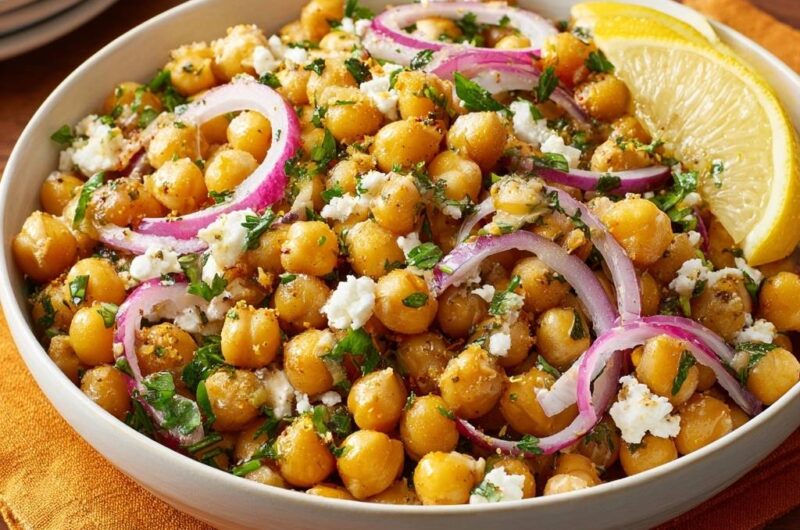
- Serve immediately or refrigerate. Because of the maceration technique, this salad stays crisp and bold even if made a day in advance. Garnish with fresh lemon wedges before serving to match the bright, citrusy profile shown in the image.
Notes
- The maceration technique allows this salad to stay crisp and bold even if made a day in advance. Ensure chickpeas are bone-dry before adding oil to prevent the dressing from sliding off.