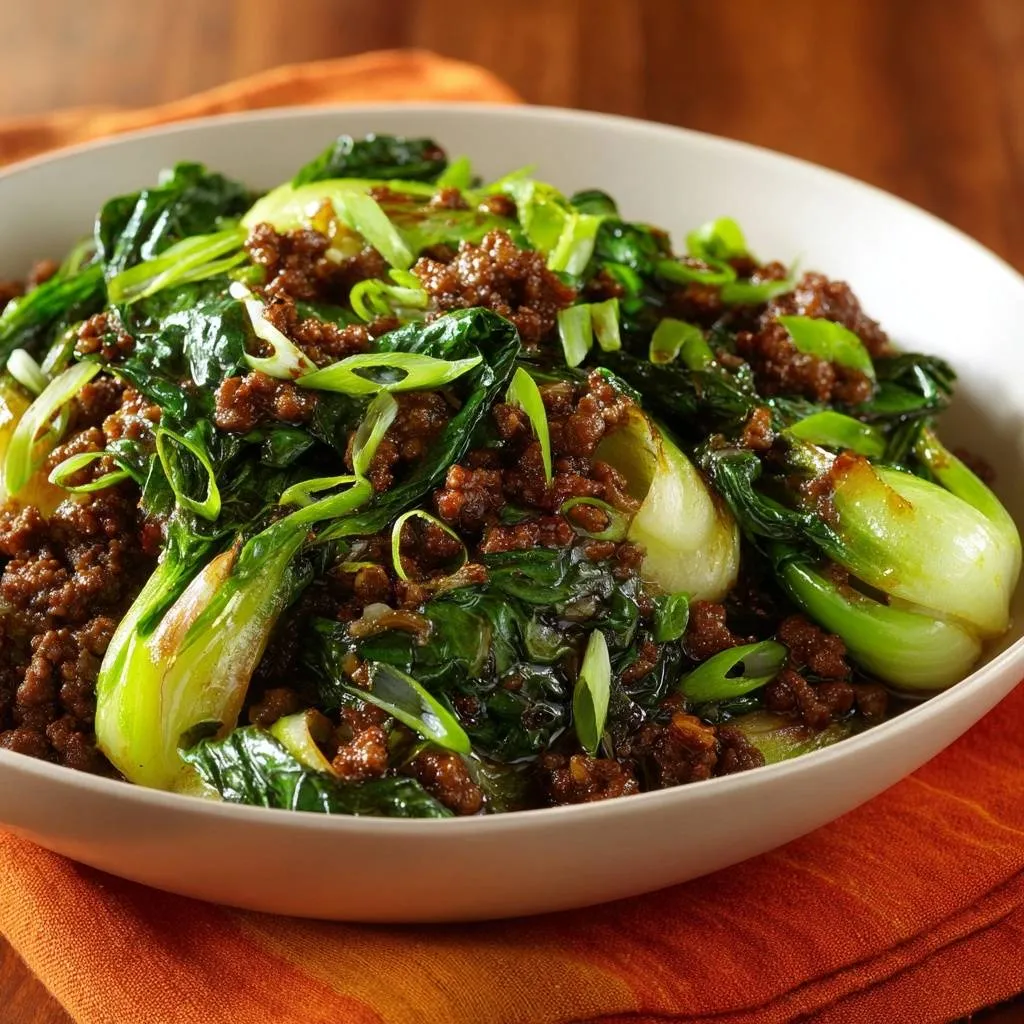
We’ve all been there. You’re craving a vibrant, restaurant-quality meal, but you end up with a grey, watery puddle at the bottom of your bowl. It’s frustrating when those beautiful greens turn into a limp, soggy mess the second they hit the pan. This Savory Beef and Bok Choy Stir-Fry is designed to end that struggle forever by focusing on structural integrity and high-heat mechanics.
The secret lies in the contrast between deeply caramelized, umami-rich beef and the crisp, snap-fresh bite of the bok choy. By mastering the “Sear-then-Sauce” philosophy, you ensure the vegetables never sit in liquid long enough to steam. Instead, they catch a quick char while the sauce transforms into a thick, glossy lacquer that clings to every morsel.
To get that perfect texture, you must ensure your greens are bone-dry before they touch the oil. Even a few drops of water on the leaves will drop the pan temperature and create steam, which is the enemy of a crisp stir-fry. I always use a salad spinner and then follow up with a quick pat-down using paper towels to guarantee a dry surface for the best possible sear.
The Anatomy of a Crisp Stir-Fry
Using lean ground beef is a deliberate choice for this recipe because it provides maximum surface area. More surface area means more browning, which translates to a deeper, more complex flavor profile. Unlike sliced steak, which can sometimes turn chewy if overcooked, ground beef stays tender while developing those coveted crispy edges.
Baby bok choy is the star here because it’s naturally more tender and sweet than its full-sized counterpart. The smaller stalks cook through quickly, allowing the leaves to wilt just enough without becoming slimy. When you pair this with the “Gloss Trio” of soy, oyster, and hoisin sauces, you create a balanced salty-sweet base that feels incredibly indulgent.
The aromatics—fresh ginger, garlic, and red pepper flakes—provide the heat and fragrance that wake up the dish. However, the real hero is the cornstarch slurry. This mixture acts as a moisture-locking agent, instantly thickening the liquids so they coat the ingredients rather than pooling at the bottom of the skillet.
Selecting and Prepping Your Baby Bok Choy
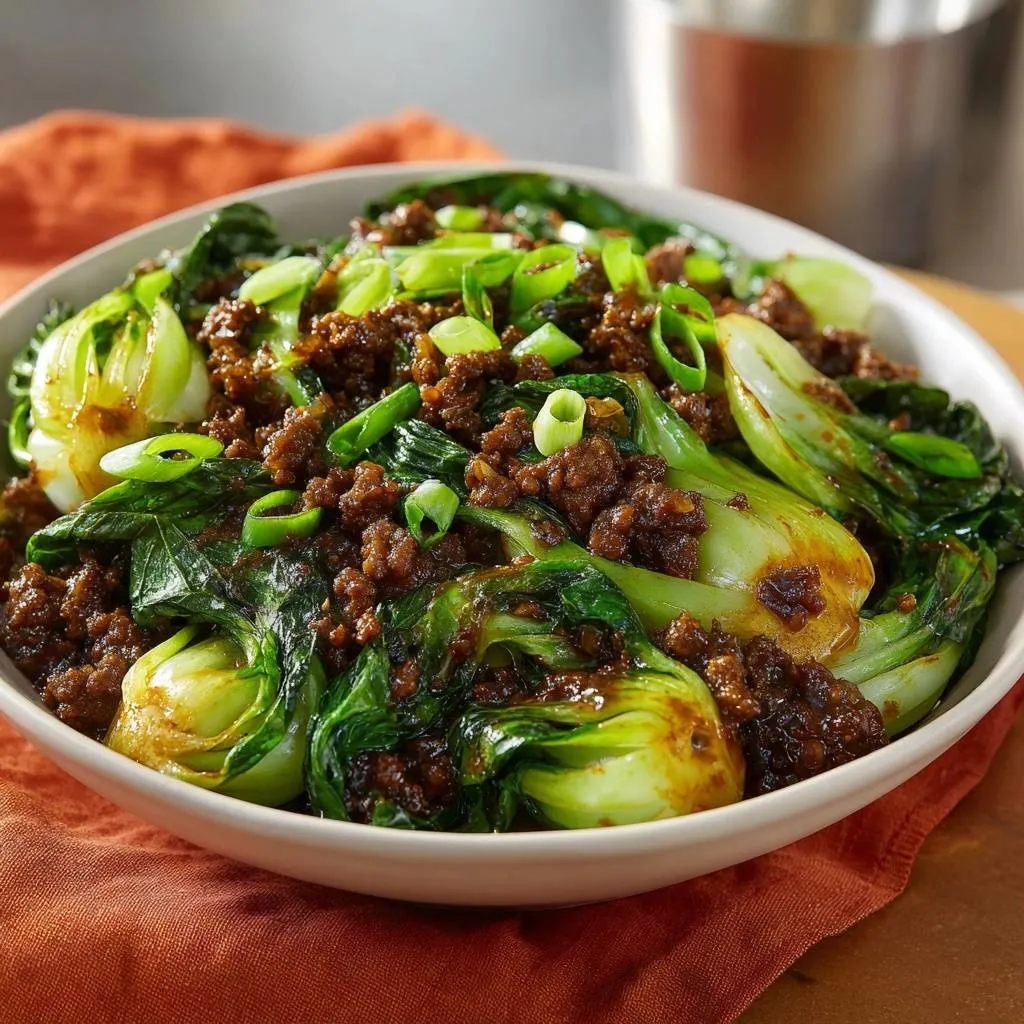
When you’re at the market, look for baby bok choy with bright green leaves and firm, white stalks. Avoid any heads that feel rubbery or show yellowing on the edges. The stalks should have a distinct “snap” when you gently press them, indicating they are full of hydration and ready to stand up to high heat.
Cleaning is the most critical prep step. Dirt often hides in the tight crevices near the base, so I recommend separating the leaves entirely. Once washed, you must be diligent about drying them. If you don’t have a salad spinner, lay the leaves out on a clean kitchen towel and roll them up tightly to wick away every bit of moisture.
Remember, moisture is the enemy of the Maillard reaction. If your bok choy is wet, it will lower the temperature of your wok instantly. You want the vegetable to sear and blister, not boil in a pool of its own wash water. Taking three extra minutes to dry the greens makes the difference between a mediocre meal and a masterpiece.
The Pantry Essentials for a Dark Umami Glaze
Hoisin and oyster sauce work together to create a complex, savory-sweet foundation. Hoisin brings a thick, jammy consistency and a hint of spice, while oyster sauce adds a deep, salty brine that rounds out the beef. Together, they create that dark, professional-looking sheen you see in high-end Chinese takeout.
Toasted sesame oil is another essential, but you have to use it correctly. It has a very low smoke point, meaning it will turn bitter if you try to fry with it. Always treat it as a finishing oil, drizzling it over the dish right before serving to preserve its delicate, nutty aroma.
The cornstarch slurry is your insurance policy against a thin sauce. By mixing the starch with a little water before adding it to the pan, you prevent clumps from forming. As soon as that slurry hits the bubbling sauce, it gelatinizes, creating a “cling” that ensures every bite of beef is fully coated in flavor.
The Science of High-Heat Searing
The Maillard reaction is the chemical process that happens when proteins and sugars are exposed to high heat, creating that delicious brown crust on the beef. To achieve this with ground beef, you have to resist the urge to move it around. If you stir too early, the meat releases its juices and begins to steam, turning grey and bland.
Crowding the pan is the most common mistake home cooks make. If you put too much food in at once, the temperature of the metal drops significantly. Instead of the moisture evaporating instantly, it collects in the pan. If you’re doubling this recipe, I highly recommend cooking the beef in two separate batches to maintain that intense heat.
A heavy skillet or a carbon steel wok is ideal because they hold onto thermal energy. You want the pan to be smoking slightly before the oil goes in. This high heat is necessary to evaporate the natural water content of the bok choy the moment it hits the surface, protecting the cell walls of the vegetable so they stay crunchy and vibrant.
Step-by-Step: Executing the Savory Beef and Bok Choy Stir-Fry
Cooking a stir-fry is a fast-paced process, so make sure all your ingredients are chopped and your sauce is whisked before you turn on the stove. Once the heat is on, things move quickly. You’ll be moving from raw ingredients to a finished plate in about ten minutes, so stay focused on the pan.
Phase 1: Achieving the Deep Beef Crust
Start by heating your oil until it shimmers. Add the ground beef and spread it out into a flat layer, then leave it alone. You want to hear a loud, aggressive sizzle. Let it sit undisturbed for at least two or three minutes until you see dark brown, crispy edges peeking out from underneath.
Once that crust has formed, use your spatula to break the meat into smaller chunks. The contrast between the soft interior of the beef and the crunchy, seared exterior is what gives this dish its addictive texture. Don’t worry if it looks a little too dark; that’s where all the umami lives.
Phase 2: Infusing Aromatics Without Burning
Garlic and ginger are delicate and can burn in seconds at these high temperatures. To prevent this, push the seared beef to the outer edges of the pan, creating a “well” in the center. Drop your aromatics into that small pool of hot fat in the middle.
Let them toast for exactly 60 seconds. You’ll know they’re ready when the kitchen suddenly smells incredible. By using this well method, you’re flavoring the oil and the meat simultaneously without risking the bitter taste of burnt garlic. Stir everything together once the ginger and garlic are fragrant.
Phase 3: The Flash-Sear for Greens
Now, clear the center of the pan again and toss in your bone-dry bok choy. Let the stalks sit against the hot metal for about a minute without moving them. This gives the thickest part of the vegetable a head start, allowing the stems to soften slightly while picking up a bit of char.
After that minute, toss the greens with the beef. The leaves will start to wilt almost immediately from the carry-over heat. You aren’t looking to “cook” the greens through; you’re just looking to warm them and coat them in the seasoned oil before the sauce goes in.
Phase 4: Emulsifying the Glossy Glaze
Give your sauce mixture a quick whisk to redistribute the cornstarch, then pour it directly over the beef and greens. The transformation is almost instant. As the liquid bubbles, it will turn from a cloudy brown to a clear, dark, and translucent glaze.
Toss everything rapidly for 60 to 90 seconds. You want every piece of bok choy and every crumble of beef to be enveloped in that sticky sauce. As soon as the sauce is thick and the leaves are a vibrant, glowing green, pull the pan off the heat. Every second it stays on the burner after this point increases the risk of the greens releasing water.
Troubleshooting Common Stir-Fry Pitfalls
If your beef looks grey and unappealing, it’s usually because the pan wasn’t hot enough or you moved the meat too much. Next time, let the pan get hotter than you think you need, and be patient with that initial sear. If you see liquid pooling in the pan during the beef stage, spoon it out so the meat can actually fry rather than boil.
If your sauce becomes too thick or looks like a paste, don’t panic. This usually happens if the cornstarch slurry was a bit too heavy or the heat was too high for too long. Simply add a teaspoon of water or beef broth and toss quickly to thin it out to a silky consistency. It should look like a shiny coating, not a thick gravy.
For those who find the dish too salty, remember that different brands of soy and oyster sauce have varying sodium levels. You can balance the saltiness by adding a tiny splash of rice vinegar or a squeeze of lime at the end. The acidity cuts through the salt and the richness of the beef, brightening the entire flavor profile.
Optimal Pairings for Savory Beef and Bok Choy Stir-Fry
A bowl of long-grain jasmine rice is the classic choice here. Its floral aroma and fluffy texture are perfect for soaking up the extra hoisin glaze. If you prefer something with more bite, brown rice adds a lovely nuttiness that complements the toasted sesame oil used at the end of the recipe.
If you’re in the mood for noodles, this stir-fry works beautifully with thick udon. Simply toss the cooked noodles into the pan during the final glazing phase. The sauce is thick enough to cling to the wide surface of the noodles, creating a dish reminiscent of “drunken noodles” but with a savory beef twist.
To round out the meal, consider a cold side dish. A simple cucumber salad with a splash of rice vinegar and a pinch of sugar provides a refreshing, crunchy contrast to the warm, savory beef. The coolness of the cucumbers cleanses the palate between bites of the rich, umami-heavy stir-fry.
Expert Tips for Texture and Flavor Maintenance
Professional chefs often talk about “Wok Hei,” or the breath of the wok. While it’s hard to achieve that smoky flavor on a standard home stove, you can mimic it by using a heavy cast-iron skillet and letting the pan get very hot. That slight char on the bok choy stems is your way of bringing that restaurant quality home.
If you ever decide to swap the ground beef for sliced flank steak or sirloin, try “velveting” the meat. This involves coating the slices in a bit of cornstarch and oil before searing. It creates a protective barrier that keeps the meat incredibly tender, though for this specific recipe, the ground beef provides a unique texture that’s hard to beat.
Finally, remember that stir-fry is a “minute” dish. It is at its absolute peak the second it leaves the pan. If it sits in a warm skillet for even five minutes, the residual heat will continue to cook the bok choy, turning those crisp stems soft. Have your plates ready and your family at the table before you start the final toss.
Frequently Asked Questions
Can I substitute the beef with another protein?
Yes, ground turkey or ground chicken work well as leaner alternatives. However, because these meats have less fat than beef, you may need to add an extra tablespoon of oil to the pan to prevent sticking and ensure you still get a good sear. For a plant-based option, crumbled extra-firm tofu works great, provided you press it thoroughly to remove all water before cooking.
How do I store and reheat leftovers without losing the crunch?
Store leftovers in an airtight container in the fridge for up to three days. While the flavor will actually deepen overnight, the bok choy will naturally lose some of its snap. To reheat, avoid the microwave if possible. Instead, flash-fry the leftovers in a very hot skillet for 2 minutes. This helps re-caramelize the sauce and prevents the vegetables from becoming completely mushy.
What if I cannot find Baby Bok Choy?
If baby bok choy isn’t available, Choy Sum is the best substitute as it has a similar sweetness and texture. You can also use Napa cabbage, but keep in mind that it wilts much faster. If using Napa cabbage, slice it into thick ribbons and add it at the very end, tossing for only 30 seconds to ensure it doesn’t turn into a watery mess.
Is there a gluten-free version of this sauce?
To make this dish gluten-free, swap the soy sauce for Tamari. You will also need to source gluten-free certified oyster and hoisin sauces, as many traditional brands use wheat flour as a thickener. Cornstarch is naturally gluten-free, so it remains the perfect thickening agent for the glaze. Always double-check labels to ensure there is no cross-contamination.
Why is my sauce not thickening?
Cornstarch requires a specific temperature (about 144°F to 160°F) to begin the thickening process, known as gelatinization. If your pan isn’t hot enough when you add the sauce, the starch will just sit there in liquid form. Ensure the mixture comes to a visible simmer. Also, make sure you stirred the slurry right before pouring, as cornstarch settles quickly at the bottom of the bowl.
Savory Beef and Bok Choy Stir-Fry
Course: Main CourseCuisine: Asian-AmericanDifficulty: easy4
servings10
minutes10
minutes20
MinutesAsian-American
Ingredients
1 pound lean ground beef
4 large heads of baby bok choy, ends trimmed and leaves separated (keep stems and leaves together)
3 green onions, sliced diagonally
2 tablespoons soy sauce
1 tablespoon oyster sauce
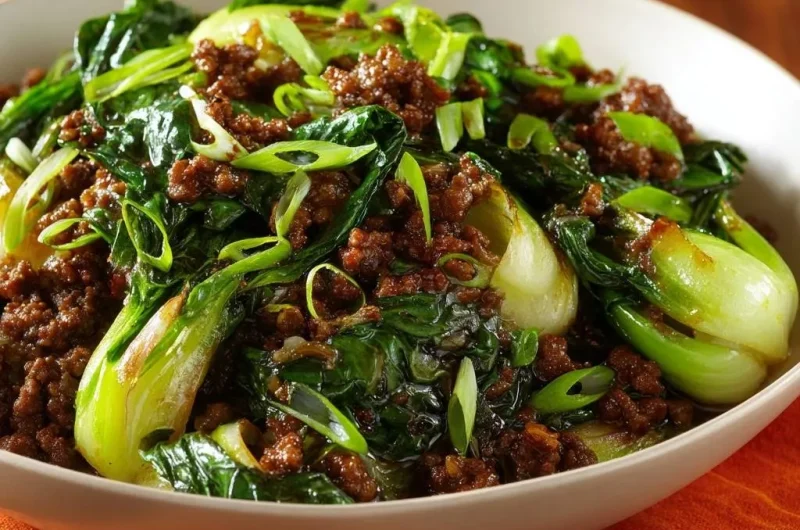
1 tablespoon hoisin sauce (for the dark, glossy glaze shown in the image)
1 tablespoon fresh ginger, minced
3 cloves garlic, minced
1 tablespoon vegetable oil
1 teaspoon toasted sesame oil
1/2 teaspoon red pepper flakes
1 teaspoon cornstarch (mixed with 1 tablespoon water)
Directions
- The key to avoiding soggy greens is to ensure the bok choy is bone-dry after washing. Use a salad spinner or pat every leaf thoroughly with paper towels. Moisture on the leaves is the enemy of a crisp stir-fry.
- In a small bowl, whisk together the soy sauce, oyster sauce, hoisin sauce, and the cornstarch slurry. Set aside.
- Heat a large wok or heavy skillet over high heat until it is smoking slightly. Add the vegetable oil and swirl to coat.
- Add the ground beef to the pan, breaking it into small chunks. Let it sit undisturbed for 2-3 minutes to develop a dark, crispy crust. This browning adds the essential umami flavor and texture seen in the image.
- Stir in the ginger, garlic, and red pepper flakes. Cook for 1 minute until fragrant.
- Push the beef to the outer edges of the pan. Place the bok choy into the center. Sear the bok choy undisturbed for 1 minute to get a slight char on the stems, then toss with the beef.
- Immediately pour the sauce mixture over the beef and greens. Toss rapidly for 60 to 90 seconds. The cornstarch will cause the sauce to thicken instantly into a dark, glossy glaze that clings to the beef without making the vegetables soggy.
- Remove from heat while the leaves are still bright green and the stems still have a snap. Overcooking will cause the cells to break down and release water.
- Drizzle with sesame oil and garnish generously with the fresh green onions. Serve immediately to maintain the perfect texture and sheen.
Notes
- The secret to avoiding soggy greens is the ‘sear-then-sauce’ technique and ensuring the vegetables are bone-dry before they hit the pan.