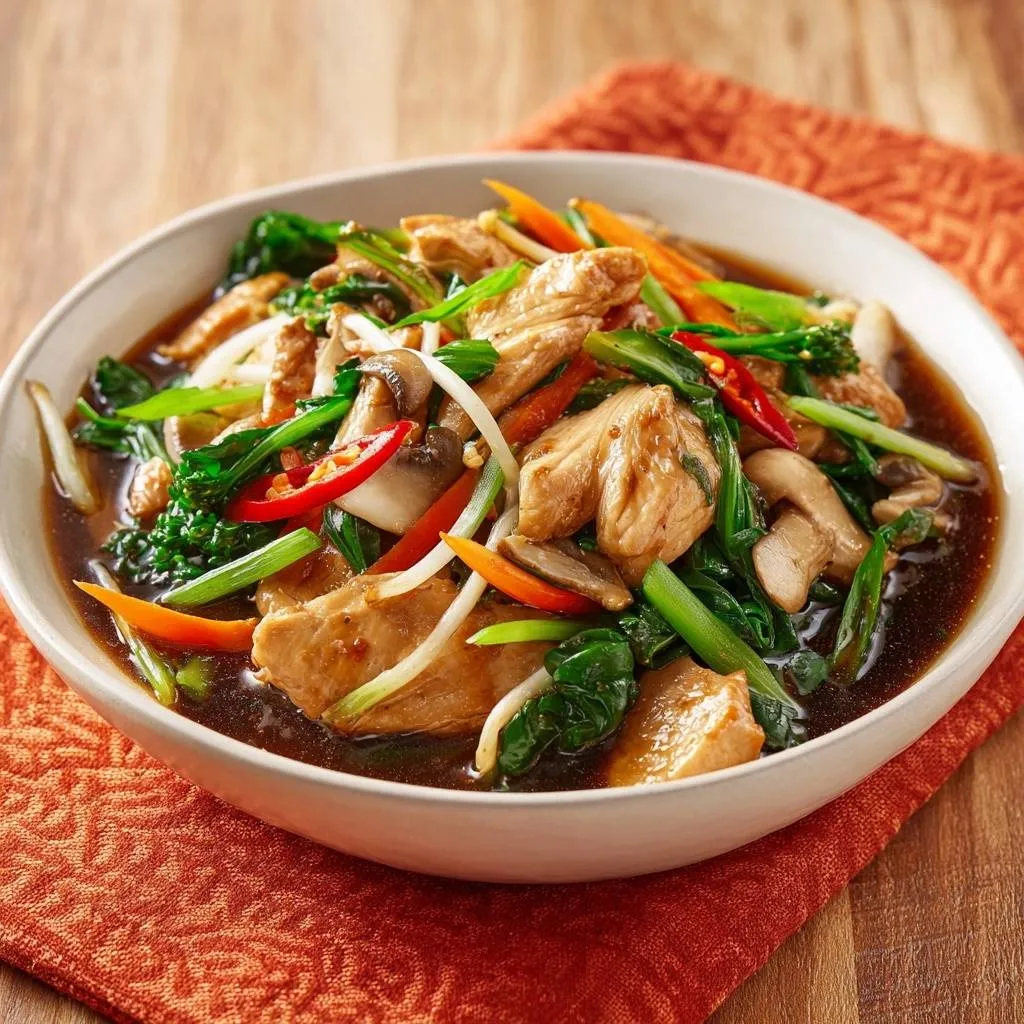
We’ve all been there. You prep your colorful vegetables and slice your chicken with care, only to end up with a sad, watery puddle at the bottom of your bowl. Instead of that glossy, restaurant-style glaze that clings to every bite, you get a thin soup that washes away all the flavor. It’s frustrating because you followed the steps, yet the texture just isn’t right.
The secret to a truly Savory Chicken and Vegetable Stir-Fry lies in the balance of moisture and heat. Most home cooks don’t realize that vegetables release a massive amount of water the moment they hit salt and heat. If your sauce isn’t built to handle that extra liquid, it breaks down instantly. This recipe changes the game by using a specific ratio of aromatics and a fortified broth base to ensure your dinner is rich, dark, and perfectly coated.
I’ve found that the real “aha!” moment comes when you master the cornstarch slurry. You can’t just dump it in and hope for the best. You have to wait for the sauce to reach a rapid, rolling boil before the starch can actually hydrate and swell. This creates that translucent, mirror-like finish that makes the dish look like it came straight out of a professional kitchen.
The Science of Velveting for Silky Chicken
If you’ve ever wondered why restaurant chicken feels incredibly soft while home-cooked breast often turns out woody or dry, the answer is velveting. This traditional Chinese technique involves coating the meat in a thin layer of cornstarch and seasonings before it ever touches the hot pan. It sounds simple, but the chemistry behind it is fascinating.
The cornstarch creates a physical barrier around the chicken fibers. When the meat hits the high heat of the wok, this coating gelatinizes instantly, trapping the natural juices inside. Therefore, the muscle fibers don’t tighten up and squeeze out their moisture. Instead of the chicken becoming tough, it stays “velvety” and tender.
Adding a splash of soy sauce to this coating does more than just add salt. The enzymes and pH level of the soy sauce help break down some of the tougher proteins on the surface of the meat. This double-action of protection and tenderizing ensures that even lean chicken breast remains succulent after a hard sear.
Choosing the Right Cut: Breast vs. Thigh
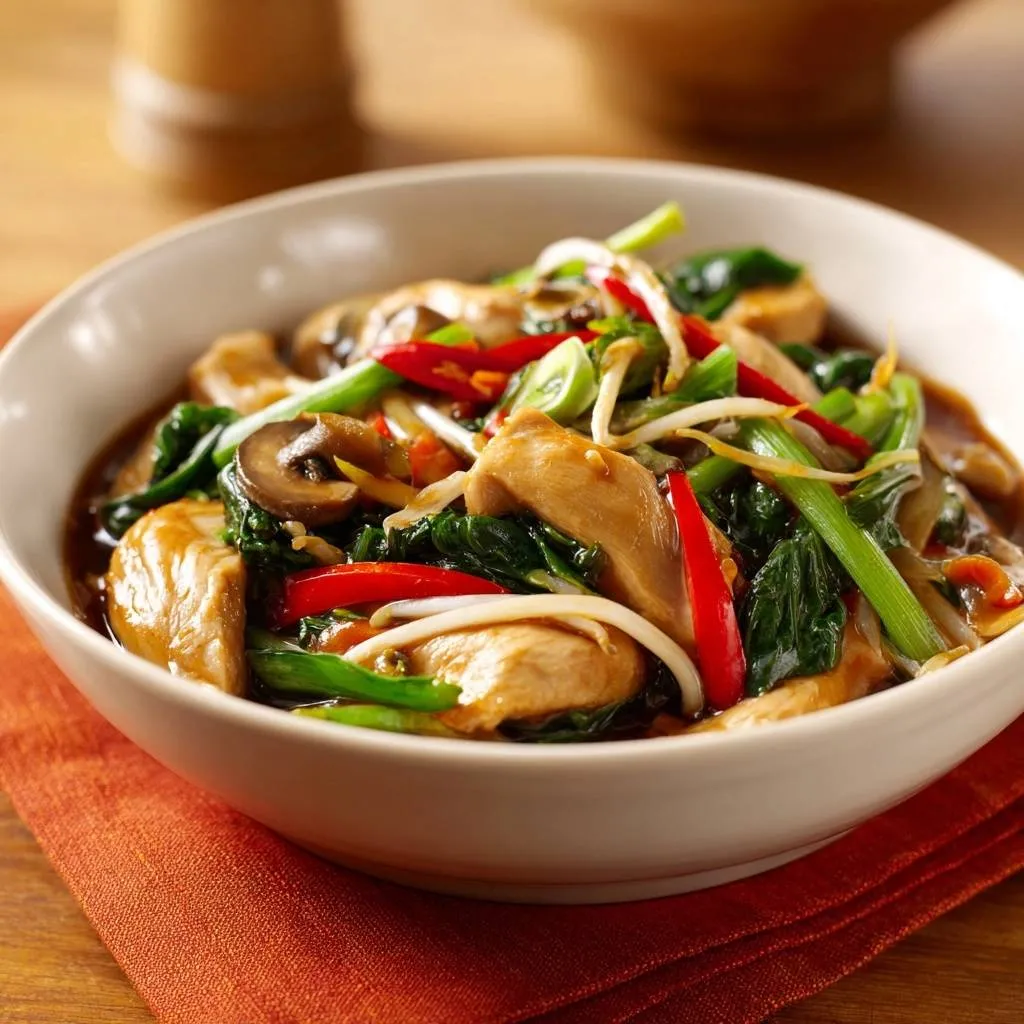
For this Savory Chicken and Vegetable Stir-Fry, chicken breast is the classic choice because its mild flavor allows the ginger and garlic to shine. However, it’s also the most unforgiving cut. If you prefer a richer, more foolproof option, boneless skinless chicken thighs are a fantastic alternative because they contain more intramuscular fat.
Regardless of the cut you choose, you must slice the meat against the grain. Look for the direction the muscle fibers are running and cut perpendicular to them. This shortens the fibers, making the meat much easier to chew. If you cut with the grain, the chicken will feel stringy and tough, no matter how well you velvet it.
Essential Components for a Glossy Stir-Fry Sauce
A great stir-fry sauce needs more than just soy sauce to be successful. To get that deep, savory “umami” punch, we use oyster sauce as a thick, salty, and slightly sweet anchor. It provides a complexity that soy sauce alone cannot achieve, giving the dish its characteristic dark mahogany color.
Using chicken broth instead of plain water is a non-negotiable step for flavor volume. The broth provides a savory backbone that carries the other ingredients across your palate. In addition, a small amount of honey or brown sugar is vital. This isn’t to make the dish “sweet,” but to encourage the Maillard reaction, which creates those deep, roasted flavor notes as the sauce bubbles in the pan.
Aromatics: The Foundation of Heat and Fragrance
Fresh ginger and garlic are the soul of this dish. You want to mince the garlic very finely so it melts into the sauce, distributing its flavor evenly without leaving large, bitter chunks. Ginger should be grated or finely minced to release its spicy, citrus-like oils into the oil during the initial fry.
The red chilies provide a controlled heat that cuts through the richness of the sesame oil. By slicing them diagonally, you expose more surface area, allowing the capsaicin to infuse the sauce. If you prefer a milder dish, you can remove the seeds, but don’t skip the chilies entirely as they provide a necessary brightness to the flavor profile.
Selecting and Prepping Your Vegetable Medley
Mise en place, or “everything in its place,” is the most important rule of stir-frying. Once the heat is on, things move fast. You won’t have time to chop a carrot while the garlic is browning. Every vegetable should be prepped and ready in bowls next to your stove before you turn on the burner.
Crucially, your vegetables must be bone-dry. If you wash your Chinese broccoli and throw it into the pan while it’s still dripping, that water will instantly drop the temperature of the oil. Instead of searing and crisping, your vegetables will steam and turn mushy. Pat everything down with a paper towel to ensure a vibrant, snappy texture.
Texture Contrast: Stems, Leaves, and Sprouts
Chinese broccoli, or Gai Lan, is prized for its thick, crunchy stems and tender, bitter leaves. Because the stems take much longer to cook, you must slice them thinly and add them to the pan early. The leaves, however, only need about 30 seconds of heat to wilt, so they go in at the very end.
Julienned carrots add a beautiful orange pop and a sweet “snap” that contrasts perfectly with the earthy, soft mushrooms. Bean sprouts are the final touch, added just before the sauce. They provide a watery, refreshing crunch that lightens the entire dish, but they must be cooked briefly to avoid losing their structure.
Step-by-Step: Searing and Building the Base
Start by heating your oil until it is shimmering and just starting to send up a tiny wisp of smoke. This high heat is essential for the “sear.” Add your chicken in a single, flat layer and leave it alone. Resist the urge to stir it immediately! Letting it sit for two minutes allows a golden-brown crust to form, which adds immense flavor.
Once the chicken is browned and removed, the pan is primed with flavorful fats. Toss in the hardy vegetables like the broccoli stems and carrots. You’ll notice the colors become more vibrant almost instantly. This flash-frying method keeps the interior of the vegetables crisp while the exterior begins to soften and take on the aromatics of the pan.
The “Never Watery” Technique: Achieving the Perfect Glaze
The magic happens when you introduce the cornstarch slurry. Cornstarch is a powerful thickener, but it only activates at high temperatures. When you pour the slurry into the bubbling sauce, the starch granules absorb the liquid and swell, turning the thin broth into a thick, glossy glaze in seconds.
Watch for the visual cues. The sauce will start out looking cloudy and opaque. As it cooks for those 45 to 60 seconds, it will suddenly turn translucent and dark. You are looking for the “ribbon stage,” where the sauce is thick enough that it leaves a brief trail when you move your spatula through it. This ensures it will cling to the chicken rather than running off.
Troubleshooting the Slurry: Temperature and Timing
A common mistake is adding the slurry to a lukewarm pan. If the liquid isn’t at a rapid boil, the starch will just sink to the bottom and create gummy clumps. Always give the sauce a good stir to get it bubbling vigorously before you pour in the slurry.
Additionally, always use cold water for your slurry. If you use warm water, the starch will start to hydrate prematurely and become lumpy before it even hits the pan. Give the mixture a quick whisk right before pouring, as cornstarch settles at the bottom of the bowl very quickly.
Equipment Essentials: Wok vs. Cast Iron Skillet
A carbon steel wok is the traditional tool for this job because its thin walls respond instantly to heat changes. It allows you to toss the food high into the air, which cools it slightly and prevents overcooking while adding that elusive “Wok Hei” or smoky breath of the wok. However, not everyone has a high-output gas range to make a wok truly effective.
A heavy-bottomed cast iron skillet is a fantastic alternative for home cooks. It retains heat much better than a thin wok on a standard electric or induction stove. While you can’t toss the food as easily, the cast iron provides a superior sear on the chicken, which is the foundation of a Savory Chicken and Vegetable Stir-Fry.
Flavor Variations and Protein Substitutions
This recipe is incredibly versatile. If you want to swap the protein, large shrimp or sliced flank steak work beautifully with the same velveting technique. For a vegetarian-friendly version, use extra-firm tofu. Just make sure to press the tofu for 20 minutes beforehand to remove excess water so it can crisp up in the pan.
If you can’t find Gai Lan, don’t worry. Broccolini or baby bok choy are excellent substitutes. They offer a similar balance of crunchy stems and soft leaves. You can also add sliced bell peppers or snap peas if you want more sweetness and color in your vegetable medley.
What to Serve with Your Savory Stir-Fry
Because this dish features a generous amount of rich sauce, you need a side that can soak it all up. Steamed Jasmine rice is the gold standard. Its floral aroma complements the ginger, and the fluffy grains act like a sponge for the glossy glaze. For a heartier meal, brown rice provides a nutty chew that stands up well to the bold flavors.
If you prefer noodles, try tossing the finished stir-fry with thick Udon or thin Soba noodles. The sauce is thick enough to coat the noodles perfectly without making them soggy. To balance the heat and salt, a simple side of smashed cucumbers with a little rice vinegar provides a cooling, acidic contrast that cleanses the palate between bites.
Troubleshooting Common Stir-Fry Mistakes
The biggest mistake people make is overcrowding the pan. If you put too much chicken or too many vegetables in at once, the temperature drops and the food begins to boil in its own juices. Cook in batches if you have to! It’s better to spend an extra five minutes cooking in two stages than to end up with a soggy mess.
Another pitfall is burning the garlic. Garlic can turn bitter in seconds under high heat. Always add your aromatics after the meat has seared or alongside the vegetables so they are protected by the moisture of the other ingredients. If you see the garlic turning dark brown, it’s time to add your liquid immediately to stop the cooking process.
Why is my sauce still thin?
If your sauce won’t thicken, it’s usually because there is too much liquid or not enough starch. First, make sure the sauce has come to a full boil. If it has and it’s still thin, mix another half-tablespoon of cornstarch with a tablespoon of cold water and add it in. Never add dry cornstarch directly to the hot pan, or it will clump instantly.
Sometimes, the vegetables release more water than expected, especially if they weren’t dried properly. In this case, you can let the sauce boil for an extra minute to reduce the volume slightly before adding your slurry. This concentrates the flavors and ensures the final glaze is potent and thick.
How to fix an overly salty dish
If you accidentally used regular soy sauce instead of low-sodium, the dish might taste too salty. Don’t panic! You can balance saltiness by adding a small splash of rice vinegar or a squeeze of lime juice. The acid distracts your taste buds from the salt. Alternatively, a tiny bit more honey can help round out the sharp edges of the sodium.
Storage and Reheating for Meal Prep
This stir-fry makes an excellent lunch the next day, but you have to be careful with the reheating process. As the dish cools, the cornstarch glaze will set and become somewhat firm. This is normal! When you’re ready to eat, the best method is to return it to a pan over medium heat with a tablespoon of water or broth.
The extra liquid will “loosen” the sauce and bring back that glossy, silky texture. Avoid using the microwave on high power, as this tends to overcook the chicken and make it rubbery. If you must use a microwave, use 50% power and stir every 30 seconds to ensure the heat is distributed evenly without drying out the meat.
How long does stir-fry last in the fridge?
You can store this Savory Chicken and Vegetable Stir-Fry in an airtight container for up to 3 days. The vegetables will lose some of their “snap” over time as they sit in the sauce, but the flavors will actually deepen. I do not recommend freezing this dish, as the bean sprouts and Chinese broccoli leaves will become mushy and the sauce may break and become watery upon thawing.
What is the best substitute for oyster sauce?
If you don’t have oyster sauce, you can create a quick substitute by mixing 1 tablespoon of soy sauce with a teaspoon of hoisin sauce and a pinch of sugar. This provides the thickness and the sweet-salty balance needed for the glaze. While it won’t have the exact same briny depth, it will still result in a delicious, savory sauce.
Why did my chicken stick to the pan?
Chicken usually sticks for two reasons: the pan wasn’t hot enough or you tried to move it too soon. When the pan is properly heated, the proteins in the chicken will sear and naturally “release” from the surface once a crust has formed. If you try to flip the chicken and it feels stuck, give it another 30 seconds. It will tell you when it’s ready to move!
Can I use frozen vegetables for this recipe?
While fresh is always best for the texture of a Savory Chicken and Vegetable Stir-Fry, you can use frozen in a pinch. However, frozen vegetables hold a lot of extra moisture. To prevent a watery sauce, thaw them completely and pat them very dry before cooking. You may also need to increase the cornstarch in your slurry slightly to account for the extra liquid they release.
Is there a way to make this spicy?
Absolutely! While the red chilies provide a nice hum of heat, you can increase the spice level by adding a teaspoon of chili garlic sauce or Sriracha to the sauce base. For a more authentic “numbing” heat, you can also add a few crushed Sichuan peppercorns to the oil at the very beginning of the cooking process.
Savory Chicken and Vegetable Stir-Fry
Course: Main CourseCuisine: Asian-AmericanDifficulty: easy4
servings15
minutes10
minutes25
Minutes325
kcalAsian-American
Ingredients
1 lb chicken breast, thinly sliced against the grain
2 cups Chinese broccoli (Gai Lan), stems sliced and leaves kept whole
1 cup sliced white button mushrooms
1 large carrot, julienned
1 red chili, sliced diagonally
3 green onions, cut into 2-inch batons
1 cup fresh bean sprouts
2 tablespoons vegetable oil
The Sauce Base:
1/2 cup low-sodium soy sauce
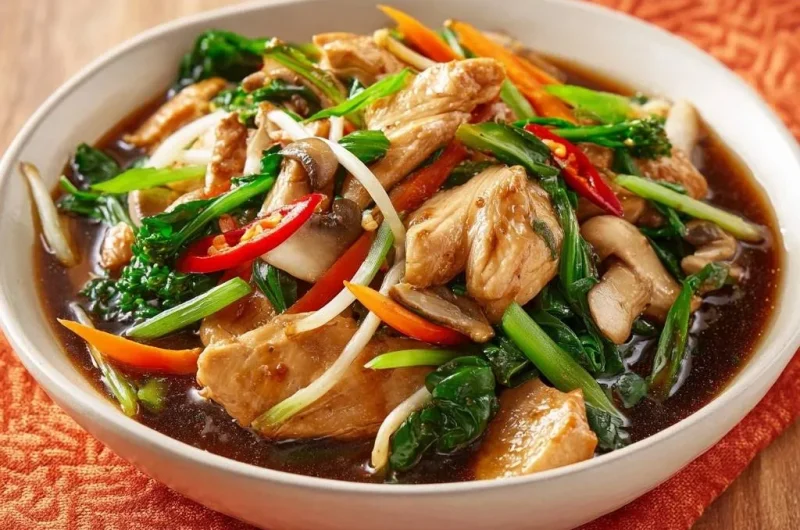
1/2 cup chicken broth (essential for the volume shown in the image)
1 tablespoon oyster sauce (for depth and color)
1 tablespoon ginger, minced
3 cloves garlic, minced
1 tablespoon honey or brown sugar
1 teaspoon toasted sesame oil
The Slurry:
1.5 tablespoons cornstarch mixed with 3 tablespoons cold water
Directions
- Velveting (Optional but recommended): Toss the raw chicken slices with 1 teaspoon of cornstarch and a splash of soy sauce 10 minutes before cooking to ensure they stay silky and never dry.
- In a small bowl, whisk together the soy sauce, chicken broth, oyster sauce, ginger, garlic, honey, and sesame oil. Set aside.
- Heat 1 tablespoon of oil in a large wok or skillet over high heat until shimmering. Add the chicken in a single layer. Let it sear undisturbed for 2 minutes to develop a golden color, then toss until just cooked through. Remove chicken from the pan.
- Add the remaining oil to the pan. Toss in the carrots, Chinese broccoli stems, and mushrooms. Stir-fry for 2-3 minutes until the vegetables are vibrant but crisp.
- Add the Chinese broccoli leaves, bean sprouts, sliced chilies, and green onions. Toss for 30 seconds.
- Return the chicken to the pan. Pour the sauce base over the ingredients and bring to a rapid boil.
- To achieve the “Never Watery” finish: Give your cornstarch slurry a quick stir and pour it into the bubbling liquid. Stir constantly for 45-60 seconds. The sauce will darken and thicken into a rich, translucent glaze that pools at the bottom of the dish as seen in the photo.
- Serve immediately in a shallow bowl to maintain the sauce’s glossy consistency.
Notes
- Velveting the chicken with cornstarch and soy sauce for 10 minutes before cooking is highly recommended for a silky texture. Serve in a shallow bowl to showcase the rich sauce pool.