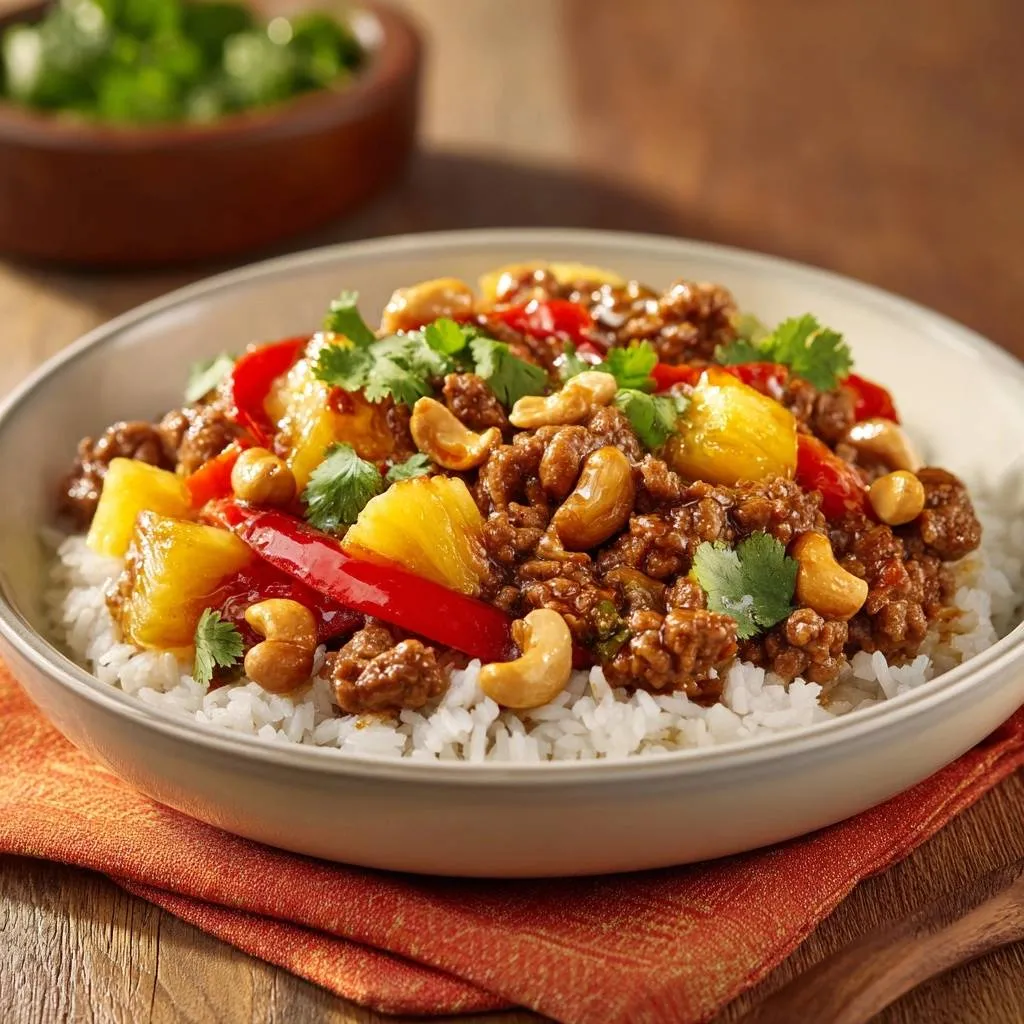
Most home cooks have experienced the disappointment of a stir fry that looks more like a soup than a restaurant-quality meal. You toss in your meat, your veggies, and a handful of fruit, only to watch the pan fill with a thin, watery liquid that steams everything instead of searing it. This “watery mess” syndrome usually happens because the ingredients release their moisture all at once, drowning the flavors and turning the texture into a soggy disappointment.
While many people reach for flank steak or chicken breast, ground beef is actually the secret weapon for a truly spectacular stir fry. Because it has a massive amount of surface area, every tiny crinkle and crevice of the meat acts like a magnet for the sauce. It is budget-friendly, quick to cook, and provides a rich, savory base that balances perfectly against tangy flavors. However, the real trick to this dish is my “Anti-Soggy Pineapple Secret,” which ensures your fruit stays firm and your sauce stays thick.
The secret to success is all about moisture management. By searing the pineapple separately at the very beginning, you create a caramelized barrier that keeps the juices inside the fruit rather than in your sauce. This simple technical shift changes the entire profile of the dish, giving you that glossy, professional finish you crave without the expensive takeout bill.
The Science of the Anti-Soggy Pineapple Technique
Pineapple contains an enzyme called bromelain, which is a powerful meat tenderizer. While that sounds like a good thing, leaving raw pineapple to simmer with ground beef for too long can actually turn the meat mushy. Furthermore, pineapple is nearly 85% water. When you “dump and stir” fresh fruit into a hot pan with other ingredients, that water leaches out immediately, thinning your cornstarch slurry and preventing a proper glaze from forming.
To combat this, we use the Maillard reaction to our advantage. By hitting the pineapple wedges with high heat and a little oil right at the start, the natural sugars on the surface undergo a chemical transformation. This creates a golden-brown, caramelized crust. This crust acts as a protective seal, locking the internal juices inside the fruit so they don’t escape later when you toss everything together.
This method is the polar opposite of the standard “one-pot” approach. Instead of a soggy mixture, you get distinct textures: crispy beef, tender-crisp peppers, and warm, juicy pineapple that pops in your mouth. The high-heat sear ensures the fruit remains a structural component of the meal rather than melting into a sugary puddle at the bottom of your wok.
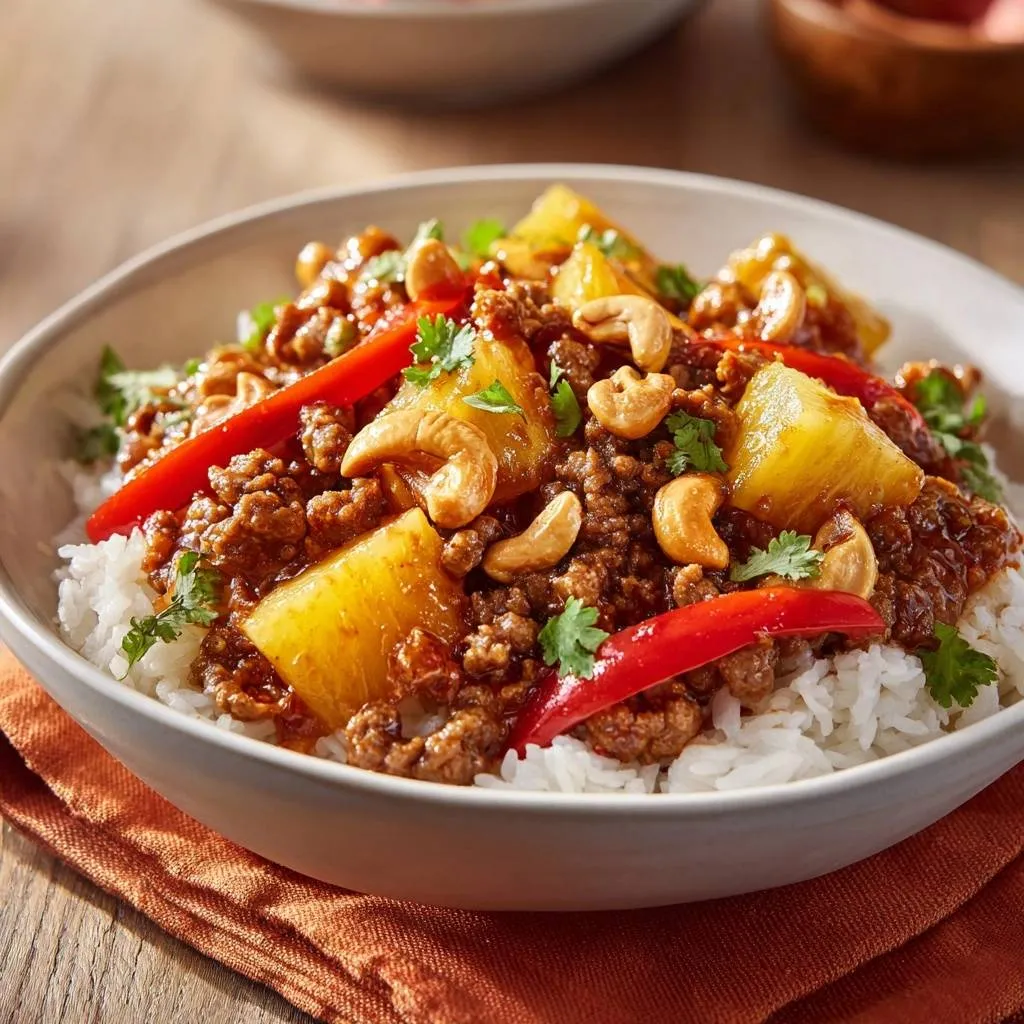
Essential Components for a Glossy Stir Fry Sauce
A great stir fry sauce needs body and shine, which is why tomato paste is a secret hero in this recipe. While the soy sauce and rice vinegar provide the salty-tangy backbone, the tomato paste adds a deep umami richness and helps the sauce achieve a vibrant, reddish-brown color. It also acts as a secondary thickener, working alongside the cornstarch to create a glaze that actually clings to the beef.
Aromatics are the next pillar of flavor. You really want to use fresh garlic and ginger here. Powdered versions simply cannot replicate the pungent, spicy bite that fresh ginger provides or the mellow sweetness of freshly minced garlic. These fresh ingredients bloom in the heat, infusing the oil and the beef with layers of complexity that make the dish taste authentic and bright.
Choosing the Right Ground Beef Grade
When you are standing in the meat aisle, look for 85/15 ground beef. While 80/20 is delicious for burgers, the higher fat content can overwhelm a stir fry sauce, making it feel greasy rather than glossy. On the other hand, 90/10 can sometimes lean toward being too dry once it is seared at high heat.
The 85/15 ratio provides enough fat to flavor the meat and help it brown beautifully, but it is easy to manage. The most important step you will take is draining the excess fat after the beef is browned. If you leave that liquid grease in the pan, the cornstarch glaze will slide right off the meat instead of coating it. You want the sauce to touch the protein, not a layer of oil.
Fresh vs. Canned Pineapple: Texture Implications
Fresh pineapple is the gold standard for this recipe because its cellular structure is much firmer than the canned variety. It stands up to the high-heat sear without falling apart. If you can find a ripe, fresh pineapple, the flavor payoff is immense—it has a bright acidity that cuts through the richness of the beef perfectly.
However, if you must use canned pineapple, choose the chunks packed in juice rather than heavy syrup. You must pat them extremely dry with paper towels before they hit the pan. Since canned pineapple is already softer and sweeter, you might want to reduce the brown sugar in the sauce by a teaspoon to keep the flavors balanced.
Step-by-Step: Executing the Perfect Sear and Glaze
Cooking a stir fry is a fast-paced process that requires your full attention. Once the heat is on, things move quickly, so it helps to think of the process in three distinct phases. This ensures every ingredient is cooked to its ideal texture without overcomplicating your time at the stove.
Phase 1: Caramelizing the Fruit for Maximum Flavor
Start by getting your skillet or wok very hot. You will know the oil is ready when it starts to shimmer and move like water across the pan. Carefully place your pineapple chunks in a single layer. If you crowd the pan, the temperature will drop, and the fruit will steam instead of sear.
Resist the urge to move them around! Let them sit undisturbed for about two minutes. You are looking for those dark, golden edges that signal the sugars have caramelized. Once they have a beautiful crust, scoop them out and set them aside. They are already “sealed” and ready for the final toss.
Phase 2: Developing the Beef Crust and Draining
Wipe the pan quickly to remove any leftover fruit sugars, add a fresh splash of oil, and crank the heat to high. When you add the ground beef, spread it out into one large, flat layer, almost like a giant patty. Let it sear for at least two minutes without touching it. This develops a deep, savory crust that adds incredible texture to the final dish.
After that initial sear, break the meat into large, bite-sized crumbles. Once the pink is gone, move the beef to a colander or use a spoon to remove every drop of excess liquid fat. This is the “make or break” moment. A dry, seared beef surface is what allows the sauce to emulsify and stick, creating that professional, glossy look.
Phase 3: Achieving the Glossy Sauce Emulsion
Add your bell peppers to the beef and toss them just until they turn a vibrant red. Now, give your sauce bowl a quick whisk—cornstarch loves to settle at the bottom—and pour it over the mixture. As the sauce heats up, you will see it change from a cloudy, thin liquid to a clear, syrupy glaze that bubbles and thickens almost instantly.
The final step is the most satisfying. Fold the seared pineapple and the roasted cashews back into the pan. You only want them in there for about 30 seconds. This is just enough time to coat them in the glaze and warm them through without softening the pineapple or making the cashews lose their crunch. Serve it immediately while the textures are at their peak.
Troubleshooting Common Stir Fry Textures
If your sauce becomes too thick—almost like a paste—don’t panic. This usually happens if the heat was a bit too high or the sauce simmered too long. Simply whisk in a tablespoon of beef broth or water at a time until it reaches a silky, pourable consistency. The flavor is concentrated enough that a little extra liquid won’t hurt it.
If your meat looks gray and steamed rather than brown and crispy, it is likely because the pan was overcrowded or not hot enough. Next time, try cooking the beef in two smaller batches. For now, you can save the dish by ensuring you drain the fat thoroughly and letting the sauce reduce until it is very thick, which helps mask the lack of a sear.
Sometimes the balance of sweet and sour can shift depending on the ripeness of your fruit. If the dish tastes a bit too sugary, add a tiny splash of rice vinegar or a pinch of salt. The acidity and salt will cut through the sugar and bring the savory notes of the beef back to the forefront.
Flavor Variations and Ingredient Swaps
This recipe is incredibly adaptable to what you have in your pantry. If you prefer a leaner profile, ground turkey or ground chicken works beautifully. Since these meats have less fat, you may need to add an extra teaspoon of oil to the pan to get a good sear, and be careful not to overcook them as they can dry out faster than beef.
For those with nut allergies, toasted sunflower seeds or even crispy fried onions can provide that essential crunch that the cashews usually offer. If you want to turn up the heat, a teaspoon of sambal oelek or a squeeze of sriracha added directly to the sauce base will give you a spicy kick that plays well with the pineapple.
You can also swap the vegetables based on the season. Snap peas, broccoli florets, or sliced water chestnuts all add great texture. Just remember the golden rule: cook the heartier vegetables with the beef and save the delicate or crunchy items for the very last 30 seconds of cooking.
Optimal Pairings for a Balanced Meal
Long-grain white rice, such as Jasmine, is the classic partner for this stir fry. Its fluffy texture and mild flavor make it the perfect sponge for soaking up that glossy sweet and sour glaze. If you want a nuttier profile, brown rice works well, though it takes longer to cook, so plan accordingly.
For a lower-carb option, cauliflower rice is a fantastic substitute. Since the stir fry sauce is so flavorful, you won’t even notice the switch. Another great addition is a side of chilled cucumber salad dressed with a little rice vinegar and sesame oil. The cold, crisp cucumbers provide a refreshing temperature contrast to the hot, savory beef.
Expert Tips for Success
Why You Must Wipe the Pan
After you sear the pineapple, you might notice some dark spots or sticky residue in the pan. This is concentrated sugar. If you leave it in there while you sear the beef at high heat, those sugars will burn and turn bitter. A quick wipe with a damp paper towel between steps ensures your beef tastes like beef and not burnt caramel.
The Importance of “Mise en Place”
In a 15-minute cook, you do not have time to mince garlic while the beef is searing. “Mise en place” is just a fancy French term for having everything ready. Chop your peppers, whisk your sauce, and measure your cashews before you ever turn on the stove. This prevents the aromatics from burning while you’re distracted with other tasks.
Managing Heat on a Standard Home Range
Most home burners don’t produce the “wok hei” or “breath of the wok” that commercial ranges do. To compensate, use a heavy-bottomed skillet like cast iron or stainless steel. These materials hold onto heat much better than thin non-stick pans. If you notice the pan cooling down, stop stirring for a moment to let the heat build back up.
Frequently Asked Questions
Can I freeze this stir fry?
You can freeze the cooked ground beef and the sauce together in an airtight container for up to two months. However, the bell peppers and pineapple will lose their crisp texture and become quite soft upon thawing. For the best results, freeze the beef and sauce, then add fresh peppers and seared pineapple when you reheat it on the stovetop.
How do I make the sauce spicier?
The best way to add heat is to infuse the oil. Add your crushed red pepper flakes to the oil right before you add the beef. This allows the heat to distribute evenly throughout the entire dish. If you prefer a vinegary heat, stirring in a tablespoon of sriracha or chili-garlic sauce into the liquid glaze mixture works perfectly.
What if I don’t have a wok?
Don’t worry at all! A large cast-iron skillet or a heavy stainless steel frying pan is actually superior to a cheap, thin wok for searing ground beef. The flat surface area of a skillet allows the meat to spread out and develop a better crust. As long as the pan is large enough to toss the ingredients without them spilling over, you are good to go.
Is there a soy sauce substitute?
If you are looking for a gluten-free option, tamari is an excellent 1:1 substitute that tastes almost identical. Liquid aminos also work well, though they tend to be slightly less salty, so you might need an extra pinch of salt. If you use a low-sodium soy sauce, you may want to increase the tomato paste slightly to maintain the depth of flavor.
How long does the leftovers stay fresh?
Leftovers will stay delicious in the refrigerator for up to three days when stored in an airtight container. To keep the cashews from getting soggy, you might want to pick them out and store them separately, or simply accept that they will soften slightly. When reheating, use a skillet over medium heat rather than a microwave to help the beef regain some of its texture.
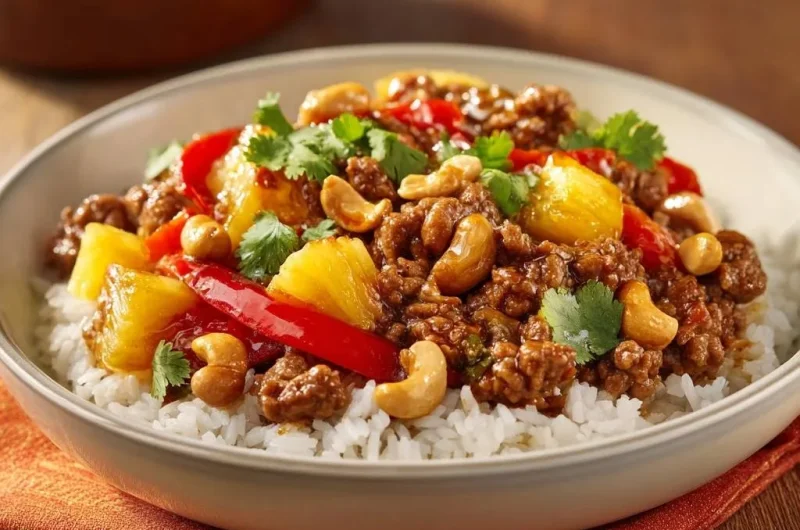
Sweet and Sour Ground Beef Stir Fry
Course: Main CourseCuisine: Asian-AmericanDifficulty: easy4
servings15
minutes15
minutes30
Minutes485
kcalAsian-American
Ingredients
1 pound lean ground beef (85/15 or 90/10)
1 ½ cups fresh pineapple chunks (cut into 1-inch wedges)
1 large red bell pepper, sliced into thick strips
1/2 cup whole roasted unsalted cashews
1/4 cup fresh cilantro, roughly chopped
3 cups cooked long-grain white rice
2 tablespoons vegetable oil, divided
For the Glossy Glaze:
1/4 cup soy sauce
2 tablespoons rice vinegar
2 tablespoons brown sugar, packed
1 tablespoon tomato paste (for color and body)
1 tablespoon cornstarch
1/2 cup beef broth or water
2 cloves garlic, minced
1 teaspoon fresh ginger, grated
1/2 teaspoon crushed red pepper flakes (optional)
Directions
- In a small bowl, whisk together the soy sauce, rice vinegar, brown sugar, tomato paste, cornstarch, beef broth, garlic, and ginger. Ensure the cornstarch is fully dissolved and the tomato paste is incorporated. Set this sauce base aside.
- Heat a large skillet or wok over medium-high heat with 1 tablespoon of vegetable oil. Once the oil is shimmering, add the pineapple chunks in a single layer. Sear for 2-3 minutes without stirring until the edges are golden brown and caramelized. This seals the exterior and prevents juice from leaking into the sauce. Remove the pineapple and set aside.
- Wipe out the pan if necessary and add the remaining 1 tablespoon of oil. Increase heat to high and add the ground beef. Spread it out and let it sear undisturbed for 2 minutes to develop a dark, crispy crust. Break the meat into large, bite-sized crumbles and cook until fully browned. Drain all excess fat from the pan-this is crucial for the sauce to adhere to the meat rather than sliding off.
- Add the red bell pepper strips to the beef and stir-fry for 2 minutes until they are vibrant and tender-crisp.
- Give the sauce mixture a quick whisk to redistribute the cornstarch, then pour it over the beef and peppers. Stir constantly for 1-2 minutes. The sauce will transition from cloudy to a dark, thick, and glossy glaze that coats the beef.
- Gently fold the seared pineapple and the roasted cashews back into the pan. Toss for only 30 seconds to warm through. Tossing them in at the very last second keeps the fruit firm and the nuts perfectly crunchy.
- Serve immediately over a bed of warm white rice. Garnish generously with fresh cilantro to cut through the richness of the glaze.
Notes
- Draining the excess fat after browning the beef is crucial for ensuring the sauce adheres to the meat. Searing the pineapple separately prevents the juice from thinning out the glaze.