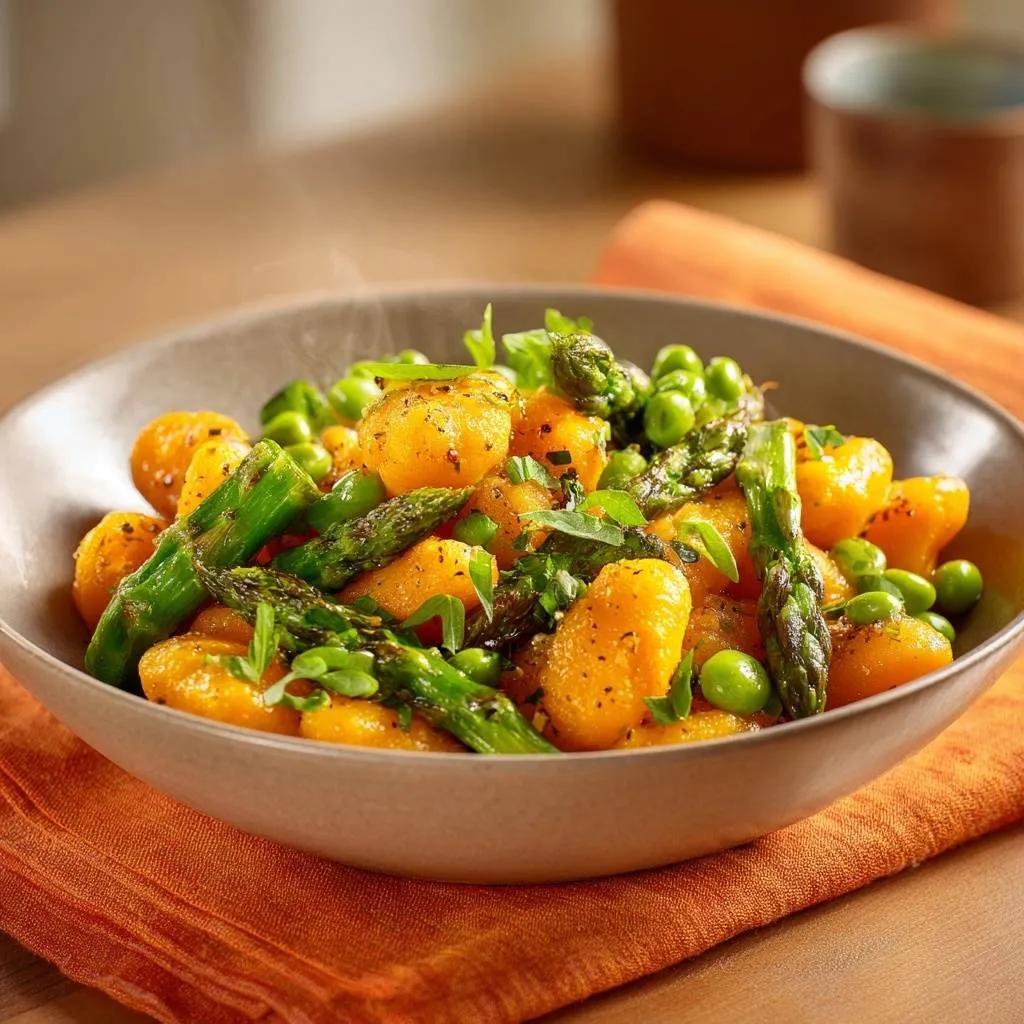
Stop settling for mushy, sticky gnocchi that clumps together in the pan. Most of us grew up thinking that boiling water was the only way to cook pasta, but that’s exactly what leads to a gummy, unappealing mess. When you boil sweet potato gnocchi, the delicate starch absorbs too much water, turning a pillowy dumpling into a heavy lump.
The secret to restaurant-quality results is skipping the boiling water entirely. By pan-searing the gnocchi directly from the package, you lock in a soft interior while creating a golden, crispy crust. This textural contrast is the hallmark of a professional kitchen, and you can achieve it in your own skillet in under fifteen minutes.
I’ve found that the key to this dish is patience during the first three minutes of cooking. If you move the gnocchi too early, you’ll tear the delicate skin before the crust has a chance to set. Use a heavy-bottomed non-stick skillet and let the heat do the work, ensuring every piece has enough space to breathe and brown.
The Science of Searing Without Boiling
When you skip the pot of water, you’re allowing the Maillard reaction to take center stage. This chemical reaction between amino acids and reducing sugars creates that deep, savory flavor and the characteristic brown crust. Because sweet potato gnocchi has a higher sugar content than traditional potato versions, it caramelizes beautifully and quickly.
Boiling gnocchi hydrates the starches until they become glue-like and sticky. However, searing them dry keeps the starch molecules tight and compact on the inside while the outside dehydrates into a crisp shell. This method creates a structural integrity that allows the gnocchi to stand up to the moisture of the fresh vegetables.
A non-stick surface is your best friend here because it allows for even heat transfer without the risk of the starch bonding to the metal. If you use stainless steel, you’ll need significantly more oil to prevent sticking. The dry-sear method ensures that the final dish feels light and vibrant rather than heavy and sodden.

Essential Components for Pan-Seared Sweet Potato Gnocchi
For this recipe, shelf-stable or refrigerated gnocchi actually works better than delicate, handmade dough. These varieties are denser and hold their shape perfectly during the high-heat searing process. The sweet potato base provides an earthy, slightly sweet foundation that pairs naturally with green, spring-forward ingredients.
Fresh asparagus is a non-negotiable partner for this pasta because its snap provides a necessary break from the soft gnocchi. I always look for bright green stalks with tightly closed buds. Sweet peas, whether fresh or frozen, add a pop of natural sugar that bridges the gap between the savory garlic and the sweet potato.
Quality olive oil is the primary fat here, so choose one with a fruity profile. While butter is optional, adding just a tablespoon during the second half of cooking helps with browning and adds a nutty depth. The fat carries the flavor of the aromatics, ensuring every bite is seasoned from the inside out.
Selecting the Best Asparagus Spears
The thickness of your asparagus will dictate how you prep it for the pan. Pencil-thin spears are elegant and cook almost instantly, making them great for a very fast sauté. However, medium to thick spears often offer a more satisfying “snap” and a juicier interior when steamed briefly.
If you find yourself with very thick, woody stalks, make sure to trim the bottom two inches aggressively. You want the tender part of the vegetable to match the cook time of the gnocchi. Regardless of the size, cutting them into uniform two-inch pieces ensures they distribute evenly throughout the skillet.
The Role of Aromatics and Acids
Garlic is a powerful flavor builder, but it is also incredibly fragile under high heat. I always add the minced garlic during the final sixty seconds of cooking. This allows the garlic to soften and release its oils without turning brown and bitter, which would ruin the delicate sweet potato flavor.
Fresh lemon juice acts as the “brightener” that pulls the whole dish together. The acidity cuts through the richness of the olive oil and the starch of the pasta. It wakes up the palate and makes the green vegetables look even more vibrant on the plate.
Mastering the Dry-Sear Technique
The most important rule of the dry-sear is to leave the gnocchi alone. Once you drop the gnocchi into the shimmering oil, resist the urge to shake the pan or stir them with a spatula. They need undisturbed contact with the hot surface to develop a thick, golden-brown crust.
You’ll know they are ready to flip when they release easily from the pan. If they feel stuck, they likely haven’t formed a sufficient crust yet. Give them another thirty seconds. The goal is a deep amber color that looks like a perfectly toasted marshmallow.
Once that first side is crisp, you can be more aggressive with your stirring. The initial sear provides the structural “skeleton” for the gnocchi. This prevents them from collapsing or sticking together when you add the vegetables and the liquid later in the process.
Integrating the Asparagus and Sweet Peas
After the gnocchi are seared, it’s time to introduce the greens. Adding the asparagus and peas directly to the hot oil allows them to blister slightly, which intensifies their flavor. You aren’t looking to cook them all the way through at this stage, just to coat them in the seasoned oil.
The transition should be quick so the pan doesn’t lose too much heat. The vibrant green of the vegetables against the orange gnocchi is a visual cue that you’re on the right track. Keep the heat at medium-high to ensure the vegetables sauté rather than stew in their own juices.
If you’re using frozen peas, there’s no need to thaw them beforehand. They will defrost almost instantly upon hitting the pan. This actually helps keep them from becoming mushy, as they retain their bright color and firm texture throughout the remaining cook time.
The Two-Minute Steam Secret
This is the “hybrid” cooking step that ensures your gnocchi aren’t just crispy on the outside, but tender on the inside. By adding two tablespoons of water or broth and immediately covering the pan, you create a concentrated burst of steam. This steam penetrates the center of the gnocchi and the asparagus stalks.
The lid should only stay on for about two minutes. This is just enough time to soften the starch without compromising the crust you worked so hard to build. It’s a delicate balance that replaces the traditional boiling method with a much more controlled environment.
When you lift the lid, you’ll see a cloud of steam and vibrant, bright green vegetables. There will still be a little moisture in the bottom of the pan. Continue to sauté for another minute or two until that liquid evaporates, which re-crisps the edges of the gnocchi perfectly.
Troubleshooting Common Gnocchi Textures
If your gnocchi are sticking to the pan, your heat is likely too low or you didn’t use enough oil. The oil needs to be shimmering before the pasta hits the surface. On electric stoves, which can have hot spots, try moving the pan slightly to ensure even browning across the entire batch.
If your vegetables are turning a dull olive green, they have been overcooked. This usually happens if the “steam” phase lasts too long. Next time, pull the pan off the heat a minute earlier. Remember that the vegetables will continue to cook slightly from residual heat even after they are plated.
For those using a gas range, the heat can be quite intense. If you notice the garlic or the herbs scorching, turn the flame down to low for the final toss. The goal is to warm the aromatics through, not to fry them into oblivion.
Flavor Variations and Seasonal Swaps
While sweet potato and asparagus are a classic spring pairing, this technique works for any season. In the autumn, you can swap the sweet potato gnocchi for butternut squash gnocchi and replace the asparagus with sage leaves and toasted walnuts. The searing method remains exactly the same.
In the heat of summer, try adding halved cherry tomatoes during the final sauté. They will burst and create a light, fresh sauce that coats the crispy gnocchi. You could also swap the basil for fresh mint or chives to give the dish a completely different herbal profile.
If you want a bit of heat, a pinch of red pepper flakes added with the garlic works wonders. For a more savory, umami-heavy version, a teaspoon of nutritional yeast or a sprinkle of toasted breadcrumbs can add extra texture and depth without needing a heavy sauce.
Vegetarian Pairings and Serving Suggestions
Since this is a starch-forward dish, it pairs beautifully with a crisp, bitter salad. An arugula salad with a simple lemon vinaigrette provides a sharp contrast to the sweet potato. The bitterness of the greens cuts through the richness of the pan-seared crust.
When plating, try to spread the gnocchi out rather than piling them in a deep bowl. If they are stacked too high, the residual steam will soften the crispy exteriors. A wide, shallow pasta bowl or a flat plate is the best way to maintain that “peak crispness” while you eat.
For a light lunch, this dish stands perfectly on its own. If you’re serving it for dinner, a side of roasted cauliflower or a light slaw can round out the meal. The vibrant colors make it a showstopper for guests, even though it only took you twelve minutes to cook.
Expert Tips for Success
A crowded pan is the absolute enemy of a good sear. If the gnocchi are touching each other too much, they will steam instead of fry. If you’re doubling the recipe, it is much better to cook in two batches than to pile everything into one skillet.
I always recommend letting the gnocchi “rest” for about thirty seconds after you turn off the heat but before you do the final toss with lemon juice. This brief pause allows the crust to firm up slightly so it doesn’t fall off when you add the liquid acid.
Check your oil temperature by dropping a single gnocchi into the pan. If it doesn’t sizzle immediately, the oil isn’t hot enough. Waiting for that shimmering point is the difference between a greasy dumpling and a perfectly fried one.
Use sea salt or kosher salt rather than fine table salt. The larger grains provide a subtle crunch and a more controlled burst of seasoning. It clings to the nooks and crannies of the seared gnocchi much better than fine salt, which can sometimes just disappear into the starch.
Frequently Asked Questions
Can I use homemade gnocchi for this method?
You can, but you need to be very careful. Homemade gnocchi usually has a much higher moisture content and a softer structure than store-bought versions. I recommend freezing your homemade gnocchi for about 20 minutes before searing to help them hold their shape, and you may need to skip the steaming step entirely to prevent them from falling apart.
How do I store and reheat leftovers?
Store any leftovers in an airtight container in the refrigerator for up to three days. To reheat, avoid the microwave as it will make the gnocchi rubbery and soft. Instead, toss them back into a dry, hot skillet for 3-4 minutes or use an air fryer at 350°F for 5 minutes to bring back that essential crispy exterior.
Is there a dairy-free alternative for the butter?
Absolutely. You can simply use an extra tablespoon of high-quality olive oil to achieve a great sear. If you want that specific buttery flavor, a high-quality vegan butter substitute works well. Just keep in mind that oil has a higher smoke point, so it’s actually easier to get a dark golden crust using only oil.
What if my asparagus is very thick?
If you have very thick spears, they might need a little extra help. You can slice them in half lengthwise (shaving them) so they cook at the same rate as the gnocchi. Alternatively, you can blanch them in boiling water for 60 seconds before adding them to the skillet, though the “two-minute steam” method usually handles medium-thick spears just fine.
Can I add protein to this dish?
To keep the dish vegetarian while increasing satiety, try adding a can of rinsed and dried chickpeas to the pan at the same time as the gnocchi. They will crisp up alongside the pasta. Toasted pine nuts or slivered almonds added at the very end also provide a great protein boost and an extra layer of crunch that complements the sweet potato.

Pan-Seared Sweet Potato Gnocchi with Asparagus
Course: Main CourseCuisine: AmericanDifficulty: easy4
servings10
minutes12
minutes22
Minutes360
kcalAmerican
Ingredients
1 pound shelf-stable or refrigerated sweet potato gnocchi
1 bunch fresh asparagus, trimmed and cut into 2-inch pieces
1 cup fresh or frozen sweet peas
3 tablespoons extra virgin olive oil
1 tablespoon unsalted butter (optional, for browning)
2 cloves garlic, minced
1/2 teaspoon cracked black pepper
1/2 teaspoon sea salt
1/4 cup fresh basil or parsley, finely chopped
1 tablespoon fresh lemon juice
2 tablespoons water or vegetable broth
Directions
- Heat 2 tablespoons of olive oil in a large non-stick skillet over medium-high heat. To solve the gummy texture issue, do not boil the gnocchi first. Add the dry gnocchi directly to the hot oil in a single layer.
- Let the gnocchi sear undisturbed for 3 to 4 minutes until the bottoms are deeply golden and crisp.
- Add the remaining tablespoon of oil (and butter, if using) to the pan. Add the asparagus pieces and sweet peas. Toss to coat everything in the oil.
- Pour in 2 tablespoons of water or broth and immediately cover the pan with a lid for 2 minutes. This creates a quick steam that ensures the centers of the gnocchi are tender and the asparagus is vibrant and cooked through without losing its snap.
- Remove the lid and continue to sauté for another 2 to 3 minutes, stirring occasionally, until the moisture has evaporated and the gnocchi edges are re-crisped.
- Add the minced garlic, salt, and black pepper during the last 60 seconds of cooking to prevent the garlic from scorching.
- Remove from heat. Immediately drizzle with lemon juice and toss with the fresh chopped herbs. Serve immediately while the crust is at its peak crispness.
Notes
- The secret to avoiding gummy texture is to skip boiling the gnocchi. Adding a small amount of water or broth and covering the pan briefly ensures the centers are tender while maintaining a crispy exterior.