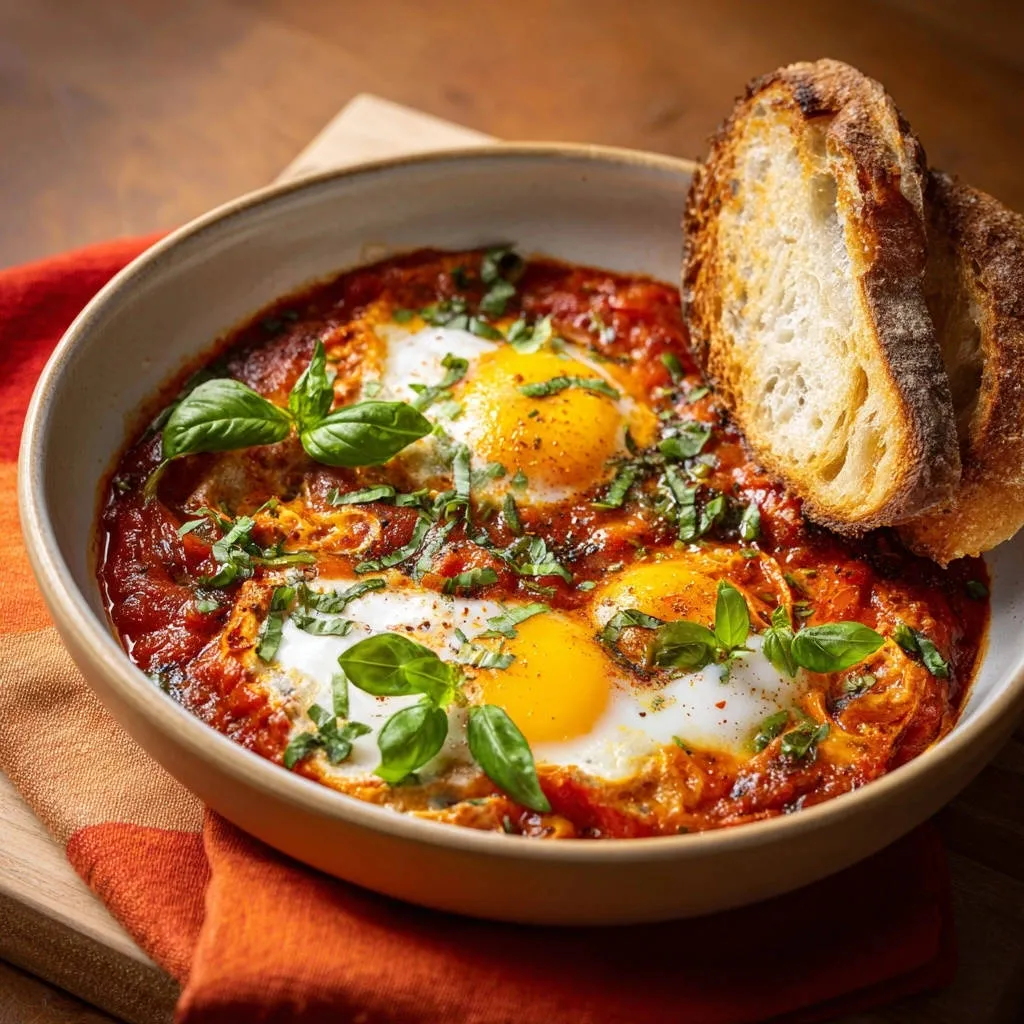
I know the frustration of struggling with baked eggs-you end up with either slimy, raw whites or gray, rubbery yolks, completely failing to achieve that essential dipping consistency. This recipe for Perfect Eggs in Tomato Sauce solves that problem definitively using the unique steam-and-simmer technique, guaranteeing fully set whites and luxuriously runny centers every single time.
Why This Is the Last Eggs in Tomato Sauce Recipe You’ll Ever Need
Eliminating Slimy Whites and Gray Yolks Forever
The secret lies in controlled dual-stage cooking. We begin with a gentle simmer to set the bottom of the egg whites quickly where they contact the hot sauce.
The subsequent lid addition creates a steam bath, which cooks the surface of the egg whites rapidly from the top down without exposing the yolks to high, direct heat.
The All-Day Dish: Versatility for Breakfast, Brunch, or Dinner
This savory dish is remarkably flexible, transitioning seamlessly from a hearty weekend brunch item to a quick, satisfying weeknight dinner.
The total hands-on time is minimal, making it an ideal choice when you need maximum flavor delivery with minimal fuss.
The Single Pan Advantage: Minimal Cleanup, Maximum Flavor
By cooking and serving the dish in the same heavy-bottomed skillet, you lock in all the flavor created in the spice-infused sauce base.

The crusty sauce that forms around the edges of the pan is often the best part, and cleanup involves only one piece of cookware.
Building the Ultimate Base: Ingredient Selection for Depth
Selecting the Right Olive Oil and Aromatics
Use a high-quality extra virgin olive oil (EVOO) here; its fruity, robust flavor acts as the foundational fat for the entire dish.
Properly sweating the diced yellow onion is vital. Cooking it for 5 to 7 minutes until translucent releases its sweetness and prevents a raw, harsh flavor in the finished sauce.
The Power Couple: Smoked Paprika and Cumin
These two spices are essential for achieving a deeply savory, slightly smoky profile that moves the dish far beyond simple marinara.
The smoked paprika provides rich warmth and color, while the cumin adds earthy depth, complementing the sweetness of the cooked tomatoes perfectly.
Crushed Tomatoes vs. Puree: Why Texture Matters
We specifically call for canned crushed tomatoes because they provide necessary body and structure to the sauce.
This texture is critical for creating stable wells to hold the eggs. Avoid thin, watery purees, which cause the egg whites to run everywhere and prevent the creation of defined, set edges.
The Critical Final Touch: Fresh Herbs
Fresh basil adds a bright, slightly peppery lift that cuts through the richness of the tomato sauce and runny yolks.
We incorporate basil in two stages: half is stirred into the sauce during simmering to infuse flavor, and the remainder is scattered on top as a fragrant, fresh garnish before serving.
Equipment Checklist: Setting the Stage for Success
The Ideal Skillet: Heavy-Bottomed or Cast Iron?
A heavy, thick pan-either enameled cast iron or a thick stainless steel skillet-is non-negotiable for this technique.
The thickness ensures even heat retention and distribution, which prevents the sauce from scorching in the center while the eggs are setting.
Why You Need a Tight-Fitting Lid
The lid is the critical component that transforms simple baking into the ‘steam’ portion of the method.
A tight seal traps moisture and heat, allowing the steam to cook the top surface of the egg whites quickly and gently without overcooking the yolks underneath.
Perfect Eggs in Tomato Sauce: Mastering the Steam-and-Simmer Technique
-
Preparing Rich, Fragrant Flavor:
Heat the olive oil in your heavy-bottomed skillet over medium heat. Sauté the diced onion until it is translucent and fully softened (about 5-7 minutes).
Add the minced garlic, paprika, and cumin. Stir constantly for only 1 minute until fragrant. This toasting step activates the spices, but be extremely careful not to scorch the garlic, which would ruin the sauce base.
-
Building Sauce Depth and Body:
Pour in the crushed tomatoes and water. Stir well and bring the mixture to a gentle simmer.
Reduce the heat to medium-low, season generously, and simmer uncovered for 10 minutes. This allows excess water to evaporate, thickening the sauce slightly before the eggs are added.
Stir in half of the fresh basil now; this infuses the sauce while it cooks.
-
The Crucial Well Formation:
Using the back of a large spoon, create four evenly spaced indentations (wells) in the simmering tomato sauce.
These wells must be deep enough to cradle the eggs, preventing the white from running into the sauce too quickly. The temperature difference between the sides and bottom of the pan will start setting the whites immediately.
-
Cracking and Seasoning the Eggs:
Carefully crack one egg into each well. Season the eggs lightly with salt and pepper immediately.
Tip: Crack the eggs into a small ramekin first, then gently slide them into the well. This prevents shell fragments and ensures a smooth placement.
-
Executing the Steam-and-Simmer Method:
Cook the eggs uncovered over medium-low heat for exactly 3 minutes. The sauce should be simmering gently around the edges of the wells, causing the bottom of the egg whites to begin setting.
Immediately place a tight-fitting lid on the skillet and turn the heat down to the lowest setting (low).
Cook for an additional 4 to 6 minutes. The trapped steam will cook the top of the egg whites to an opaque white, while the lower heat prevents the yolks from overheating.
Check for doneness at the 4-minute mark: the white should be fully opaque, but the yolk should still jiggle slightly when the pan is moved.
-
The Final Garnish and Serving:
Remove the pan from the heat immediately to stop residual cooking.
Garnish with the remaining fresh basil. Serve directly from the skillet or portion into bowls alongside plenty of crusty bread for dipping into those perfectly runny yolks!
Chef’s Secrets: Elevating Your Baked Egg Game
-
Preventing Garlic Burn: Always add the spices and garlic only after the onions are soft. Toasting them for just 60 seconds at a medium temperature is sufficient; any longer risks bitterness and ruins the sauce foundation.
-
Temperature Control is King: Use the lowest heat setting during the steaming phase. If the sauce boils vigorously, it will aggressively cook the yolks and potentially splatter, leading to tough edges.
-
Warming the Eggs: Use room temperature eggs if possible. Cold eggs take longer to cook through and require a slightly longer steaming time, increasing the risk of overcooking the sauce or the yolks.
-
Serving Direct from the Pan: Not only is this presentation beautiful, but the skillet retains heat, keeping the dish warmer longer. Just ensure you place the hot skillet on a protective trivet.
Troubleshooting Common Snags: Achieving Perfect Texture
Problem: The Egg Whites Are Still Slimy After Steaming
If the whites appear clear or translucent after 6 minutes of steaming, your heat source was likely too low. Increase the heat very slightly to medium-low and replace the lid for 1-2 minutes, carefully monitoring the internal simmer.
Ensure your lid is truly tight-fitting. If steam is escaping, the top of the egg will not set properly.
Problem: The Sauce Tastes Too Acidic or Flat
If the canned tomatoes taste flat or acidic, add a tiny pinch of sugar (about 1/2 teaspoon) during the 10-minute simmer phase. This balances the acidity without making the sauce sweet.
Always season aggressively with salt and pepper before adding the eggs. Baked eggs require well-seasoned liquid, as the egg itself needs salt.
Problem: The Yolks Cooked Through and Are Hard
This is usually caused by excessive heat or leaving the pan on the burner after the time is up. Ensure you turn the heat to the lowest setting once the lid goes on, and remove the pan completely from the burner as soon as the whites are set.
Beyond the Plate: Perfect Pairings and Variations
The Must-Have Dipper: Crusty Bread Hacks
A crusty, hearty bread like a French baguette or good sourdough is essential for soaking up the rich tomato base and runny yolks. Slice the bread and brush with olive oil and garlic powder, then toast lightly before serving.
Alternatively, serve with warm pita bread or challah, which provides a softer contrast to the savory sauce.
Variations: Additions for Protein and Vegetables
For a heartier meal, add protein like crumbled feta cheese, goat cheese, or pre-cooked crumbled sausage during the simmering stage.
To incorporate vegetables, stir in a handful of baby spinach or chopped bell peppers after the onions have softened. These additions should be fully incorporated and hot before forming the egg wells.
Make-Ahead and Storage Guidance
The tomato sauce base can be made up to three days in advance and stored in an airtight container in the refrigerator.
To finish, simply reheat the sauce gently in the skillet until simmering before cracking the eggs. Note that Perfect Eggs in Tomato Sauce is best eaten immediately; leftovers should be refrigerated promptly, but the yolks will set up completely upon cooling.
Quick Answers: FAQs About Perfect Eggs in Tomato Sauce
Can I use whole canned tomatoes instead of crushed?
Yes, but you will need to break them up first. Gently crush them with your hands or roughly pulse them in a food processor. The sauce relies on the crushed texture to help stabilize the egg wells.
How do I make this dish spicier?
For heat, add a pinch of red pepper flakes along with the garlic and paprika. Alternatively, for a deeper heat, add a few drops of your favorite hot sauce or chili paste (like harissa) directly into the wells before cracking the eggs.
Is there a good substitute for fresh basil?
While fresh basil provides the best flavor, you can substitute it with fresh parsley or oregano. If using dried herbs, use only about 1/3 of the amount called for, and mix them in with the tomatoes during the initial simmer.
Ready to Master This One-Pan Wonder?
Mastering this simple steam-and-simmer technique ensures you achieve perfect texture with every batch, transforming basic ingredients into a stunning, deeply satisfying dish.
The expertise is in the timing and the heavy pan-and once you try it, you will never go back to unevenly cooked baked eggs. Grab your best skillet and try this recipe tonight!

Perfect Eggs in Tomato Sauce
Course: Main CourseCuisine: Mediterranean cuisineDifficulty: easy4
servings10
minutes25
minutes35
minutesMediterranean cuisine
Ingredients
2 tablespoons extra virgin olive oil
1 small yellow onion, diced
3 cloves garlic, minced
1 teaspoon smoked paprika
1/2 teaspoon cumin
1 (28 ounce) can crushed tomatoes
1/2 cup water
1/4 cup chopped fresh basil, divided
Salt and black pepper to taste
4 large eggs
Crusty bread, for serving
Directions
- Prepare the Sauce Base: Heat the olive oil in a large, heavy-bottomed skillet (or cast iron pan) over medium heat. Add the diced onion and cook for 5 to 7 minutes until softened and translucent. Add the minced garlic, paprika, and cumin, stirring continuously for 1 minute until fragrant. Do not let the garlic scorch.
- Build Flavor Depth: Pour in the crushed tomatoes and 1/2 cup of water. Stir well to combine. Bring the sauce to a gentle simmer, then reduce the heat to medium-low. Season generously with salt and pepper. Let the sauce simmer, uncovered, for 10 minutes, allowing it to thicken slightly. Stir in half of the fresh basil.
- Implement the Set White Technique: Use the back of a large spoon to create four evenly spaced indentations (wells) in the tomato sauce. The wells should be deep enough to comfortably hold an egg without the white running everywhere.
- Poach the Eggs: Carefully crack one egg into each well. Immediately season the eggs lightly with salt and pepper.
- Steam and Finish: This is the critical step for perfect texture. Cook the eggs, uncovered, over medium-low heat for 3 minutes. The sauce should be simmering very gently around the edges of the wells. After 3 minutes, place a tight-fitting lid on the skillet. Turn the heat down to low. Cook for an additional 4 to 6 minutes. The trapped steam will cook the top of the egg whites until they are fully set and opaque white, while the yolks underneath remain liquid and runny. Check for doneness at 4 minutes.
- Serve: Remove the skillet from the heat. Garnish immediately with the remaining fresh basil. Serve directly from the pan or portion into bowls alongside crusty toasted bread for dipping.
Notes
- Use a large, heavy-bottomed skillet or cast iron pan for best results and even heat distribution.