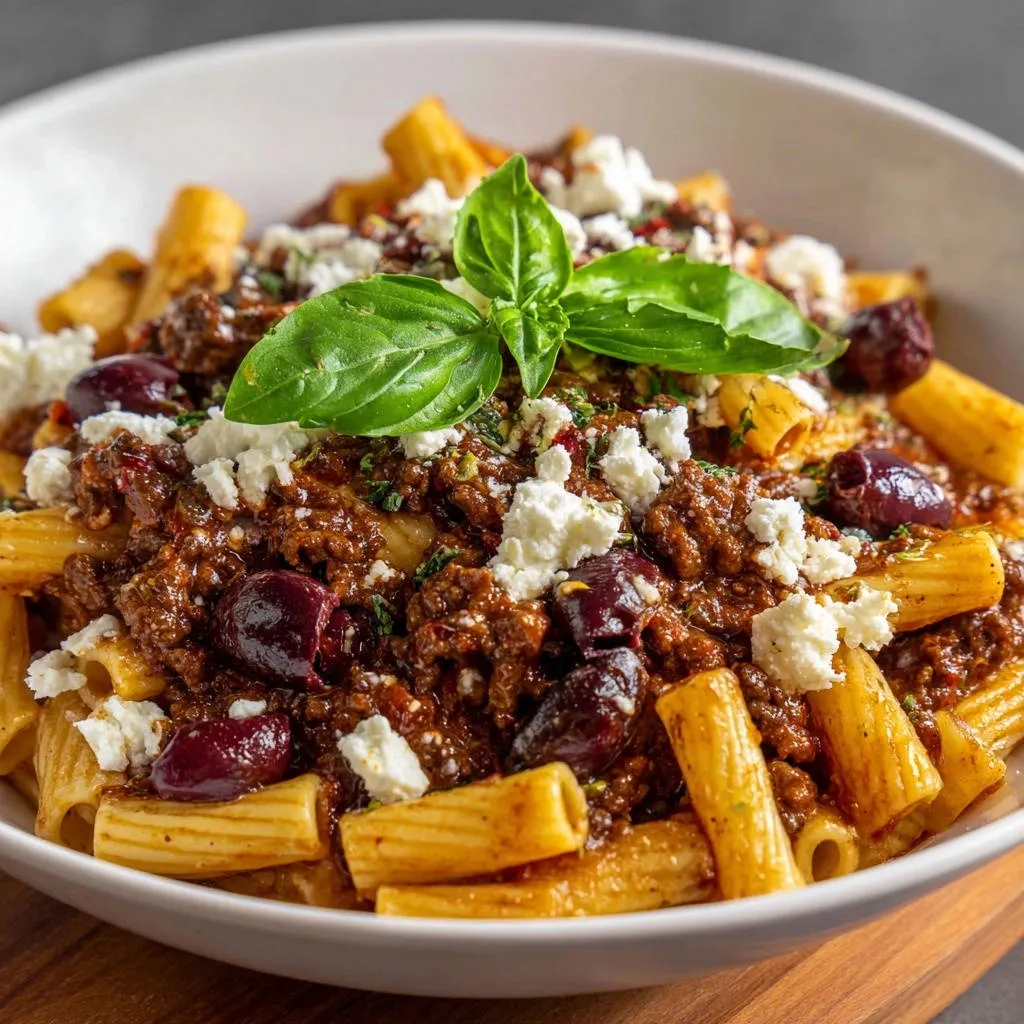
I spent years battling watery pasta sauces, a common kitchen frustration that ruins an otherwise perfect bowl, until I embraced the secrets of low-and-slow simmering and starch emulsification. This specific recipe for Rich Mediterranean Ragu Pasta integrates those fundamental Italian techniques with bright, briny Mediterranean elements, guaranteeing a thick, glossy sauce that truly clings to every rigatoni groove.
The Secret to Perfect Sauce Cling: Why This Ragu is Different
The Pasta Water Emulsification Guarantee (The “Cling Secret”)
The magic ingredient isn’t an herb or spice, but the starchy water reserved after cooking the pasta.
When you toss the slightly undercooked pasta and this reserved water into the ragu, the heat activates the starches, binding the fats and liquids into a cohesive, velvety emulsion. This is the non-negotiable step that Italian grandmothers swear by to achieve that thick, luxurious coating.
The Mediterranean Flavor Profile Defined
Traditional ragu is rich and savory, but this Mediterranean iteration is defined by specific bright additions.
The salinity and oiliness of Kalamata olives add depth and complexity, while the salty, tangy feta crumbled on top provides a creamy, cooling contrast to the slow-simmered meat sauce.
That Crucial Depth: The Tomato Paste Technique
Tomato paste is highly concentrated, but its flavor reaches maximum potential only when caramelized.

By cooking the tomato paste directly on the hot base of the pot for three minutes-a process called blooming-you deepen the sugars and intensify the savory umami notes, eliminating any raw, metallic taste and ensuring the crucial foundation for the ragu’s richness.
Building the Rich Mediterranean Ragu Flavor Foundation
Meat Choices: Beef, Lamb, or Turkey?
Ground beef (80/20) provides the richest flavor due to its high fat content, which is necessary for the final sauce emulsification.
Ground lamb offers a more pungent, gamy flavor that pairs beautifully with the oregano and olives, while ground turkey is the leanest option, requiring careful draining and potentially more olive oil to prevent a dry ragu.
The Essential Aromatics and Spice
Finely dicing the yellow onion ensures it dissolves completely into the sauce, adding sweetness without texture.
Garlic must be cooked briefly-just until fragrant-to avoid bitterness, and the dried oregano is essential for lending that classic, warm Mediterranean aroma. Red pepper flakes add a pleasant, subtle warmth that cuts through the ragu’s richness.
Enhancing the Mediterranean Pouch: Olives and Feta
Kalamata olives are chosen for their intense, fruity flavor and robust texture, which holds up during the final tossing.
Feta cheese provides a bright, acidic counterbalance to the long-simmered sauce, and should always be crumbled fresh over the plated dish, rather than cooked into the ragu, to maintain its tangy bite.
Essential Tools for Your Ragu Success
Dutch Oven or Heavy-Bottomed Pot
A heavy pot is essential because it holds and distributes heat evenly, preventing scorching during the critical long, slow simmer (60 minutes or more), which is necessary for tenderizing the meat and developing deep flavor.
A Solid Slotted Spoon or Wooden Spatula
These tools are needed to vigorously break up the ground meat while browning and ensure proper contact with the hot base of the pot. A wooden spatula is also helpful for scraping up the caramelized bits (fond) from the bottom.
Fine Mesh Colander or Skimmer
A fine mesh tool allows you to drain off excess fat after browning the meat in Step 1, ensuring your ragu isn’t overly oily. A large colander is then required for the crucial undercooked pasta drain.
Rich Mediterranean Ragu Pasta Perfection: Step-by-Step Cooking Guide
Phase 1: Preparing the Base and Building Depth (Steps 1 & 2)
Start by heating your oil over medium-high heat in a Dutch oven. Add the ground meat and cook aggressively, using your spatula to break it into fine pieces until it is completely browned and crispy.
Crucially: Drain off any liquid or pooled excess fat from the pot before proceeding; this prevents a greasy sauce. Reduce the heat and add the diced onion, cooking until perfectly softened, which usually takes 5 to 7 minutes. Stir in the minced garlic and spices, cooking for only 60 seconds until a strong, fragrant aroma is released.
Phase 2: Developing Deep Umami with Tomato Concentrate (Step 3)
Push the browned meat mixture to one side of the pot to expose the hot cooking surface. Add the tomato paste directly to this hot spot.
Cook the tomato paste for a full three minutes, stirring constantly as it darkens from bright red to a brick-red color. This concentrated cooking caramelizes the sugars and ensures the richest possible tomato base.
Phase 3: The Long, Slow Simmer (The Flavor Lock) (Step 4)
Stir the bloom-cooked tomato paste into the meat mixture, then pour in the crushed tomatoes and the broth. Season generously with salt and pepper, remembering that the sauce will reduce and concentrate over time.
Bring the ragu to a bare simmer, then reduce the heat to the lowest setting, cover loosely, and let it cook for a minimum of 60 minutes. The longer you simmer-up to three hours-the more tender the meat becomes, and the more deeply the flavors marry.
Phase 4: Achieving Al Dente and Reserving the Water (Step 5)
About 15 minutes before the ragu is finished, bring a large pot of water to a heavy boil and season it heavily with salt-it should taste like the sea. Add the pasta (rigatoni or ziti are excellent choices) and cook it until it is 2 minutes less than the package directs for al dente; the pasta should still be very firm.
Before draining, use a measuring cup to reserve at least 1 cup of the cloudy, starchy cooking water; this is essential for the cling secret.
Phase 5: The Emulsification Finish (Implementing the Cling Secret) (Steps 6 & 7)
Drain the undercooked pasta and immediately transfer it directly into the pot of simmering ragu. Add 1/2 cup of the reserved pasta water.
Increase the heat to medium and toss or stir the pasta vigorously for two minutes. You will visibly see the starch activate and combine with the fats, transforming the sauce into a thick, glossy, cohesive coating. Add more pasta water, one splash at a time, until your Rich Mediterranean Ragu Pasta reaches a perfect velvety consistency.
Chef’s Pro Tips: Elevating Your Mediterranean Ragu Experience
Don’t Skimp on the Broth Quality
Since the ragu simmers for a long period, the flavor of the broth concentrates significantly. Using a high-quality, low-sodium chicken or vegetable broth contributes essential savory complexity without adding artificial flavors.
Salty Water is Non-Negotiable
The only time you can season the pasta itself is while it boils. Heavily salting the cooking water ensures the noodles are seasoned deep into their core, making a profound difference in the finished dish’s overall flavor.
The Best Time to Stir in Olives
Adding the Kalamata olives right at the very end (Step 8), just before serving, prevents them from overcooking. This maintains their firm texture and ensures their bright, briny flavor is still pronounced.
Resting the Ragu
After the final emulsification, turn off the heat and let the pasta rest in the sauce for 10 to 15 minutes before plating. This brief rest allows the pasta to absorb even more of the sauce and helps the flavors settle and deepen.
Troubleshooting and Mastering Meal Prep for Rich Mediterranean Ragu
Help! My Ragu is Too Thick (or Too Thin)
If the sauce is too thick, simply add more of the reserved starchy pasta water, a quarter cup at a time, until the desired velvety texture is achieved.
If the ragu is too thin before adding the pasta, remove the lid and increase the heat slightly, allowing the sauce to simmer uncovered for 10 to 15 minutes until it reduces and concentrates.
How to Fix Oily Ragu After Browning
The most important time to address oiliness is immediately after browning the meat; drain off all excess grease from the pot.
If you notice excess oil floating on the surface during the long simmer, you can gently skim the pooled fat with a large spoon or ladle before stirring in the tomatoes.
Storing and Reheating Leftovers Safely
Store leftover Rich Mediterranean Ragu Pasta in an airtight container in the refrigerator for up to three days.
To reheat, place the pasta and sauce in a skillet with a splash of water or broth and heat gently over low heat, stirring occasionally, until warmed through; high heat can dry out the sauce and break the emulsification.
Making and Freezing Your Ragu Base Ahead of Time
The ragu base (without the pasta, olives, or feta) freezes exceptionally well, maintaining its rich flavor for up to three months.
Cool the finished sauce completely, transfer it to freezer-safe containers, and thaw overnight in the refrigerator. Reheat gently, then proceed with the final steps of cooking the fresh pasta and implementing the “cling secret.”
Serving, Pairing, and Complementary Dishes
The Art of the Garnish (Feta and Basil)
The final presentation enhances the experience. Always use a block of quality feta cheese and crumble it by hand over the plated pasta for an irregular, rustic texture and maximum tangy flavor.
Tear the fresh basil leaves rather than chopping them; this prevents bruising, preserves their bright green color, and releases a cleaner aroma over the hot ragu.
What Wine Pairs Best with Rich Mediterranean Ragu Pasta?
For a bold pairing, choose a medium-bodied Italian red like Chianti Classico, which has enough acidity to cut through the meat and tomato richness.
Alternatively, embrace the Mediterranean theme with a savory Greek Agiorgitiko, known for its soft tannins and complex fruit notes that complement the olives and oregano beautifully.
Simple Side Salad Suggestions
The ragu is very rich, so the best side dishes are light and acidic to cleanse the palate.
A simple arugula salad tossed with a sharp lemon vinaigrette and shaved Parmesan provides a peppery and bright contrast. Another excellent choice is a quick cucumber and dill salad with a touch of red wine vinegar.
Rich Mediterranean Ragu Pasta: Your Most Asked Questions Answered
How Long Should I Simmer the Ragu for Best Flavor?
The absolute minimum simmer time is 60 minutes for the meat to become tender and the sauce to reduce. However, simmering for two to three hours yields dramatically superior results, deepening the umami and creating a truly cohesive flavor.
Can I Substitute Different Canned Tomatoes?
While you can use diced or whole peeled tomatoes, crushed tomatoes are highly recommended for ragu because they break down smoothly and quickly, lending a naturally thick, consistent texture without large chunks.
What is the Difference Between Ragu and Bolognese?
Bolognese is traditionally a specific type of ragu from Bologna, often containing milk or cream and usually involving finely minced meat. Ragu is a broader Italian term for any slow-cooked, meat-based sauce.
This recipe is firmly a ragu due to its long simmer and chunky meat focus, and specifically Mediterranean due to the inclusion of olives and feta.
Is Reserved Pasta Water Necessary?
Yes, absolutely. Reserving the starchy pasta water is the single most important step for achieving the velvety texture that perfectly coats the pasta. Without it, the sauce will be thin, and the flavors will not emulsify properly.
Ready to Impress? Share Your Ragu Masterpiece!
With these expert techniques-from blooming the tomato paste to mastering the starchy emulsification-you now possess the knowledge to create truly exceptional Rich Mediterranean Ragu Pasta. Say goodbye to watery sauce forever and get ready to serve a dish that tastes like it simmered for an entire day.
We encourage you to try this recipe, trust the process, and share your velvety ragu results with us!

Rich Mediterranean Ragu Pasta
Course: Main CourseCuisine: Mediterranean cuisineDifficulty: easy4
servings20
minutes1
hour60
minutesMediterranean cuisine
Ingredients
1 pound Rigatoni or Ziti pasta
1 tablespoon Olive oil
1.5 pounds Ground Beef (or ground turkey/lamb substitute)
1 medium Yellow onion, finely diced
4 cloves Garlic, minced
1 tablespoon Dried oregano
1 teaspoon Red pepper flakes (optional, for heat)
4 ounces Tomato paste
1 (28 ounce) can Crushed tomatoes
1 cup Chicken broth or vegetable broth
1 cup Kalamata olives, pitted and halved
Salt and Black pepper to taste
1/2 cup Pasta cooking water (reserved)
4 ounces Feta cheese, crumbled (for garnish)
Fresh basil leaves (for garnish)
Directions
- Prepare the Ragu Base. Heat olive oil in a large Dutch oven or heavy-bottomed pot over medium-high heat. Add the ground meat and cook, breaking it up with a spoon, until fully browned. Drain off any excess fat from the pot.
- Build Flavor Depth. Reduce heat to medium. Add the diced onion and cook until softened, about 5 to 7 minutes. Stir in the minced garlic, oregano, and red pepper flakes (if using). Cook for 1 minute until fragrant.
- Create the Tomato Concentrate. Push the meat mixture to one side and add the tomato paste directly to the hot base of the pot. Cook the tomato paste for 3 minutes, stirring constantly, until it darkens slightly. This step is crucial for deepening the flavor.
- Simmer the Sauce. Stir the tomato paste into the meat mixture. Pour in the crushed tomatoes and the broth. Season generously with salt and pepper. Bring the mixture to a low simmer, then reduce heat to low, cover slightly, and let the ragu cook for at least 60 minutes, stirring occasionally. The longer it simmers, the richer it becomes.
- Cook the Pasta Correctly. About 15 minutes before the sauce is ready, bring a large pot of heavily salted water to a boil. Add the rigatoni and cook until it is 2 minutes less than al dente (very firm). Before draining, reserve at least 1 cup of the starchy cooking water.
- THE CLING SECRET. Drain the pasta and immediately transfer it directly into the pot of simmering ragu. Add 1/2 cup of the reserved pasta water. Increase the heat to medium.
- Finish and Emulsify. Stir and toss the pasta vigorously in the sauce for 2 minutes. The starch in the reserved water, combined with the fats in the sauce, will emulsify, creating a thick, glossy, cohesive sauce that perfectly coats the rigatoni. If the sauce looks too thick, add a splash more pasta water until you reach the desired velvety consistency.
- Serve. Stir in the halved Kalamata olives. Serve immediately in bowls, topping each portion generously with crumbled feta cheese and fresh basil leaves.
Notes
- The key to a perfectly coated pasta is reserving the starchy cooking water and finishing the noodles directly in the ragu to create a thick, glossy emulsification.