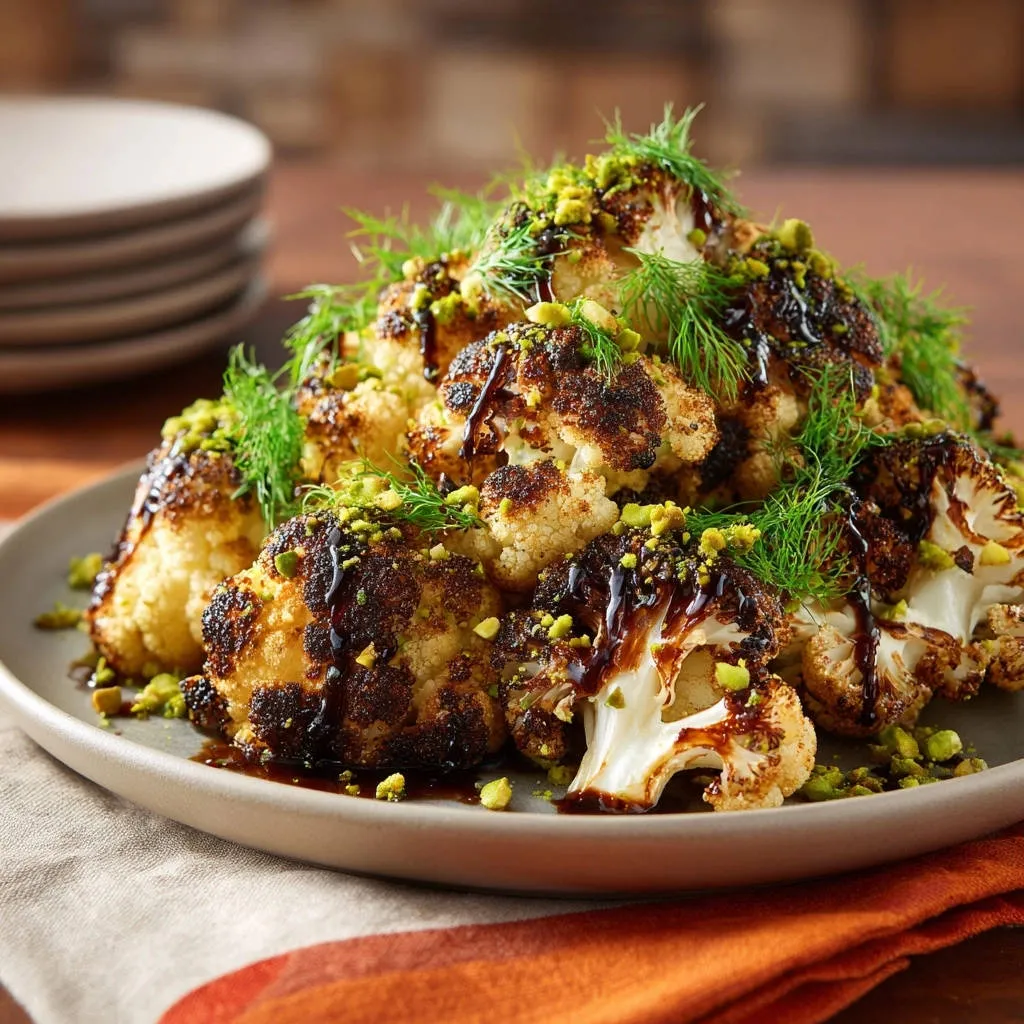
Ever struggled to achieve that perfect crispy texture when roasting cauliflower, only to end up with a disappointingly mushy result? I know the frustration! My quest for the ultimate roasted cauliflower led me to a simple yet transformative trick, and now my Roasted Cauliflower with Pistachios and Dill is consistently caramelized, tender, and incredibly flavorful-a true game-changer.
Tired of Mushy Cauliflower? Discover the Secret to Crispy Perfection!
This recipe for Roasted Cauliflower with Pistachios and Dill isn’t just another vegetable dish; it’s a revelation in texture and taste. We unlock the secrets to achieving intensely caramelized edges and a tender interior, elevating humble cauliflower to a standout side.
The key lies in two fundamental yet often overlooked steps: meticulous drying of the florets and ensuring they have ample space on the baking sheet. These simple adjustments prevent steaming, promoting that coveted golden-brown crispness.
Beyond texture, this dish offers an irresistible symphony of flavors. The savory depth of perfectly roasted cauliflower is beautifully complemented by the sweet-tangy notes of balsamic glaze, the earthy crunch of pistachios, and the vibrant freshness of dill.
It’s a versatile side dish that feels gourmet yet is remarkably easy to prepare, making it ideal for weeknight dinners or elegant gatherings.
The Flavorful Cast: Ingredients for Your Roasted Cauliflower
Star of the Show: The Cauliflower
Select one large, firm head of cauliflower, free from blemishes. For even cooking, cut it into uniform, bite-sized florets, ensuring no piece is too large or too small.
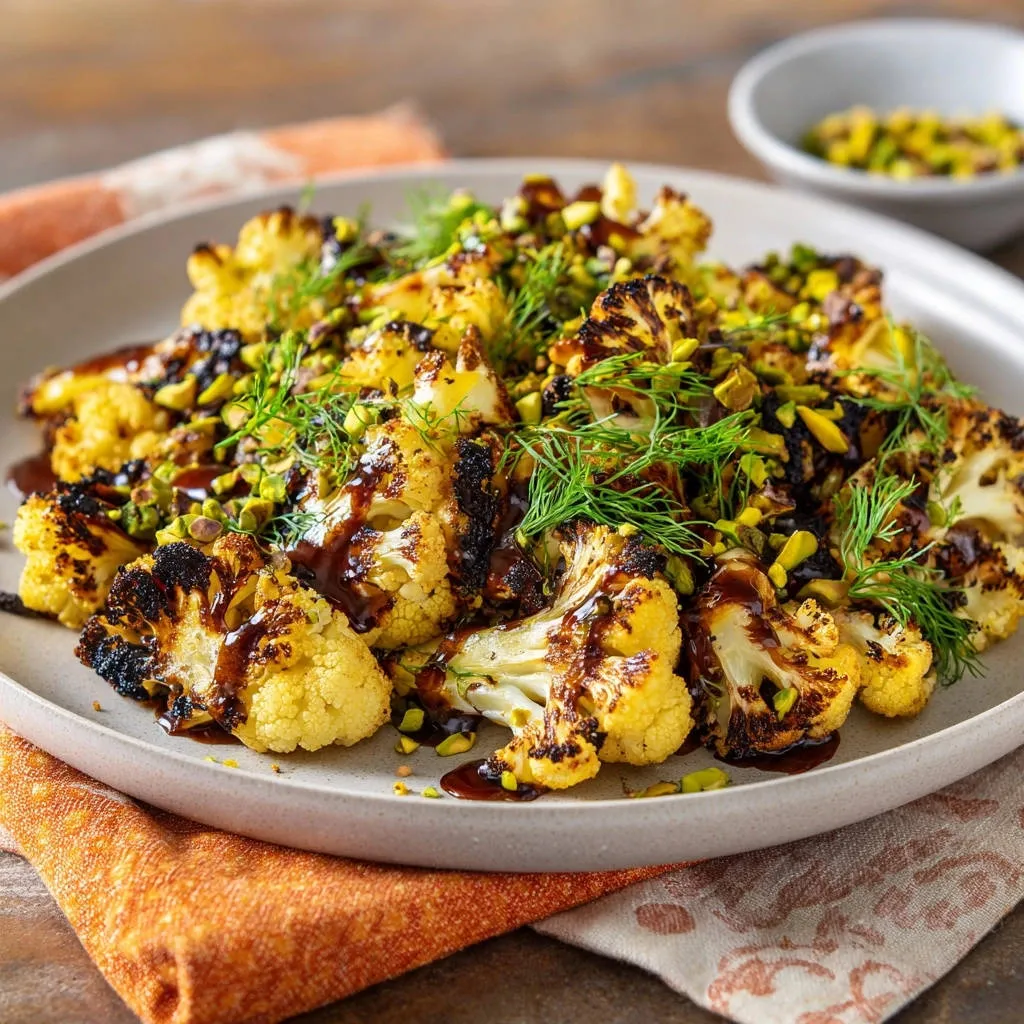
Crucially, after washing, pat the florets absolutely dry with a clean kitchen towel or paper towels. This step is the single most important factor for achieving crispiness, preventing the cauliflower from steaming.
The Aromatic Duo: Olive Oil, Salt & Pepper
Good quality olive oil acts as a flavor carrier and facilitates beautiful caramelization, helping the cauliflower achieve a golden crust. Use extra virgin for the best flavor.
Salt enhances all the flavors, while freshly ground black pepper adds a subtle warmth and aromatic lift. Season generously but judiciously.
The Sweet and Tangy Finish: Balsamic Glaze
Balsamic glaze is essential for this recipe’s unique sweet and tangy profile, adding a luxurious sheen and a burst of acidity that brightens the entire dish.
If you don’t have store-bought glaze, you can easily make your own by simmering balsamic vinegar until it reduces and thickens to a syrupy consistency.
Crunch & Freshness: Pistachios and Dill
Shelled pistachios provide a delightful textural contrast with their satisfying crunch and a subtle, buttery flavor that complements the roasted cauliflower beautifully.
Fresh dill is non-negotiable for its bright, herbaceous, and slightly anisy notes, adding an aromatic finish and vibrant color. Other fresh herbs like parsley or chives could be substituted in a pinch, but dill offers a unique magic here.
Essential Tools for Roasted Cauliflower Success
Baking Sheets: The Importance of Space
Utilize one or two large, heavy-duty baking sheets. The generous surface area is critical to spread your cauliflower florets in a single, uncrowded layer.
Crowding causes steaming, which means mushy cauliflower instead of the desired crispy, caramelized exterior. Always err on the side of using more space.
Sharp Knives & Cutting Boards
A sharp chef’s knife and a sturdy cutting board are essential for safely and efficiently breaking down the cauliflower head into uniform florets.
Uniformity ensures that all pieces cook at the same rate, preventing some from burning while others remain undercooked.
Large Mixing Bowl
A spacious mixing bowl allows you to toss the cauliflower florets with olive oil, salt, and pepper thoroughly and evenly.
This ensures every piece is lightly coated, promoting consistent seasoning and caramelization.
Parchment Paper or Silicone Mat (Optional but Recommended)
Lining your baking sheets with parchment paper or a silicone baking mat makes cleanup incredibly easy.
It also helps prevent the cauliflower from sticking to the pan, ensuring those beautifully caramelized bits don’t get left behind.
Mastering the Roast: Achieving Crispy, Tender Cauliflower Every Time
Prep for Perfection (The Moisture Secret)
Preheat your oven to 400°F (200°C). A hot oven is key for immediate caramelization.
After washing your cauliflower florets, spread them out on a clean kitchen towel or paper towels. Pat them thoroughly dry until no visible moisture remains.
This step is non-negotiable for achieving that coveted crispy exterior, as any excess moisture will steam the cauliflower instead of roasting it golden brown.
Season Evenly
In a large bowl, combine the completely dry cauliflower florets with olive oil, salt, and pepper.
Toss vigorously until every single floret is lightly and uniformly coated. This ensures consistent seasoning and browning.
The Golden Rule: No Crowding Allowed
Spread the seasoned cauliflower in a single layer on your prepared baking sheet(s). Critically, ensure there is ample space between each floret.
If your florets are crowded, they will steam rather than roast. Use two baking sheets if necessary to guarantee proper air circulation and crispy results.
Roast Until Golden & Tender
Roast for 20-25 minutes, flipping the florets halfway through the cooking time to ensure even browning on all sides.
The cauliflower is ready when it’s fork-tender on the inside and beautifully golden brown and caramelized at the edges. Keep a close eye on them during the final minutes, as oven temperatures can vary.
The Grand Finale: Glaze, Pistachios & Dill
Carefully transfer the hot, roasted cauliflower to a serving platter or bowl.
Generously drizzle with balsamic glaze, ensuring it coats many of the florets for that sweet and tangy kick.
Finally, sprinkle the roughly chopped pistachios and fresh dill over the top. Serve your perfectly crispy-tender Roasted Cauliflower with Pistachios and Dill immediately to enjoy its peak texture and flavor.
Chef’s Secrets: Elevate Your Roasted Cauliflower Game
The Dryness Factor: Why It’s Non-Negotiable
Reiterating this point is crucial because it’s the biggest culprit for mushy cauliflower. Moisture on the florets creates steam, which prevents caramelization.
Take the extra 5 minutes to pat every floret thoroughly dry, or even let them air dry on a rack for 15-20 minutes after washing.
Optimal Roasting Temperature & Time
A consistent 400°F (200°C) is ideal for achieving both tenderness and crispiness without burning.
If you prefer an even crispier result, you can increase the temperature to 425°F (220°C) and reduce the cooking time slightly, but watch it closely.
Boosting Flavor: Seasoning Variations
While salt and pepper are foundational, consider adding a pinch of garlic powder, onion powder, or a dash of smoked paprika for extra depth.
A touch of red pepper flakes can introduce a subtle heat that complements the sweetness of the balsamic glaze.
Don’t Skimp on the Balsamic Glaze
The balsamic glaze isn’t just for looks; it’s a critical flavor component that ties the dish together. Drizzle generously for the best balance of sweet and tangy.
For an extra touch, warm the glaze slightly before drizzling to make it flow more easily and coat the cauliflower beautifully.
Fresh Herbs Make All the Difference
The vibrant flavor of fresh dill is unmatched here. While dried dill can be used, it won’t provide the same bright, fresh aroma and visual appeal.
If you love a more pungent herb, consider a small amount of fresh rosemary or thyme mixed in with the dill.
Pre-Chopping for Weeknight Wins
To make this a super-speedy weeknight side, you can chop your cauliflower florets, pistachios, and dill ahead of time.
Store the dry florets in an airtight container in the fridge for up to 2-3 days, and the chopped nuts and herbs separately, ready for roasting and finishing.
Troubleshooting Your Roast: Common Issues & Quick Fixes
Why is my roasted cauliflower mushy instead of crispy?
The primary reason is excess moisture on the florets or overcrowding on the baking sheet. Ensure your cauliflower is completely dry before tossing with oil, and always spread it in a single layer with space between pieces.
If needed, use two baking sheets to avoid steaming. A lower oven temperature can also contribute to a mushy texture; ensure your oven is preheated to 400°F (200°C).
It’s not getting golden brown!
This often points to overcrowding, insufficient oven temperature, or an oven that isn’t calibrated correctly. Double-check your oven temperature with an oven thermometer.
Make sure the cauliflower has plenty of space on the baking sheet, and consider roasting for an additional 5-10 minutes if needed, but watch it closely to prevent burning.
My roasted cauliflower tastes bland.
Blandness typically indicates under-seasoning. Don’t be shy with the salt and pepper, and ensure the olive oil is well distributed to carry the flavor.
After roasting, make sure you’ve drizzled generously with balsamic glaze, which adds a crucial sweet-tangy punch. A little extra fresh dill can also brighten up the flavors immediately.
Serving Suggestions, Storage & Make-Ahead Tips
Delicious Pairings for Your Roasted Cauliflower
This versatile Roasted Cauliflower with Pistachios and Dill makes an exceptional side to a wide range of main courses. It pairs wonderfully with grilled chicken or pan-seared fish.
It’s also a fantastic addition to grain bowls, a vibrant complement to roasted lamb or beef, or even a flavorful component in a hearty vegetarian platter.
Storing Leftovers for Optimal Freshness
Store any leftover roasted cauliflower in an airtight container in the refrigerator for up to 3-4 days. While it won’t retain its initial crispness, the flavor will still be delicious.
To reheat, spread the cauliflower on a baking sheet and warm it in a 350°F (175°C) oven for 10-15 minutes, or until heated through. Avoid microwaving if you want to prevent a rubbery texture.
Can You Make This Ahead?
You can certainly prep some components ahead of time. Chop the cauliflower florets, pistachios, and dill up to 2-3 days in advance.
Store them separately and keep the cauliflower well-dried in an airtight container. Roast and assemble right before serving for the best possible flavor and texture.
Your Top Questions About Roasted Cauliflower, Answered!
What’s the best way to cut cauliflower florets for roasting?
First, remove the outer leaves and core. Then, use a sharp knife to carefully cut around the core, separating the large florets.
Break these larger pieces into uniform, bite-sized florets, aiming for pieces roughly 1 to 1.5 inches in size. This ensures even roasting and consistent texture.
Can I use frozen cauliflower for this recipe?
While possible, fresh cauliflower is highly recommended for optimal crispness. Frozen cauliflower contains more moisture, making it challenging to achieve the same level of caramelization.
If using frozen, spread it directly on a baking sheet without oil and roast for 10-15 minutes to evaporate excess moisture before tossing with oil and proceeding with the recipe as directed.
What if I don’t have balsamic glaze?
You can easily make your own by simmering 1 cup of balsamic vinegar in a small saucepan over medium-low heat until it reduces by about half and thickens to a syrupy consistency (approximately 10-15 minutes).
Alternatively, a squeeze of fresh lemon juice or a light drizzle of honey mixed with a splash of balsamic vinegar can offer a similar sweet-tangy counterpoint, though it won’t be as thick as a glaze.
Are pistachios necessary, or can I use other nuts?
Pistachios offer a unique color, texture, and flavor, but you can certainly substitute them. Toasted slivered almonds, chopped walnuts, or even pine nuts would make excellent alternatives.
Each nut will bring its own subtle flavor profile, so choose one that you enjoy and toast them lightly for enhanced taste.
Is roasted cauliflower healthy?
Absolutely! Cauliflower is a cruciferous vegetable packed with nutrients. It’s an excellent source of vitamin C, vitamin K, and fiber, making this a very healthy and delicious side dish.
Roasting brings out its natural sweetness, and with healthy fats from olive oil and beneficial nuts, this recipe is a nutritious addition to any meal.
Ready to Roast? Share Your Perfectly Crispy Creation!
Now that you’re equipped with all the secrets, it’s time to transform your cauliflower! This Roasted Cauliflower with Pistachios and Dill is more than just a side dish; it’s a testament to how simple techniques can yield extraordinary results.
Go forth and create perfectly crispy, tender cauliflower that will impress everyone at your table. We’d love to see your delicious creations-share your photos and tell us how much you loved it!
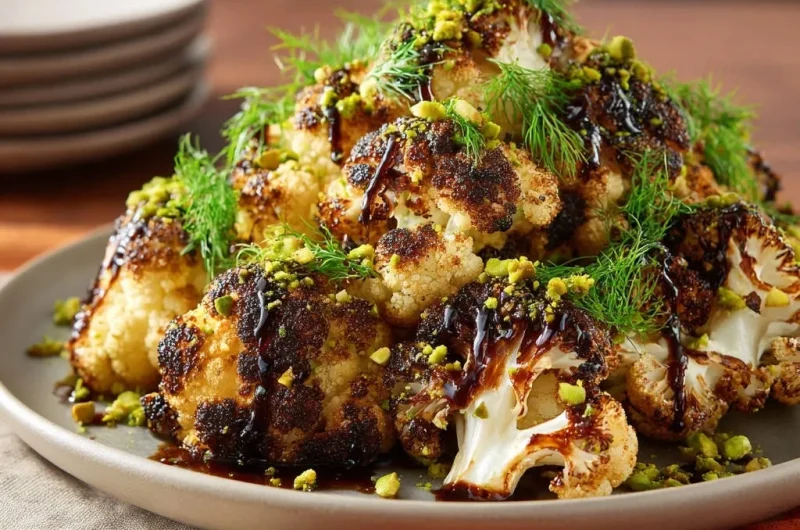
Roasted Cauliflower with Pistachios and Dill
Course: Side DishCuisine: American CuisineDifficulty: easy4
servings15
minutes25
minutes40
minutesAmerican Cuisine
Ingredients
1 large head cauliflower, cut into bite-sized florets
3 tablespoons olive oil
1/2 teaspoon salt
1/4 teaspoon black pepper
2 tablespoons balsamic glaze
1/4 cup shelled pistachios, roughly chopped
2 tablespoons fresh dill, chopped
Directions
- Prep for Perfect Texture: Preheat your oven to 400 degrees F (200 degrees C). The secret to truly crispy cauliflower starts here: after washing your florets, make sure they are completely dry. Use a clean kitchen towel or paper towels to pat them thoroughly dry. Any excess moisture will steam the cauliflower instead of roasting it to that perfect golden brown.
- Season Evenly: In a large bowl, toss the dry cauliflower florets with olive oil, salt, and pepper until every piece is lightly coated.
- No Crowding Allowed: Spread the seasoned cauliflower in a single layer on a large baking sheet. Do not overcrowd the pan; give the florets space to breathe. If necessary, use two baking sheets to ensure they brown instead of steam. This is crucial for achieving that crispy exterior.
- Roast to Perfection: Roast for 20-25 minutes, flipping the florets halfway through, until they are fork-tender and beautifully golden brown and caramelized on the edges. Keep an eye on them towards the end, as ovens can vary.
- Finishing Touches: Carefully transfer the roasted cauliflower to a serving platter. Drizzle generously with balsamic glaze. Sprinkle the chopped pistachios and fresh dill over the top. Serve immediately and enjoy your perfectly crispy-tender roasted cauliflower!
Notes
- Ensure cauliflower is completely dry and don’t overcrowd the baking sheet for best results to achieve optimal crispness.