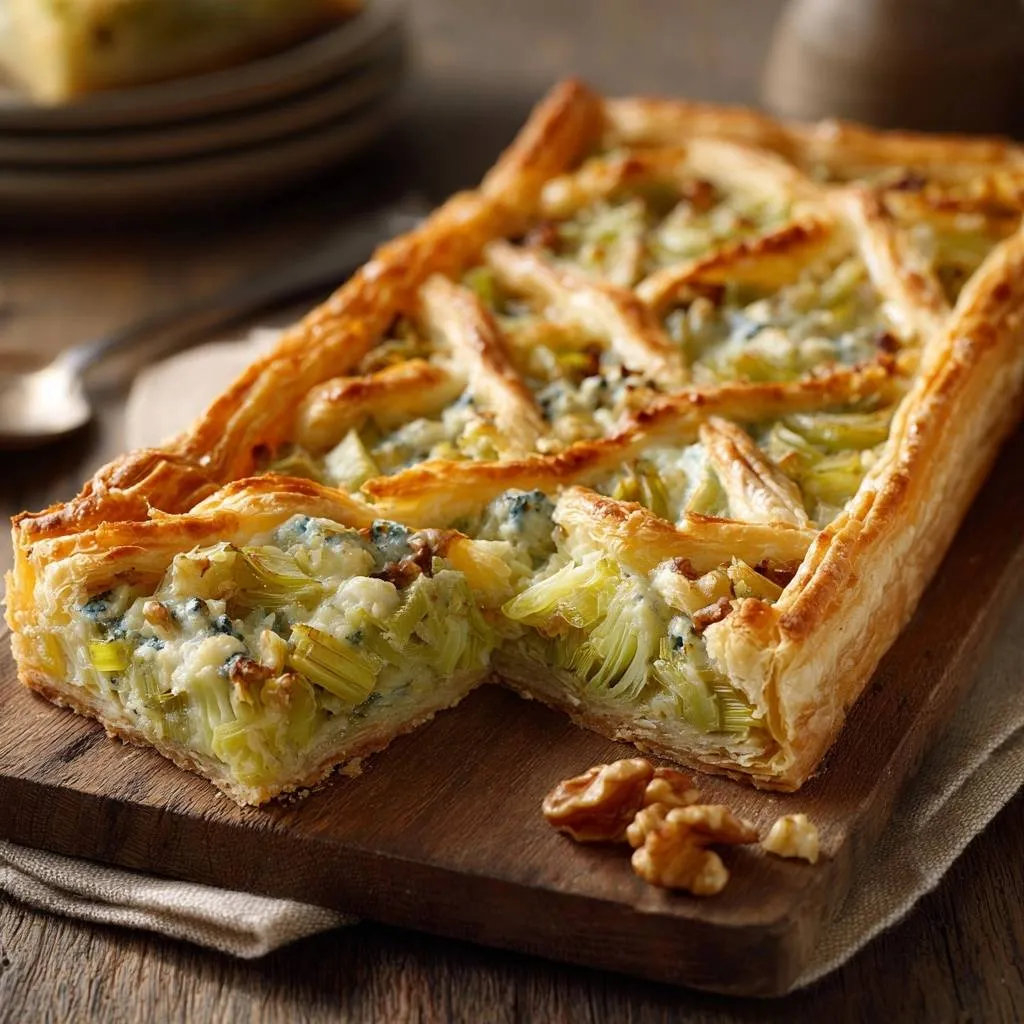
Imagine biting into a layer of shatteringly crisp, buttery pastry that gives way to a velvety, molten center of sweet leeks and pungent blue cheese. This tart isn’t just another savory bake; it’s a masterclass in balancing the sharp, salty “funk” of a good blue with the mellow, onion-like sweetness of slow-cooked leeks. The crunch of toasted walnuts adds an earthy finish that ties the whole experience together.
Most home cooks struggle with puff pastry tarts because the vegetables release moisture, turning the bottom crust into a soggy, doughy disappointment. We’re moving past basic assembly today to focus on the “Anti-Soggy Bottom” philosophy. By using specific heat management and moisture-reduction techniques, you’ll create a professional-grade tart that maintains its structural integrity from the oven to the table.
The secret to that elusive, golden-brown crunch lies in thermal mass. I always preheat a heavy baking sheet directly in the oven before the tart ever touches it. When you slide your pastry onto that scorching metal, the bottom sears instantly, creating a moisture barrier that keeps the crust crisp even under a creamy filling. It’s a simple step that makes a world of difference.
The Architecture of a Crisp Pastry Base
Puff pastry relies on the physics of steam to achieve its famous lift. As the cold butter layers melt in a hot oven, they release water vapor that pushes the thin sheets of dough apart. However, if your filling is too wet or your oven isn’t hot enough, that steam gets trapped, resulting in a limp base rather than a flaky one.
Using a preheated baking sheet acts like a pizza stone for your tart. This immediate blast of heat ensures the bottom layer of dough sets and crisps before the moisture from the leeks can soak in. Therefore, you’re essentially frying the bottom of the pastry in its own butter, creating a sturdy foundation for the heavy toppings.
Why Cold Fat is Non-Negotiable
Lamination is the process of folding fat into dough to create hundreds of microscopic layers. If your puff pastry gets too warm while you’re working, those layers of butter melt into the flour, and you lose the “puff” entirely. You’ll end up with a greasy, flat cracker instead of a light, airy pastry.
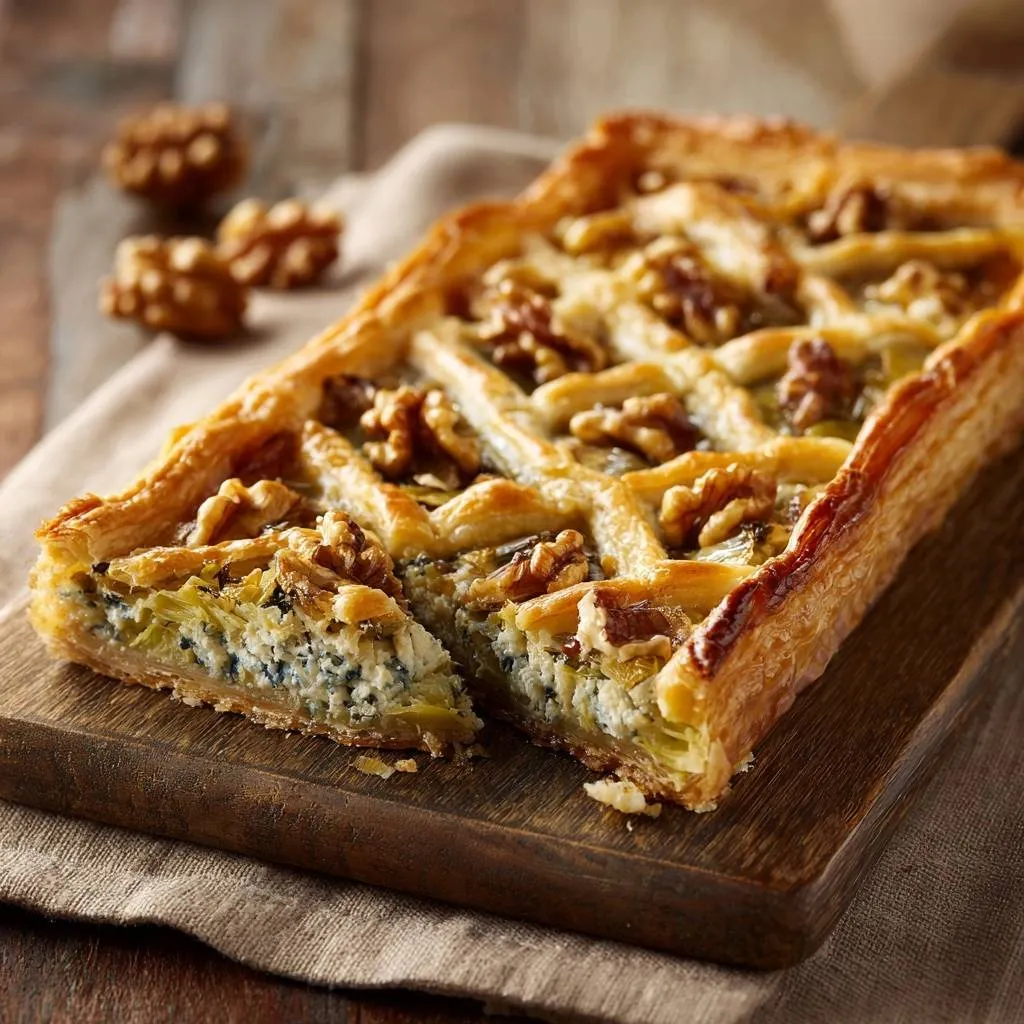
I recommend keeping your pastry in the fridge until the very second you’re ready to roll it out. If you feel the dough getting tacky or soft while you’re weaving the lattice, stop immediately. Pop the whole thing into the freezer for five minutes to firm up the fat before continuing your work.
Essential Components for the Savory Leek Filling
The success of this filling depends on how you treat your leeks. We only use the white and light green parts because the dark green tops are too fibrous and won’t soften at the same rate. When you slice them into thick rounds, they retain enough body to provide a bite, rather than turning into a mushy puree.
Heavy cream serves a dual purpose here. While it adds a luxurious mouthfeel, it also acts as a stabilizer for the cheese and leeks. It binds the ingredients together into a cohesive custard-like filling that won’t run or leak when you slice into the finished tart. Use a high-quality cream with at least 36% milkfat for the best structural results.
Selecting the Right Blue Cheese Profile
Not all blue cheeses are created equal when it comes to baking. A very young, wet Gorgonzola Dolce might melt too quickly and make the filling greasy. On the other hand, a very dry, aged Roquefort can be overwhelmingly salty once the flavors concentrate in the oven.
I find that a mid-range blue, like a classic Stilton or a Danish Blue, works best. These varieties offer a creamy texture that holds its shape just long enough to meld with the leeks without disappearing into the pastry. You want those distinct pockets of blue “funk” to provide a sharp contrast to the buttery crust.
The Role of Walnuts in Texture Contrast
Walnuts are the unsung heroes of this recipe because they provide a necessary textural break. Without them, the tart is almost entirely soft and creamy. The slight bitterness of the walnut skin also helps cut through the richness of the heavy cream and butter.
For an even deeper flavor, I like to give the chopped walnuts a quick toast in a dry pan for two minutes before adding them to the tart. This releases their natural oils and ensures they stay crunchy even after being baked into the filling. It’s a small detail that adds a lot of sophistication.
Step-by-Step: Preparing the Leek and Cream Binder
When you sauté your leeks in the butter and oil, you’re looking for a specific transformation. Initially, they’ll look bulky and bright, but as the water evaporates, they’ll shrink and become translucent. You must cook them until the pan is dry; any leftover liquid in the skillet will inevitably end up soaking your bottom crust.
Once the leeks are soft and sweet, stir in the cream and half of the blue cheese off the heat. The residual warmth will partially melt the cheese, creating a thick, spreadable paste. Let this mixture cool for at least ten minutes before spreading it on the pastry. Putting a hot filling on cold dough is a recipe for an instant soggy bottom.
Mastering the Lattice Top Technique
A lattice top isn’t just for looks; it’s a functional design that allows steam to vent freely from the filling. To get clean lines, use a pizza cutter or a very sharp knife to slice your second pastry sheet into one-inch strips. If the dough feels stretchy, it’s too warm—chill it again before you start weaving.
Lay your vertical strips down first, then fold back every other strip to weave in the horizontal ones. This over-under pattern creates a structural web that holds the filling in place. Because the lattice is open, the heat can reach the center of the tart quickly, ensuring the leeks are heated through by the time the pastry is bronzed.
Securing the Perimeter: Crimping and Sealing
Once your lattice is in place, you need to fuse it to the bottom crust. Press the ends of the strips firmly into the one-inch border you left around the filling. I use a fork to crimp the edges, which not only looks beautiful but physically locks the two layers of dough together.
This seal is vital because as the blue cheese melts, it wants to bubble out the sides. A strong, crimped border acts like a dam, keeping all that savory goodness inside the tart. Don’t be afraid to press down firmly; you want to see the indentations of the fork tines in the dough.
The Baking Phase: Heat Management and Timing
When you slide the tart into the 400°F oven, the transformation happens fast. In the first ten minutes, the pastry will puff and rise significantly. During the final fifteen minutes, the Maillard reaction takes over, turning the pale dough into a deep, mahogany gold.
Don’t be tempted to pull the tart out when it’s just “lightly golden.” You want a deep bronze color. This extra time in the oven ensures that the inner layers of the puff pastry are fully cooked and dry, providing that signature shatter when you take a bite. If the top browns too quickly, you can loosely drape a piece of foil over it.
Troubleshooting Your Savory Blue Cheese Tart
If you notice the pastry is browning unevenly, rotate the baking sheet halfway through the cooking time. Every oven has hot spots, and a quick 180-degree turn ensures a uniform color. If the edges are puffing too much and pushing the filling toward the center, simply use a knife to gently prick any large air bubbles that form in the border.
For those working in a hot kitchen, the dough might become floppy during the lattice weave. If this happens, slide the parchment paper onto a flat tray and put it in the freezer for five minutes. Working with cold dough is the only way to get those clean, professional-looking strips and a high rise.
Optimal Pairings for Savory Pastry
This tart is incredibly rich, so you’ll want to serve it with something that offers a bright, acidic contrast. A simple arugula salad dressed with lemon juice and a pinch of sea salt is the perfect companion. The peppery greens and citrus cut right through the heavy cream and buttery pastry.
For a beverage, look for something with a bit of sparkle to cleanse the palate. A crisp, sparkling apple cider or a dry white grape juice provides a refreshing counterpoint to the salty blue cheese. The bubbles help lift the richness of the tart, making every bite feel as fresh as the first one.
Make-Ahead Strategies and Storage
You can easily prep the leek and cream filling up to 24 hours in advance. Store it in an airtight container in the fridge, which actually allows the flavors to meld and deepen. However, do not assemble the tart until you are ready to bake it, as the moisture from the filling will soften the raw dough over time.
If you have leftovers, store them in the refrigerator for up to three days. To reheat, avoid the microwave at all costs, as it will turn the pastry rubbery. Instead, place the slices in a 350°F oven or toaster oven for 8 to 10 minutes. This will recrisp the butter layers and restore that beautiful crunch.
Expert Tips for Professional Results
How do I prevent the walnuts from burning?
The high heat of the oven can sometimes scorch the nuts before the pastry is done. To prevent this, gently press the walnut pieces into the leek and cream mixture. This partially coats them in moisture, protecting them from the direct heat while still allowing them to toast beautifully.
Can I use frozen leeks for this recipe?
I strongly recommend using fresh leeks. Frozen leeks tend to hold a significant amount of excess water, which is released during the sautéing process. This extra moisture is very difficult to cook off completely and often leads to a soggy crust, defeating the purpose of our specialized technique.
What if I don’t have a heavy baking sheet?
If your baking sheets are thin or prone to warping, you can use a large cast-iron skillet turned upside down. Place the skillet in the oven during the preheating phase. The thick cast iron holds an incredible amount of heat and will sear the bottom of your tart perfectly.
How long can the tart sit before serving?
Patience is key here. Let the tart rest on a wire rack for at least 10 minutes. This allows the fats in the cheese and cream to firm up slightly. If you cut it immediately, the filling will be too fluid and will run out, leaving you with a messy plate instead of a clean slice.
Can I substitute the blue cheese?
If blue cheese isn’t your favorite, you can substitute it with a firm goat cheese or a sharp, aged Gruyère. Both options provide a strong flavor profile that stands up well to the leeks. Just ensure the substitute cheese isn’t too high in moisture, or you may need to bake the tart a few minutes longer.
Resting and Slicing for the Perfect Cross-Section
The final rest on a wire rack is what guarantees that beautiful, vertical cross-section. During these ten minutes, carry-over cooking finishes the very center of the tart while the steam escapes from the bottom, preventing any last-minute softening. Using a wire rack instead of a flat board allows air to circulate underneath the crust.
When you’re ready to serve, use a long serrated knife. Use a gentle sawing motion rather than pressing straight down. This allows the blade to cut through the delicate lattice layers without crushing them. You’ll be rewarded with a clean, professional slice that shows off every layer of leek, walnut, and golden pastry.
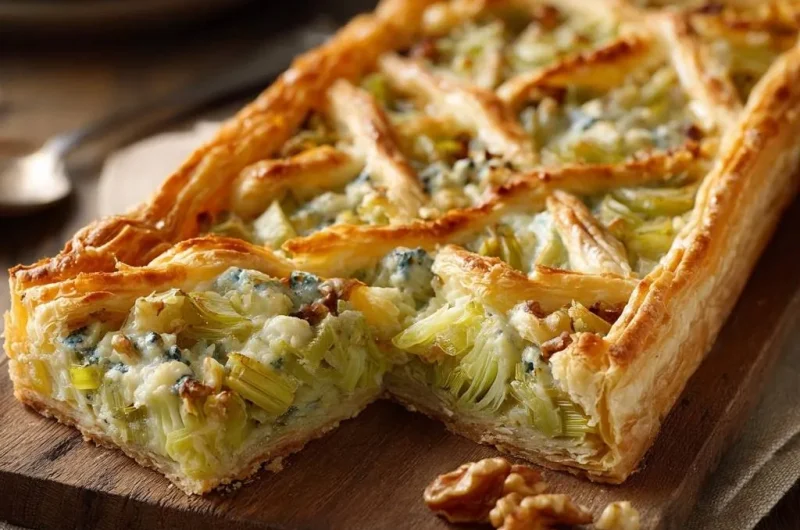
Savory Leek and Blue Cheese Lattice Tart
Course: Main CourseCuisine: French-AmericanDifficulty: easy6
servings25
minutes30
minutes55
Minutes420
kcalFrench-American
Ingredients
2 sheets frozen puff pastry, thawed but very cold
3 large leeks, white and light green parts only, sliced into 1-inch thick rounds
4 ounces blue cheese, crumbled
1/2 cup walnuts, roughly chopped
2 tablespoons unsalted butter
1 tablespoon olive oil
1/4 cup heavy cream (to bind the filling)
1 egg, beaten with 1 teaspoon water (egg wash)
Salt and black pepper to taste
Directions
- Preheat your oven to 400°F (200°C). Place a heavy baking sheet inside the oven while it heats. This hot surface is the first secret to searing the bottom crust instantly.
- Melt butter and oil in a large skillet over medium heat. Add the sliced leeks and cook for 8 to 10 minutes until they are soft and their liquid has evaporated. Season with salt and pepper.
- Transfer the leeks to a bowl and stir in the heavy cream and half of the blue cheese. This creates the creamy, stable binder seen in the cross-section of the image. Let the mixture cool slightly.
- Roll out the first sheet of puff pastry on a piece of parchment paper into a rectangle. Prick the entire surface with a fork to prevent uneven rising.
- Spread the leek and cream mixture evenly over the pastry, leaving a 1-inch border. Sprinkle the remaining blue cheese and chopped walnuts over the top.
- Cut the second sheet of puff pastry into 1-inch wide strips. Lay the strips over the filling in a diagonal lattice pattern, pressing the ends into the border of the bottom pastry sheet to seal.
- Trim any excess pastry and use a fork to crimp the edges of the tart, ensuring the filling is encased by the raised golden crust.
- Brush the lattice and the outer border generously with the egg wash.
- Carefully slide the parchment paper with the tart onto the preheated baking sheet in the oven.
- Bake for 25 to 30 minutes until the pastry is deeply bronzed and the lattice is puffed and crisp.
- Let the tart rest for 10 minutes on a wire rack before slicing. This allows the creamy filling to set so you get the clean, vertical cut shown in the image.
Notes
- Ensure the puff pastry is very cold when working with it. Resting the tart on a wire rack for 10 minutes after baking is crucial for a clean slice and to maintain the crispness of the bottom crust.