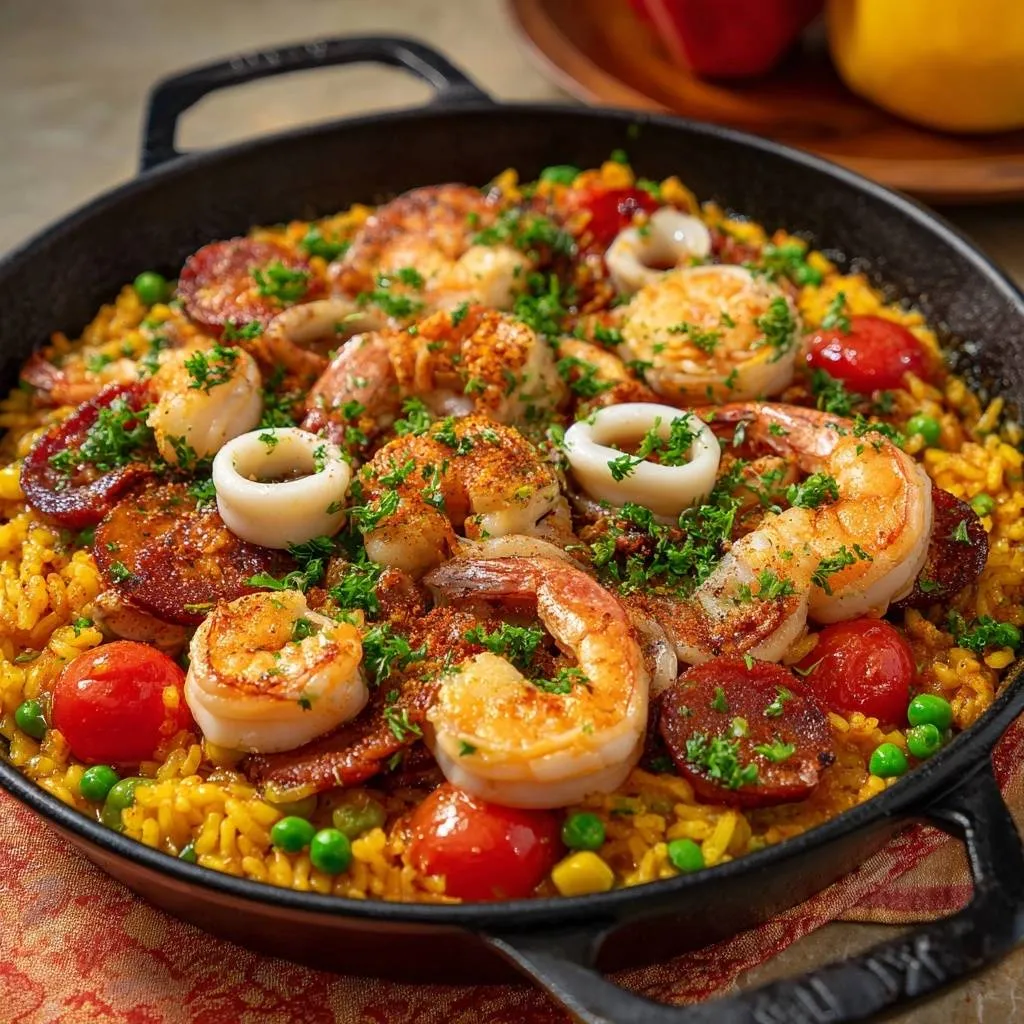
Why Seafood Paella Captivates Home Cooks
Picture this: briny shrimp and tender calamari nestled in golden rice, with that addictive crispy socarrat crust crackling under your spoon. Seafood Paella delivers Valencia’s coastal magic right to your table, but most home cooks battle soggy rice or burnt edges. This recipe fixes it all with a high-heat finish and steam rest that guarantees pro results every time.
So why does Seafood Paella hook you? It blends vibrant seafood flavors with smoky chorizo and sweet veggies in one pan. However, the real star is socarrat, that caramelized rice bottom prized in Spain. You’ll crave scraping the pan clean.
The secret lies in listening for the crackle during the final high-heat blast. In addition, nestling seafood atop the rice lets residual heat cook it gently. That’s how you nail Seafood Paella without special gear.
Key Ingredients for Authentic Seafood Paella
Short-grain paella rice forms the backbone because it releases just enough starch for creaminess without gumminess. Therefore, grab 2 cups and pair it with 4 cups seafood stock for perfect absorption. Saffron threads, steeped in 1/4 cup hot stock, infuse golden color and floral aroma that no substitute matches.
One pound large shrimp and calamari rings stay juicy thanks to their size and late addition. Meanwhile, 8 ounces sliced chorizo releases smoky oils that build unbeatable flavor. Frozen peas, corn kernels, and halved cherry tomatoes add pops of sweetness and acidity to balance the richness.
Fresh parsley and lemon wedges brighten everything at the end. Use quality stock, not bouillon, for depth. If needed, swap chicken stock, but seafood elevates this Seafood Paella.
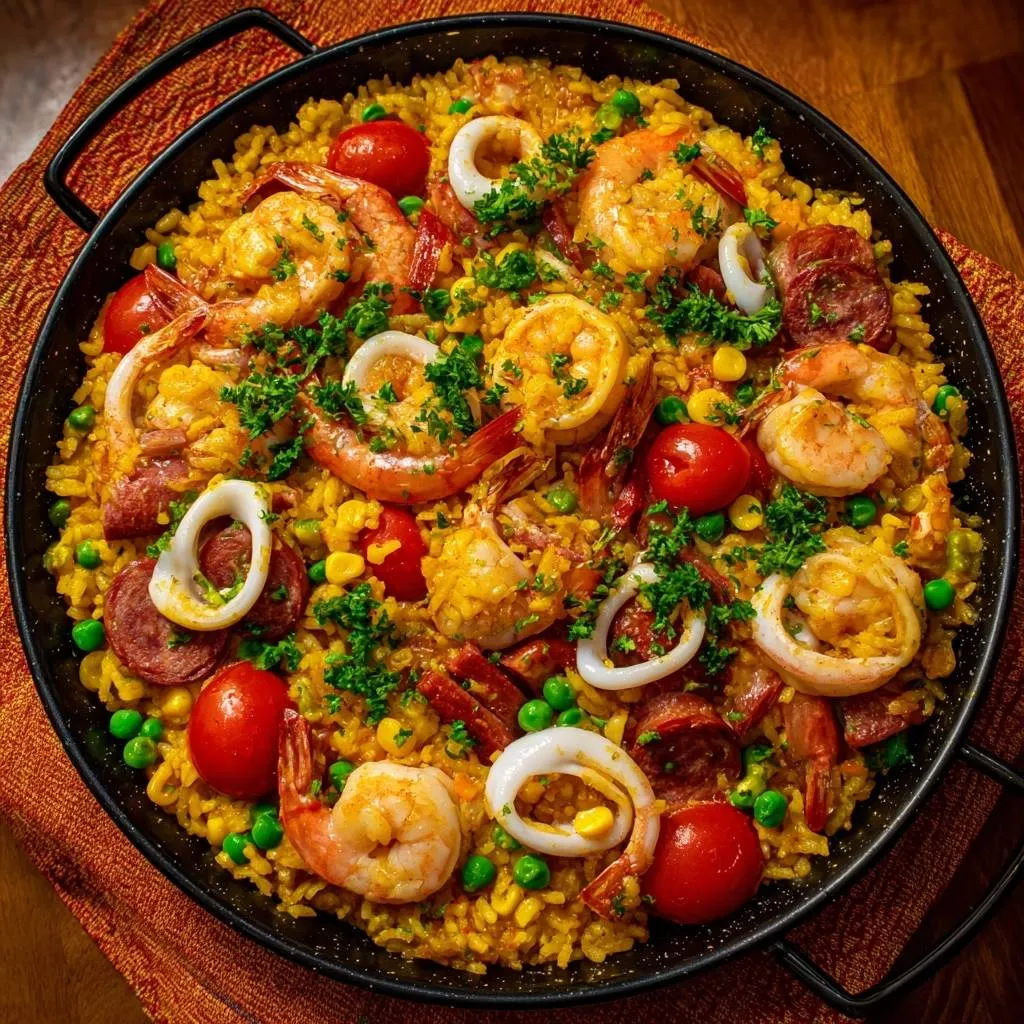
Proteins: Shrimp, Calamari, and Chorizo Dynamics
Large shrimp hold their shape during the quick steam, staying plump. Calamari rings turn tender in 5 minutes off heat, avoiding rubberiness. Chorizo crisps first, so its fat infuses the rice base.
Rice and Stock: Foundation of Paella Texture
Short-grain rice beats arborio here because it creates distinct grains with subtle crust. Steep saffron early for even distribution. The 4:1 stock-to-rice ratio ensures al dente bite.
Vegetables and Garnishes in Seafood Paella
Cherry tomatoes burst with acidity, peas and corn bring sweetness. Chopped parsley adds freshness, lemon wedges cut through richness. Toss in sliced red bell pepper for color if you like.
Origins of Seafood Paella from Valencia Shores
Paella started in Valencia’s 19th-century rice fields, where locals mixed whatever was fresh. Coastal tweaks birthed Seafood Paella, swapping rabbit for shrimp and squid. Socarrat evolved as the prized crispy prize from wood-fired pans.
Families gathered around open flames, scraping the crust together. Today, cast iron mimics that even heat. Regional versions vary proteins, but the no-stir method stays true.
Essential Tools for Perfect Seafood Paella
A large cast iron paella pan retains heat for flawless socarrat. No gas burner required; your stovetop works fine. Foil seals in steam perfectly.
A wide skillet substitutes if needed. Therefore, focus on size for even layering. This setup nails Seafood Paella every time.
Phase 1: Building the Sofrito Base
Heat 3 tablespoons olive oil in your cast iron pan over medium. Add chorizo slices and cook 3 minutes. You’ll see oils release, filling the kitchen with smoky aroma, and edges crisp slightly.
Don’t crank the heat high yet; medium prevents burning. This base flavors every grain in your Seafood Paella.
Phase 2: Rice Simmer Without Stirring
Stir in saffron-steeped stock, remaining 3 3/4 cups stock, rice, peas, corn, tomatoes, and bell pepper. Season with salt and pepper, then bring to a simmer. Reduce to low and cook undisturbed 18 to 20 minutes.
Watch liquid absorb; rice hits al dente with a slight bottom crust forming. No stirring preserves texture in Seafood Paella.
Pro tip: Taste a edge grain at 18 minutes for doneness cue.
Science of No-Stir Paella Rice Layering
Starch gelatinizes evenly without disturbance, creating heat gradients. Bottom Maillard precursors kick off crust. Cast iron’s retention makes it foolproof.
Phase 3: Seafood Nesting and Steam Rest
Nestle shrimp and calamari evenly over rice. Cover tightly with foil and rest off heat 5 minutes. Steam gently poaches seafood, keeping it juicy.
This step locks in briny flavors without overcooking. You’ll smell perfection rising.
Phase 4: High-Heat Socarrat Crust Mastery
Uncover and crank heat to high for 1 to 2 minutes. Listen for crackling as rice caramelizes into golden socarrat. Pull off heat right away to avoid burning.
Drizzle olive oil if dry, scatter parsley, and serve with lemon. That crust delivers nutty crunch in Seafood Paella.
Pro tip: Use a spatula to check underside gently; it should release cleanly.
Science Behind Socarrat in Seafood Paella
Maillard reaction crisps sugars and amino acids at 300°F plus. High heat triggers it fast after steam softens rice. The rest builds moisture, so crust forms without drying top.
This method works on any stovetop because cast iron holds steady temps. Therefore, you get restaurant socarrat at home. Tenderness pairs with crunch perfectly.
Avoiding Pitfalls in Seafood Paella Prep
Mushy rice comes from stirring; resist the urge. Tough seafood means overcooking, so nestle late. No crust? Heat stayed too low; blast it high at end.
Match pan to rice amount for even layers. Salt lightly early since chorizo adds some.
Stock Temperature and Rice Ratio Fixes
Warm stock absorbs faster than cold. Stick to 4:1 ratio precisely for al dente results.
Seafood Overcooking Prevention
Residual heat does the work; 5-minute rest prevents rubbery bites. Nestle don’t bury.
Flavor Twists on Classic Seafood Paella
Add mussels or clams for extra brine. Go veggie with artichokes and more peppers. Boost with smoked paprika for depth.
These keep socarrat intact. Adapt to your catch of the day.
Pairing Sides with Seafood Paella
Crisp green salad cuts richness. Garlic aioli dips enhance. Simple grilled asparagus works too.
White Riesling or light lager refreshes. They balance the bold Seafood Paella flavors.
Storage and Reheating Seafood Paella
Store leftovers in an airtight container in the fridge up to 3 days. Freeze portions without crust for 1 month; rice holds up okay.
Reheat stovetop on low with a stock splash. High-heat recrisp socarrat briefly.
Seafood Paella Troubleshooting Guide
Why didn’t I get a socarrat crust?
Low heat or short blast caused it. Next time, ensure high heat for full 2 minutes and listen for crackle. Cast iron helps; wide pans prevent steaming instead of crisping.
Why is my rice still firm?
Not enough stock or cold liquid slowed absorption. Use warm stock at 4:1 ratio exactly. Extend simmer 2 minutes if needed, but check al dente.
Why is the seafood rubbery?
Overcooking from early addition or long rest. Nestle after rice simmers and limit to 5 minutes off heat. Large shrimp curl perfectly when done right.
Why is the top soggy?
Foil didn’t seal tight, letting steam escape unevenly. Press edges down firmly. Veggies release moisture too; pat dry if fresh.
Can I scale Seafood Paella for 2 people?
Halve everything and use a 10-inch skillet. Keep ratios same for socarrat. It still shines small-scale.
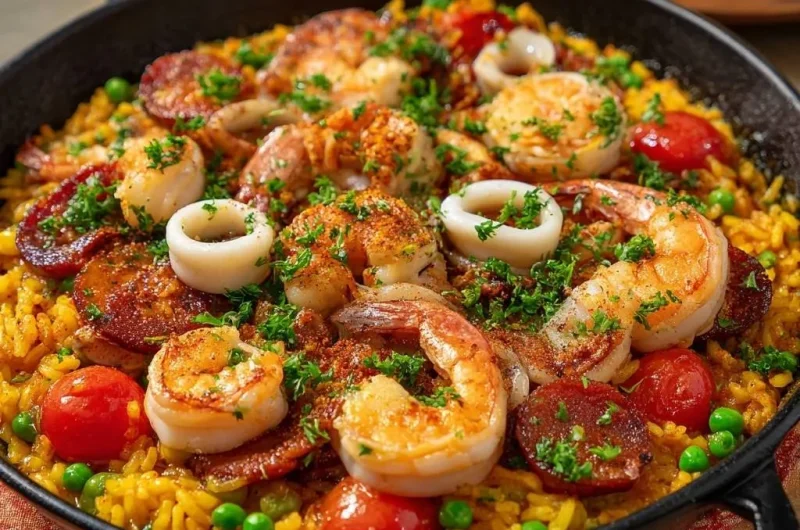
Seafood Paella
Course: Main CourseCuisine: SpanishDifficulty: easy4
615
minutes25
minutes40
Minutes550
kcalSpanish
Ingredients
2 cups short-grain paella rice
1 pound large shrimp, peeled and deveined
1 pound calamari rings and tentacles
8 ounces chorizo, sliced
1 cup frozen peas
1 cup corn kernels
12 cherry tomatoes, halved
1/2 cup fresh parsley, chopped
4 cups seafood or chicken stock
1 teaspoon saffron threads, steeped in 1/4 cup hot stock
3 tablespoons olive oil
1 red bell pepper, sliced (optional garnish element)
Lemon wedges for serving
Salt and pepper to taste
Directions
- Heat olive oil in a large cast iron paella pan over medium heat. Add chorizo slices and cook 3 minutes until they release oils and crisp slightly.
- Stir in saffron-steeped stock, remaining stock, rice, peas, corn, tomatoes, and bell pepper if using. Season with salt and pepper. Bring to a simmer, then reduce heat to low. Cook undisturbed 18 to 20 minutes until liquid is mostly absorbed and rice is al dente. Rice should form a slight crust on the bottom, but do not stir.
- Nestle shrimp and calamari evenly over the rice. Cover pan with foil and let rest off heat 5 minutes to gently cook seafood through.
- For the foolproof socarrat crust: Uncover, increase heat to high for exactly 1 to 2 minutes. Listen for a crackling sound as the rice bottom caramelizes, forming the golden crust without burning. Remove from heat immediately, drizzle with olive oil if needed, scatter parsley, and serve with lemon wedges.
- Perfect tender seafood, vibrant flavors, and that pro-level crispy bottom guaranteed.
Notes
- Use short-grain paella rice for best texture. Listen for crackling sound during high-heat socarrat step to avoid burning. Cast iron pan recommended for even crisping.