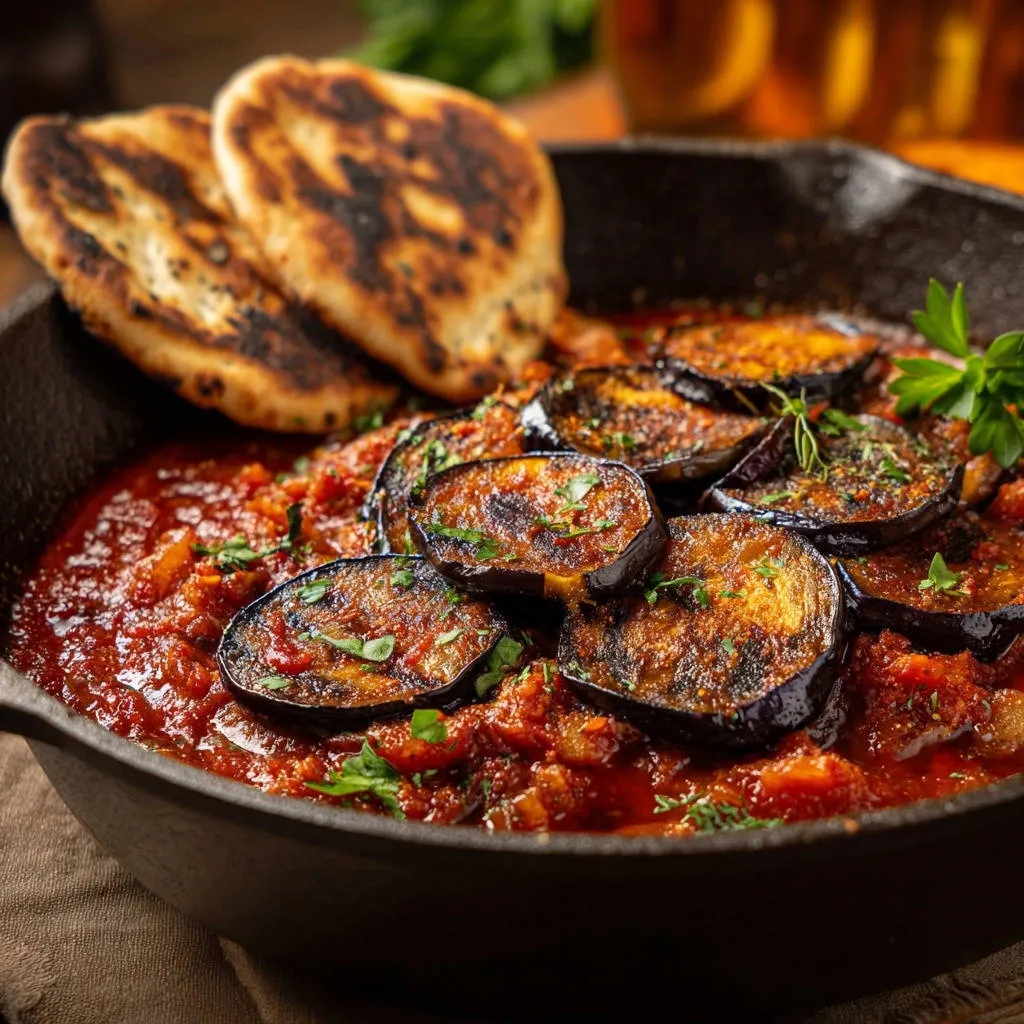
For years, I struggled to make eggplant dishes without the slices instantly soaking up all the oil, leading to a heavy, soggy mess. This frustration ended when I mastered a simple prep technique that completely transforms the result, making this Seared Eggplant Tomato Skillet reliable every time.
This recipe delivers the perfect balance: a beautiful caramelized crust on the eggplant, a soft interior, and a vibrant, rich tomato sauce, all achieved without excess grease.
The Secret Weapon Against Soggy Eggplant: Why This Skillet Works
The Texture Triumph: Caramelized Edges, Tender Interior
The core success of this recipe lies in the pre-searing prep method, often called “sweating” the eggplant. This draws out excess moisture before cooking.
When moisture is removed, the eggplant’s cellular structure collapses slightly, preventing it from acting like a massive sponge when it hits the hot fat.
The result is a stunningly deep, brown crust achieved with minimal oil, leading to that sought-after caramelized flavor and a silken, tender interior texture.
Quick Weeknight Elegance: Ready in Under an Hour
While the salting process takes 30 to 45 minutes of passive time, the active cooking of this dish is incredibly fast. You can prepare the aromatics while the eggplant rests.

Once the eggplant is prepped, the searing and sauce development takes less than 30 minutes. It’s truly a fast, impressive meal ideal for busy evenings.
Diet-Friendly Versatility (Low Carb & Vegan Potential)
Because this recipe controls the amount of oil absorbed by the eggplant, the resulting dish is naturally lighter and cleaner than traditional fried versions.
This Seared Eggplant Tomato Skillet is inherently vegan and naturally fits into many low-carb dietary plans when served without bread or pasta. It is a hearty, vegetable-forward centerpiece.
Building Blocks of Flavor: Essential Ingredients for the Best Skillet
Choosing the Perfect Eggplant (Globe vs. Italian and Freshness Checks)
We rely on large globe eggplants for this recipe because their flesh-to-skin ratio holds up well to both searing and braising.
Select eggplants that are firm, heavy for their size, and have taut, shiny skin without any brown spots or soft areas. Younger eggplant tends to have fewer seeds and less bitterness.
The Aromatic Foundation: Onion, Garlic, and Oregano
The yellow onion provides a sweet and savory base as it cooks down in the oil, balancing the acidity of the tomatoes.
Use fresh garlic and dried oregano. Dried oregano provides that essential Mediterranean depth, while the fresh minced garlic releases its fragrance quickly, avoiding bitterness.
Why Canned Crushed Tomatoes are Best Here (A Note on Consistency)
A 28 oz can of crushed tomatoes provides the perfect consistency for the skillet sauce-it is thick enough to coat the eggplant without being watery.
Unlike whole peeled or diced tomatoes, crushed tomatoes break down immediately, creating a cohesive, velvety sauce quickly during the 10-minute simmer.
Don’t Forget the Salt: Why Kosher Salt is Crucial for Prep
Kosher salt is critical for the eggplant prep because its large, flaky crystals draw out moisture effectively without dissolving too quickly.
The texture makes it easy to brush off both the moisture and the residual salt, ensuring your final dish isn’t overly seasoned.
Mastering the Anti-Grease Technique: Prep Steps That Change Everything
The Science of Salting: Drawing Out Excess Moisture (Why It Matters)
The salting step, which involves sprinkling 1/2-inch thick slices with kosher salt, utilizes osmosis to pull water from the cells.
This essential process collapses the interior cell structure, which is what normally causes the vegetable to instantly absorb oil.
Allow the slices to rest for the full 30 to 45 minutes on a rack to facilitate drainage and ensure maximum moisture removal.
The Crucial Blotting Step (Getting Rid of the Excess)
Once the resting time is complete, you will notice beads of amber moisture on the surface of the eggplant slices.
Use sturdy paper towels to firmly press and wipe away every trace of this moisture and any remaining visible salt crystals.
If you skip this step, the residual salt will make the final dish too salty, and the moisture will prevent a proper sear.
Optimal Equipment: Why Cast Iron Delivers Superior Sear
A heavy-bottomed skillet, preferably seasoned cast iron or thick stainless steel, is vital for achieving the deep sear needed.
Cast iron retains heat exceptionally well, minimizing temperature drops when the cold eggplant hits the pan, guaranteeing maximum caramelization.
Avoid non-stick pans for the searing stage, as they rarely achieve the required high heat and deep brown crust.
Your Path to Seared Eggplant Tomato Skillet Perfection: The Method
-
Step 1: Prep the Eggplant Using the Anti-Grease Method
Slice the eggplant 1/2 inch thick and salt according to the instructions above, allowing 30 to 45 minutes for the moisture to weep out before thoroughly blotting dry.
-
Step 2: Sear the Eggplant (The Color is Key)
Heat 1 tablespoon of olive oil over medium-high heat until it shimmers. The oil must be hot enough to sizzle the eggplant immediately upon contact.
Achieving a deep brown crust here is vital for flavor, as the eggplant won’t brown much once it’s nested in the sauce.
Work in necessary batches to prevent steaming; if the eggplant pieces touch, the pan temperature drops and you lose the sear.
-
Step 3: Creating a Deep, Rich Tomato Base
Reduce the heat to medium. Add the remaining 1 tablespoon of olive oil, then sauté the diced yellow onion for 5 to 7 minutes until softened and translucent, avoiding any browning.
Add the minced garlic and any crushed red pepper flakes, stirring for exactly 60 seconds until fragrant to prevent the garlic from burning and turning bitter.
-
Step 4: Simmer and Reduce the Sauce
Pour in the crushed tomatoes and the dried oregano. Season conservatively with salt and pepper, remembering the eggplant was pre-salted.
Allow the sauce to come to a gentle simmer and let it cook for the full 10 minutes. This concentrates the tomato flavor and ensures the final texture is not too liquidy, providing a rich coating consistency.
-
Step 5: Low and Slow Braising for Ultimate Tenderness
Gently nestle the seared eggplant slices back into the simmering tomato sauce, ensuring the pieces are submerged or coated with sauce.
Reduce the heat immediately to low, cover the skillet, and let the dish gently braise for 5 to 10 minutes.
This final covered braise ensures the eggplant absorbs the sauce without losing its shape, resulting in a silken, meltingly tender texture throughout.
-
Step 6: Final Garnish and Serve
Taste the dish and adjust salt or pepper if necessary. Remove the skillet from the heat.
Finish the dish generously with fresh parsley or basil. The fresh herbs add a bright, essential contrast to the rich, warm tomato base.
Chef’s Tips for Maximum Flavor and Efficiency
-
Maximize Browning: Don’t Overcrowd the Skillet. If you need to cook the eggplant in three batches, prioritize the deep sear. Overcrowding drops the temperature rapidly and forces the eggplant to steam rather than sear, ruining the texture.
-
Use High-Quality Canned Tomatoes. Since tomatoes are the star of this Seared Eggplant Tomato Skillet, investing in premium crushed tomatoes (like those labeled San Marzano style) makes a noticeable difference.
Higher quality tomatoes offer superior sweetness and reduced acidity, elevating the overall complexity of the sauce.
-
Quick Make-Ahead Strategy. You can complete Steps 3 and 4 (building the tomato sauce) up to two days ahead of time and refrigerate it.
Simply warm the sauce gently while you sear the eggplant slices, then complete Step 5 with the freshly prepared eggplant for fast assembly.
-
Boost the Spice. If you enjoy heat, try adding a pinch of freshly cracked black pepper alongside the red pepper flakes in the sauce for a more nuanced warmth.
Elevate the Experience: Serving and Pairing Suggestions
Beyond Flatbread: Alternative Ways to Serve the Skillet
While warm flatbread or pita is perfect for soaking up the sauce, consider serving the skillet over fluffy polenta or creamy, soft parmesan grits.
For a low-carb alternative, serve the dish alongside zoodles (zucchini noodles) or a bed of fresh baby spinach, which will wilt beautifully under the heat.
Recommended Garnishes: Fresh Herbs, Cheese, or Lemon Zest?
Fresh basil or parsley are essential for balancing the dish. Use the quantity specified, or even more, for maximum freshness.
If you are not keeping the dish vegan, a generous grating of Parmesan or Pecorino Romano cheese adds savory depth. A microplaned dash of lemon zest added at the end provides an unexpected, bright lift.
Wine Pairing Suggestions (Matching Acidity with the Tomatoes)
The high acidity of the tomato sauce requires a wine that can stand up to it without tasting flat.
Look for light-to-medium bodied Italian reds like Chianti or Sangiovese, as their earthy notes and tartness beautifully complement the oregano and tomato base.
For white wine lovers, a dry Rosé or a crisp Sauvignon Blanc works well to cut through the richness of the olive oil.
Troubleshooting Your Seared Eggplant Tomato Skillet
“Why is my sauce too watery?”
This typically means the sauce wasn’t simmered long enough in Step 4. Ensure the sauce reduces by about 10-15% and has a thick consistency before adding the eggplant back.
Alternatively, excess moisture may have been released from the eggplant during the final braise. Simply remove the lid and simmer the skillet on low for a few extra minutes to evaporate the water.
“My eggplant is still tough-What went wrong?”
If the eggplant is tough, it likely didn’t cook long enough during the final covered braise (Step 5).
Toughness can also result if the slices were cut too thick, or if they were not properly sweated and are dry internally. Ensure slices are consistently 1/2 inch thick.
Storage and Reheating Best Practices for Leftovers
Store leftovers of the Seared Eggplant Tomato Skillet in an airtight container in the refrigerator for up to 3 days.
Reheat gently on the stovetop in a covered skillet over low heat, adding a splash of water if the sauce appears too thick. Avoid using the microwave, which can make the eggplant mushy.
Frequently Asked Questions About Cooking Eggplant
Can I skip the salting step?
While you technically can skip the salting, doing so defeats the primary purpose of this specific recipe and guarantees a greasy, oil-logged result.
The salting step is non-negotiable for achieving the beautifully seared, non-soggy texture that defines this dish.
Is this Seared Eggplant Tomato Skillet freezer friendly?
We do not recommend freezing this dish. Eggplant has a high water content, and upon thawing, the texture becomes rubbery and mushy.
It is best enjoyed fresh or within a day or two of refrigeration.
What is the best type of oil for searing eggplant?
High-quality extra virgin olive oil works perfectly here. It has a robust flavor that complements the Mediterranean ingredients and a high enough smoke point for medium-high heat searing.
Ready to Impress? Share Your Skillet Masterpiece!
The anti-grease technique for eggplant is a truly transformative piece of kitchen knowledge that will unlock countless delicious, perfectly textured meals.
This beautiful Seared Eggplant Tomato Skillet is proof that simple, high-quality ingredients and a little bit of technique yield spectacular results. We encourage you to try the salting method this week and experience the difference.
Don’t be shy about your newfound success! Grab your skillet and share your caramelized eggplant creations.

Seared Eggplant Tomato Skillet
Course: Main CourseCuisine: Mediterranean CuisineDifficulty: easy4
servings50
minutes35
minutes60
minutesMediterranean Cuisine
Ingredients
2 large globe eggplants, sliced 1/2 inch thick
1 teaspoon kosher salt, plus more for seasoning
2 tablespoons olive oil, divided
1 large yellow onion, finely diced
3 cloves garlic, minced
1 (28 oz) can crushed tomatoes
1/2 teaspoon dried oregano
1/4 teaspoon crushed red pepper flakes (optional)
1/4 cup chopped fresh parsley or basil, for garnish
Flatbread or pita, for serving (optional)
Directions
- Prepare the Eggplant (The Anti-Grease Technique): Arrange the sliced eggplant rounds in a single layer on a cooling rack placed over a baking sheet or layered paper towels. Generously sprinkle the eggplant slices with 1 teaspoon of kosher salt. Allow the eggplant to sit for 30 to 45 minutes. This crucial step draws out excess moisture and collapses the cell structure, preventing the eggplant from acting like a sponge when it hits the oil later. After 45 minutes, use paper towels to firmly blot and wipe away all the moisture and excess salt.
- Sear the Eggplant: Heat 1 tablespoon of olive oil in a large skillet (cast iron works best) over medium-high heat until shimmering. Working in batches if necessary, add the prepared eggplant slices. Sear them hard for 3 to 4 minutes per side until they develop a deep brown color and are beautifully caramelized. You will notice the eggplant absorbs significantly less oil because it was properly sweated. Remove the seared eggplant and set it aside.
- Build the Tomato Sauce: Reduce the heat to medium. Add the remaining 1 tablespoon of olive oil to the same skillet. Add the diced onion and cook for 5 to 7 minutes until softened and translucent. Add the minced garlic and crushed red pepper flakes (if using), stirring for 1 minute until fragrant.
- Simmer: Pour in the crushed tomatoes and add the oregano. Season the sauce with salt and black pepper to taste. Bring the sauce to a gentle simmer and let it cook for 10 minutes, stirring occasionally, until it has reduced slightly and thickened.
- Assemble and Finish: Gently nestle the seared eggplant slices into the simmering tomato sauce. Spoon some sauce over the tops of the eggplant slices. Reduce the heat to low, cover the skillet, and let the dish gently braise for 5 to 10 minutes until the eggplant is tender throughout and fully warmed through.
- Serve: Garnish generously with fresh parsley or basil. Serve immediately directly from the skillet with warm flatbread for dipping.
Notes
- The 30-45 minute salting and blotting step is critical for preventing the eggplant from absorbing excess oil during searing.